Lawn Care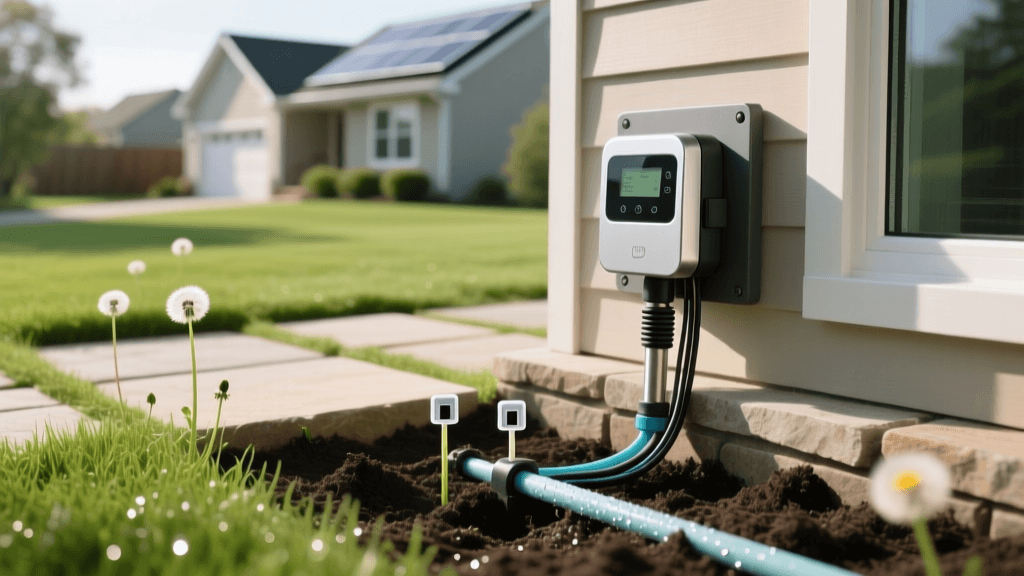
Smart Irrigation Controllers: Automate Your Lawn Care
The Evolution of Lawn Watering: Enter Smart Irrigation
For decades, homeowners have relied on mechanical or basic digital sprinkler timers to maintain their lawns. These "dumb" timers operate on a rigid schedule, completely oblivious to the environment. They will water your lawn during a torrential downpour, immediately after a heavy frost, or during the peak heat of the afternoon when evaporation rates are highest. In the modern era of smart home automation, this lack of intelligence is not just a waste of resources; it is actively detrimental to your turf health and your wallet.
According to the Environmental Protection Agency (EPA), the average American family uses more than 300 gallons of water per day at home, with roughly 30 percent devoted to outdoor uses. In arid climates, this outdoor water usage can exceed 60 percent. By upgrading to a smart irrigation controller, you integrate your lawn care routine into your broader smart home ecosystem, ensuring your grass receives precisely what it needs, exactly when it needs it, without any manual intervention.
The Problem with Traditional Timers
Traditional sprinkler controllers rely on historical averages and manual guesswork. A homeowner might set their timer to run for 20 minutes per zone every other day. However, turfgrass water requirements fluctuate wildly based on evapotranspiration (ET) rates, which are influenced by solar radiation, wind speed, humidity, and temperature. Overwatering leads to shallow root systems, nutrient leaching, and fungal diseases like brown patch or dollar spot. Underwatering causes drought stress, making the lawn susceptible to weed invasion and grub damage. Automation solves this by outsourcing the decision-making to real-time data.
How Smart Irrigation Controllers Work
Smart controllers replace your old wall-mounted timer with a Wi-Fi-enabled hub that communicates with cloud-based weather services. There are two primary types of smart automation in lawn care:
- Weather-Based (ET) Controllers: These devices pull hyperlocal weather data from nearby meteorological stations or personal weather networks. They calculate daily evapotranspiration rates and automatically skip watering if rain is in the forecast, or increase run times during heatwaves.
- Soil Moisture-Based Controllers: These systems rely on physical sensors buried in the root zone of your lawn. They measure the actual volumetric water content (VWC) of the soil and only trigger the sprinkler valves when moisture drops below a predefined threshold.
Top Smart Irrigation Controllers Compared
Choosing the right hardware is the first step in automating your lawn care. Below is a comparison of the industry-leading smart controllers available today:
| Feature | Rachio 3 Smart Sprinkler | Orbit B-hyve XR | Rain Bird ST8I-2.0-SMART |
|---|---|---|---|
| Zones | 8 or 16 | 6 to 16 | 8 |
| Weather Intelligence | Weather Intelligence Plus (Hyperlocal) | WeatherSense Technology | Daily Adjust & Rain Delay |
| Smart Home Integration | Alexa, Google, HomeKit, IFTTT, Samsung | Alexa, Google Home | Alexa, Google Home |
| Average Cost | $230 - $280 | $180 - $220 | $150 - $180 |
| Best For | Tech enthusiasts & deep automation | Budget-conscious smart upgrades | Rain Bird loyalists & simple setups |
The Rachio 3 is widely considered the gold standard for smart home integration. Its IFTTT (If This Then That) compatibility allows for advanced automations, such as pausing your sprinklers if your smart doorbell detects motion in the driveway or shutting off the system if a connected smart rain gauge detects more than 0.25 inches of precipitation.
Integrating Soil Moisture Sensors for Precision Automation
While weather-based controllers are excellent, they cannot account for microclimates in your yard, such as heavily shaded areas or zones with poor drainage. This is where soil moisture sensors become a vital part of your automated lawn care strategy. According to the Irrigation Association, pairing a smart controller with soil moisture sensors can reduce outdoor water use by up to 50 percent compared to traditional clock timers.
Installation Best Practices:
- Placement: Install the sensor in the driest, most representative area of the zone (usually the sunniest spot, away from downspouts).
- Depth: For cool-season grasses (Kentucky Bluegrass, Tall Fescue), bury the sensor 4 to 6 inches deep. For warm-season grasses (Bermuda, Zoysia), bury it 6 to 8 inches deep to match the active root zone.
- Calibration: Set your controller's moisture threshold to 50 percent for clay soils and 30 percent for sandy soils to prevent the system from triggering unnecessary cycles.
Configuring Zones for Cool and Warm-Season Grasses
Automation is only as effective as the data you feed it. When setting up your smart controller, you must accurately categorize each zone based on grass type, soil type, and sun exposure.
The Cycle and Soak Method
If your lawn sits on heavy clay soil, applying 30 minutes of water at once will result in massive surface runoff. Smart controllers automate the "cycle and soak" method. You can program the controller to split a 30-minute runtime into three 10-minute cycles, separated by 20-minute soak intervals. This allows the water to penetrate deeply into the soil profile, encouraging roots to grow downward rather than staying near the surface.
Optimal Timing Automations
Always configure your smart controller's "watering window" to end by 6:00 AM. Watering in the early morning minimizes evaporation from wind and sun, while ensuring the grass blades dry quickly once the sun rises. Watering in the evening leaves the lawn wet overnight, creating a breeding ground for fungal pathogens. Smart controllers will automatically calculate the necessary start time based on the total runtime required to finish by your 6:00 AM deadline.
Step-by-Step Guide to Automating Your Lawn Care
- Audit Your Hardware: Inspect all sprinkler heads, rotors, and drip lines. Replace any clogged nozzles and ensure head-to-head coverage is intact. Automation cannot fix broken hardware.
- Install the Smart Hub: Turn off the power to your old controller at the breaker. Label your zone wires, remove the old unit, and wire the new smart controller. Connect it to your 2.4GHz Wi-Fi network.
- Build Your Yard Profile: Open the companion app and input specific data for each zone: grass type, soil type (clay, loam, sand), slope percentage, and sprinkler head type (rotor vs. spray).
- Enable Weather Intelligence: Link the controller to a hyperlocal weather station. Enable features like "Rain Skip," "Wind Skip" (pause watering if winds exceed 15 mph to prevent uneven distribution), and "Freeze Skip."
- Integrate with Smart Home Routines: Link the controller to your smart home hub. Create a "Backyard BBQ" scene on your phone that instantly pauses all irrigation and extends the watering window to the following night.
The ROI of Smart Watering: Savings and Lawn Health
The return on investment for smart irrigation is twofold: financial and ecological. The EPA WaterSense program notes that smart irrigation controllers can save the average home nearly 7,600 gallons of water annually. For homes with larger landscapes, this number can easily exceed 15,000 gallons, translating to significant reductions in municipal water and sewer bills. In many municipalities, local water authorities offer rebates of up to $100 for installing Wi-Fi-enabled, weather-based controllers, effectively cutting the hardware cost in half.
Beyond the financial savings, automating your lawn care results in a visibly healthier, more resilient turf. By eliminating overwatering, you prevent soil compaction and anaerobic conditions that choke out grassroots. By utilizing cycle-and-soak automations, you force the root system to chase moisture deeper into the soil profile, creating a drought-tolerant lawn that stays green even during the peak heat of summer. Embracing smart home automation in your yard is no longer a luxury; it is the most efficient, science-backed method for modern lawn maintenance.