Home & Garden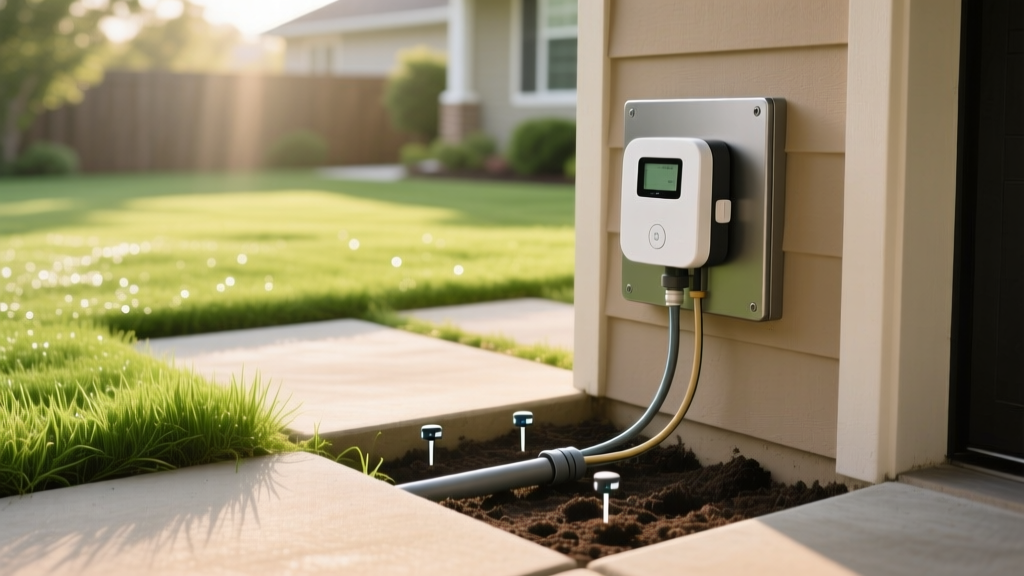
Smart Irrigation Controllers: Automate and Save Water Outdoors
James MillerPublished
Smart Irrigation Controllers: The Future of Outdoor Water Management
Maintaining a lush, vibrant lawn and garden has traditionally required a delicate balancing act of timing, weather observation, and manual labor. For decades, homeowners relied on basic mechanical timers that blindly watered the lawn whether it was experiencing a severe drought or a torrential downpour. Today, the integration of smart home technology into outdoor spaces has revolutionized landscape maintenance. Smart irrigation controllers bridge the gap between indoor automation and outdoor care, ensuring your garden receives the exact amount of hydration it needs, precisely when it needs it.
According to the Environmental Protection Agency (EPA), outdoor water use accounts for nearly 30% of total household water consumption, with some arid regions seeing that number climb as high as 60%. By upgrading to a smart irrigation system, homeowners can eliminate water waste, reduce utility bills, and promote deeper, healthier root growth in their turf and garden beds.
How Smart Irrigation Controllers Work
Unlike traditional sprinkler timers that operate on a fixed schedule, smart controllers connect to your home Wi-Fi network and pull real-time data to make autonomous watering decisions. There are two primary types of smart controllers recognized by the EPA WaterSense program:
1. Weather-Based (ET) Controllers
These controllers use local meteorological data to calculate the evapotranspiration (ET) rate—the combined rate of evaporation from the soil and transpiration from plants. By accessing hyper-local weather stations via the cloud, the controller automatically skips watering cycles if rain is in the forecast, delays watering during high-wind events to prevent drift, and increases hydration during extreme heat waves.
2. Soil Moisture Sensor Controllers
These systems rely on physical sensors buried in the root zones of your lawn or garden beds. The sensors measure the actual volumetric water content in the soil. If the soil moisture level is above the predefined threshold, the controller overrides any scheduled watering, regardless of what the weather forecast predicts.
Top Smart Irrigation Controllers Compared
Choosing the right hardware depends on your budget, the size of your property, and your desired level of smart home integration. Below is a comparison of the top three industry-leading smart controllers.
| Brand & Model | Avg. Cost | Max Zones | Key Features & Integrations |
|---|---|---|---|
| Rachio 3 Smart Sprinkler Controller | $229 | 8 or 16 | Weather Intelligence Plus, Alexa, Google, Apple HomeKit, IFTTT |
| Orbit B-hyve Pro | $119 | 6, 12, or 24 | WeatherSense, built-in screen, Alexa, Google, budget-friendly |
| Hunter PRO-HC Hydrawise | $180 | 6 to 24 | Professional-grade, flow meter support, predictive watering |
Our Recommendation: For most DIY homeowners, the Rachio 3 offers the most intuitive mobile app and the most robust smart home ecosystem integration. However, if you are on a strict budget, the Orbit B-hyve Pro provides exceptional value and includes a physical digital display on the unit itself, which is helpful if your Wi-Fi connection drops.
Step-by-Step Installation and Setup Guide
Installing a smart irrigation controller is a straightforward DIY project that typically takes less than 45 minutes. Here is a practical guide to upgrading your system:
- Turn Off the Power: Locate your irrigation system's dedicated breaker or unplug the existing controller from the wall outlet to ensure safety.
- Document Your Wiring: Take a clear, well-lit photograph of the wiring inside your old controller. Each colored wire corresponds to a specific sprinkler zone or master valve.
- Remove the Old Unit: Disconnect the wires, unscrew the mounting bracket, and remove the old timer.
- Mount the New Controller: Use the provided template to drill pilot holes and secure the new smart controller's backplate to the wall. Ensure it is within range of your home's Wi-Fi router (2.4 GHz networks are standard for smart home devices).
- Reconnect the Wires: Using your photograph as a guide, insert each zone wire into the corresponding numbered terminal on the new controller. Connect the common wire (usually white or black) to the 'C' or 'COM' terminal.
- Power On and Configure: Plug in the unit, download the manufacturer's app, and follow the on-screen prompts to connect the device to your Wi-Fi network.
- Map Your Zones: Walk your property and trigger each zone manually via the app. Label each zone in the software (e.g., 'Front Yard Sun', 'Shady Garden Bed', 'Drip Line Shrubs') and assign the correct soil type, sun exposure, and sprinkler head type for accurate ET calculations.
Maximizing Efficiency with Soil Sensors
While weather-based data is incredibly accurate, it cannot account for microclimates in your yard or poor soil drainage. A heavily shaded area of your lawn will retain moisture much longer than a sun-baked slope. To achieve true precision, pair your smart controller with wireless soil moisture sensors.
Brands like Rachio and Hunter offer proprietary wireless soil sensors that you bury at the root level (typically 4 to 6 inches deep for turfgrass). These sensors communicate directly with the controller. If the shaded zone's sensor reads 35% moisture, but the weather data suggests watering, the controller will intelligently skip that specific zone while still watering the drier, sun-exposed zones. This targeted approach prevents fungal diseases caused by overwatering and protects your landscape from root rot.
Integrating Irrigation with Smart Outdoor Lighting
A truly automated outdoor living space extends beyond just watering; it encompasses the entire ambiance and functionality of your yard. By integrating your smart irrigation controller with outdoor smart lighting systems—such as Philips Hue, Ring Pathlights, or Lutron—you can create sophisticated routines that bridge indoor and outdoor living.
For example, you can use platforms like Apple HomeKit or Amazon Alexa to create an 'Outdoor Entertainment' scene. When triggered, this scene can ensure your smart irrigation system is locked out from watering for the next 12 hours (preventing guests from being sprayed), while simultaneously dimming your smart pathway lights to 40% and turning on your patio string lights. Conversely, a 'Winterization' routine can trigger your smart controller to open the drain valves (if equipped with smart relays) while flashing your outdoor security lights to confirm the system has been successfully blown out for the season.
Financial ROI and Utility Rebates
The return on investment for a smart irrigation controller is remarkably fast. The Irrigation Association notes that smart watering technologies can reduce outdoor water use by 20% to 50% compared to traditional clock-based timers. For a household spending $80 a month on water during the peak summer season, a 30% reduction yields immediate savings that typically pay for the cost of the hardware within a single summer.
Pro Tip: Before purchasing a smart controller, check with your local municipal water provider. Because these devices significantly reduce strain on municipal water treatment facilities, many local utility districts offer instant rebates ranging from $50 to $150 for installing EPA WaterSense-certified smart controllers. In some cases, the rebate covers the entire cost of the unit!
Seasonal Maintenance and Winterization
Smart controllers do not eliminate the need for seasonal physical maintenance. In late autumn, before the first hard freeze, you must winterize your irrigation system to prevent cracked pipes and damaged valves. While the smart controller can be set to 'Standby' or 'Off' mode via the app, the physical pipes must be drained or blown out with an air compressor. Additionally, take a moment to clean the controller's casing, check for any frayed wiring caused by rodents, and ensure the Wi-Fi antenna is secure. In the spring, run a manual test of every zone through the app to verify that no sprinkler heads were damaged by winter snowplows or frost heave.
Conclusion
Upgrading to a smart irrigation controller is one of the most impactful home and garden improvements you can make. It removes the guesswork from lawn care, conserves vital water resources, and seamlessly integrates your outdoor landscape into your modern smart home ecosystem. By combining weather-based data, soil moisture sensing, and smart lighting routines, you can cultivate a healthier, more resilient garden while enjoying the ultimate convenience of automated outdoor living.
