Home & Garden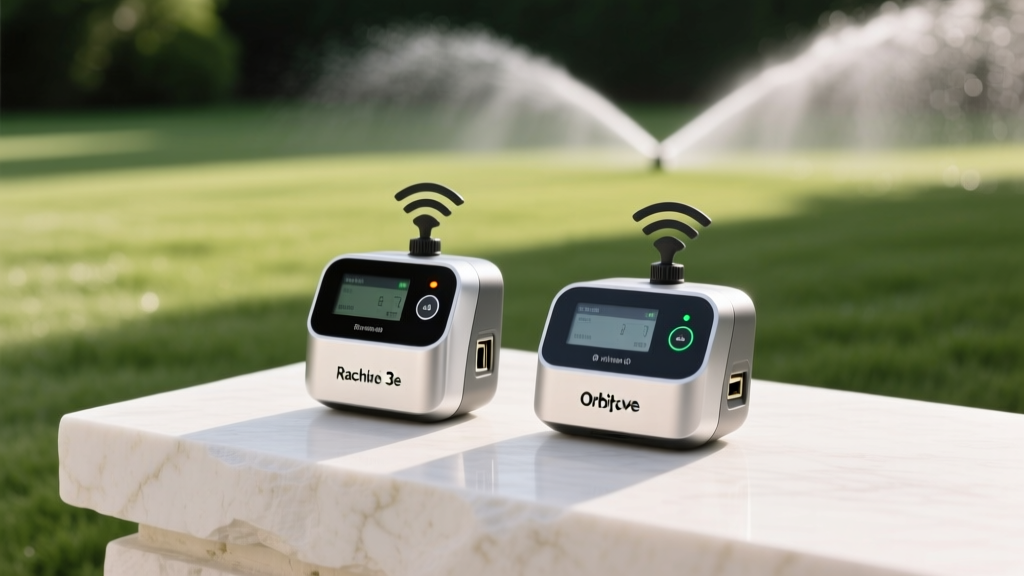
Best Smart Irrigation Controllers: Rachio vs Orbit Review
James MillerPublished
Why Upgrade to a Smart Irrigation Controller?
For decades, homeowners have relied on rudimentary dial timers to water their lawns, leading to overwatering during rainstorms and underwatering during heatwaves. Today, bridging the gap between indoor smart home ecosystems and outdoor landscaping is easier than ever. Smart irrigation controllers replace guesswork with meteorological data, adjusting your watering schedules based on real-time local weather, soil conditions, and seasonal shifts.
The environmental and financial benefits of upgrading are substantial. According to the Environmental Protection Agency's (EPA) WaterSense program, an EPA WaterSense labeled smart irrigation controller can save the average home nearly 7,600 gallons of water annually. Furthermore, research from the University of Florida IFAS Extension highlights that integrating smart controllers with soil moisture sensors can reduce outdoor water use by up to 50% compared to traditional time-based clocks, without compromising turfgrass health.
In this comprehensive product review and comparison, we pit the two industry titans against each other: the Rachio 3e and the Orbit B-hyve XR. Whether you are looking to integrate your garden care with Alexa and Google Home, or you simply want to lower your summer water bill, this guide will help you choose the right hub for your yard.
Top Contender 1: Rachio 3e Smart Sprinkler Controller
The Rachio 3e is widely considered the gold standard for smart home irrigation. Designed with a sleek, minimalist aesthetic, it is built primarily for indoor installation (though a separate weatherproof enclosure can be purchased for outdoor use). The 3e model is an evolution of the beloved Rachio 3, offering a slightly more budget-friendly entry point while retaining the core features that make Rachio a market leader.
Key Features and Performance
- Weather Intelligence Plus: Rachio's proprietary algorithm skips watering based on rain, wind, freeze, and saturation. It pulls data from over 50,000 local weather stations to ensure your lawn gets exactly what it needs.
- Smart Home Integration: Flawless compatibility with Apple HomeKit, Amazon Alexa, Google Assistant, and Samsung SmartThings. You can trigger your sprinklers via voice commands or tie them to geofencing routines.
- App Experience: The Rachio app is incredibly intuitive, offering easy-to-read water usage reports and push notifications if a zone fails to start or if a wire is disconnected.
Drawbacks and Considerations
The primary drawback of the Rachio 3e is its lack of native Bluetooth. If your Wi-Fi goes down, you cannot manually control the unit from your phone while standing in front of it. Additionally, the 3e model does not include a physical flow meter connection, which is reserved for the premium Rachio 3 model. Priced at approximately $229 for the 8-zone model, it is an investment, but one that pays for itself in water savings.
Top Contender 2: Orbit B-hyve XR Smart Controller
Orbit's B-hyve XR is a rugged, versatile workhorse designed for homeowners who need flexibility. Unlike the indoor-focused Rachio, the B-hyve XR comes in a weather-resistant casing straight out of the box, making it ideal for mounting on an exterior wall or in a garage. It bridges the gap between basic smart timers and high-end professional controllers.
Key Features and Performance
- Wi-Fi and Bluetooth 5.0: The inclusion of Bluetooth is a massive advantage. If your home internet drops, you can still connect directly to the controller via the B-hyve app to run zones or adjust schedules while standing in your yard.
- WeatherSense Technology: Similar to Rachio, Orbit uses local weather data to adjust watering times. It automatically delays watering during rain and adjusts for seasonal evapotranspiration (ET) rates.
- Indoor/Outdoor Versatility: The XR model is built to withstand the elements, featuring a locking cabinet that protects the digital interface from rain, dust, and UV degradation.
Drawbacks and Considerations
While the hardware is robust, the Orbit B-hyve app interface is often criticized for being slightly more cluttered and less intuitive than Rachio's polished ecosystem. Furthermore, while it supports Alexa and Google Assistant, it lacks native Apple HomeKit support, which may be a dealbreaker for dedicated Apple ecosystem users. The 12-zone model retails for around $189, offering exceptional value for larger properties.
Head-to-Head Comparison Chart
| Feature | Rachio 3e (8-Zone) | Orbit B-hyve XR (12-Zone) |
|---|---|---|
| Retail Price | ~$229 | ~$189 |
| Installation Location | Indoor Only (Enclosure sold separately) | Indoor / Outdoor (Weatherproof included) |
| Connectivity | Wi-Fi (2.4 GHz) | Wi-Fi (2.4 GHz) + Bluetooth 5.0 |
| Weather Adjustments | Weather Intelligence Plus | WeatherSense Technology |
| Smart Home Support | Alexa, Google, Apple HomeKit, SmartThings | Alexa, Google Assistant |
| App Interface | Highly polished, user-friendly | Functional, slightly cluttered |
| Warranty | 3 Years | 6 Years |
Installation and Setup: What to Expect
Many homeowners hesitate to upgrade their irrigation systems, fearing complex electrical work. Fortunately, both the Rachio 3e and Orbit B-hyve XR are designed for DIY installation, typically taking 30 to 45 minutes to complete. Here is a practical, step-by-step overview of the process:
- Power Down: Locate your irrigation transformer (usually plugged into an outlet in the garage or basement) and unplug it. Never work on the wiring while the system is live.
- Label Your Wires: Before removing the old controller, use the included stickers or painter's tape to label every wire according to its terminal number (e.g., Zone 1, Zone 2, Common). Take a clear photo of the old wiring as a backup.
- Mount the New Unit: Use a level and the provided screws to mount the new backplate. If you are replacing an old unit, you may need to drill new holes, as the footprints rarely match perfectly.
- Connect the Wiring: Strip about 1/4 inch of insulation from the ends of your wires if they are frayed. Insert them into the corresponding push-in terminals on the new smart controller. Ensure the 'Common' wire (usually white or black) is in the designated 'C' terminal.
- Power Up and Pair: Plug the transformer back in. The controller will boot up and display a Wi-Fi setup code or QR screen. Download the respective app, create an account, and follow the on-screen prompts to connect the device to your 2.4 GHz home network.
- Configure Zones: The most critical step for water efficiency is accurately inputting your zone data into the app. Specify the plant type (grass, shrubs, garden), soil type (clay, loam, sand), and sprinkler head type (rotor, spray, drip). This data allows the algorithm to calculate precise run times.
Pro Tip: For maximum efficiency, the University of Florida IFAS Extension recommends pairing your smart controller with a wired soil moisture sensor. Both Rachio and Orbit support these sensors, which physically measure the water content in your root zone and override weather-based scheduling if the ground is already saturated.
Water Savings and ROI: The Financial Breakdown
Let's look at the practical economics of upgrading to a smart controller. The average American household spends roughly $300 to $500 annually on outdoor water use, with a significant portion wasted due to inefficient scheduling.
Assume your current water bill spikes by $40 a month during the summer (June, July, August, and September). By installing an EPA WaterSense-certified smart controller, you can conservatively expect a 30% reduction in outdoor water usage. This translates to a savings of about $12 per month, or $48 per summer season. Furthermore, many local municipal water districts offer rebates ranging from $50 to $100 for upgrading to smart irrigation technology.
When you factor in a potential $100 rebate, the net cost of a $229 Rachio 3e drops to $129. At $48 in annual water savings, the device achieves a 100% return on investment in less than three years, all while keeping your lawn significantly healthier by preventing root rot from overwatering and fungal diseases caused by nighttime watering cycles.
Final Verdict: Which Should You Choose?
The decision between the Rachio 3e and the Orbit B-hyve XR ultimately comes down to your specific landscape setup and smart home preferences.
Choose the Rachio 3e if: You are heavily invested in the Apple HomeKit ecosystem, you prefer a highly polished and intuitive mobile app experience, and your controller will be mounted safely indoors (such as in a garage or basement). The Rachio 3e is the premium choice for the tech-savvy homeowner who wants a 'set it and forget it' experience with beautiful data tracking.
Choose the Orbit B-hyve XR if: You need to mount the controller outdoors on a fence or exterior wall, you want the reliability of Bluetooth fallback for offline manual control, or you are managing a larger property that requires 12 zones on a tighter budget. The B-hyve XR is a rugged, utilitarian workhorse that delivers exceptional value and flexibility without sacrificing core weather-smart features.
By upgrading to either of these top-tier smart irrigation controllers, you are not just elevating your home's landscaping; you are actively participating in water conservation, reducing your utility bills, and taking a massive step toward a fully integrated, energy-efficient smart home.
