Home & Garden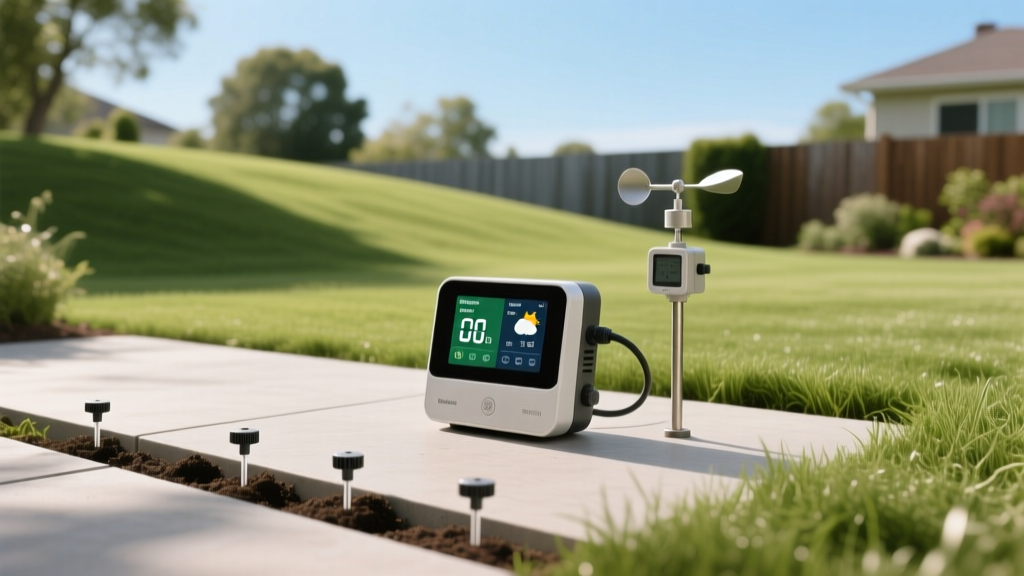
Smart Irrigation Controllers: Maximize Water Savings
Robert HayesPublished
The Evolution of Lawn Care: Why Upgrade to Smart Irrigation?
For decades, homeowners have relied on mechanical or basic digital sprinkler timers to maintain their lawns and gardens. These traditional 'set it and forget it' systems operate on rigid schedules, completely blind to the actual environmental conditions outside. They water your lawn during torrential downpours, waste precious resources during mild spring weeks, and often fail to provide enough moisture during peak summer heat waves. As the bridge between indoor smart home technology and outdoor landscaping continues to grow, smart irrigation controllers have emerged as a revolutionary solution for modern, eco-conscious homeowners.
Upgrading to a smart irrigation system is no longer just a luxury for tech enthusiasts; it is a practical, cost-effective strategy for sustainable landscape management. According to the EPA WaterSense program, replacing a standard clock timer with a WaterSense labeled smart irrigation controller can save the average home nearly 7,600 gallons of water annually. This massive reduction in water waste not only preserves vital local water resources but also translates directly into lower monthly utility bills.
How Smart Irrigation Controllers Work
Unlike traditional timers that rely on static countdowns, smart controllers dynamically adjust your watering schedules based on real-time data. They generally fall into two primary categories: weather-based controllers and soil moisture sensor controllers. Many premium models now combine both data sources for unparalleled precision.
Weather-Based Controllers (ET Controllers)
Weather-based controllers, often referred to as Evapotranspiration (ET) controllers, use local weather data to determine the exact amount of water your landscape needs. Evapotranspiration is the combined process of water evaporating from the soil surface and transpiring from plant leaves. These controllers connect to your home Wi-Fi network and pull hyper-local weather data from nearby meteorological stations or personal weather sensors. They factor in variables such as temperature, humidity, wind speed, solar radiation, and rainfall forecasts. If a rainstorm is predicted for Tuesday afternoon, the controller will automatically skip Tuesday morning's scheduled watering, preventing over-saturation and runoff.
Soil Moisture Sensor Controllers
While weather data is highly predictive, soil moisture sensors measure the actual conditions at the root zone. These systems utilize probes buried in the ground across different hydro-zones in your yard (e.g., a sunny front lawn versus a shaded garden bed). The sensors continuously monitor the volumetric water content in the soil. The controller will only trigger the sprinkler valves when the soil moisture drops below a predefined threshold. This method is exceptionally accurate for gardens with varied microclimates, ensuring that shade-loving plants are not drowned while sun-baked grass receives the hydration it desperately needs.
Comparing Irrigation Control Systems
To understand the value of a smart upgrade, it is helpful to compare the three main types of irrigation controllers available on the market today.
| Feature | Mechanical Timer | Basic Digital Timer | Smart Wi-Fi Controller |
|---|---|---|---|
| Average Cost | $30 - $60 | $50 - $120 | $150 - $350 |
| Weather Adaptability | None | None (Manual rain delay only) | Automatic (Real-time ET & forecasts) |
| Remote Access | No | No | Yes (via Smartphone App) |
| Zone Customization | Limited (Global runtime) | Moderate (Per-zone runtime) | Advanced (Soil type, slope, sun/shade) |
| Water Savings | 0% (Often over-waters) | 0% - 5% | 20% - 50% |
Top Smart Irrigation Brands to Consider
When shopping for a smart controller, several industry leaders stand out for their reliability, ease of use, and robust feature sets.
- Rachio 3 Smart Sprinkler Controller: Widely considered the gold standard for residential smart irrigation, the Rachio 3 features Weather Intelligence Plus, which automatically skips watering based on rain, freeze, wind, and saturation. It integrates seamlessly with almost all smart home ecosystems and offers an intuitive app interface.
- Orbit B-hyve XR: A fantastic option for homeowners who want both indoor and outdoor control. The B-hyve XR can manage both your sprinkler system and indoor smart water valves, providing whole-home leak detection and water management from a single dashboard.
- Hunter Hydrawise: Favored by landscaping professionals, Hunter's Hydrawise platform offers predictive watering based on local weather stations and provides detailed water usage reports. It is highly durable and designed to withstand harsh outdoor conditions when mounted outside.
Installation and Setup: A Step-by-Step Guide
One of the most common misconceptions about smart irrigation is that installation requires a licensed electrician or irrigation specialist. In reality, replacing an old timer with a smart controller is a straightforward DIY project that typically takes less than an hour.
- Power Down: Locate your current irrigation controller and unplug it from the wall outlet. For hardwired units, turn off the corresponding circuit breaker to ensure safety.
- Document the Wiring: Before removing any wires, take a clear, well-lit photograph of the existing wiring configuration. Pay special attention to the 'COM' (common) wire and the numbered zone wires.
- Label and Disconnect: Use the stickers provided with your new smart controller to label each wire according to its terminal number. Loosen the terminal screws and gently remove the wires.
- Mount the New Controller: Use the included mounting bracket to secure the new smart controller to the wall. If you are mounting it outdoors, ensure you use a weatherproof enclosure.
- Reconnect the Wiring: Insert the labeled wires into their corresponding terminals on the new controller. Ensure the 'COM' wire is securely in the common terminal, as this completes the electrical circuit for the sprinkler valves.
- Power Up and Connect: Plug in the new controller. Download the manufacturer's app on your smartphone, connect the device to your 2.4GHz Wi-Fi network, and follow the on-screen setup wizard.
- Configure Your Zones: Input specific data for each zone, including plant type (grass, shrubs, trees), soil type (clay, loam, sand), sun exposure, and slope. The algorithm will use this data to calculate optimal watering durations.
Calculating Your ROI and Water Savings
The financial argument for smart irrigation is compelling, especially in regions with tiered water pricing or frequent drought restrictions. The U.S. Department of Energy highlights that water-efficient landscaping and automated irrigation are key components of reducing a home's overall environmental footprint and utility costs.
Consider a household in a dry climate that spends $80 per month on water during the peak summer irrigation season. A traditional timer might overwater by 30% due to static scheduling. By installing a $250 smart controller that reduces water usage by 40%, the homeowner could save $32 per month during the watering season. Over a 5-month irrigation season, that equates to $160 in annual savings. In this scenario, the smart controller pays for itself in less than two years, while simultaneously promoting a healthier, deeper-rooted lawn that is more resistant to drought and disease.
Integrating with Your Broader Smart Home Ecosystem
The true power of smart irrigation is realized when it is integrated into your broader home automation ecosystem. Modern controllers support platforms like Amazon Alexa, Google Home, Apple HomeKit, and IFTTT (If This Then That). According to research from Penn State Extension, leveraging these integrations allows for highly customized, automated landscape care that requires zero daily intervention from the homeowner.
Here are a few advanced automation routines you can implement:
- Geofencing Triggers: Set up a routine that pauses your sprinkler system if your smartphone's GPS detects that you are hosting a backyard barbecue or if your kids are playing in the yard.
- Smart Rain Gauges: While Wi-Fi weather data is excellent, pairing your controller with a physical smart rain gauge or soil moisture sensor via IFTTT ensures hyper-local accuracy, overriding the schedule the second a localized micro-burst drops half an inch of rain on your property.
- Voice Commands: Use voice assistants to manually trigger specific zones for maintenance. Simply say, 'Hey Google, run the front lawn zone for three minutes,' to test a sprinkler head without needing to open the app or walk out to the controller.
- Seasonal Shift Automation: Link your irrigation system to your smart thermostat or outdoor temperature sensors. As autumn approaches and nighttime temperatures consistently drop below 50°F, the system can automatically initiate a winterization protocol, shutting down the water supply and preparing the system for the freeze.
Conclusion
Transitioning from a legacy sprinkler timer to a smart irrigation controller is one of the most impactful upgrades you can make to your home's exterior. It bridges the gap between indoor convenience and outdoor sustainability, ensuring your garden-to-table vegetables, lush lawns, and ornamental flower beds receive precisely the amount of water they need—no more, no less. By leveraging real-time weather data, soil science, and smart home automation, you are not just saving time and money; you are actively participating in vital water conservation efforts while cultivating a healthier, more resilient landscape.
