Home & Garden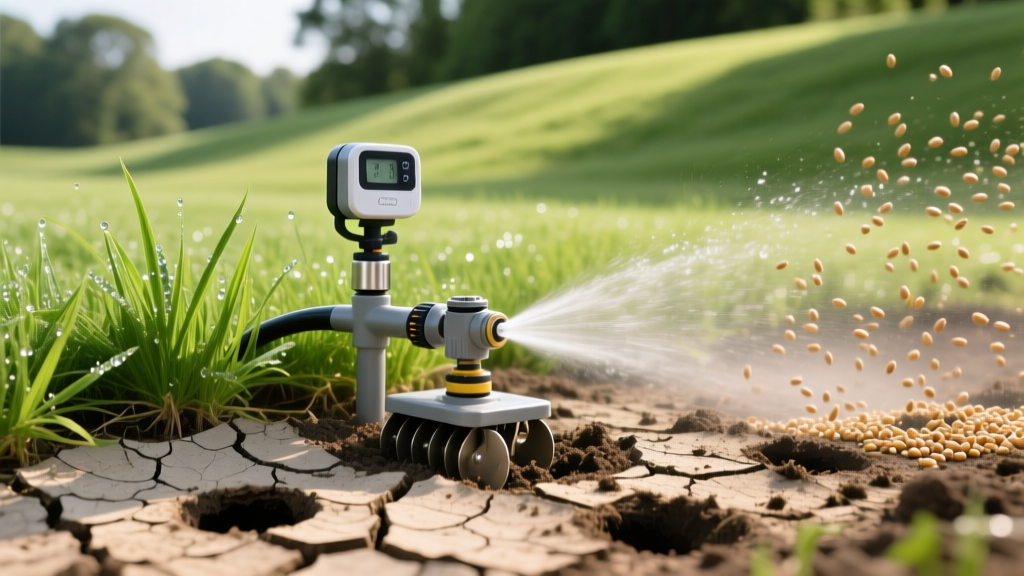
Revive Your Lawn: Smart Irrigation and Recovery Tips
Anna KowalskiPublished
Assessing Lawn Damage: Dead vs. Dormant
Before investing time and money into lawn renovation, it is critical to determine whether your brown, patchy grass is dead or simply dormant. Cool-season grasses like Kentucky Bluegrass and Tall Fescue have natural survival mechanisms that allow them to enter a state of dormancy during extreme heat or prolonged drought. During dormancy, the grass blades turn brown to conserve moisture, but the crown and root system remain alive just below the soil surface.
To perform the 'tug test,' grab a handful of brown grass near the base and pull gently. If the grass pulls up easily with little to no root resistance, it is likely dead or suffering from severe grub damage. If it resists and stays firmly anchored in the soil, the grass is dormant and can be revived with proper hydration and care. According to experts at UC ANR Turfgrass Management, most healthy lawns can survive up to three to four weeks of dormancy without permanent damage, but pushing beyond this threshold requires immediate intervention.
Step 1: Core Aeration and Soil Amendment
Drought-stressed lawns often suffer from severe soil compaction. When the soil bakes in the sun, it forms a hard crust that repels water, meaning any irrigation or rainfall simply runs off into the street rather than reaching the root zone. Core aeration is the most effective way to break up this compaction.
Rent a walk-behind core aerator from a local hardware store (typically costing between $70 and $90 for a half-day rental). Make two passes over your lawn: one horizontally and one vertically, ensuring the machine pulls out 2-to-3-inch soil plugs. Leave the plugs on the lawn; they will break down naturally and return valuable microbes to the surface. Immediately after aerating, apply a thin layer (about 1/4 inch) of high-quality organic compost as a topdressing. This compost will fall into the aeration holes, improving soil structure, increasing water retention, and providing a nutrient-rich seedbed for the next phase of recovery.
Step 2: Upgrading to Smart Irrigation for Precision Recovery
Reviving a damaged lawn requires consistent, deep watering, but traditional timer-based sprinkler systems often lead to water waste and shallow root growth. Upgrading to a Wi-Fi-enabled smart irrigation controller is one of the most impactful home and garden tech integrations you can make. Devices like the Rachio 3 or Rain Bird ESP-TM2 connect to local weather stations via Wi-Fi, automatically adjusting watering schedules based on real-time evapotranspiration rates, humidity, and incoming rain forecasts.
The EPA WaterSense program notes that Weather-Based Irrigation Controllers (WBICs) can save the average home nearly 7,600 gallons of water annually while keeping landscapes significantly healthier. For a recovering lawn, program your smart controller to use the 'Cycle and Soak' method. Instead of running a zone for 30 continuous minutes—which causes runoff on compacted soil—program three 10-minute cycles with an hour of soak time in between. This allows moisture to penetrate deeply into the aeration holes, encouraging roots to grow downward rather than staying near the surface.
Step 3: Integrating Soil Moisture Sensors
While smart controllers rely on weather data, integrating a wireless soil moisture sensor provides ground-truth data directly from your root zone. Sensors like the Hunter Soil-Clik or Toro Precision Soil Sensor are buried about 4 inches deep in a representative zone of your lawn. They communicate directly with your smart controller to override scheduled watering if the soil already holds adequate moisture. This prevents the 'overwatering trap' that many homeowners fall into when trying to aggressively revive brown patches, which can inadvertently invite fungal diseases like Pythium blight or brown patch.
Step 4: Strategic Overseeding and Fertilization
Once the soil is aerated and the irrigation system is calibrated, it is time to fill in the dead patches with new seed. According to guidelines published by Penn State Extension on Lawn Renovation, selecting the right seed cultivar is paramount for long-term resilience. For high-traffic, drought-prone areas, Turf-Type Tall Fescue is highly recommended due to its deep root system and heat tolerance. For shady areas, opt for a Fine Fescue blend.
Use a broadcast spreader to apply seed at a rate of 3 to 5 pounds per 1,000 square feet for overseeding (or 8 to 10 pounds if establishing a completely bare area). Immediately follow up with a high-phosphorus starter fertilizer (such as a 10-18-10 NPK ratio). Phosphorus is crucial for rapid root development in new seedlings. Keep the top inch of soil consistently moist until the seeds germinate, which typically takes 7 to 14 days depending on soil temperatures.
Lawn Recovery Timeline and Maintenance Schedule
Patience and precise scheduling are the keys to a successful lawn renovation. Use the following timeline to coordinate your smart home irrigation settings with manual landscape maintenance.
| Recovery Phase | Timeline | Smart Irrigation Setting | Manual Action Required |
|---|---|---|---|
| Initial Hydration & Germination | Days 1-14 | 2x daily, 10 mins (Cycle & Soak) | Hand-water stubborn brown spots; avoid mowing. |
| Root Establishment | Days 15-30 | Every other day, 20 mins (Deep soak) | First mow when new grass hits 3.5 inches; bag clippings. |
| Hardening Off | Days 31-45 | 2x per week, 30 mins (Deep soak) | Apply slow-release nitrogen fertilizer; resume normal mowing. |
| Long-Term Maintenance | Day 46+ | Weather-based adaptive scheduling | Monitor soil moisture sensor; aerate annually. |
Long-Term Energy and Water Efficiency
Bridging the gap between outdoor landscaping and indoor smart home management ensures your lawn recovery efforts are sustainable. Connect your smart irrigation hub to your home's voice assistant or smart home ecosystem (like Apple HomeKit, Google Home, or Amazon Alexa). You can create routines that pause the sprinkler system if your smart weather station detects high wind speeds, which prevents water from blowing onto driveways and wasting resources.
Additionally, consider the energy-water nexus of your landscape. By maintaining a dense, healthy lawn through smart irrigation and proper soil biology, you naturally cool the microclimate around your home. A healthy, transpiring lawn can reduce the ambient temperature of your immediate outdoor living spaces by up to 10 degrees compared to bare soil or artificial turf, indirectly reducing the cooling load on your home's HVAC system during the peak of summer. Combine this with strategic placement of deciduous shade trees on the south and west sides of your property, and your garden will work in tandem with your home's energy efficiency goals for years to come.
