
Landscaping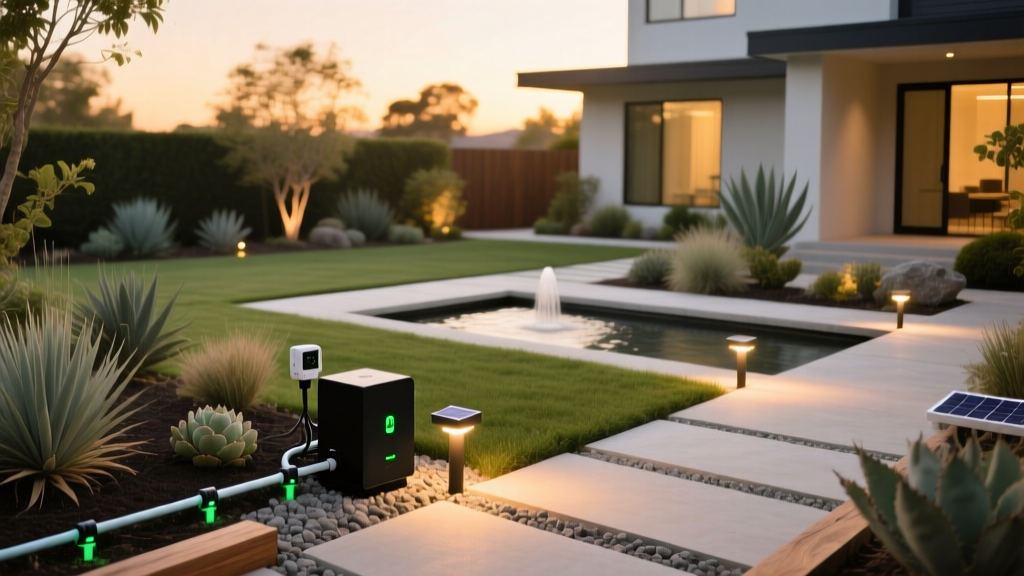
Smart Landscape Automation: Irrigation and Lighting Guide
James MillerPublished
The Rise of the Connected Yard
The concept of the smart home has officially spilled over the threshold and into the garden. Modern landscaping is no longer just about selecting the right soil, mulch, and plant varieties; it is about integrating intelligent technology to manage resources efficiently and elevate your outdoor living experience. By automating your landscape's irrigation and lighting systems, you can achieve a lush, vibrant yard while significantly reducing water waste and energy consumption. Whether you are looking to upgrade an existing garden bed or design a new outdoor living space from scratch, incorporating smart home automation into your landscaping plan is a high-ROI investment that pays dividends in both curb appeal and utility savings.
Smart Irrigation Controllers: Precision Hydration
Traditional sprinkler timers are notoriously inefficient, often watering the lawn during rainstorms or failing to adjust for seasonal temperature shifts. Smart irrigation controllers solve this by connecting to local weather stations and utilizing evapotranspiration (ET) data to calculate exactly how much water your specific landscape needs. According to the Environmental Protection Agency (EPA) WaterSense program, upgrading to a smart irrigation controller can save the average home up to 7,600 gallons of water annually. These devices use Wi-Fi to pull hyper-local weather forecasts, automatically skipping watering cycles when rain is imminent or delaying irrigation during freeze warnings to prevent hazardous ice buildup on walkways.
Top Smart Sprinkler Controllers for Landscaping
- Rachio 3 Smart Sprinkler Controller: Priced around $230 for an 8-zone system, the Rachio 3 is widely considered the gold standard for smart irrigation. It features advanced weather intelligence, soil type customization, and seamless integration with Apple HomeKit, Amazon Alexa, and Google Assistant. Its proprietary Weather Intelligence Plus automatically adjusts for rain, wind, freeze, and even seasonal shifts.
- Orbit B-hyve Smart Indoor/Outdoor Sprinkler Controller: A more budget-friendly option at approximately $100 for a 6-zone indoor model (or $130 for the weather-resistant outdoor model). The B-hyve offers robust app control, water usage reporting, and EPA WaterSense certification, making it an excellent entry point for automated landscape hydration.
Installation and Network Requirements
Before purchasing a smart controller, verify your outdoor Wi-Fi coverage. Most smart irrigation devices operate strictly on 2.4 GHz Wi-Fi networks, which offer better range and wall-penetration than 5 GHz bands. If your sprinkler manifold is located far from your router, consider installing a weatherproof Wi-Fi extender or a mesh network node near the exterior wall. During installation, map your existing 18-gauge irrigation wiring carefully. Label each zone wire with waterproof tape corresponding to your physical sprinkler heads (e.g., Zone 1: Front Rotor, Zone 2: Drip Line Garden Bed) to ensure accurate digital mapping within the companion app.
Smart Landscape Lighting: Security Meets Ambiance
Landscape lighting transforms your property after dark, highlighting architectural features, illuminating pathways, and deterring intruders. However, leaving lights on all night wastes electricity and contributes to light pollution. Smart outdoor lighting automation allows you to sync your fixtures with the sun's schedule, adjust color temperatures, and trigger security routines. The U.S. Department of Energy highlights that combining LED fixtures with advanced smart controls drastically reduces outdoor energy consumption while extending the lifespan of the bulbs.
Transformer-Level vs. Bulb-Level Control
When automating low-voltage (12V) landscape lighting, you have two primary approaches:
- Smart Transformers: Brands like WAC Lighting and VOLT offer app-controlled transformers. This allows you to dim the entire 12V system, set schedules, and monitor wattage draw from a single hub. It is ideal for integrated LED fixtures where the bulb cannot be swapped.
- Smart Outdoor Plugs & Hubs: If you are using standard 120V patio string lights, smart pathway bollards, or a traditional transformer plugged into an exterior GFCI outlet, a smart outdoor plug (such as the Kasa Smart Outdoor Plug or Wyze Plug Outdoor) is the most cost-effective solution. These cost between $15 and $30 and allow you to group multiple fixtures into single automation routines.
Lighting Design Metrics for Automation
For pathway lighting, aim for fixtures that output 100 to 200 lumens with a warm color temperature of 2700K to 3000K. This mimics moonlight and reduces glare. For uplighting trees or architectural hardscaping, use directional LED spotlights ranging from 300 to 500 lumens. By integrating these with smart dimmers, you can program the lights to operate at 100% brightness from sunset to 10:00 PM, dim to 20% for ambient security overnight, and turn off completely at dawn.
Designing Automated Landscape Routines
The true power of smart landscaping lies in cross-system automation using platforms like IFTTT (If This Then That), Apple HomeKit, or Samsung SmartThings. Here are three advanced routines to implement:
- The 'Vacation Mode' Security Routine: Link your smart irrigation and lighting to your home security system. When you arm your system in 'Away' mode, the landscape lights will randomize their on/off cycles to simulate occupancy, while the irrigation controller will restrict watering to early morning hours to avoid creating muddy footprints for potential intruders.
- Wind and Evaporation Guard: Set a geofenced weather trigger. If local wind speeds exceed 15 mph, the smart controller automatically pauses sprinkler zones to prevent water from blowing onto driveways and hardscaping, saving water and preventing concrete staining.
- Sunset Ambiance Sync: Link your smart landscape lighting to a local sunset API. As the sun dips below the horizon, your patio and garden bed uplighting will slowly fade on over a 10-minute period, creating a seamless transition from day to night without requiring manual intervention.
Cost vs. ROI: Standard vs. Smart Landscaping
While smart landscaping requires a higher upfront investment, the return on investment through utility savings and plant health is substantial. Below is a comparison of standard versus smart setups for an average 5,000 sq. ft. landscaped yard.
| Feature | Standard Setup | Smart Automated Setup | Estimated Annual Savings |
|---|---|---|---|
| Irrigation Controller | $45 (Basic Digital Timer) | $230 (Rachio 3 Smart Controller) | $150 - $250 (Water Bill Reduction) |
| Landscape Lighting | $60 (Mechanical Dial Timer) | $35 (Smart Outdoor Plug + LED) | $40 - $80 (Electricity Reduction) |
| Soil Moisture Mgmt | Manual Observation | Wireless Soil Sensor ($60) | Prevents $500+ plant replacement |
| Total Upfront Cost | ~$105 | ~$325 | System pays for itself in 12-18 months |
Furthermore, the Irrigation Association notes that smart controllers not only save water but also promote deeper, healthier root systems by encouraging deep, infrequent watering cycles tailored to real-time soil conditions, reducing long-term landscape maintenance costs.
Step-by-Step Implementation Guide
Ready to upgrade your landscape? Follow this actionable checklist to ensure a smooth transition to a smart yard:
- Audit Your Current Infrastructure: Test all existing sprinkler valves and 12V lighting wires. Repair any leaks or broken heads before connecting them to a smart controller, as automation will only amplify existing inefficiencies.
- Map Your Zones and Sun Exposure: Divide your yard into hydro-zones. Group plants with similar water needs (e.g., turfgrass vs. drought-tolerant garden beds) on separate valves. Note which areas receive full sun versus deep shade to adjust smart watering durations accordingly.
- Install and Connect Hardware: Mount your smart controller in a weatherproof location. Ensure your GFCI outlets are tripped and reset properly before plugging in smart lighting transformers or outdoor plugs.
- Calibrate and Automate: Input your exact soil type (clay, loam, or sand) and plant types into the irrigation app. Set your lighting schedules to dynamic sunset/sunrise triggers rather than fixed clock times, ensuring your landscape is perfectly lit regardless of the season.
By embracing smart home automation in your landscaping design, you create a dynamic, responsive outdoor environment that conserves vital resources, secures your property, and looks stunning year-round with minimal manual effort.

