Home & Garden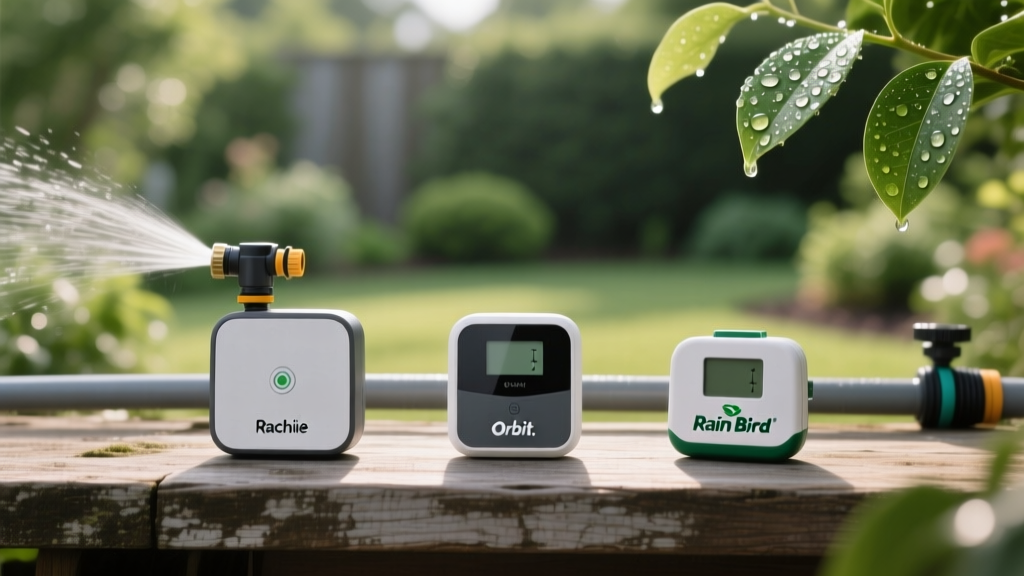
Best Smart Sprinkler Controllers: Rachio vs Orbit vs Rain Bird
Lisa ThompsonPublished
Bridging the Gap: Smart Home Tech Meets Lawn Care
The modern home garden is no longer just about soil, seeds, and manual labor. As smart home integration becomes a staple in indoor living, the technology is rapidly expanding outdoors. One of the most impactful upgrades you can make to your energy-efficient landscaping is replacing your outdated, timer-based irrigation clock with a smart sprinkler controller. These Wi-Fi-enabled devices bridge the gap between convenience and conservation, ensuring your lawn gets exactly the water it needs based on real-time hyperlocal weather data.
But with dozens of options on the market, which system deserves a spot on your garage wall? In this comprehensive product review and comparison, we are putting the industry heavyweights head-to-head: the Rachio 3, the Orbit B-hyve, and the Rain Bird ST8I-2.0. We will break down their features, pricing, smart home compatibility, and overall value to help you make an informed decision for your garden-to-table ecosystem and landscape maintenance.
Why Upgrade to a Smart Irrigation System?
Before diving into specific models, it is crucial to understand the environmental and financial benefits of smart irrigation. Traditional timers operate on a set schedule, completely ignoring recent rainfall, humidity levels, or upcoming freeze warnings. This leads to massive water waste and potential landscape damage.
According to the United States Environmental Protection Agency (EPA) WaterSense program, replacing a standard clock timer with a WaterSense labeled smart irrigation controller can save the average home nearly 7,600 gallons of water annually. Nationally, this could save over 390 billion gallons of water and $4.5 billion in water costs.
Beyond the EPA statistics, smart controllers offer unparalleled convenience. Whether you are adjusting your garden's drip irrigation from your office or setting up seasonal delays via voice commands, these devices put total control in the palm of your hand.
Top Smart Sprinkler Controllers Reviewed
1. Rachio 3 Smart Sprinkler Controller
The Rachio 3 is widely considered the gold standard in the smart irrigation market. Available in 8-zone ($229) and 16-zone ($279) configurations, it boasts a sleek, modern design that looks more like a high-end smart home hub than a utility device.
Key Features:
- Weather Intelligence Plus: Utilizes hyperlocal weather data from over 250,000 personal weather stations to automatically skip watering during rain, wind, or freezing conditions.
- Smart Home Integration: Flawless compatibility with Apple HomeKit, Amazon Alexa, Google Assistant, and IFTTT. It is the premier choice for users deeply embedded in the Apple ecosystem.
- Soil and Plant Customization: The app allows you to input specific soil types (e.g., clay, loam, sand), plant types, and sun exposure for each individual zone, calculating precise run times to prevent runoff.
Pros: Unmatched app interface, best-in-class smart home integration, highly accurate weather skipping.
Cons: Premium price point; the physical buttons on the unit are somewhat difficult to use without the app.
2. Orbit B-hyve Smart Indoor/Outdoor Sprinkler Controller
If you are looking for a budget-friendly workhorse, the Orbit B-hyve is a formidable contender. Priced around $109 for the 6-zone indoor model and $149 for the 12-zone version, it offers incredible value. Unlike the Rachio, the B-hyve is also available in a weather-resistant outdoor enclosure, eliminating the need for a separate waterproof box if your wiring is on the side of your house.
Key Features:
- WeatherSense Technology: Adjusts watering schedules based on local weather data, though it relies on broader regional airport weather stations rather than hyperlocal personal stations.
- Flow Meter Compatibility: When paired with Orbit's optional flow meters, the system can detect leaks and automatically shut off the water supply to prevent landscape flooding.
- Physical Dial Interface: Features a traditional physical dial and LCD screen, making it easier to operate manually if your Wi-Fi network goes down.
Pros: Excellent price-to-feature ratio, outdoor-rated options available, physical manual controls.
Cons: The app interface feels slightly dated compared to Rachio; lacks native Apple HomeKit support (requires IFTTT workarounds).
3. Rain Bird ST8I-2.0 Smart Indoor WiFi Sprinkler System Timer
Rain Bird is a legacy brand trusted by professional landscapers for decades. The ST8I-2.0 (approximately $115) represents their pivot into the smart home space. It is designed for the traditionalist who wants Wi-Fi connectivity without abandoning the familiar, heavy-duty build quality of legacy irrigation clocks.
Key Features:
- LNK2 WiFi Module: The Wi-Fi connectivity is handled by a removable module. If the module fails or you want to upgrade your network tech in five years, you only replace the module, not the entire controller.
- Contractor-Grade Durability: Features heavy-duty wiring terminals and a robust transformer that handles voltage fluctuations better than cheaper competitors.
- Simple App Integration: The Rain Bird app is straightforward, focusing on basic schedule overrides and seasonal adjust features rather than hyper-complex soil metrics.
Pros: Legendary hardware reliability, easy-to-replace Wi-Fi module, familiar setup for DIYers upgrading from older Rain Bird models.
Cons: Limited to 8 zones; smart features are basic compared to Rachio's predictive algorithms.
Feature Comparison Chart
| Feature | Rachio 3 | Orbit B-hyve | Rain Bird ST8I-2.0 |
|---|---|---|---|
| Starting Price | $229 (8-zone) | $109 (6-zone) | $115 (8-zone) |
| Max Zones | 16 | 24 | 8 |
| EPA WaterSense Certified | Yes | Yes | Yes |
| Weather Data Source | Hyperlocal (Personal Stations) | Regional (Airport Stations) | Local Forecast APIs |
| Apple HomeKit Support | Native | No | No |
| Manual Physical Controls | Limited (App preferred) | Full Dial & Screen | Full Buttons & Screen |
| Outdoor Enclosure Option | Sold Separately | Available Built-in | No (Indoor Only) |
Installation and Setup: What You Need to Know
Upgrading your irrigation controller is a highly manageable DIY garden project that typically takes 30 to 45 minutes. However, because you are dealing with electrical components, safety and precision are paramount.
Step-by-Step Wiring Guide
- Power Down: Always turn off the power to your existing irrigation controller at the circuit breaker. While the transformer steps the voltage down to 24V AC, working on live wires can cause sparks or short out your new controller's internal motherboard.
- Document Your Wiring: Before removing a single wire from your old controller, take a high-resolution, well-lit photograph of the terminal block. You will need to match the colored zone wires to the corresponding numbers on your new device.
- Mounting the New Unit: Most smart controllers are lighter than legacy models. Use a stud finder to locate a wall stud, or use heavy-duty drywall anchors. Ensure the unit is mounted at eye level (roughly 60 inches from the floor) for easy visibility and app pairing.
- Stripping and Seating Wires: Strip exactly 1/4 inch of insulation from the end of each wire. Insert them into the new terminal slots and tighten the set screws. Give each wire a gentle tug to ensure a solid connection. A loose 'Common' wire is the number one cause of multi-zone failure in DIY installations.
- Wi-Fi Pairing: Restore power at the breaker. Download the manufacturer's app and follow the on-screen prompts to connect the device to your 2.4GHz Wi-Fi network. (Note: Most smart home outdoor devices do not support 5GHz networks due to range limitations).
Calculating Your Return on Investment (ROI)
When evaluating the cost of these products, it is essential to factor in the long-term utility savings. Let us look at a practical cost-analysis scenario.
Assume your local water utility charges $5.00 per 1,000 gallons (including sewer and stormwater fees). If a traditional timer wastes 7,600 gallons a year through unnecessary watering during rain events, you are losing $38.00 annually. Over a five-year period, that is $190 in wasted water.
If you purchase the Orbit B-hyve for $109, the water savings alone will pay for the device in roughly 2.8 years. If you live in an area with tiered water pricing—where heavy usage pushes you into a more expensive cost bracket—or if you are subject to strict municipal watering restrictions and fines, the ROI timeline shrinks to a single season. Furthermore, preventing overwatering protects your garden-to-table vegetable patches from root rot and fungal diseases, saving you money on soil amendments and plant replacements.
Final Verdict: Which Controller is Right for Your Landscape?
Choosing the right smart sprinkler controller depends entirely on your specific landscaping needs, budget, and existing smart home ecosystem.
- Choose the Rachio 3 if: You want the absolute best predictive weather technology, you use Apple HomeKit, and you have a complex landscape with varied soil types and microclimates that require precise, zone-by-zone customization.
- Choose the Orbit B-hyve if: You are on a budget, need an outdoor-rated unit without buying extra accessories, or prefer having a physical dial to manually water the lawn when hosting a weekend backyard barbecue.
- Choose the Rain Bird ST8I-2.0 if: You are replacing an existing legacy Rain Bird system, value contractor-grade hardware reliability, and want a straightforward app experience without a steep learning curve.
By integrating one of these smart controllers into your seasonal home maintenance routine, you are not just upgrading your garden's health; you are taking a significant step toward sustainable, energy-efficient landscaping. Your lawn will thrive, your water bill will drop, and you will gain total control over your outdoor oasis right from your smartphone.
