Home & Garden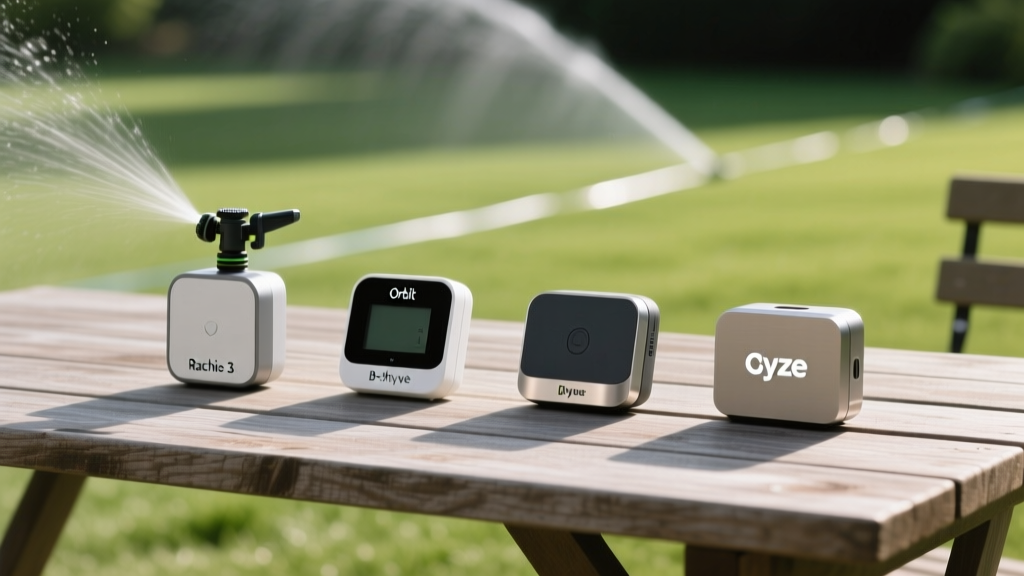
Top Smart Sprinkler Controllers: Rachio vs Orbit vs Wyze
Sarah ChenPublished
Bridging the Gap: Smart Home Tech Meets the Lawn
Integrating smart home technology into your outdoor living space is one of the most effective ways to boost your property's energy efficiency and landscape health. While smart thermostats and indoor lighting get most of the attention, the modern smart sprinkler controller is the unsung hero of home and garden maintenance. By replacing your outdated, dial-based irrigation timer with a Wi-Fi-enabled smart controller, you can seamlessly manage your garden's hydration from your smartphone, adapt to real-time weather changes, and significantly reduce your monthly water bill.
But with dozens of options on the market, which system actually delivers on its promises? In this comprehensive product review and comparison, we are putting three of the most popular smart irrigation controllers head-to-head: the premium Rachio 3, the versatile Orbit B-hyve, and the budget-friendly Wyze Sprinkler Controller. We will break down costs, features, installation requirements, and long-term water savings to help you choose the perfect brain for your lawn's irrigation system.
Why Upgrade to a Smart Irrigation Controller?
Traditional sprinkler timers operate on rigid, pre-set schedules. They will water your lawn during a torrential downpour or during the peak heat of the afternoon, leading to massive water waste and shallow root growth. According to the EPA WaterSense program, standard irrigation controllers can waste up to 50% of the water they use due to wind, evaporation, and runoff.
Smart controllers utilize local weather data, soil type parameters, and evapotranspiration (ET) rates to automatically adjust your watering schedule. The EPA notes that upgrading to a Weather-Based Irrigation Controller (WBIC) can save the average home nearly 7,600 gallons of water annually. Furthermore, many local municipalities offer utility rebates ranging from $50 to $150 for installing EPA WaterSense-certified smart controllers, effectively cutting your upfront hardware costs in half.
The Contenders: Feature and Price Breakdown
1. Rachio 3 Smart Sprinkler Controller (The Premium Pick)
The Rachio 3 has long been considered the gold standard in smart irrigation. Priced at approximately $229 for the 8-zone model and $279 for the 16-zone model, it sits at the top of the market. However, its premium price tag is justified by its unparalleled software experience and deep smart home integrations.
- Weather Intelligence Plus: Rachio's proprietary algorithm doesn't just look at rain; it factors in wind speed, freeze conditions, and seasonal shifts to create hyper-local watering schedules.
- Smart Home Integration: It works flawlessly with Apple HomeKit, Amazon Alexa, Google Assistant, Samsung SmartThings, and IFTTT. You can easily trigger your sprinklers via voice or tie them to a soil moisture sensor.
- Design & Build: The sleek, minimalist white design is meant to be mounted in a garage or basement. If you need to mount it outside, you will need to purchase a separate weatherproof enclosure (approx. $30).
Best For: Tech enthusiasts who want deep smart home integration, highly customized zone scheduling (including cycle-and-soak for clay soils), and the most reliable weather data on the market.
2. Orbit B-hyve Smart Indoor/Outdoor Sprinkler Controller (The Versatile Pick)
Orbit's B-hyve line offers incredible versatility, particularly for homeowners who need to mount their controller on an exterior wall or fence. The 6-zone indoor model retails for about $109, while the 12-zone outdoor model (which includes a built-in weatherproof case and lock) costs around $179.
- WeatherSense Technology: B-hyve uses local weather station data to adjust watering times, though its algorithm is slightly less granular than Rachio's when it comes to micro-climate adjustments.
- Manual Override Dial: Unlike the Rachio, the B-hyve retains a physical dial and digital screen on the unit. This is a massive plus for family members or landscapers who prefer to make manual adjustments without opening an app.
- Outdoor Ready: The outdoor model is UV-resistant and waterproof right out of the box, saving you the cost and hassle of buying a separate enclosure.
Best For: Homeowners who need an outdoor-mounted controller, prefer having a physical screen on the device, and want a mid-tier price point without sacrificing core smart features.
3. Wyze Sprinkler Controller (The Budget Pick)
Wyze has built a reputation for disrupting the smart home market with aggressively priced hardware, and their Sprinkler Controller is no exception. At just $99 for an 8-zone model, it is the most affordable entry point into smart irrigation. Despite the low cost, it punches well above its weight class in terms of app design and basic functionality.
- EPA WaterSense Certified: Despite its budget price, the Wyze controller has earned the EPA's WaterSense certification, ensuring it meets strict water-efficiency criteria.
- App Ecosystem: If you already use Wyze cameras or sensors, the sprinkler controller integrates seamlessly into the same app, allowing for unified automation routines.
- Limitations: The weather data integration is more basic than Rachio or Orbit. It handles rain delays and freeze skips well, but lacks the advanced soil-type absorption rate calculations found in premium models.
Best For: Budget-conscious DIYers, smaller lawns with basic watering needs, and existing Wyze ecosystem users who want a simple, no-fuss upgrade from a mechanical timer.
Side-by-Side Comparison Chart
| Feature | Rachio 3 | Orbit B-hyve | Wyze Sprinkler |
|---|---|---|---|
| Starting Price | $229 (8-zone) | $109 (6-zone indoor) | $99 (8-zone) |
| EPA WaterSense Certified | Yes | Yes (Select models) | Yes |
| Weather Data Granularity | Excellent (Hyper-local) | Very Good | Good (Basic delays) |
| On-Device Manual Controls | App / Buttons only | Physical Dial & Screen | App / Basic Buttons |
| Smart Home Integration | Alexa, Google, HomeKit, IFTTT | Alexa, Google | Alexa, Google, Wyze App |
| Outdoor Mounting | Enclosure sold separately | Available w/ built-in case | Enclosure sold separately |
| Wi-Fi Requirement | 2.4 GHz only | 2.4 GHz only | 2.4 GHz only |
Installation and Setup: What to Expect
One of the biggest misconceptions about smart sprinkler controllers is that they require professional installation. In reality, if you can use a screwdriver and take a photo with your smartphone, you can install any of these three units in about 30 to 45 minutes.
Step-by-Step Installation Guide
- Safety First: Locate your irrigation system's dedicated circuit breaker and turn off the power. Verify the power is off by trying to run a manual zone on your old controller.
- Document the Wiring: Before removing a single wire, take a clear, well-lit photograph of your existing controller's wiring terminals. You will typically see a "C" or "COM" wire (the common wire) and several numbered wires (zones 1 through 8+).
- Label and Remove: Use the sticker labels provided in the box to tag each wire. Loosen the terminal screws and remove the old backplate.
- Mount the New Backplate: Feed the 18-gauge multi-conductor irrigation wires through the center hole of the new smart controller's backplate and screw it into your wall studs or drywall anchors.
- Reconnect the Wires: Insert the common wire into the "C" terminal and the zone wires into their corresponding numbered slots. Ensure no stray copper strands are touching adjacent terminals, which can cause a short circuit.
- Power and Pair: Turn the breaker back on. Download the manufacturer's app and follow the on-screen prompts to connect the device to your home Wi-Fi.
Crucial Networking Note: All three of these controllers require a 2.4 GHz Wi-Fi network. They do not support 5 GHz bands. If you have a mesh router that combines both bands under one name, you may need to temporarily separate them in your router settings or stand near the router with an older 2.4 GHz-only device to bridge the connection during setup.
Calculating Your ROI and Water Savings
Does the investment actually pay for itself? According to data compiled by the City of Austin Water Department, homes that switch from traditional clock timers to smart weather-based controllers see an average reduction in outdoor water use of 20% to 30%.
Let's break down the math for an average suburban home:
- Annual Outdoor Water Use: ~50,000 gallons
- Average Cost of Water: $5.00 per 1,000 gallons (varies heavily by municipality)
- Annual Outdoor Water Cost: $250
- Smart Controller Savings (25%): $62.50 per year
Based purely on water bill reductions, a $99 Wyze controller pays for itself in roughly 1.5 years. However, the true ROI accelerates when you factor in local utility rebates. Many regional authorities, such as the Southwest Florida Water Management District, offer rebates that can cover up to 100% of the purchase price for WaterSense-labeled controllers. Always check your local water provider's conservation portal before purchasing; you might get your Rachio 3 entirely reimbursed after installation.
Final Verdict: Which Controller is Right for Your Lawn?
Choosing the right smart sprinkler controller depends entirely on your budget, your mounting location, and how deeply you want to integrate your landscape with your indoor smart home ecosystem.
- Choose the Rachio 3 if you want the absolute best software, hyper-local weather tracking, and seamless Apple HomeKit or IFTTT integration. It is the ultimate set-it-and-forget-it tool for lawn care purists.
- Choose the Orbit B-hyve if your controller must be mounted outdoors on a fence or exterior wall, or if you share your home with family members who prefer twisting a physical dial over using a smartphone app.
- Choose the Wyze Sprinkler Controller if you are on a strict budget, have a relatively simple lawn layout, and want an easy, EPA-certified entry point into smart landscaping without breaking the bank.
Upgrading your irrigation controller is one of the highest-impact weekend DIY projects you can undertake. Not only will you enjoy a lusher, healthier garden-to-table landscape, but you will also gain the peace of mind knowing your home is conserving one of our most vital natural resources.
