Home & Garden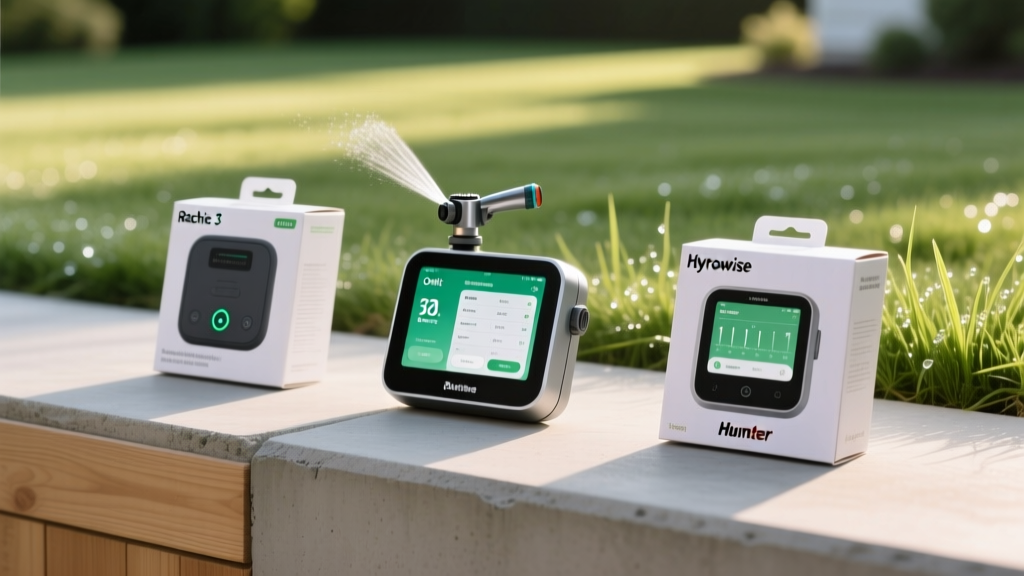
Top Smart Sprinkler Controllers: Rachio, Orbit & Hunter Compared
James MillerPublished
The Evolution of Lawn Care: Smart Irrigation
Watering your lawn should not feel like a second job, nor should it drain your wallet and local water resources. Traditional timer-based sprinkler systems operate on rigid schedules, blindly watering your grass whether it is experiencing a drought or a torrential downpour. This inefficiency leads to shallow root growth, fungal diseases, and massive water waste. According to the Environmental Protection Agency (EPA) WaterSense program, the average American home wastes nearly 30,000 gallons of water annually from leaks and inefficient outdoor irrigation systems alone.
Enter the smart sprinkler controller. By bridging the gap between outdoor landscaping and smart home integration, these devices use real-time weather data, soil moisture levels, and evapotranspiration rates to automate your watering schedule. In this comprehensive product review and comparison, we evaluate three of the most popular smart irrigation controllers on the market: the Rachio 3, the Orbit B-hyve XR, and the Hunter Hydrawise Pro-HC. Whether you are a tech-savvy homeowner or a landscaping professional, this guide will help you choose the right brain for your sprinkler system.
Why Upgrade to a Smart Sprinkler Controller?
Before diving into specific models, it is essential to understand the tangible benefits of upgrading from a standard dial timer to a Wi-Fi-enabled smart controller:
- Water Conservation and Cost Savings: Smart controllers automatically skip watering during rain, freezing temperatures, or high winds. Most users see a 20% to 50% reduction in their outdoor water usage.
- Healthier Landscapes: By utilizing cycle-and-soak methods, these controllers prevent runoff and encourage deep root growth, making your lawn more drought-resistant.
- Remote Management: Adjust your zones from your smartphone while on vacation, ensuring your garden-to-table vegetable beds get exactly what they need without overwatering.
- Utility Rebates: Because they are EPA WaterSense certified, many local water municipalities offer rebates ranging from $50 to $150 for installing a smart controller.
Top Smart Irrigation Controllers Reviewed
1. Rachio 3 Smart Sprinkler Controller (8-Zone)
The Rachio 3 is widely considered the gold standard for residential smart irrigation. Its standout feature is Weather Intelligence Plus, which utilizes hyper-local weather data to make micro-adjustments to your schedule. The app interface is incredibly intuitive, walking you through a setup process that asks about your soil type, sun exposure, and sprinkler head type for each individual zone.
Pros:
- Best-in-class mobile app with an easy-to-read dashboard.
- Seamless integration with smart home ecosystems (Alexa, Google Assistant, Apple HomeKit, and IFTTT).
- Highly accurate hyper-local weather skipping.
Cons:
- Indoor use only; requires a weatherproof enclosure if mounted outside.
- Does not support master valves or flow meters natively.
Cost & Specs: Retailing around $229 for the 8-zone model, it connects exclusively to 2.4GHz Wi-Fi networks. Installation typically takes 30 minutes using a smartphone-guided wiring diagram.
2. Orbit B-hyve XR Smart Indoor/Outdoor Controller (16-Zone)
Orbit's B-hyve XR is a robust, versatile contender that offers excellent value, especially for larger properties requiring up to 16 zones. Unlike the Rachio 3, the B-hyve XR is rated for both indoor and outdoor mounting, featuring a built-in weather-resistant case and a physical locking mechanism to prevent tampering.
Pros:
- WeatherSense technology provides highly effective weather-based adjustments.
- Durable outdoor enclosure included in the box.
- Supports master valves and pump start relays, making it suitable for well-water systems.
Cons:
- The mobile app is slightly more cluttered and less intuitive than Rachio's.
- Smart home integrations are limited primarily to Alexa and Google Assistant.
Cost & Specs: Priced at approximately $279 for the 16-zone version, it is a cost-effective solution for expansive lawns. It requires a strong 2.4GHz Wi-Fi signal at the mounting location.
3. Hunter Hydrawise Pro-HC Controller (16-Zone)
Hunter is a legendary name in professional landscaping, and the Pro-HC with Hydrawise software brings commercial-grade reliability to the residential market. The Hydrawise platform relies on professional-grade weather forecasting and offers granular control over irrigation parameters, making it a favorite among lawn care enthusiasts and professionals.
Pros:
- Supports flow meters to detect leaks and broken pipes, automatically shutting off zones to prevent flooding.
- Heavy-duty, commercial-grade construction suitable for harsh outdoor environments.
- Advanced reporting and water usage analytics.
Cons:
- Steeper learning curve; the software is complex for casual users.
- Premium weather data and advanced features sometimes require an ongoing software subscription.
Cost & Specs: At roughly $320 for the 16-zone model, it is the most expensive on this list, but the inclusion of flow meter support justifies the premium for high-end landscapes.
Feature-by-Feature Comparison Chart
| Feature | Rachio 3 (8-Zone) | Orbit B-hyve XR (16-Zone) | Hunter Pro-HC (16-Zone) |
|---|---|---|---|
| Average Cost | $229 | $279 | $320 |
| Weather Intelligence | Advanced (Local Weather) | Advanced (WeatherSense) | Advanced (Hydrawise) |
| Mounting | Indoor Only | Indoor / Outdoor | Indoor / Outdoor |
| EPA WaterSense | Yes | Yes | Yes |
| Smart Home Integration | Alexa, Google, HomeKit, IFTTT | Alexa, Google | Alexa, Google |
| Flow Meter Support | No | No | Yes |
| Master Valve / Pump | No | Yes | Yes |
Installation and Setup: What to Expect
Replacing an old irrigation controller is a highly manageable DIY project that typically takes 45 to 60 minutes. Here is an actionable step-by-step guide to ensure a safe and successful installation:
- Safety First: Turn off the power to your existing controller at the main circuit breaker. Unplug the old transformer.
- Document Your Wiring: Before removing a single wire, take a clear, well-lit photograph of your existing terminal board. Most systems use 18-gauge multi-strand wire, with a common white wire and colored wires for each zone.
- Mount the New Backplate: Use the provided template to drill new holes if necessary. Ensure the location is within reach of a standard 120V outlet and has a strong 2.4GHz Wi-Fi signal. (Pro tip: Smart home devices rarely connect to 5GHz networks; ensure your router's 2.4GHz band is enabled).
- Transfer the Wires: Strip about 1/4 inch of insulation from the ends of your 18-gauge wires if they are frayed. Insert them into the new controller's push-in terminals according to your reference photo.
- Weatherproof Connections: If mounting outdoors, ensure all exterior wire nuts are wrapped with waterproof silicone tape to prevent corrosion from humidity and sprinkler overspray.
- App Configuration: Power on the unit, download the respective app, and follow the on-screen prompts to connect to your Wi-Fi. Spend 15 minutes customizing each zone's soil type (e.g., clay vs. loam) and vegetation type (e.g., turf vs. garden-to-table raised beds).
Expert Tips for Maximizing Water Efficiency
A smart controller is only as effective as the physical sprinkler system it manages. The University of California Agriculture and Natural Resources (UC ANR) extension emphasizes that matching precipitation rates to soil infiltration rates is critical for preventing runoff and maximizing water efficiency. To get the most out of your new smart device, implement the following best practices:
"Irrigation scheduling should be based on the specific water needs of the plant and the soil's ability to absorb water. Applying water faster than the soil can infiltrate it leads to surface runoff, wasting water and carrying pollutants into storm drains." — UC ANR Irrigation Guidelines
- Upgrade to Rotary Nozzles: Standard spray heads apply water at roughly 1.5 inches per hour, which easily overwhelms clay soils. Swap them for multi-trajectory rotary nozzles that apply water at a slower 0.4 inches per hour, allowing deep soil penetration.
- Group by Hydrozone: Ensure your sprinkler valves are wired so that sunny turf areas, shaded garden beds, and drip-irrigated shrubs are on separate zones. The smart controller can then apply tailored watering schedules to each unique microclimate.
- Perform a Catch-Cup Test: Place flat-bottomed tuna cans or specialized catch cups across your lawn during a watering cycle. Measure the water depth to calibrate your app's 'Precipitation Rate' setting, ensuring the controller's algorithms have accurate baseline data.
Final Verdict: Which Controller is Right for Your Lawn?
Choosing the best smart sprinkler controller depends entirely on your landscape's complexity and your technical comfort level.
If you want a hassle-free, highly intuitive experience with top-tier smart home integrations and your controller will be mounted indoors (like in a garage), the Rachio 3 is the undisputed champion. It offers the best user experience for the everyday homeowner looking to set it and forget it.
If you have a larger property requiring up to 16 zones, an outdoor mounting location, or a well-water system requiring a pump start relay, the Orbit B-hyve XR provides exceptional versatility and value without breaking the bank.
Finally, if you are a landscaping enthusiast or professional who demands commercial-grade durability, advanced analytics, and the critical safety net of flow meter leak detection, the Hunter Hydrawise Pro-HC is worth the premium investment.
By upgrading to any of these EPA WaterSense-certified devices, you are not just automating a chore; you are actively conserving water, lowering your utility bills, and cultivating a healthier, more resilient outdoor living space.
