Home & Garden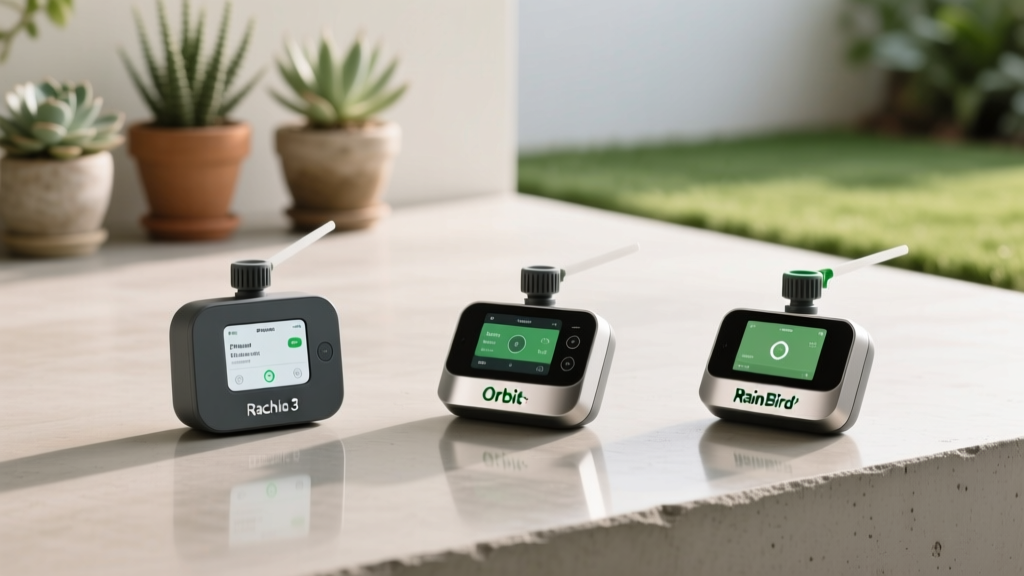
Smart Sprinkler Controller Review: Rachio vs Orbit
David ParkPublished
Upgrade Your Lawn Care: The Smart Irrigation Revolution
When it comes to energy-efficient landscaping and maintaining a lush, green lawn, the days of relying on a mechanical dial timer are officially over. Traditional irrigation controllers operate on rigid schedules, watering your lawn even when it is raining, leading to massive water waste, nutrient runoff, and inflated utility bills. Enter the smart sprinkler controller. By bridging the gap between outdoor maintenance and smart home integration, these Wi-Fi-enabled devices use real-time weather data to optimize your watering schedule. In this comprehensive product review and comparison, we evaluate the top three smart irrigation controllers on the market: the Rachio 3, the Orbit B-hyve, and the Rain Bird ARC8. Whether you are a tech-savvy gardener looking for deep smart home integration or a practical homeowner seeking a budget-friendly upgrade, this guide will help you choose the right tool for your garden-to-table lifestyle and seasonal home maintenance.
1. Rachio 3 Smart Sprinkler Controller: The Premium Tech Pick
The Rachio 3 has long been considered the gold standard in the smart irrigation space. Priced around $229 for the 8-zone model, it is an investment that pays for itself through unparalleled water conservation and ease of use. The standout feature of the Rachio 3 is its Weather Intelligence Plus platform. Unlike basic controllers that pull data from a single distant airport weather station, Rachio uses hyper-local weather data, integrating inputs from over 50,000 personal weather stations, soil moisture sensors, and satellite imagery to calculate exact evapotranspiration (ET) rates for your specific microclimate.
Pros:
- Hyper-local weather tracking ensures you never water during or immediately after a rainstorm.
- Seamless integration with Amazon Alexa, Google Assistant, Apple HomeKit, and IFTTT for advanced smart home automation.
- EPA WaterSense certified, making it eligible for local utility rebates that can cover up to 100% of the purchase price.
Cons:
- Premium price point compared to competitors.
- Lacks a physical interface on the device itself; all adjustments must be made via the smartphone app.
2. Orbit B-hyve Smart Sprinkler Controller: The Budget Champion
If you want smart watering capabilities without breaking the bank, the Orbit B-hyve is the undisputed value champion. The 6-zone indoor model retails for approximately $109, while the weather-resistant outdoor model sits around $189. Orbit utilizes its proprietary Weather Sense technology, which adjusts watering schedules based on local weather forecasts, site conditions (like soil type and slope), and seasonal variations.
One of the most significant advantages of the B-hyve is its user-friendly app and the inclusion of a physical LCD screen and push-button interface on the device itself. This is a massive plus for homeowners who may have spotty Wi-Fi coverage in their garage or basement where the controller is mounted.
Pros:
- Highly affordable entry point into smart irrigation.
- Built-in physical screen and manual controls for offline adjustments.
- Available in both indoor and rugged outdoor enclosures.
Cons:
- Smart home integration is somewhat limited compared to Rachio (works with Alexa and Google, but lacks native Apple HomeKit support).
- Weather data sources are slightly less granular than Rachio's hyper-local network.
3. Rain Bird ARC8 Smart Irrigation Controller: The Landscaper's Choice
Rain Bird is a legacy brand deeply trusted by professional landscapers, and the ARC8 (often integrated with their LNK Wi-Fi module) bridges the gap between commercial durability and residential smart features. Priced around $165 for an 8-zone system, the Rain Bird ARC8 appeals to those who prefer traditional, zone-by-zone programming logic enhanced by smart connectivity.
The Rain Bird app focuses heavily on seasonal adjust features and detailed zone management. It allows users to set specific watering windows and flow rates, which is ideal for gardeners utilizing drip irrigation systems alongside traditional spray heads for their garden-to-table vegetable patches.
Pros:
- Exceptional build quality and familiar programming logic for those upgrading from older Rain Bird models.
- Excellent support for complex setups, including drip irrigation and distinct micro-climates within the same yard.
- Reliable LNK Wi-Fi module connects easily to 2.4GHz networks.
Cons:
- The app interface feels slightly dated compared to the sleek, modern dashboards of Rachio and Orbit.
- Weather-based adjustments require manual triggering or specific schedule setups rather than fully autonomous daily recalculations.
Head-to-Head Feature Comparison
| Feature | Rachio 3 | Orbit B-hyve | Rain Bird ARC8 |
|---|---|---|---|
| Average Cost (8-Zone) | $229 | $189 (Outdoor) | $165 |
| Weather Intelligence | Hyper-local (Weather+) | Weather Sense | Seasonal Adjust |
| Physical Interface | None (App only) | LCD Screen & Buttons | Dial & Buttons |
| Smart Home Integration | Alexa, Google, HomeKit, IFTTT | Alexa, Google | Alexa (via IFTTT) |
| EPA WaterSense Certified | Yes | Yes | Yes (with LNK module) |
| Warranty | 3 Years | 6 Years | 3 Years |
DIY Installation: What to Expect
Upgrading to a smart controller is a highly accessible DIY garden project that typically takes less than 45 minutes. Here is a practical, step-by-step guide to ensure a smooth installation:
- Safety First: Turn off the power to your existing irrigation controller at the circuit breaker. Verify the power is off by attempting to turn on a manual zone.
- Document Your Wiring: Before disconnecting a single wire, take a clear, well-lit photograph of your existing controller's wiring terminal. Label each wire with painter's tape corresponding to its zone number.
- Mount the New Baseplate: Most smart controllers are lighter than legacy models. Use a level and the provided drywall anchors or wood screws to mount the new backplate.
- Reconnect the Wires: Follow your photograph to insert the labeled wires into the corresponding terminals on the new smart controller. Ensure the common wire (usually white or black) is securely in the 'C' or 'COM' terminal.
- Power and Connect: Restore power at the breaker. Download the manufacturer's app and follow the pairing instructions. Crucial Tip: Smart irrigation devices almost exclusively require a 2.4GHz Wi-Fi network. If your router uses a combined 2.4GHz/5GHz SSID, you may need to temporarily separate them or stand far enough from your router that your phone drops to the 2.4GHz band during pairing.
The Science of Water Savings and ROI
Do smart controllers actually save money? According to the University of Florida IFAS Extension, traditional timer-based irrigation systems often apply 30% to 50% more water than a landscape actually requires. By utilizing evapotranspiration (ET) data and soil moisture tracking, smart controllers apply water only when the root zone requires it.
"Smart irrigation controllers that carry the EPA WaterSense label have been independently tested to ensure they reduce outdoor water use by at least 15% compared to standard clock timers, without compromising landscape health." — U.S. Environmental Protection Agency (EPA) WaterSense Program
Let us look at the Return on Investment (ROI). If your summer water bill averages $120 per month, and a smart controller reduces your outdoor water usage by 30% (assuming outdoor use accounts for half your bill), you save roughly $18 per month during a 6-month irrigation season. That equals $108 in annual savings. In this scenario, a $189 Orbit B-hyve pays for itself in under two years. Furthermore, many local water municipalities offer rebates ranging from $50 to $150 for installing EPA WaterSense-certified controllers, drastically accelerating your ROI.
Final Verdict: Which Controller is Right for Your Home?
Choosing the right smart sprinkler controller depends on your budget, technical comfort level, and smart home ecosystem.
- Choose the Rachio 3 if you want the most advanced, autonomous weather tracking and deep integration into a broader smart home setup (especially if you use Apple HomeKit). It is the ultimate 'set it and forget it' device for the modern, energy-efficient landscape.
- Choose the Orbit B-hyve if you are on a budget, want a physical backup interface on the device, or need a rugged outdoor enclosure without buying separate weatherproof housing.
- Choose the Rain Bird ARC8 if you have a complex landscape with mixed irrigation types (drip lines for garden-to-table raised beds and rotary nozzles for turf) and prefer the granular, zone-by-zone control that legacy landscaping brands provide.
By upgrading your irrigation system, you are not just adopting a convenient piece of smart home technology; you are actively participating in water conservation, protecting local watersheds from fertilizer runoff, and ensuring your outdoor living spaces remain vibrant and lush all season long.
