Home & Garden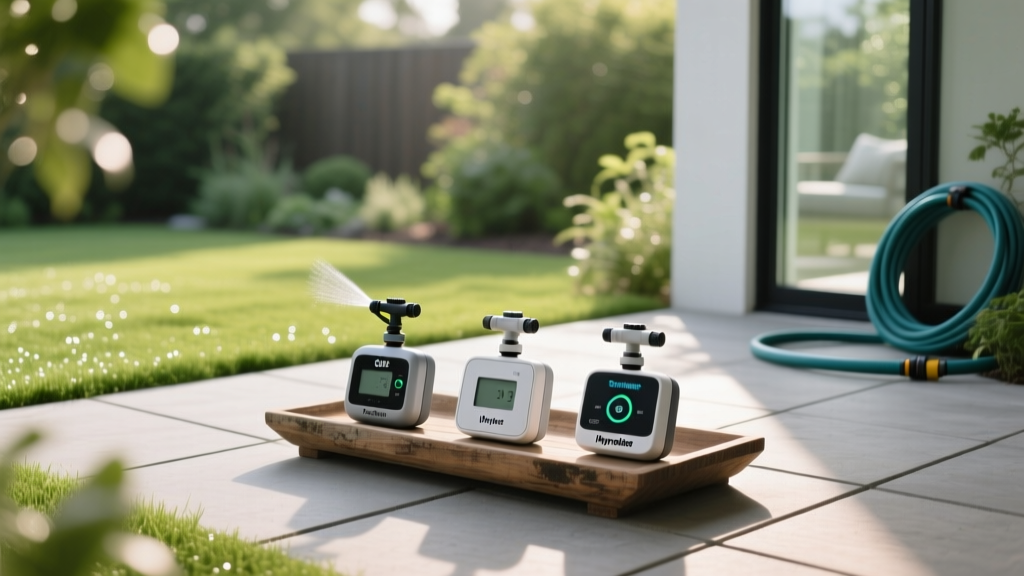
Smart Sprinkler Controller Reviews: Rachio vs Orbit
Robert HayesPublished
The Evolution of Lawn Care: Smart Irrigation
Bridging the gap between indoor smart home technology and outdoor landscape maintenance has never been more accessible. For decades, homeowners relied on rudimentary dial-based timers that watered their lawns on rigid schedules, completely ignoring environmental factors like recent rainfall, humidity, and seasonal shifts. Today, smart sprinkler controllers have revolutionized garden-to-table landscaping and energy-efficient yard care by integrating real-time meteorological data directly into your irrigation routine.
In this comprehensive product review and comparison, we evaluate the top smart irrigation controllers on the market: the Rachio 3, the Orbit B-hyve, and the Hunter Hydrawise Pro-HC. Whether you are looking to lower your municipal water bill, integrate your sprinklers with Amazon Alexa, or simply ensure your tomato garden gets the precise hydration it needs, this guide will help you choose the right hardware for your home.
Why Upgrade to a Smart Sprinkler Controller?
Traditional irrigation systems are notoriously inefficient. According to the U.S. Environmental Protection Agency (EPA) WaterSense program, an average home can waste up to 25,000 gallons of water annually through outdated irrigation practices and broken equipment. The EPA notes that replacing a standard clock timer with a WaterSense-labeled smart irrigation controller can save the average home nearly 7,600 gallons of water annually.
Smart controllers utilize a concept known as Evapotranspiration (ET). The Colorado State University Extension defines ET as the combined loss of water from the soil surface (evaporation) and the water used by the plant (transpiration). Smart controllers pull local weather data from nearby meteorological stations to calculate daily ET rates, automatically adjusting your watering schedules to replace only the exact amount of moisture your turfgrass and garden beds have lost.
'Smart irrigation controllers adjust watering schedules based on weather and soil moisture conditions, eliminating the guesswork and preventing overwatering.' — EPA WaterSense Program
Feature-by-Feature Comparison Chart
Below is a structured comparison of the three leading smart sprinkler controllers based on their most popular residential models.
| Feature | Rachio 3 (8-Zone) | Orbit B-hyve (6-Zone) | Hunter Pro-HC (12-Zone) |
|---|---|---|---|
| Average Retail Price | $229.99 | $119.00 | $250.00 |
| Max Zones (Base Model) | 8 Zones | 6 Zones | 12 Zones |
| EPA WaterSense Certified | Yes | Yes | Yes |
| Weather Intelligence | Advanced (Local Micro-climate) | Standard (WeatherSense) | Advanced (Hydrawise) |
| Smart Home Integration | Alexa, Google, Apple HomeKit, IFTTT | Alexa, Google | Alexa, Google |
| Flow Meter Support | No (Requires 3rd party) | No | Yes (Native) |
| Warranty | 3 Years | 6 Years | 3 Years |
Deep Dive: Rachio 3 Smart Sprinkler Controller
The Rachio 3 is widely considered the gold standard for consumer-facing smart home irrigation. Its sleek, minimalist white design is meant to be displayed proudly in your garage or utility room rather than hidden away. The standout feature of the Rachio 3 is its Weather Intelligence Plus platform, which hyper-localizes weather data using a network of over 200,000 personal weather stations.
Pros and Cons
- Pros: Unmatched app user interface; seamless Apple HomeKit and IFTTT integration; highly accurate hyper-local weather skips; incredibly easy DIY setup with push-to-connect wiring terminals.
- Cons: Higher price point; lacks native flow meter support for detecting underground pipe leaks; outdoor enclosure must be purchased separately.
Best For: Tech enthusiasts and smart-home purists who want a frictionless, highly automated experience and use Apple HomeKit or advanced IFTTT routines to trigger their irrigation based on custom soil moisture sensors.
Deep Dive: Orbit B-hyve Smart Controller
The Orbit B-hyve is the undisputed champion of budget-friendly smart irrigation. Priced at roughly half the cost of its competitors, the B-hyve offers remarkable value without sacrificing EPA WaterSense certification. It utilizes Orbit's proprietary WeatherSense technology to adjust watering based on local forecasts, and the app provides a straightforward, visual calendar for your watering schedule.
Pros and Cons
- Pros: Excellent price-to-performance ratio; available in both indoor and weather-resistant outdoor models; boasts an industry-leading 6-year warranty; intuitive manual override dial.
- Cons: App interface feels slightly dated compared to Rachio; lacks native Apple HomeKit support; WeatherSense data is slightly less granular than hyper-local alternatives.
Best For: Budget-conscious DIYers and homeowners looking for a quick, affordable upgrade to their traditional dial timer without needing to rewire their entire system or invest in premium smart-home ecosystems.
Deep Dive: Hunter Hydrawise Pro-HC
Hunter Industries is a legacy brand in professional landscaping, and the Pro-HC with Hydrawise software brings commercial-grade analytics to the residential market. The Hydrawise platform is incredibly data-heavy, offering detailed graphs on historical water usage, ET rates, and precipitation forecasts. Crucially, the Pro-HC supports a native flow meter, meaning the system can automatically shut off your main valve and alert your smartphone if it detects a broken sprinkler head or a ruptured underground pipe.
Pros and Cons
- Pros: Native flow meter support for leak detection; commercial-grade build quality; supports up to 12 zones out of the box; highly detailed predictive watering graphs.
- Cons: Steeper learning curve for the Hydrawise app; utilitarian, industrial aesthetic; physical wiring terminals require a bit more dexterity than Rachio's push-locks.
Best For: Homeowners with large, complex landscapes, multiple garden beds, or those who have experienced costly water bills due to hidden irrigation leaks and want proactive pipe-burst protection.
Installation and Setup: What to Expect
Upgrading to a smart controller is a highly manageable DIY weekend project. However, working with electrical components requires strict adherence to safety protocols. Here is a generalized step-by-step guide for replacing an existing indoor controller:
- Power Down: Turn off the circuit breaker dedicated to your irrigation system. Verify the power is off using a non-contact voltage tester.
- Document Existing Wiring: Before disconnecting a single wire, take a clear, well-lit photograph of your old controller's terminal block. You will need to map your zone wires (usually labeled 1, 2, 3) and your common wire (usually labeled 'C' or 'COM').
- Mount the New Backplate: Smart controllers require a standard 120V outlet nearby to plug in their 24VAC transformers. Mount the new backplate using drywall anchors if you are moving the location.
- Connect the Wires: Strip 1/4 inch of insulation from the ends of your zone wires and the common wire. Insert them into the corresponding terminals on your new smart controller. Ensure the 'C' wire is securely in the 'C' or 'COM' terminal, as this completes the 24-volt circuit.
- Wi-Fi Provisioning: Power on the unit. Download the manufacturer's app and follow the on-screen prompts to connect the controller to your 2.4GHz home Wi-Fi network. (Note: Most smart controllers do not support 5GHz networks).
Final Verdict: Which Should You Buy?
Choosing the right smart irrigation controller ultimately depends on your budget, your landscape's complexity, and your desired level of smart-home integration. If you want the most polished, user-friendly app experience and rely heavily on Apple HomeKit, the Rachio 3 is worth the premium $230 price tag. If you are looking to save money and want a reliable, weather-adjusting timer with an incredible warranty, the Orbit B-hyve at $119 is an absolute steal. Finally, if you have a sprawling property and want commercial-grade leak detection to protect your home's foundation and your water bill, the Hunter Pro-HC is the superior investment.
By upgrading to any of these WaterSense-labeled devices, you are not just automating a chore; you are actively participating in energy-efficient landscaping, conserving vital municipal water resources, and ensuring your outdoor living spaces remain vibrant and lush all season long.
