Home & Garden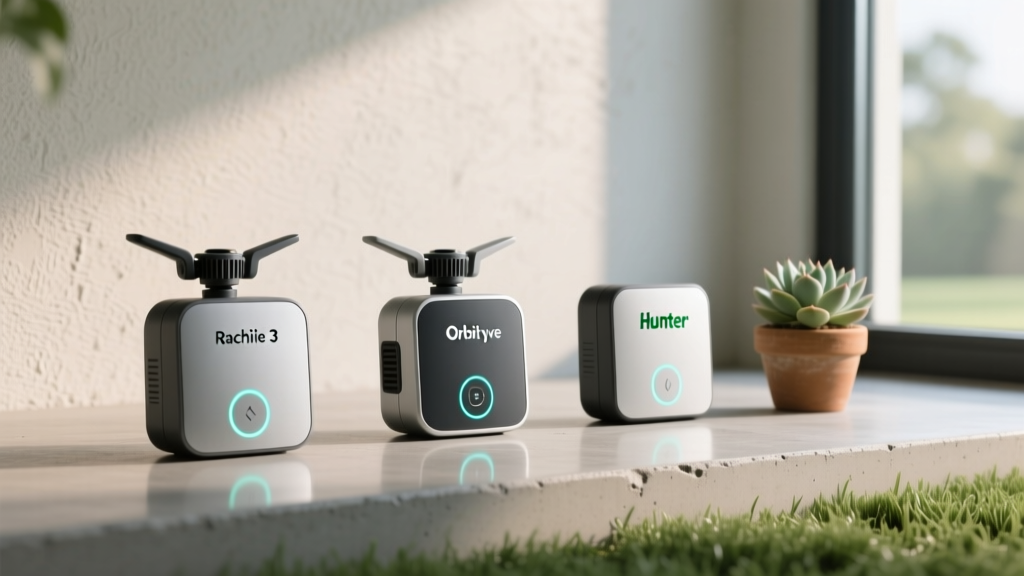
Best Smart Sprinkler Controllers: Rachio vs Orbit vs Hunter
Emily WatsonPublished
Upgrade Your Lawn: The Smart Irrigation Revolution
Maintaining a lush, vibrant lawn while managing household water usage is one of the most common challenges for modern homeowners. Traditional sprinkler timers, often referred to as 'dumb' controllers, operate on rigid, pre-set schedules. They blindly water your grass whether it is experiencing a severe drought or a torrential downpour. This outdated approach not only wastes a precious natural resource but also drives up utility bills and promotes shallow root growth, fungal diseases, and nutrient runoff.
Enter the smart irrigation controller. By bridging the gap between outdoor landscaping and indoor smart home ecosystems, these Wi-Fi-enabled devices use real-time weather data, soil moisture levels, and evapotranspiration (ET) rates to deliver the exact amount of water your lawn needs. In this comprehensive product review and comparison, we evaluate the top three smart sprinkler controllers on the market: the Rachio 3, the Orbit B-hyve XR, and the Hunter Hydrawise Pro-HC. We will break down their features, costs, installation requirements, and overall value to help you make an informed decision for your garden.
The Case for Smart Irrigation: Data and Savings
Before diving into specific product models, it is essential to understand the measurable impact of upgrading your irrigation system. According to the Environmental Protection Agency (EPA) WaterSense program, replacing a standard clock timer with a WaterSense-labeled smart irrigation controller can save the average home nearly 7,600 gallons of water annually. For those living in arid regions or areas with tiered water pricing, this translates to significant financial savings.
Furthermore, a comprehensive study published by the University of Georgia Cooperative Extension demonstrated that weather-based smart controllers and soil moisture sensor systems reduced residential outdoor water use by up to 40% compared to traditional time-based schedules, all while maintaining or improving turfgrass quality. The key lies in the controller's ability to utilize 'skip' features—automatically bypassing scheduled watering cycles during rain, high winds, or freezing temperatures.
Rachio 3 Smart Sprinkler Controller: The Consumer Favorite
The Rachio 3 has long been considered the gold standard for residential smart irrigation. Designed with the everyday homeowner in mind, it boasts a sleek, minimalist aesthetic and an incredibly intuitive mobile application. The controller relies heavily on its proprietary Weather Intelligence Plus technology, which pulls data from over 300,000 local weather stations to create hyper-local watering schedules based on evapotranspiration rates.
Key Specifications and Pricing
- Zones: Available in 8-zone ($229) and 16-zone ($279) models.
- Connectivity: 2.4 GHz Wi-Fi and Bluetooth for initial setup.
- Smart Home Integration: Apple HomeKit, Amazon Alexa, Google Assistant, Samsung SmartThings, and IFTTT.
- EPA WaterSense Certified: Yes.
Pros and Cons
The primary advantage of the Rachio 3 is its user experience. The app walks you through a zone-by-zone setup, asking about soil type, sun exposure, and sprinkler head type to automatically calculate optimal run times. However, its minimalist design is also its biggest drawback: there is no physical screen or manual control buttons on the device itself. If your Wi-Fi network goes down, you cannot manually trigger a zone from the garage wall without resorting to the physical master valve or relying on a secondary smart home hub.
Orbit B-hyve XR: The Versatile Contender
Orbit's B-hyve XR (eXtended Range) is a robust, highly capable controller that bridges the gap between consumer-friendly pricing and professional-grade features. Unlike the Rachio, the B-hyve XR features a built-in digital display and physical buttons, allowing for manual zone operation even without an internet connection. It utilizes WeatherSense technology, which adjusts watering based on local weather forecasts, site conditions, and historical data.
Key Specifications and Pricing
- Zones: Available in 6-zone, 8-zone ($189), and 16-zone ($239) models.
- Connectivity: 2.4 GHz Wi-Fi with an extended-range antenna for better penetration through exterior walls.
- Smart Home Integration: Amazon Alexa and Google Assistant.
- EPA WaterSense Certified: Yes.
Pros and Cons
The standout feature of the B-hyve XR is its swivel wire terminals, which make the physical installation process significantly easier, especially when working with stiff, aging 18-gauge irrigation wires. The built-in screen is a massive plus for quick manual overrides. On the downside, the Orbit mobile app interface feels slightly more cluttered and less intuitive than Rachio's, and it lacks native Apple HomeKit support, which may deter users heavily invested in the Apple ecosystem.
Hunter Hydrawise Pro-HC: The Professional's Choice
Hunter Industries is a legendary name in commercial and high-end residential irrigation. The Pro-HC controller, powered by the Hydrawise software, is built like a tank and designed for complex landscapes. It is the only controller in this comparison that natively supports the integration of a flow meter and master valve, allowing the system to detect broken pipes or leaking sprinkler heads and automatically shut down the water supply to prevent catastrophic landscape damage.
Key Specifications and Pricing
- Zones: Base model supports 6 zones, expandable to 15 zones via plug-in modules (Starting around $350).
- Connectivity: Wi-Fi enabled with a heavy-duty outdoor enclosure option.
- Smart Home Integration: Limited native smart home integration; focuses heavily on its proprietary web-based dashboard.
- EPA WaterSense Certified: Yes (when configured with weather-based schedules).
Pros and Cons
The Hydrawise platform offers unparalleled granular control. You can set up custom sensor inputs, complex flow rate alerts, and detailed reporting that landscape professionals love. The hardware is exceptionally durable, featuring a locking metal cabinet for outdoor installations. The cons are primarily price and complexity. It is the most expensive option on this list, and the setup process requires a steeper learning curve, making it less ideal for the casual DIYer who just wants a simple 'set it and forget it' solution.
Feature-by-Feature Comparison Chart
To help you visualize how these three industry leaders stack up against one another, review the comparison table below.
| Feature | Rachio 3 | Orbit B-hyve XR | Hunter Pro-HC |
|---|---|---|---|
| Starting Price (8-Zone) | $229 | $189 | $350 (6-Zone Base) |
| Physical Display | No (LED indicators only) | Yes (Digital LCD) | Yes (Backlit LCD) |
| Weather Skip Tech | Weather Intelligence Plus | WeatherSense | Hydrawise Predictive |
| Flow Meter Support | No | No | Yes (Native) |
| Smart Home Ecosystem | HomeKit, Alexa, Google | Alexa, Google | Limited / Web-based |
| Installation Difficulty | Moderate | Easy (Swivel terminals) | Advanced |
Installation and Setup: What to Expect
Regardless of which smart controller you choose, the physical installation process is remarkably similar and generally takes between 45 minutes to 2 hours for a DIY homeowner. You are essentially replacing an old 24V AC transformer and control box. Here is a practical, actionable guide to ensure a smooth upgrade.
Tools Required
- Flathead and Phillips screwdrivers
- Wire strippers and cutters
- Smartphone (for taking reference photos)
- Voltage tester (optional but recommended for safety)
Step-by-Step Replacement Guide
1. Safety First: Locate your circuit breaker and turn off the power to the irrigation system. Use a voltage tester to confirm the 24V AC transformer is no longer receiving power.
2. Document the Wiring: Open your old controller and take a clear, well-lit photograph of the wiring. Pay special attention to the numbered zone wires and the 'C' or 'COM' (common) wire. This photo is your lifeline if you get confused during the swap.
3. Remove the Old Unit: Loosen the terminal screws, remove the wires, and unscrew the backplate from the wall. Disconnect the old transformer.
4. Mount the New Backplate: Feed the existing wires through the new smart controller's backplate and secure it to the wall using the provided drywall anchors and screws.
5. Reconnect the Wires: Strip about 1/4 inch of insulation from the ends of your 18-gauge wires if they are brittle or oxidized. Insert the common wire into the 'C' terminal, and the zone wires into their corresponding numbered terminals. Connect the new 24V AC transformer to the AC terminals.
6. Power Up and Configure: Turn the breaker back on. Download the manufacturer's app, connect the device to your 2.4 GHz Wi-Fi network (note that most smart home devices do not support 5 GHz networks), and input your specific lawn parameters.
Final Verdict: Which Controller is Right for Your Lawn?
Choosing the right smart irrigation controller depends entirely on your technical comfort level, budget, and landscape complexity.
If you want the most seamless, user-friendly experience and rely heavily on Apple HomeKit or advanced smart home routines, the Rachio 3 is the undisputed champion. Its app interface is second to none, making lawn care effortless for the modern homeowner.
If you are on a stricter budget, prefer having a physical screen for manual overrides, and want an easier physical installation process, the Orbit B-hyve XR offers the best overall value. It provides 90% of the water-saving benefits of the Rachio at a noticeably lower price point.
Finally, if you manage a large, complex property with varying water pressure issues, or if you simply want commercial-grade reliability and leak detection via a flow meter, the Hunter Hydrawise Pro-HC is worth the premium investment. It is the ultimate tool for the serious landscaping enthusiast who demands total control over every drop of water.
By upgrading to any of these smart systems, you are not just investing in a healthier, greener lawn; you are actively conserving water and reducing your environmental footprint for years to come.
