
Pest Control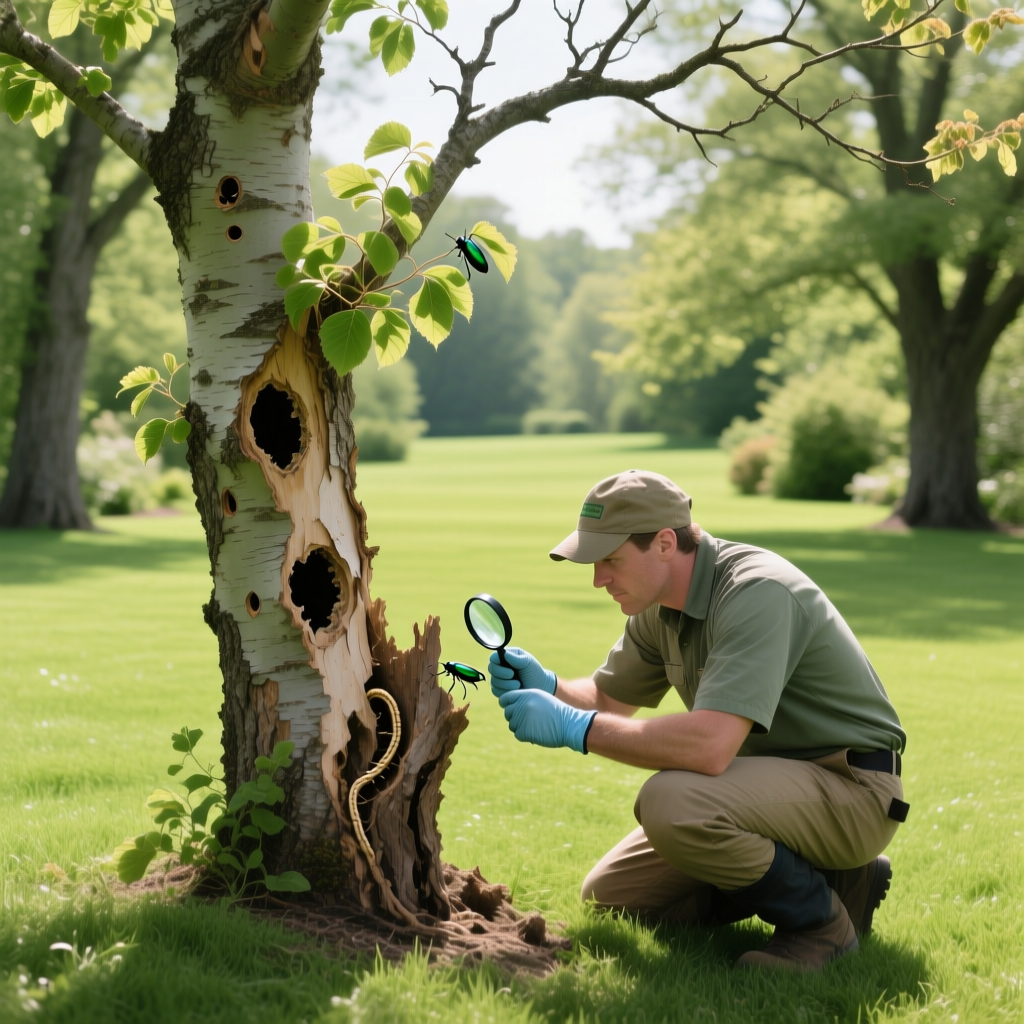
Spotting and Managing Emerald Ash Borer Infestations in Ash Trees
James MillerPublished
Spotting & Managing Emerald Ash Borer Infestations in Ash Trees
Ash trees have long been a staple of North American landscapes, prized for their rapid growth, symmetrical canopies, and excellent shade. However, these majestic trees face a severe threat from a tiny, invasive insect known as the emerald ash borer (EAB). Since its accidental introduction to the continent, this destructive beetle has decimated millions of ash trees, fundamentally altering urban forests and private landscapes alike. For homeowners and property managers, understanding how to spot, manage, and prevent emerald ash borer infestations is critical to preserving the health, safety, and aesthetic value of your outdoor spaces.
The emerald ash borer (Agrilus planipennis) is a highly aggressive wood-boring beetle that exclusively targets ash species (Fraxinus). Because the larvae feed on the inner bark, they effectively girdle the tree, cutting off the vital flow of water and nutrients. Without early detection and proactive intervention, an infested ash tree will almost certainly die within a few years. In this comprehensive guide, we will explore the telltale signs of an EAB infestation, outline effective prevention strategies, discuss DIY treatment options, and explain when it is time to call in professional arborists. Whether you are managing a single backyard shade tree or a diverse woodland border, integrating these pest control strategies into your landscape maintenance routine is essential.
Identifying the Emerald Ash Borer & Signs of Infestation
Early detection is the single most important factor in saving an ash tree from the emerald ash borer. Unfortunately, because the most destructive stage of the insect's life cycle occurs beneath the bark, above-ground symptoms often do not appear until the tree has been under attack for several years. To effectively monitor your landscape, you must know what to look for both on the insect itself and on the host tree.
Recognizing the Insect
- Adult Beetles: The adult emerald ash borer is a striking, metallic emerald-green beetle measuring roughly half an inch in length. They have a slightly flattened, bullet-shaped body. When their wing covers are lifted, the upper abdomen reveals a distinct metallic copper or purplish-red color. Adults are typically active from late spring through mid-summer.
- Larvae: The larvae are cream-colored, legless grubs with flat, bell-shaped body segments. They can grow up to 1.5 inches long before pupating. You will rarely see them unless you peel back the bark of an infested tree.
Visual Symptoms on Ash Trees
If you suspect your ash trees are under attack, look for the following diagnostic symptoms:
- Canopy Dieback: Infestations typically begin in the upper canopy. You will notice thinning leaves, yellowing foliage, and dead branches starting at the top of the tree and progressively moving downward. By the time dieback is obvious, the tree has often been infested for two to three years.
- D-Shaped Exit Holes: As adult beetles emerge from the tree in the spring, they chew distinct, D-shaped exit holes through the bark. These holes are small, usually about 1/8 of an inch in diameter, and are a definitive signature of EAB activity.
- Serpentine Galleries: Beneath the bark, larvae create winding, S-shaped tunnels (galleries) as they feed on the phloem & xylem. If you carefully peel back the loose bark on a declining tree, you will see these packed with sawdust-like frass.
- Epicormic Sprouting: In a desperate attempt to survive, heavily stressed ash trees will often produce "water sprouts" or suckers along the lower trunk and root flare. These vigorous, leafy shoots are a strong indicator of severe canopy stress.
- Woodpecker Flecking: Woodpeckers love to feed on EAB larvae. As they forage, they strip away the outer layer of bark, leaving behind light-colored, "blonde" patches on the trunk and lower branches. If you see heavy woodpecker damage on an ash tree, an infestation is highly likely.
Before initiating any treatment, ensure you are actually dealing with a true ash tree. Mountain ash, prickly ash, and wafer ash are not true ash species and are completely immune to the emerald ash borer. True ash trees have compound leaves with 5 to 11 leaflets and branch in an opposite pattern.
Understanding the EAB Life Cycle & Tree Damage
To effectively manage this pest, it helps to understand how it damages the tree. The emerald ash borer operates on a one- to two-year life cycle, depending on the health of the host tree and environmental conditions. Adult beetles emerge in late spring, mate, and lay eggs in the crevices of the ash tree's bark. The eggs hatch within a few weeks, and the tiny larvae immediately bore through the bark into the cambium layer.
The cambium is the tree's vascular system, responsible for transporting water from the roots to the leaves and sugars from the leaves to the roots. As the larvae feed and grow throughout the summer and fall, their serpentine galleries expand, effectively choking off the tree's circulatory system. This girdling effect is what ultimately kills the tree. The larvae overwinter in the outer sapwood, pupate in the spring, and emerge as adults to restart the cycle. Because a single female can lay up to 200 eggs, populations can explode exponentially, overwhelming a tree's natural defenses in a very short period.
Preventing Emerald Ash Borer Infestations
While treating an active infestation is possible, preventing the beetle from reaching your property in the first place is the most cost-effective and environmentally sound approach. Incorporating these preventative measures into your broader tree and shrub care regimen can significantly reduce your risk.
Never Move Firewood
The primary method of long-distance EAB spread is the human transport of infested firewood, logs, and nursery stock. The larvae can survive for months inside cut wood. Always buy firewood locally, burn it where you buy it, and never transport untreated ash wood across county or state lines. This simple rule is the cornerstone of regional quarantine efforts.
Maintain Optimal Tree Health
Healthy trees are better equipped to withstand and recover from pest pressures. Ensure your ash trees receive adequate water during dry spells, particularly in late summer. Apply a 2-to-3-inch layer of organic mulch around the base of the tree to retain moisture and regulate soil temperature, but keep the mulch pulled back from the trunk to prevent rot. Proper soil health management, including avoiding soil compaction from heavy machinery, ensures the root system remains robust. For more tips on maintaining vigorous landscape plants, explore our guides on holistic lawn and garden maintenance.
Diversify Your Landscape
Urban and suburban forests often suffer from "monoculture," where a single tree species is planted in vast numbers. If your property consists entirely of ash trees, an EAB outbreak could result in the total loss of your tree canopy. Proactively plant a diverse array of native, non-ash tree species to ensure that the loss of one species does not devastate your landscape's shade, privacy, and ecological value.
DIY Solutions & Treatment Options for Homeowners
If you have confirmed an emerald ash borer infestation and the tree still has a mostly healthy canopy (less than 30% dieback), you can attempt to save it using DIY chemical treatments. It is important to note that treatment is a long-term commitment; once you begin treating an ash tree for EAB, you must continue treatments every one to two years for the life of the tree.
Soil Drenches & Granular Insecticides
For smaller ash trees (generally those with a trunk diameter of less than 20 inches measured at breast height, or DBH), systemic soil drenches containing the active ingredient imidacloprid are highly effective and easy for homeowners to apply. The tree's roots absorb the chemical and translocate it into the canopy, where it kills feeding larvae.
- Measurement: Measure the circumference of the trunk at 4.5 feet above the ground and divide by 3.14 to find the diameter (DBH). Dosage is strictly based on this measurement.
- Application: Clear away mulch and dead leaves from the base of the trunk. Mix the liquid concentrate with water according to the label instructions and pour it in a continuous circle directly around the root flare.
- Watering: Lightly water the area after application to help the chemical penetrate the soil profile. This method is similar to the systemic approaches used in lawn grub prevention, relying on root uptake to protect the plant from within.
Over-the-Counter Trunk Injections
Some garden centers sell DIY trunk injection kits containing emamectin benzoate or azadirachtin. These involve drilling small, shallow holes into the base of the trunk and inserting pressurized capsules or using a syringe to force the chemical into the sapwood. While effective, DIY trunk injection carries risks. Improper drilling can cause excessive wounding, creating entry points for fungal pathogens. If you choose this route, follow the manufacturer's instructions meticulously and sanitize your tools between trees.
Timing & Environmental Safety
Timing is critical for DIY treatments. Soil drenches should be applied in early to mid-spring, allowing the tree several weeks to absorb the chemical before the adult beetles emerge and lay eggs in early summer. Always wear appropriate personal protective equipment (PPE), including gloves and eye protection, when handling pesticides. To protect pollinators, avoid applying systemic insecticides to trees that are currently in bloom, and prevent chemical runoff into storm drains or nearby water features.
When to Call Professional Arborists & Pest Control Experts
While DIY methods are suitable for smaller trees, there are several scenarios where hiring a certified arborist or a licensed pest control operator is not just recommended, but absolutely necessary.
Large Trees & Advanced Infestations
Soil drenches are generally ineffective for ash trees with a DBH greater than 20 inches because the chemical cannot be translocated fast enough to reach the upper canopy in lethal concentrations. For large, mature shade trees, professionals use specialized, high-pressure trunk injection systems to deliver potent, restricted-use chemicals like emamectin benzoate directly into the tree's vascular system. These professional-grade treatments often provide two to three years of protection with a single application.
Tree Risk Assessment & Removal
If your ash tree has lost more than 30% to 50% of its canopy, it is generally considered too far gone to save. The vascular damage is too severe, and the tree will likely die despite chemical intervention. Furthermore, dead and dying ash trees become incredibly brittle and pose a severe hazard to people, homes, and power lines. Professional arborists have the heavy equipment and expertise to safely dismantle and remove hazardous trees. They will also ensure the infested wood is properly chipped or treated to prevent the emerging beetles from spreading to neighboring properties. If you are unsure about the health of your tree or the scope of the required work, consult our guide on hiring a pest control professional to ensure you get qualified, reputable service.
Community-Wide Management
If you manage a homeowner's association, a municipal park, or a large estate with dozens of ash trees, a professional pest management firm can conduct a comprehensive inventory, map the health of every tree, and implement a phased treatment and replacement plan that optimizes your budget while preserving the landscape's overall structure.
Frequently Asked Questions
Can an ash tree recover from an emerald ash borer infestation?
Yes, but only if the infestation is caught early and treated aggressively. If the tree still has a relatively full canopy (less than 30% dieback) and the vascular system is not completely girdled, systemic insecticides can halt the larvae and allow the tree to heal its damaged cambium over the next few growing seasons. However, if the canopy is mostly dead, the tree lacks the foliage required to photosynthesize and push the chemical treatment up through its system, making recovery impossible.
How long does it take for the emerald ash borer to kill a tree?
Once a tree is initially infested, it typically takes two to four years for the emerald ash borer population to build up enough to kill a mature, healthy ash tree. Younger, smaller, or already stressed trees may succumb in as little as one to two years. The population grows exponentially each season, meaning the damage accelerates rapidly in the final stages.
Are there any ash tree species resistant to the emerald ash borer?
Currently, there are no native North American ash species that are completely immune to the emerald ash borer. However, some Asian ash species, such as the Manchurian ash (Fraxinus mandshurica), have co-evolved with the beetle and exhibit a high degree of natural resistance. Researchers are actively working on breeding programs to cross native ashes with resistant Asian varieties, and some experimental biocontrol methods (like introducing specialized parasitic wasps from the EAB's native range) are showing promise in slowing the spread in wild forests.
Should I cut down my ash tree if it has emerald ash borers?
The decision to remove an infested tree depends on its current health, its location, and your budget. If the tree is heavily infested with significant canopy dieback, it is a safety hazard and should be removed immediately before it becomes too brittle to climb safely. If the tree is relatively healthy and holds high sentimental or property value, investing in professional trunk injections is often more cost-effective over a ten-year period than paying for the removal of a massive tree and the planting of a new, slow-growing replacement.
Does the emerald ash borer attack other types of trees?
The emerald ash borer is highly host-specific and exclusively targets true ash trees (Fraxinus species), such as green ash, white ash, black ash, and blue ash. It does not attack oak, maple, pine, or other common landscape trees. It is important to note that trees with "ash" in their common name, like mountain ash or prickly ash, are not true ashes and are completely unaffected by this pest.
Conclusion
The emerald ash borer remains one of the most devastating landscape pests, but it is not an unstoppable force. By learning to identify the early warning signs, adhering to strict firewood quarantine rules, and utilizing targeted systemic treatments, homeowners can successfully protect their valuable ash trees. Regular monitoring and proactive care are the keys to maintaining a vibrant, shady, and healthy landscape. For more tips on keeping your entire outdoor space thriving, be sure to explore our comprehensive lawn care guides and stay informed about the best practices for long-term yard maintenance.

