Home & Garden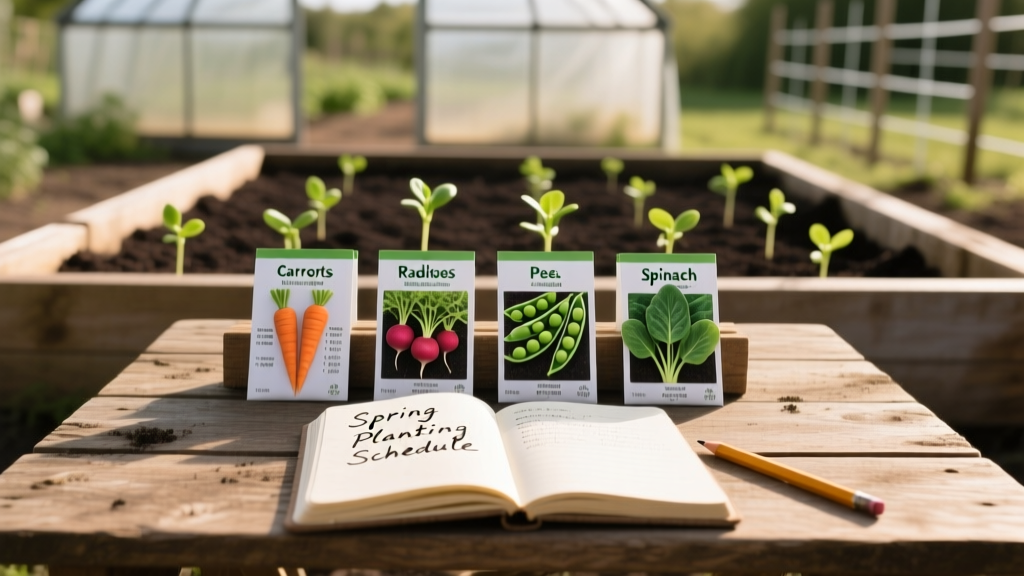
Spring Vegetable Planting Schedule For Garden Harvests
Emily WatsonPublished
Mastering the Garden-to-Table Timeline
Transitioning from a barren winter landscape to a lush, productive garden-to-table oasis requires more than just good soil and quality seeds; it demands precise seasonal timing. A successful spring vegetable garden hinges on understanding the delicate balance between air temperatures, soil warmth, and the biological needs of your crops. Planting too early can result in frost damage or seed rot in cold, damp earth, while planting too late can stunt growth and expose young seedlings to peak summer heat and pests. By aligning your planting schedule with your local microclimate, you can maximize your yield, extend your harvest window, and ensure a continuous supply of fresh, homegrown produce for your kitchen.
Step 1: Pinpointing Your Frost Dates and Hardiness Zone
The foundation of any seasonal planting schedule is your local frost dates. The 'last spring frost date' is the benchmark that dictates your entire planting calendar. To find your baseline, consult the USDA Plant Hardiness Zone Map, which categorizes regions based on their average annual extreme minimum winter temperatures. However, hardiness zones only tell half the story. For precise spring timing, you must determine your specific 50% probability last frost date. You can easily calculate this by entering your zip code into the Old Farmer's Almanac Frost Date Calculator. Once you have this date, mark it on your calendar. Every subsequent planting window—whether it is 6 weeks before or 2 weeks after—will be calculated backward or forward from this critical milestone.
Furthermore, air temperature is only one metric. Soil temperature is equally crucial for seed germination. Invest in a reliable tool like the REOTEMP Fast Response Soil Thermometer (approximately $25). Insert the probe 2 to 4 inches into the soil at 8:00 AM for a consistent daily reading. Cool-season crops require a minimum soil temperature of 40°F to 45°F, while warm-season transplants demand soil temperatures of at least 65°F to prevent transplant shock.
Step 2: Early Spring (4 to 6 Weeks Before Last Frost)
As soon as the ground thaws and becomes workable—meaning it is no longer waterlogged or frozen—you can begin direct sowing cold-hardy crops. This is the time for peas, spinach, and kale. For a sweet, crunchy harvest, plant 'Sugar Snap' peas. Sow the seeds 1 inch deep and 2 inches apart in rows spaced 18 inches apart. Because peas are legumes, they fix their own nitrogen, but they benefit greatly from a trellis system installed at the time of planting to avoid disturbing roots later.
Spinach is another early-spring champion. Varieties like 'Bloomsdale Long Standing' tolerate chilly mornings beautifully. Sow spinach seeds 1/2 inch deep and 2 inches apart. Thin the seedlings to 6 inches apart once they develop their first true leaves. The thinnings are perfect for early spring salads. Seed packets for these cold-hardy varieties are highly economical, typically costing between $3.00 and $4.50 per packet from reputable suppliers like Johnny's Selected Seeds or Burpee, yielding hundreds of plants.
Step 3: Mid-Spring (2 to 4 Weeks Before Last Frost)
As the soil begins to warm consistently above 45°F, it is time to transition to root vegetables and fast-growing brassicas. Carrots and radishes thrive when sown directly into well-aerated, stone-free soil during this window. Carrots require a fine seedbed; sow them 1/4 inch deep and thin aggressively to 3 inches apart. If the soil is heavy clay, consider growing 'Danvers 126' or planting in raised beds filled with a loose compost blend to prevent forked roots.
Radishes are the ultimate gratification crop for impatient gardeners. 'Cherry Belle' radishes can germinate in as little as 3 days and are ready to harvest in just 25 to 30 days. Sow them 1/2 inch deep and 1 inch apart. To ensure a continuous harvest rather than a single overwhelming bounty, practice succession planting by sowing a new 3-foot row of radishes every 10 days until the weather becomes too hot, which causes radishes to bolt and turn woody.
Step 4: Late Spring (1 to 2 Weeks After Last Frost)
Once the danger of frost has entirely passed and nighttime temperatures consistently stay above 50°F, the warm-season heavyweights can take the stage. This is the time for tomatoes, peppers, eggplants, and squash. These crops should generally be started indoors 6 to 8 weeks prior to this date or purchased as nursery transplants. When transplanting tomatoes, such as the heirloom 'Cherokee Purple', bury the stem up to the first set of true leaves. Tomatoes will sprout adventitious roots along the buried stem, creating a robust root system capable of supporting heavy fruit loads.
Warm-season crops are heavy feeders. When transplanting, amend the planting hole with a high-quality, biologically active soil mix. FoxFarm Ocean Forest Potting Soil (approximately $20 per 1.5 cubic foot bag) is an industry favorite, pre-mixed with earthworm castings, bat guano, and aged forest products to provide immediate and long-term nutrition. Space indeterminate tomatoes 24 to 36 inches apart and install heavy-duty steel cages immediately to support their vigorous summer growth.
Comprehensive Spring Planting Schedule
Use the following data table as a quick-reference guide for your spring garden-to-table planning. Adjust the 'Timing' column based on your specific last frost date.
| Crop | Min. Soil Temp | Seed Depth | Final Spacing | Timing Relative to Last Frost |
|---|---|---|---|---|
| Peas (Sugar Snap) | 40°F | 1.0 inch | 2 inches | 4-6 weeks before |
| Spinach | 40°F | 0.5 inch | 6 inches | 4-6 weeks before |
| Carrots | 45°F | 0.25 inch | 3 inches | 2-3 weeks before |
| Radishes | 45°F | 0.5 inch | 2 inches | 2-4 weeks before |
| Tomatoes | 65°F | Transplant | 36 inches | 1-2 weeks after |
| Bell Peppers | 70°F | Transplant | 18 inches | 2-3 weeks after |
| Zucchini | 65°F | 1.0 inch | 36 inches | 1-2 weeks after |
Smart Home Integration for Seasonal Timing
Modern garden-to-table success is increasingly reliant on smart home technology to manage the microclimate and hydration needs of seasonal crops. As you transition from cool-season to warm-season planting, the water requirements of your garden shift dramatically. Integrating a smart irrigation system, such as the Rachio 3 Smart Sprinkler Controller (approximately $230), allows you to automate your drip irrigation zones based on real-time local weather forecasts. The Rachio system automatically skips watering if rain is in the forecast, preventing the root rot that frequently plagues early-spring transplants.
Additionally, deploying wireless soil moisture and temperature sensors, like those offered by Ecowitt, directly into your raised beds provides live data to your smartphone. This eliminates the guesswork of seasonal timing. You can set custom alerts to notify you the exact moment your soil temperature crosses the 65°F threshold, signaling that it is perfectly safe to transplant your expensive heirloom tomato starts without fear of a sudden cold snap stunting their growth.
Seasonal Pest Management and Crop Rotation
Timing your planting schedule also plays a vital role in organic pest management. By planting certain crops early or late, you can avoid the peak life cycles of destructive insects. For example, planting squash early in the spring or utilizing row covers until the plants flower can help you bypass the first generation of squash vine borers. Implementing Integrated Pest Management (IPM) strategies from the very beginning of the season is crucial. According to guidelines supported by the EPA's IPM Principles, focusing on biological controls, crop rotation, and environmental manipulation reduces the need for chemical interventions, keeping your garden-to-table produce safe and organic.
Never plant crops from the same family in the exact same soil two springs in a row. Rotate your nightshades (tomatoes, peppers) with legumes (peas, beans) and brassicas (kale, radishes) to naturally disrupt soil-borne diseases and balance nutrient depletion. Keep a detailed digital or physical garden journal to track your planting dates, varieties, and harvest yields year over year. This historical data will allow you to fine-tune your seasonal timing, adapting to the unique microclimate of your specific backyard and ensuring a bountiful, delicious harvest season after season.
