Gardening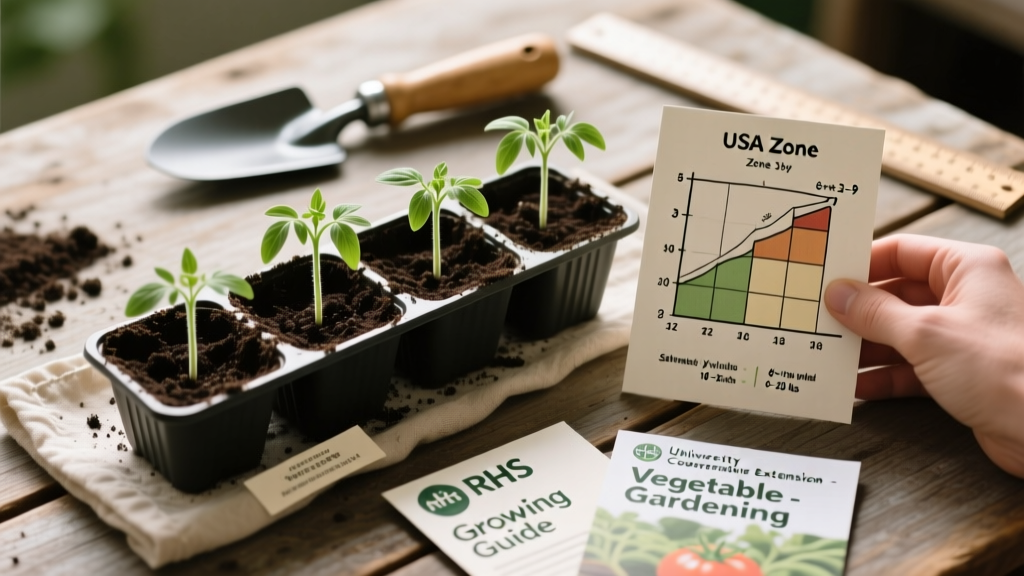
Starting Tomatoes From Seed Indoors Step By Step
Timing Your Indoor Sowing for Optimal Transplant Success
Starting tomatoes from seed indoors gives gardeners precise control over germination conditions and extends the growing season—especially critical in cooler climates. The ideal sowing window is calculated backward from your local last spring frost date, not by calendar month alone. According to the USDA Plant Hardiness Zone Map, gardeners in Zone 3 (e.g., Anchorage, Alaska) should sow seeds 6–8 weeks before their average last frost, typically around May 15–20; this places indoor sowing between March 20 and April 1. In contrast, Zone 7 gardeners (e.g., Richmond, Virginia) with a mid-April frost date begin sowing around February 20–25. Zone 9 growers (e.g., San Diego, California), where frost is rare or absent, may start as early as January 15 but risk leggy growth without supplemental lighting.
The University of Minnesota Extension (2022) emphasizes that sowing too early leads to overcrowded, weak transplants prone to disease and transplant shock. Conversely, sowing too late compromises yield potential, especially for long-season varieties like ‘Brandywine’ (90+ days to maturity). A study conducted at Cornell University’s Horticulture Section found that tomato seedlings transplanted at the optimal 6-week mark produced 23% more fruit per plant than those held an extra two weeks indoors.
Selecting Containers and Sterile Seed-Starting Mix
Use clean, shallow containers with drainage holes—6-cell or 12-cell plastic flats are widely recommended for initial germination. Avoid reused pots unless sterilized in a 10% bleach solution (1 part household bleach to 9 parts water) for 30 minutes, then rinsed thoroughly. Reusing unsterilized containers significantly increases risk of damping-off, a fungal disease responsible for ~40% of pre-transplant seedling loss in home gardens (RHS, 2021).
Never use garden soil or compost-based potting mixes for starting seeds. These harbor pathogens and are too dense for delicate radicles. Instead, use a sterile, soilless mix composed of peat moss (or coconut coir), perlite, and vermiculite. A standard formulation contains 50% peat or coir, 30% perlite, and 20% vermiculite by volume—light enough for root penetration yet moisture-retentive.
Preparing the Medium
- Moisten mix thoroughly before filling containers—squeeze a handful; it should hold shape without dripping.
- Fill cells to within ¼ inch of the top and gently firm—not compact—the surface.
- Label each cell immediately with variety name and sowing date using weatherproof tags.
Sowing Depth, Temperature, and Germination Management
Plant two seeds per cell at a uniform depth of ¼ inch (6 mm). Cover lightly with mix and mist gently with a fine spray nozzle. Maintain consistent moisture—never allow the surface to crust or dry completely. Bottom heat dramatically improves speed and uniformity: keep soil temperature at 70–80°F (21–27°C) using a propagation mat. At 75°F, most tomato cultivars germinate within 5–7 days; at 65°F, germination may stretch to 12–14 days.
Once cotyledons emerge, remove the humidity dome and move trays under lights. Position LED or fluorescent grow lights 2–4 inches above seedlings and run them 14–16 hours daily. Failure to provide adequate light intensity causes etiolation—stems elongate to 4–6 inches tall before true leaves appear, weakening structural integrity.
Transplanting, Hardening Off, and Field Spacing
When seedlings develop their second set of true leaves (usually 3–4 weeks after germination), transplant into individual 4-inch pots filled with a nutrient-balanced potting mix containing slow-release fertilizer (e.g., 5-5-5 NPK). Bury stems up to the first set of true leaves—tomatoes readily form adventitious roots along buried stem tissue, increasing drought resilience and anchoring stability.
Begin hardening off 7–10 days before transplanting outdoors. Start with 1 hour of dappled shade on day one, increasing exposure by 1–2 hours daily while reducing water slightly. By day seven, seedlings should tolerate full sun and overnight temperatures down to 50°F (10°C) for short periods. Do not transplant until soil temperature at 4 inches depth reaches a minimum of 60°F (16°C), verified with a soil thermometer.
Outdoor Planting Guidelines by Zone
- Zone 3–4: Wait until soil warms to 60°F; space plants 24–30 inches apart in rows 48 inches apart.
- Zone 5–6: Transplant 1–2 weeks after last frost; spacing remains 24–30 inches, but row width can narrow to 42 inches for high tunnels.
- Zone 7–10: Soil often reaches 60°F by early April; use 18–24 inch spacing for determinate types, 30–36 inches for indeterminates.
Yield Expectations and Harvest Timing
Yield varies by variety, climate, and cultural practices—but research from the University of Florida IFAS Extension (2023) documents average field yields across 12 trials: determinate ‘Roma’ produced 8–12 lbs per plant over 4–6 weeks, while indeterminate ‘Celebrity’ yielded 15–22 lbs per plant across a 10–12 week harvest window. In raised beds with drip irrigation and mulch, yields increased by 18–25% compared to bare-ground plots.
First harvest begins approximately 60–85 days after transplanting, depending on variety and accumulated growing degree days (GDD). For example, ‘Early Girl’ matures in ~60 days (1,200 GDD base 50°F), whereas ‘Green Zebra’ requires ~75 days (1,800 GDD). Peak harvest occurs during weeks 3–6 post-first-fruit, when ambient temperatures remain between 70–85°F daytime and 60–70°F nighttime—ideal for fruit set and sugar accumulation.
| USDA Zone | Avg. Last Frost Date | Indoor Sowing Window | Soil Temp Threshold | Recommended Spacing (inches) |
|---|---|---|---|---|
| Zone 4 (Minneapolis, MN) | May 10 | March 15–25 | 60°F at 4″ depth | 24–30 × 48 |
| Zone 6 (St. Louis, MO) | April 15 | February 25–March 10 | 60°F at 4″ depth | 24 × 42 |
| Zone 8 (Austin, TX) | March 15 | January 25–February 5 | 60°F at 4″ depth | 24 × 36 |
Consistent watering—1–1.5 inches per week applied at the base—is essential for preventing blossom-end rot, which affects 5–12% of fruit in calcium-deficient or irregularly irrigated plantings (Cornell Cooperative Extension, 2021). Mulching with 2–3 inches of straw or shredded bark conserves moisture, suppresses weeds, and reduces soil splashing that spreads early blight spores. Monitor for aphids and spider mites weekly; release lady beetles or apply insecticidal soap at first sign—avoid broad-spectrum sprays that eliminate beneficial predators.
Pruning is optional but beneficial for indeterminate varieties: remove suckers below the first flower cluster to direct energy toward fruit production. In greenhouse trials at Michigan State University, pruned ‘Beefsteak’ plants yielded 17% more marketable fruit than unpruned controls, with improved air circulation reducing foliar disease incidence by 31%.
Harvest tomatoes when fully colored and slightly yielding to gentle palm pressure—not when rock-hard or overly soft. Store ripe fruit at 55–70°F away from direct sunlight; never refrigerate below 50°F, as cold injury degrades flavor volatiles and texture. For extended storage, pick mature-green fruit and ripen indoors at 68–72°F—typically 5–7 days to full color development.
“Tomato success hinges less on exotic inputs and more on consistency: consistent light, consistent moisture, consistent warmth during establishment, and consistent observation once outdoors.” — Dr. Amy Wright, Vegetable Specialist, University of Vermont Extension (2020)
Rotate tomato planting sites annually to reduce buildup of soil-borne pathogens like Fusarium and Verticillium wilt. Follow tomatoes with brassicas or legumes—not peppers or eggplants—to disrupt pest life cycles. Record planting dates, variety performance, and pest incidents in a garden journal; this data sharpens decision-making year after year.
Seed-starting is both science and stewardship: understanding the physiological needs of Solanum lycopersicum allows gardeners to nurture resilience from the first radicle through final harvest. With attention to zone-specific timing, sterile media, precise spacing, and environmental cues, even first-time growers achieve robust yields rooted in evidence-based practice.
