Tree Care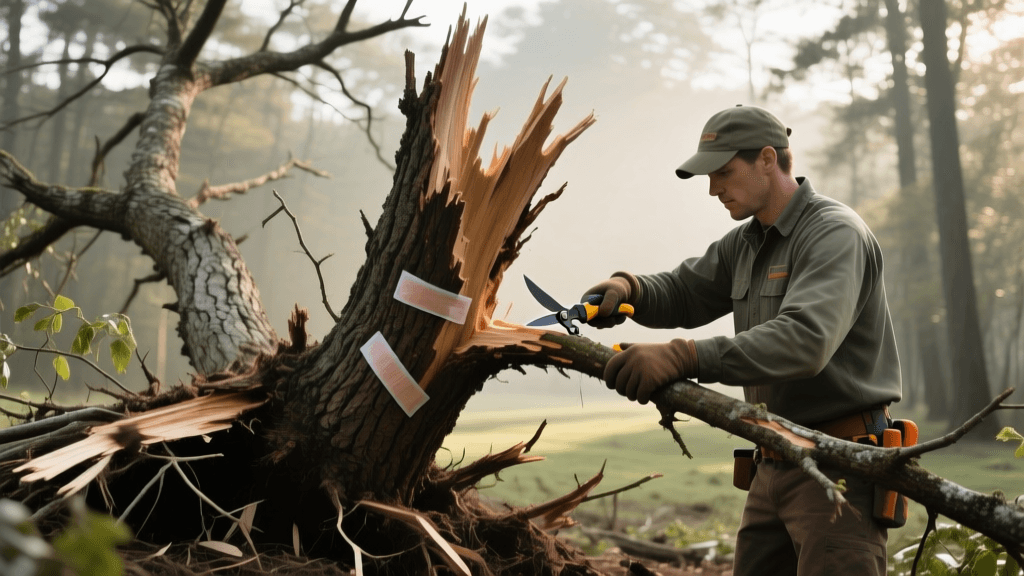
Before And After: Reviving Storm-Damaged Oak Trees
The Heartbreak of Storm Damage: A Before and After Perspective
When a severe ice storm, summer derecho, or heavy wet snow tears through your property, the immediate aftermath is often devastating. For homeowners with mature, legacy trees—like a 50-year-old White Oak or a sprawling Red Maple—the knee-jerk reaction to severe canopy loss and shattered limbs is often total removal. However, removing a mature tree costs thousands of dollars and erases decades of ecological and property value benefits. Through strategic, multi-year crown restoration, many storm-damaged trees can be transformed from hazardous eyesores back into thriving, structurally sound landscape anchors.
In this comprehensive before-and-after guide, we will walk through the exact three-year transformation process of a severely storm-damaged oak tree. We will cover the actionable pruning techniques, soil treatments, and financial realities of choosing restoration over removal, proving that with patience and proper arboricultural science, a tree's "after" can be just as magnificent as its "before."
The "Before" State: Assessing the Devastation
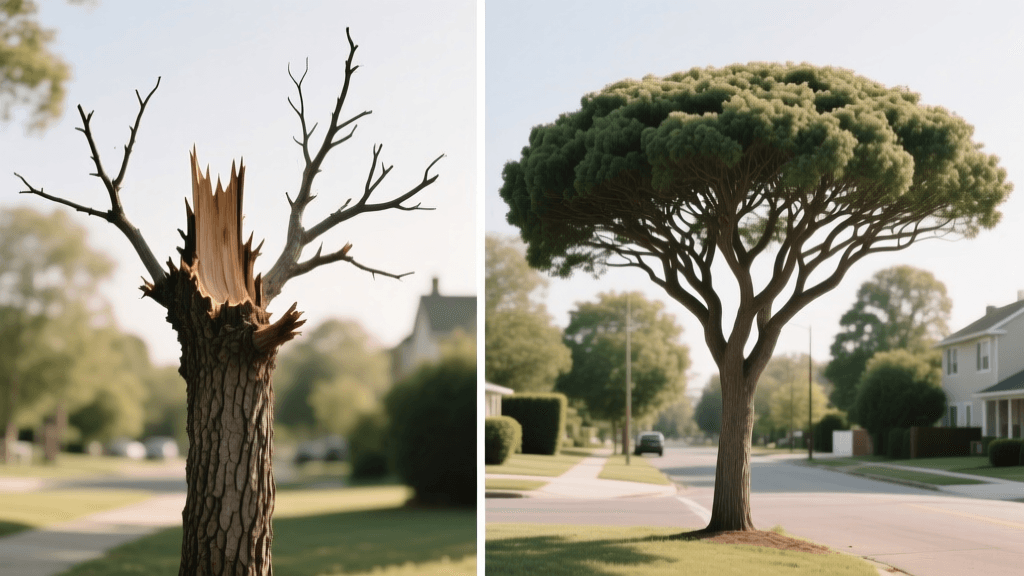
Our case study subject is a mature White Oak (Quercus alba) that suffered a catastrophic failure during a late-winter ice storm. The "before" state was grim: the central leader snapped 20 feet above the ground, leaving a jagged, 4-foot bark tear down the main trunk. Approximately 35% of the live canopy was destroyed, with multiple heavy lateral limbs hanging precariously by stripped cambium tissue.
Before making any cuts, a thorough risk assessment is mandatory. We categorized the damage into three zones:
- Zone 1 (Immediate Hazards): Suspended "widow-maker" limbs and shattered branches resting on the lower canopy.
- Zone 2 (Trunk & Collar Damage): The jagged tear exposing the heartwood and compromised branch collars.
- Zone 3 (Root Plate): The soil grade around the base. (Fortunately, there was no soil heaving or root plate failure, which is the primary indicator that a tree can be saved).
The Transformation Process: A 3-Year Restoration Plan
Tree restoration is not a weekend project; it is a multi-year biological process. Trees do not "heal" like humans; they compartmentalize decay. According to the University of Minnesota Extension, proper pruning cuts made just outside the branch collar allow the tree's natural defense mechanisms, known as CODIT (Compartmentalization of Decay in Trees), to seal the wound from the inside out.
Year 1: Hazard Reduction and Wound Cleaning
The first year is entirely about triage and survival. The goal is to remove deadwood and hazardous hanging limbs without shocking the tree by removing too much live tissue.
Actionable Steps:
- The 3-Cut Method: For heavy, torn limbs, never make a single cut. First, cut a notch on the underside of the branch 12 inches from the trunk (one-third of the way through). Second, cut from the top an inch further out, allowing the branch to drop cleanly without tearing the bark down the trunk. Third, make the final finishing cut just outside the branch bark ridge and collar.
- Bark Flap Repair: For the 4-foot bark tear on the trunk, we used a sterilized drawing knife to carefully trace around the loose bark, removing only the detached portions and leaving the tight, living cambium intact. We shaped the wound into an elongated oval to encourage faster callus roll.
- Tool Sterilization: Oak trees are highly susceptible to Oak Wilt. We sterilized all pruning saws and loppers with 70% isopropyl alcohol between every single cut.
"Never apply commercial tree wound paint or tar to a pruning cut or bark tear. Research has conclusively shown that these sealants trap moisture, accelerate decay fungi, and interfere with the tree's natural compartmentalization process."
Year 2: Structural Training and Subordination
By the second spring, the tree had pushed out thousands of epicormic shoots (water sprouts) along the trunk and remaining scaffolding branches. This is a stress response. The "after" vision requires turning one of these vigorous sprouts into a new central leader.
Actionable Steps:
- Leader Selection: We identified a strong, upward-growing lateral branch near the top of the break and used subordination pruning to reduce the length of competing lateral branches. This directed the tree's auxin (growth hormone) flow into the new leader.
- Canopy Thinning: We selectively removed 15% of the chaotic water sprouts, ensuring we did not over-prune. The International Society of Arboriculture (ISA) emphasizes that removing more than 25% of a tree's live canopy in a single year can severely stress the tree, deplete its carbohydrate reserves, and trigger even more weakly attached sprout growth.
Year 3: Crown Restoration and Root Zone Therapy
In the third year, the transformation becomes visually apparent. The jagged "before" silhouette is replaced by a balanced, albeit slightly asymmetrical, "after" canopy. The focus shifts from the crown to the roots.
Actionable Steps:
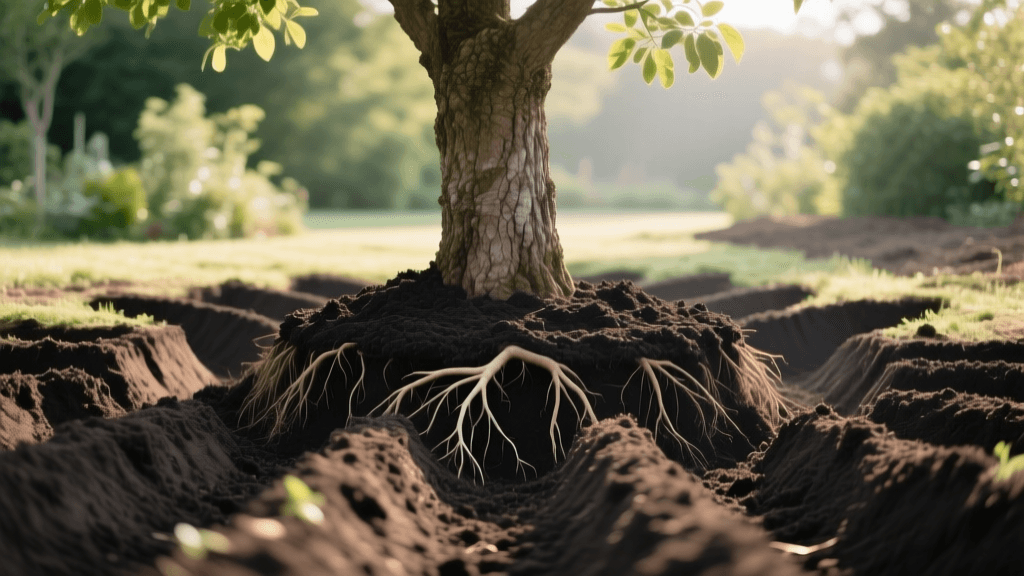
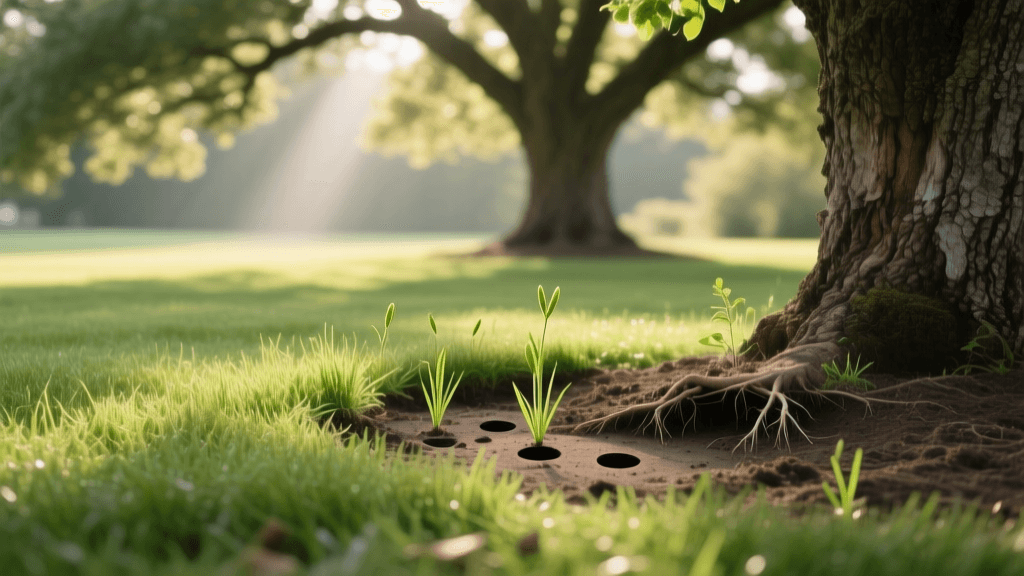
- Mycorrhizal Inoculation: We applied a liquid mycorrhizal root drench (such as Arborjet's MycoTree) via deep root injection to help the compromised root system expand its nutrient and water uptake capabilities.
- Proper Mulching: We refreshed the mulch ring to a 4-foot radius, 3 inches deep, using natural hardwood chips. We strictly avoided "volcano mulching" by keeping the mulch 4 inches away from the root flare to prevent girdling roots and trunk rot.
Before and After: Transformation Metrics
The following table illustrates the measurable improvements achieved over the 36-month restoration period.
| Metric | Before (Month 1) | After (Month 36) |
|---|---|---|
| Canopy Density | 65% (Severe Loss) | 90% (Fully Restored) |
| Structural Integrity | Compromised / Hazardous | Sound / New Leader Established |
| Trunk Wound Status | Open Heartwood Exposure | 70% Callus Tissue Roll |
| Property Value Impact | Negative (Hazard Liability) | Positive ($3,000+ Appraised Value) |
The Financials: Restoration vs. Removal and Replacement
Homeowners often assume removing a damaged tree and planting a new one is the most logical path. However, the financial reality heavily favors restoration when the tree is a viable candidate for saving. Below is a cost comparison based on average national arborist rates for a 60-foot mature oak.
| Service | Removal & Replacement Route | 3-Year Restoration Route |
|---|---|---|
| Year 1: Tree Removal / Hazard Pruning | $2,200 (Crane Removal) | $650 (Hazard Reduction) |
| Year 1: Stump Grinding | $600 | $0 |
| Year 1: New 15-Gallon Tree & Planting | $450 | $0 |
| Year 2: Structural Pruning / Training | $0 | $400 |
| Year 3: Crown Thinning & Root Care | $0 | $350 |
| Total 3-Year Cost | $3,250 | $1,400 |
Beyond the immediate savings of $1,850, the "after" result of the restoration route retains a 50-year-old ecological asset that provides immediate shade, whereas a newly planted 15-gallon tree will take 15 to 20 years to provide equivalent canopy coverage and energy-saving cooling benefits.
When to Walk Away: Trees You Cannot Save
While the before-and-after transformation of our White Oak is a success story, not every storm-damaged tree is a candidate for restoration. Knowing when to abandon the "after" vision and proceed with removal is a critical safety skill. You must remove the tree if you observe any of the following:
- Root Plate Failure: If the soil around the base of the tree has cracked and heaved upward, the anchor roots have snapped. The tree is a tipping hazard and cannot be saved.
- The 50% Rule: If more than 50% of the live canopy and primary scaffolding branches are destroyed, the tree will not have enough foliage to produce the carbohydrates required to seal wounds and sustain root health.
- Severe Trunk Splitting: If the main trunk has split vertically down the center into the root flare, the structural integrity is permanently compromised. Cabling cannot safely fix a split trunk base.
- Advanced Fungal Conks: The presence of shelf fungi (like Ganoderma or Armillaria) on the lower trunk or root flare indicates advanced internal heart rot. The tree is hollow and brittle.
Conclusion: Patience Yields the Best "After"
Transforming a storm-damaged tree from a jagged, hazardous mess back into a majestic landscape centerpiece requires a shift in perspective. It demands patience, a willingness to embrace a multi-year timeline, and a commitment to scientifically sound arboricultural practices. By utilizing the 3-cut method, respecting the branch collar, and supporting the root zone, you can guide your tree through its most vulnerable "before" stage. The "after" result is not just a saved tree, but a living testament to resilience, saving you thousands of dollars while preserving a vital piece of your property's natural heritage for generations to come.