Tree Care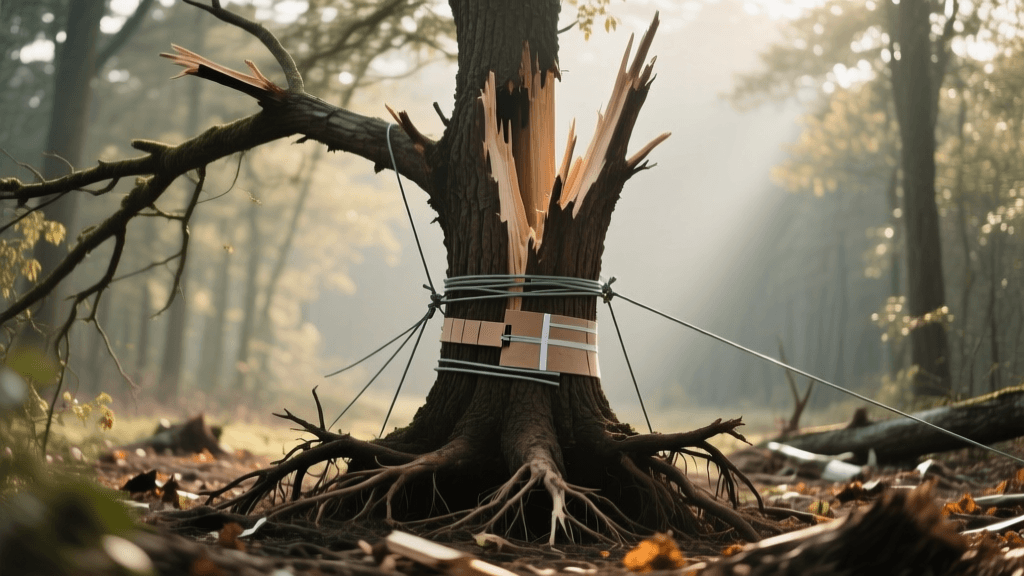
Transforming Storm-Damaged Trees: Before and After Pruning Guide
The "Before" State: Assessing Storm Devastation
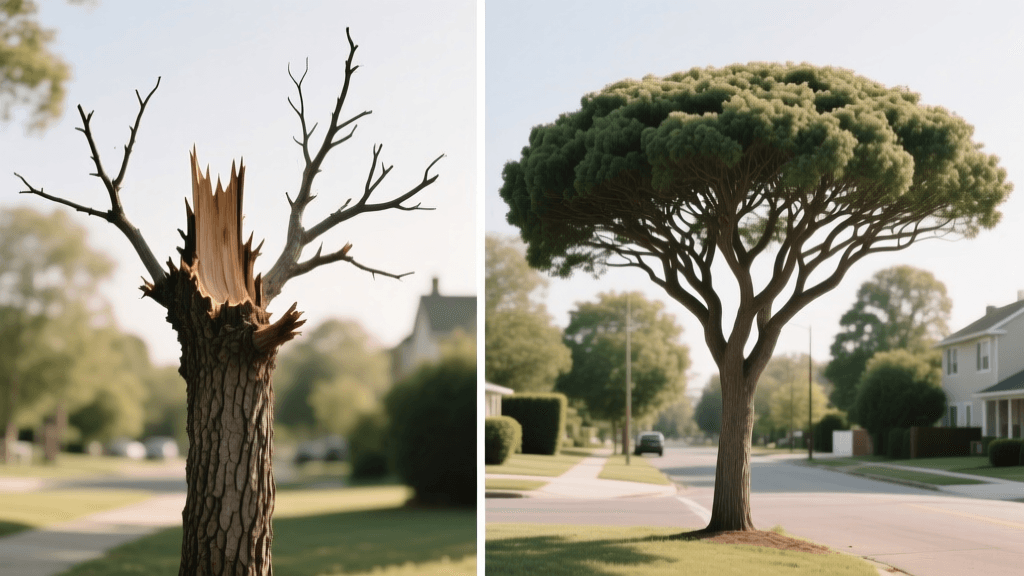
When a severe ice storm, microburst, or heavy snow event tears through your landscape, the immediate aftermath is often a scene of devastation. Mature shade trees that once provided a lush, protective canopy are suddenly left with jagged tears, hanging leaders, and splintered lateral branches. This is the critical "before" phase of tree care, where panic often leads to poor decisions like indiscriminate topping or premature removal. However, with a strategic crown restoration plan, many storm-damaged trees can undergo a remarkable transformation over a three-to-five-year period.
Before initiating any transformation, you must evaluate the tree's baseline health and structural viability. According to the University of Minnesota Extension, a tree is generally a candidate for restoration if it is relatively young or healthy prior to the storm, and if less than 50% of its crown has been destroyed. If the main trunk is split vertically or the tree has lost its central leader alongside major scaffold limbs, the "after" vision may be unsafe, and removal is the only responsible option.
Phase 1: Immediate Hazard Reduction (Days 1 to 7)
The first step in any before-and-after transformation is making the site safe. This is not the time for aesthetic pruning; it is triage. Your goal is to remove hanging limbs, clear broken branches that are resting on the roof or power lines, and make clean relief cuts on jagged stubs to prevent further bark tearing.
- Tool Selection: Use a sharp, curved-blade pruning saw (like a Silky Gomboy) for limbs between 2 and 5 inches in diameter. For smaller twigs and torn bark, use bypass hand pruners (such as Felco 2s).
- The Relief Cut: Never rip a heavy, broken branch directly from the trunk. Make an undercut 12 inches away from the trunk, followed by an overcut slightly further out. Once the weight of the branch falls away, make a final, clean cut just outside the branch collar.
- Safety Warning: If hanging limbs are near utility lines or require climbing a ladder with a chainsaw, stop immediately. The International Society of Arboriculture (ISA) strongly recommends hiring an ISA Certified Arborist for any hazard work involving tension wood or overhead obstacles.
Phase 2: The "After" Vision - Crown Restoration (Months 6 to 36)
Once the immediate hazards are cleared and the tree has had a growing season to compartmentalize the initial wounds (a biological process known as CODIT), the true transformation begins. Crown restoration is the systematic pruning of a damaged tree to re-establish a strong, dominant leader and a balanced scaffold structure.
Year 1: Cleaning and Subordination
In the first year post-storm, the tree will likely produce a flush of "watersprouts"—vigorous, vertical shoots emerging from the damaged lateral branches. While these look unsightly, they are the tree's emergency photosynthesis factories. Do not remove all of them. Instead, practice subordination pruning. Select the strongest, best-angled watersprout to become the new lateral branch tip, and shorten the competing sprouts to slow their growth. This redirects the tree's energy into structural wood rather than chaotic foliage.
Year 2 and 3: Establishing a New Leader
If the central leader was lost in the storm, your "after" transformation requires training a new one. Identify a strong, upward-growing lateral branch near the top of the remaining trunk. Using soft ties or splints, gently train this branch into a vertical position. Over the next two years, prune back competing upright branches to ensure your chosen leader remains dominant. By Year 3, the tree's silhouette will have shifted from a jagged, broken stump to a rounded, structurally sound canopy.
Before & After Case Study: The Ice-Damaged Red Oak
Consider a 40-foot Northern Red Oak that lost its primary central leader and three major right-side scaffold limbs during a February ice storm.
The Before: The tree looked heavily lopsided, with a massive, jagged wound at the apex exposing the heartwood, and a heavy lean to the left due to the missing right-side weight.
The Intervention: An arborist performed a hazard reduction cut in March, smoothing the apical wound to a clean oval to promote callus roll. In July, two vigorous watersprouts near the apex were subordinated, and the most vertical one was selected as the new leader. Over two years, the left-side canopy was lightly thinned (removing no more than 15% of live foliage) to reduce wind resistance and balance the visual weight.
The After (Year 4): The Red Oak now stands with a newly established, dominant central leader. The apical wound has nearly sealed over with woundwood, and the canopy is balanced, safe, and thriving.
Crown Restoration Timeline and Estimated Costs
Restoring a tree is a multi-year investment. Below is a structured breakdown of the transformation timeline, required actions, and average professional costs for a medium-sized mature tree (40-60 feet).
| Phase & Timeline | Primary Actions | Estimated Professional Cost |
|---|---|---|
| Triage (Days 1-7) | Hazard reduction, drop-crotch cuts, clearing debris. | $400 - $800 |
| Year 1 (Dormant Season) | Watersprout subordination, deadwood removal, wound cleaning. | $300 - $600 |
| Year 2 (Dormant Season) | Leader training, structural thinning, root zone mulching. | $250 - $500 |
| Year 3+ (Maintenance) | Routine structural pruning, health assessment, pest monitoring. | $150 - $350 |
Note: Costs vary widely based on regional labor rates, tree accessibility, and the necessity of crane assistance. Always obtain three quotes from ISA Certified Arborists.
Critical Mistakes That Ruin the "After"
Many homeowners sabotage their tree's transformation by applying outdated, harmful practices immediately after a storm.
- Tree Topping: Cutting all broken branches back to arbitrary, blunt stubs is known as topping. This destroys the tree's ability to compartmentalize decay and guarantees the growth of weakly attached, hazardous shoots. The Arbor Day Foundation explicitly warns against topping, noting that it often leads to the tree's eventual death.
- Wound Paint and Sealants: Do not paint pruning cuts or jagged tears with black tar, asphalt-based sealants, or household paint. Research conclusively shows that these sealants trap moisture and fungi against the wound, accelerating rot. Trees heal best when exposed to air, allowing natural callus tissue (woundwood) to form over the injury.
- Over-Pruning the Survivor Limbs: In an attempt to "balance" a lopsided tree, amateurs often strip healthy branches on the undamaged side. This starves the tree of the very leaves it needs to generate energy for root and wound repair.
Supporting the Transformation: Mulching and Watering
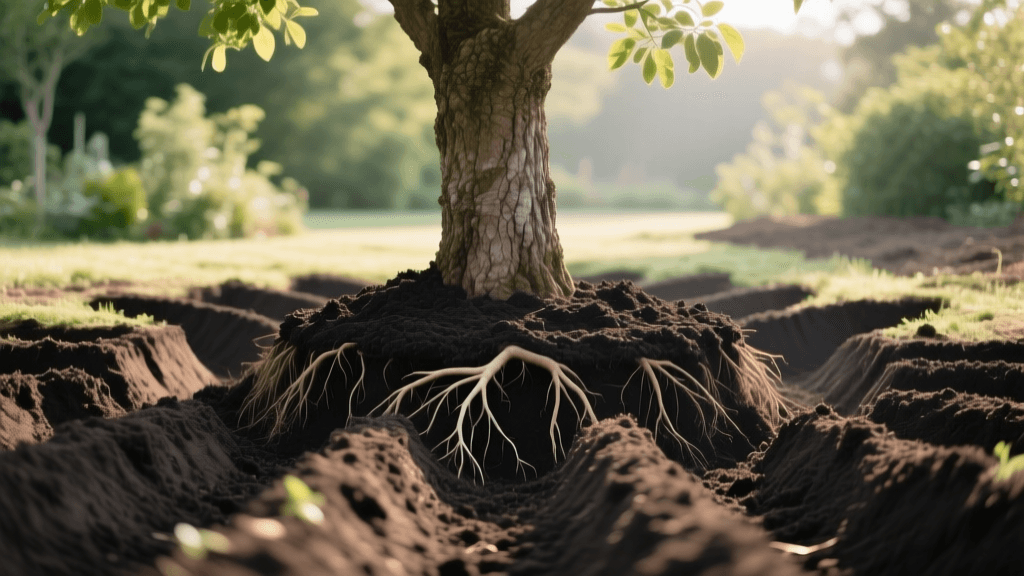
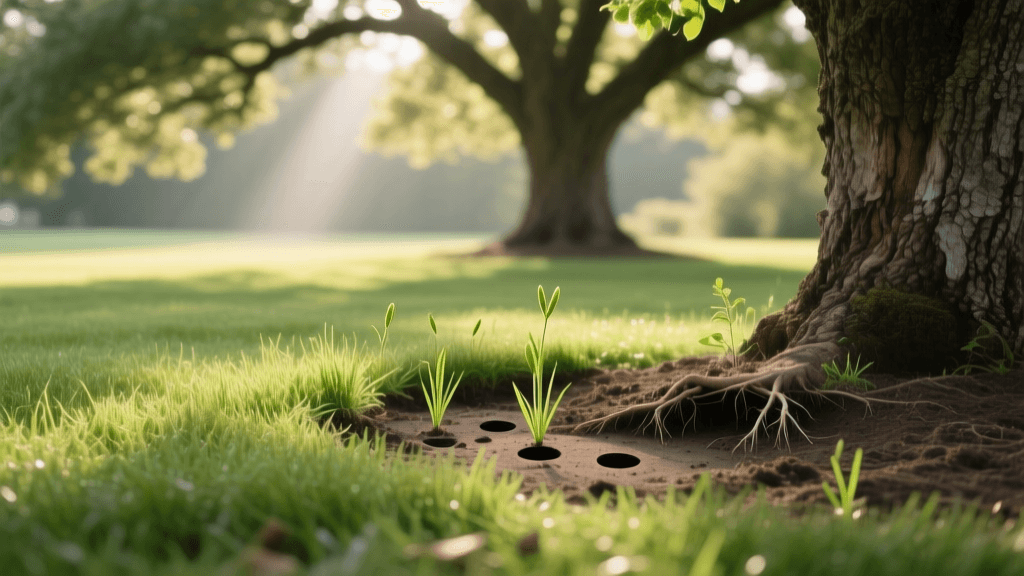
A successful before-and-after transformation extends below the soil line. A storm-damaged tree has lost a significant portion of its photosynthetic capacity, meaning its root system will soon experience dieback due to a lack of carbohydrates. You must support the remaining roots to keep the tree anchored and hydrated.
Apply a wide, shallow mulch ring to mimic the forest floor. Use organic arborist wood chips, creating a donut-shaped layer that is 3 inches deep and extends at least 3 feet from the trunk in all directions. Crucial: Keep the mulch at least 3 inches away from the actual trunk bark to prevent rodent damage and stem girdling roots. During the first two growing seasons post-storm, provide 1 inch of water per week (either via rainfall or a slow-drip soaker hose) to the outer edge of the drip line, where the fine, absorbing roots are located.
Conclusion: Patience Yields the Best Canopy
The transformation of a storm-damaged tree is not an overnight miracle; it is a partnership between skilled pruning and the tree's innate biological drive to survive. By resisting the urge to top or remove a viable tree, and instead committing to a multi-year crown restoration plan, you can guide your landscape from a scene of jagged devastation back to a lush, safe, and structurally sound canopy. Assess the damage carefully, hire certified professionals for hazardous work, and give nature the time it needs to heal.