Gardening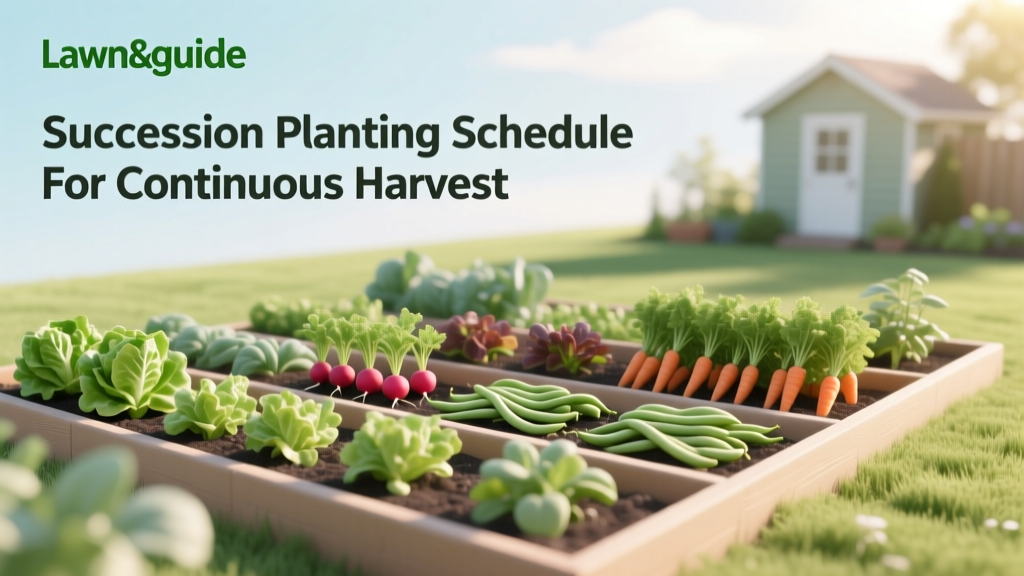
Succession Planting Schedule For Continuous Harvest
Understanding Succession Planting Fundamentals
Succession planting is a time-tested horticultural strategy that maximizes garden productivity by staggering plantings of the same or complementary crops throughout the growing season. Rather than sowing all seeds at once—risking harvest gluts followed by gaps—gardeners space sowings at calculated intervals to ensure steady yields from spring through fall. This method applies equally to vegetables like lettuce, radishes, and beans, and ornamental flowers such as zinnias, cosmos, and sweet peas. Crucially, success depends on aligning planting windows with local climate realities, soil temperature thresholds, and crop-specific maturity timelines.
Soil Preparation and Timing by USDA Hardiness Zone
Soil health directly influences succession success. Prior to each planting window, incorporate 2–3 inches of well-aged compost and conduct a pH test; most vegetables thrive between pH 6.0–7.0, while cosmos prefer slightly alkaline conditions (pH 6.5–7.5). University of Vermont Extension recommends testing soil every 2–3 years and adjusting fertility based on lab results—not visual cues alone (UVM Extension, 2022).
Planting dates must be calibrated to USDA zones. For example, in Zone 5b (e.g., Burlington, VT), direct-seed early lettuce every 10–14 days beginning April 15 until mid-July. In contrast, Zone 9a (e.g., Sacramento, CA) supports continuous lettuce sowing from October through April, with only brief summer breaks due to heat stress. The Royal Horticultural Society (RHS, 2021) advises using “days to maturity” rather than calendar dates alone—especially for cool-season crops sensitive to bolting above 75°F.
Key Zone-Based Sowing Windows
- Zone 3–4 (e.g., Anchorage, AK): First spinach sowing March 20; repeat every 18 days until June 10
- Zone 6b (e.g., Chicago, IL): Bush bean succession starts May 10; subsequent sowings every 14 days until August 15
- Zone 8b (e.g., Austin, TX): Kale can be planted March 1 and again September 15 for dual harvests
Spacing, Density, and Yield Optimization
Overcrowding undermines succession goals by reducing airflow, increasing disease pressure, and suppressing yield per square foot. Precise spacing ensures each plant receives adequate light, nutrients, and root space. For instance, ‘Bolero’ carrots require 2 inches between plants in rows spaced 12 inches apart—yielding approximately 0.75 lb per linear foot when harvested at 70 days. Similarly, ‘Black Seeded Simpson’ lettuce thrives at 6-inch spacing in 18-inch rows, producing ~1.2 heads per square foot over three successive cuttings.
Flowers follow similar logic: zinnia ‘Zowie! Yellow Flame’ performs best at 8-inch spacing, yielding an average of 12–15 stems per plant when succession-sown every 12 days from late May through early August in Zone 7a (Richmond, VA). Overly dense plantings reduce stem length and flower size—critical for cut-flower growers.
Recommended Spacing and Yield Benchmarks
- Radishes: 1 inch apart, 3-inch row spacing → 12–15 radishes per foot, ready in 22–28 days
- Swiss chard: 12 inches between plants, 18-inch rows → 1.5 lbs per plant per season across 3–4 harvests
- Cosmos ‘Sonata Mix’: 12 inches apart → 25–30 blooms per plant over 8 weeks
Real-World Data: University Trial Results
Field trials conducted by Cornell Cooperative Extension in Ithaca, NY (2020–2023) quantified yield differences between single-batch and succession-planted plots. Across 12 vegetable varieties, succession planting increased total season-long yield by 37% on average—with the largest gains seen in bush beans (+52%) and arugula (+48%). Notably, plots with 3-week intervals outperformed those with 2-week intervals for heat-sensitive crops, confirming that optimal spacing varies by species and ambient temperature.
A parallel study at Oregon State University’s North Willamette Research and Extension Center tracked soil moisture depletion rates under successive sowings. Researchers found that consistent mulching (3 inches of shredded bark) reduced irrigation needs by 29% compared to bare-soil succession beds—highlighting how cultural practices compound planting timing effects.
Practical Implementation Calendar
Building a functional succession schedule requires integrating frost dates, crop maturity, and labor capacity. Start with your area’s average last spring frost date (e.g., April 10 in Zone 6b) and first fall frost date (October 15). Then work backward and forward using crop-specific “days to maturity” and “days to harvest” metrics. For example, ‘Provider’ snap beans mature in 50 days—so the final sowing must occur no later than September 5 in Zone 6b to allow harvest before frost.
Use intercropping within succession windows to further extend harvests. Pair quick-maturing radishes (24 days) with slower-maturing broccoli (65 days); the radishes are pulled before broccoli needs the full space. This technique increases land-use efficiency without altering sowing frequency.
Sample 12-Week Succession Plan for Zone 6b
The following schedule assumes standard 30×30 ft raised beds with loamy, well-drained soil:
| Week | Crop | Quantity Planted | Spacing | Expected Harvest Window |
|---|---|---|---|---|
| Week 1 | Lettuce ‘Salad Bowl’ | 12 ft row | 6″ × 18″ | June 10–20 |
| Week 4 | Bush beans ‘Jade’ | 8 ft row | 4″ × 18″ | July 25–August 15 |
| Week 8 | Kale ‘Red Russian’ | 6 plants | 18″ × 24″ | September 20–October 30 |
Adjust quantities based on household size: USDA dietary guidelines suggest 10–12 sq ft of vegetable garden per person for moderate consumption. For cut flowers, allocate 1 sq ft per zinnia or cosmos plant to support commercial-grade stem production.
Troubleshooting Common Pitfalls
Uneven germination often stems from inconsistent soil moisture during emergence—particularly problematic for small-seeded crops like carrots and lettuce. Use floating row covers to retain moisture and deter pests, removing them once seedlings reach 2 inches tall. Another frequent error is ignoring soil temperature: planting peas below 40°F delays germination by up to 21 days and increases rot risk. Penn State Extension confirms that pea seeds germinate optimally at 45–75°F, with fastest emergence at 60–65°F (Penn State Extension, 2023).
Pest pressure escalates when successive plantings create continuous host availability. Rotate families—not just species—between succession cycles. Avoid planting brassicas (kale, broccoli) in the same bed more than once every three years. Instead, alternate with alliums (onions, leeks) or solanaceous crops (tomatoes, peppers) to disrupt pest life cycles.
“Succession planting isn’t about planting more—it’s about planting smarter. Every seed sown outside its thermal and biological window represents lost potential.” — Dr. Linda Chalker-Scott, Washington State University Extension (2021)
Track each sowing in a simple log: date, variety, quantity, observed emergence date, first harvest date, and total yield. Over time, this builds a personalized database far more accurate than generic zone charts. Gardeners in Portland, OR, reported refining their radish intervals from 10 to 14 days after analyzing three seasons of harvest logs—reducing bolting incidence by 63%.
Remember that soil biology evolves with repeated cropping. Incorporate cover crops like buckwheat or crimson clover between major successions to suppress weeds, fix nitrogen, and improve structure. At the University of Minnesota’s Horticultural Research Center, plots receiving winter rye cover crops between lettuce successions showed 22% higher organic matter content after two seasons—directly correlating with improved water retention during midsummer dry spells.
Succession planting rewards observation and iteration. A single season’s adjustments—shifting a bean sowing by five days, widening carrot spacing by half an inch, or swapping ‘Bolero’ for ‘Nantes’ based on texture preference—compound into significant long-term gains. It transforms gardening from episodic effort into continuous dialogue with soil, season, and species.
