
Landscaping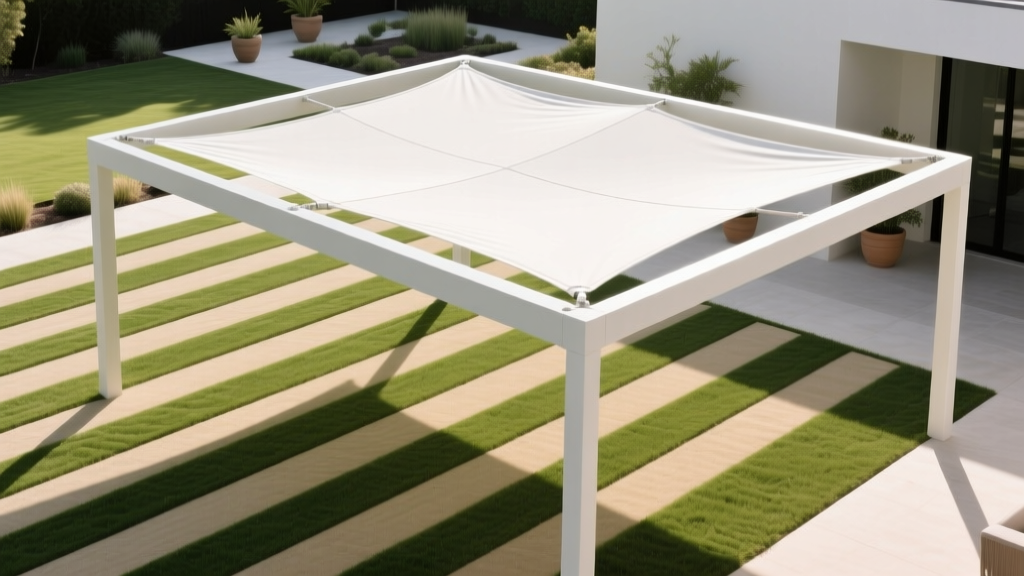
2026 Pergola & Sunbrella Sail Guide: Aligning Lawn Stripe Patterns
Emily WatsonPublished
The Intersection of Hardscaping and Lawn Striping
Welcome to 2026, where outdoor living spaces are no longer just functional areas for patio furniture; they are expansive canvases for geometric artistry. As a landscaping enthusiast, you already know the deep satisfaction of rolling perfect checkerboard, diagonal, or wave stripes into your turf using a heavy roller and a precision striping kit. But have you ever considered extending those pristine, manicured lines into the third dimension? Building a pergola with a custom Sunbrella shade sail canopy offers a unique, highly aesthetic opportunity to align hardscaping shadows and structural lines with your lawn's visual patterns.
When the vertical posts of a pergola and the taut, angled edges of a shade sail run perfectly parallel to the light and dark bands of a striped lawn, the entire property looks professionally designed. This guide will walk you through planning, material selection, and construction techniques to ensure your 2026 pergola project enhances, rather than disrupts, your meticulously striped turf.
Planning the Pergola Footprint to Match Turf Lines
The most common mistake homeowners make is treating the pergola as an isolated island in the yard. To achieve aesthetic continuity, your pergola's footprint must mathematically align with your mowing patterns. Most commercial lawn stripers and 2026 zero-turn mower deck striper kits lay down bands in 22-inch to 26-inch increments.
Before you dig a single post hole, measure your exact stripe width. If your mower deck and striping kit produce a 24-inch stripe, you should design your pergola post spacing to be exact multiples of that number. For example, spacing your posts 96 inches apart (exactly four stripes) or 120 inches apart (exactly five stripes) ensures that when you mow past the structure, the lines flow seamlessly through the pergola's footprint. According to the University of Minnesota Extension, maintaining consistent mowing lines and alternating patterns periodically prevents turf wear, meaning your geometric alignment will also promote a healthier lawn beneath and around the pergola.
Selecting 2026 Sunbrella Fabrics for Visual Contrast
The canopy material is where the aesthetic pattern truly comes to life. Sunbrella's 2026 outdoor canopy and shade sail collections feature advanced UV-resistant weaves with deeper, more colorfast pigments than ever before. When selecting your fabric, consider the color of your turf in its peak growing season and the specific striping pattern you employ.
For cool-season grasses like Kentucky Bluegrass, which exhibit a deep, rich emerald hue when rolled, lighter or highly contrasting neutral tones work best. For warm-season grasses like Bermudagrass, which can take on a slightly yellow-green tint in late summer, earthy tones provide a stunning complementary contrast.
| Fabric Color Line (2026) | Best Turf Match | Aesthetic Effect | Avg. Cost Per Sq. Yard |
|---|---|---|---|
| Slate Gray / Charcoal | Kentucky Bluegrass | Modern, high-contrast geometric lines | $85 - $110 |
| Canvas White / Oyster | Tall Fescue | Classic, crisp, reflects heat effectively | $75 - $95 |
| Earthy Terracotta | Bermudagrass / Zoysia | Warm, complementary desert-modern vibe | $90 - $120 |
| Deep Navy / Maritime | Perennial Ryegrass | Nautical, bold, deep shadow enhancement | $85 - $115 |
Step-by-Step Construction for Pattern Continuity
To ensure the shadows cast by your pergola mimic the straight lines of your lawn stripes, precision during construction is non-negotiable. A slightly skewed pergola will cast crooked shadows that clash with your straight mowing lines.
1. Post Setting and Alignment
Use a laser transit level rather than a traditional string line to mark your post locations. String lines can sag over long distances, introducing micro-curves that will ruin the parallel illusion. Dig your post holes below the 2026 local frost line codes, and use Simpson Strong-Tie structural connectors and post bases to secure 6x6 pressure-treated timber or composite posts. The rigid metal bases prevent the posts from twisting as the wood cures, maintaining your exact geometric alignment.
2. Beam and Rafter Placement
When installing the overhead beams and rafters, align them so they run either perfectly parallel or perfectly perpendicular to your primary lawn striping direction. When the midday sun hits the rafters, they will cast distinct, linear shadows across the grass. If the rafters are parallel to your mowing stripes, the shadows will act as 'ghost stripes,' deepening the visual effect of the dark turf bands.
Tensioning the Sunbrella Canopy for Geometric Precision
A sagging shade sail destroys the clean, architectural lines you are trying to achieve. To maintain the crisp geometry required to complement lawn striping, the Sunbrella fabric must be tensioned flawlessly.
- Perimeter Wire Rope: Sew a marine-grade 316 stainless steel wire rope into the perimeter seams of the Sunbrella sail. This prevents the edges from scalloping or bowing inward when tension is applied.
- Turnbuckles and D-Rings: Use heavy-duty stainless steel turnbuckles at every attachment point. This allows you to micro-adjust the tension in 2026's fluctuating humidity and temperature, keeping the sail's edges razor-straight.
- Asymmetric Angles: For a dynamic look that still respects lawn lines, mount the sail's corners at slightly different heights. A 12-inch to 18-inch drop across the diagonal encourages rainwater runoff while casting a dramatic, angled shadow that cuts across the lawn stripes like a modern art installation.
'The secret to elite landscape design in 2026 is the invisible grid. When the edges of your overhead shade structures mathematically align with the mowing lines on the ground, the human brain registers the space as exceptionally harmonious, even if the homeowner cannot articulate exactly why.' - Contemporary Landscape Architecture Journal
Shadow Play and Turf Health Under the Canopy
While the aesthetic alignment of shadows and stripes is visually stunning, you must also consider the agronomic impact of the Sunbrella sail on the turf below. Shade sails block varying degrees of UV light. If your pergola is positioned over a section of the lawn that receives heavy afternoon shade from the sail, the grass beneath may grow more slowly and require less frequent mowing.
To maintain the sharp contrast of your lawn stripes under the pergola, raise your mowing deck by half an inch in the shaded zone. Taller grass blades bend more uniformly under the weight of a lawn striper roller, resulting in a darker, more pronounced stripe. Furthermore, Sunbrella's outdoor fabric guidelines recommend periodic cleaning of the canopy to prevent mold spores from dropping onto the turf below, ensuring your grass remains vibrant and healthy enough to hold a crisp stripe.
Final Thoughts on 2026 Hardscape Integration
Integrating a pergola and Sunbrella shade sail into a lawn striping regimen elevates a standard backyard into a cohesive, master-planned estate. By treating your mower deck width as the foundational unit of measurement for your hardscaping, selecting high-contrast 2026 fabrics, and tensioning the canopy to cast deliberate, linear shadows, you bridge the gap between turf care and architectural design. Grab your striping kit, fire up the laser level, and prepare to mow the most satisfying lines of your life.

