Home & Garden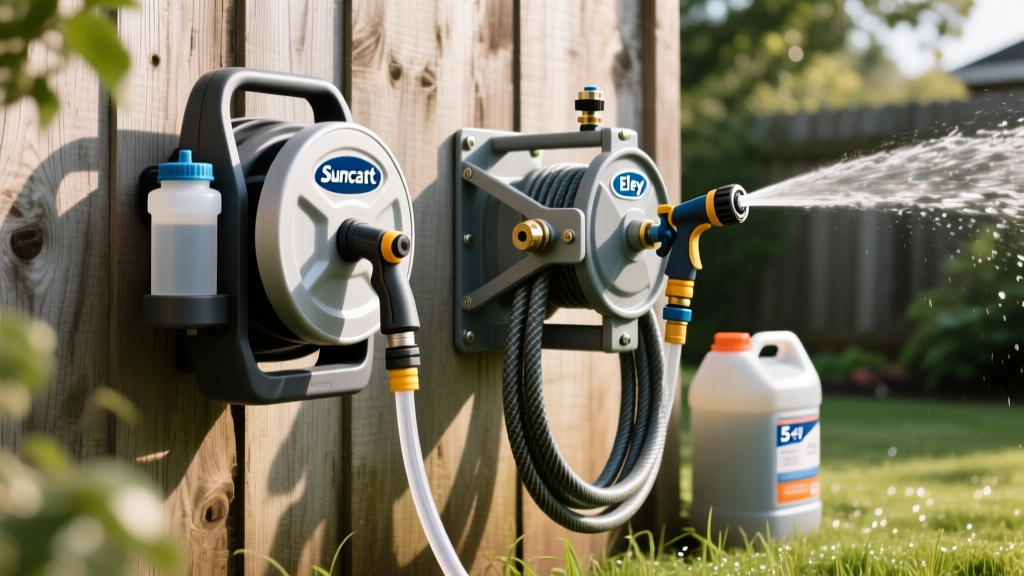
Suncast vs Eley Wall Hose Reels: 2026 Fertilizer Setup Guide
David ParkPublished
The Intersection of Hose Reels and Fertilizer Types in 2026
Welcome to the 2026 lawn care season. Over the past few years, the home and garden industry has seen a massive shift toward liquid fertilizers, water-soluble organics, and precise fertigation schedules. While most homeowners spend hours researching the best nitrogen-phosphorus-potassium (NPK) ratios or the newest organic kelp extracts, they often overlook the most critical delivery system in their arsenal: the garden hose and its reel. A kinked hose or a degraded fitting can ruin your water pressure, completely throwing off the siphon ratio of your hose-end sprayer and leading to severe fertilizer burn or under-feeding.
When it comes to wall-mount hose reels, the debate almost always narrows down to two major contenders: the premium, metal-constructed Eley Wall-Mount Reel and the budget-friendly, enclosed resin Suncast Wall-Mount Reel. But how do these two vastly different designs hold up against the harsh realities of modern fertilizer application? In this comprehensive guide, we will compare the Suncast and Eley wall-mount hose reels specifically through the lens of fertilizer types, chemical resistance, and seasonal feeding schedules to help you build the ultimate 2026 lawn care setup.
Why Your Hose Reel Matters for Liquid Fertilizers
To understand why the reel matters, we must first look at how hose-end sprayers work. These devices rely on the Venturi effect—using water pressure to create a vacuum that siphons liquid fertilizer concentrate from the attached bottle and mixes it into the water stream. According to the University of Minnesota Extension, maintaining consistent water pressure is vital for the even application of lawn chemicals and liquid nutrients. If your hose kinks because it was improperly wound on a cheap reel, the pressure drops, the siphoning stops, and you end up applying plain water instead of your expensive liquid iron or nitrogen blend.
Furthermore, liquid fertilizers—especially synthetic blends, acidic pH adjusters, and iron sulfates—are highly corrosive. They can degrade cheap rubber washers, stain plastic fittings, and cause internal corrosion in low-quality metal components. Therefore, the material composition of your hose reel and its fittings is just as important as its mechanical winding action.
Eley Wall-Mount Hose Reel: The Premium Fertigation Choice
Eley has long been the gold standard for garden hose storage, and their 2026 wall-mount models continue to dominate the premium market. Constructed from heavy-duty, rust-proof aluminum alloy and featuring solid brass fittings, the Eley reel is practically impervious to the corrosive nature of liquid lawn chemicals.
Pros for Fertilizer Application:
- Chemical Resistance: The brass and aluminum construction will not degrade, stain, or become brittle when exposed to concentrated liquid fertilizers, iron, or acidic soil amendments.
- Zero-Kink Winding: Eley's proprietary guide system ensures the hose lays flat and perfectly aligned, eliminating kinks and preserving the water pressure needed for hose-end sprayers and smart fertigation injectors.
- Drinking-Water Safe: If you are using organic, food-safe liquid fertilizers for your garden-to-table vegetable beds, Eley's 100% drinking-water-safe materials ensure no toxic plastics or lead leach into your soil.
Cons:
- Price Point: At $250 to $320 in 2026, it is a significant investment compared to resin alternatives.
- Exposed Design: Because it is an open-frame reel, the hose itself is exposed to UV rays, which can degrade the rubber over time if you do not purchase a high-quality polyurethane hose.
Suncast Wall-Mount Reel: The Budget-Friendly Resin Option
Suncast offers a variety of wall-mount reels, primarily constructed from high-impact poly resin. Models like the Suncast Swivel or Hideaway reels are incredibly popular for their enclosed designs, which protect the hose from UV damage and keep the garden looking tidy. Priced between $60 and $95 in 2026, they are an attractive option for casual gardeners.
Pros for Fertilizer Application:
- UV Protection: The enclosed or semi-enclosed resin casing shields the hose from the sun, extending the life of the rubber and preventing micro-cracks that could leak liquid fertilizer onto your patio.
- Affordability: Leaves more room in the budget for high-end organic liquid fertilizers and soil amendments.
- Spill Containment: Many Suncast models feature a base or casing that can catch minor drips from hose-end sprayers before they hit your deck or driveway.
Cons:
- Chemical Staining and Degradation: Poly resin is susceptible to staining from liquid iron and copper-based fungicides. Over time, concentrated synthetic nitrogen spills can make the plastic brittle.
- Winding Friction: The internal swivel mechanisms on budget resin reels can create drag, increasing the likelihood of hose twists and kinks that disrupt fertilizer siphon rates.
Head-to-Head Comparison Chart
| Feature | Eley Wall-Mount (2026) | Suncast Resin Wall-Mount (2026) |
|---|---|---|
| Primary Material | Rust-proof aluminum & solid brass | High-impact poly resin |
| Chemical Resistance | Excellent (handles acidic/iron mixes) | Moderate (prone to staining & brittleness) |
| Price Range | $250 - $320 | $60 - $95 |
| Warranty | 10-Year Zero-Leak Guarantee | 1-to-5 Year Limited Warranty |
| Best Fertilizer Type | Synthetic, Iron, & Hose-End Injectors | Granular wash-in & mild organics |
| Hose Protection | Exposed (requires UV-rated hose) | Enclosed / UV Shielded |
The 2026 Liquid Fertilizer Schedule & Hose Reel Maintenance
To maximize the lifespan of your chosen reel and ensure a pristine lawn, you must align your hose maintenance with your seasonal fertilizer schedule. The Environmental Protection Agency (EPA) heavily emphasizes the importance of precise nutrient application to prevent runoff and protect local waterways. A well-maintained hose and reel system is your first line of defense against accidental over-application caused by equipment failure.
Early Spring (March - April): Pre-Emergent & Liquid Iron
Spring often requires the application of liquid iron to combat winter-induced chlorosis (yellowing) and liquid pre-emergents to stop crabgrass. Reel Impact: Liquid iron is notorious for leaving deep, rust-colored stains. If you are using a Suncast resin reel, you must wipe down the casing immediately after use. Eley's aluminum and brass fittings will not stain, but you should still flush the hose to prevent iron buildup inside the rubber lining.
Late Spring (May - June): Nitrogen & Kelp Blends
This is the peak growing season, requiring heavy doses of liquid nitrogen and organic kelp extracts to promote deep root growth and drought resistance. Reel Impact: Kelp and fish emulsion are incredibly sticky and can attract pests. When winding your hose back onto the Eley or Suncast reel, use a damp cloth to wipe the final 10 feet of the hose to prevent sticky residue from gumming up the reel's winding mechanism.
Summer (July - August): Stress Management & Humic Acids
Summer fertilization shifts to soil conditioners like humic and fulvic acids, which help the grass retain moisture during heatwaves. Reel Impact: These dark, viscous liquids can clog hose-end sprayers. Always detach the sprayer and run clear water through the hose for 60 seconds before winding it back onto the reel. This prevents the dark liquid from baking inside the hose under the summer sun, which can cause internal flaking and block the Eley's brass fittings.
Fall (September - November): Winterizers
Fall requires high-potassium winterizers to prepare the turf for freezing temperatures. Reel Impact: As you prepare to winterize your garden, you must completely drain the hose and the reel's internal valve. Water left inside the Suncast swivel joint or the Eley brass valve will freeze, expand, and crack the housing. Eley's brass valves are more forgiving, but draining is non-negotiable for both brands.
Expert Tips for Hose-End Fertilizer Sprayers
Regardless of whether you choose Suncast or Eley, follow these best practices for 2026 fertigation:
- Install an Anti-Siphon Valve: If you are injecting liquid fertilizers directly into your hose line, always use an anti-siphon valve between the spigot and the reel. This prevents fertilizer-laced water from backflowing into your home's drinking water supply.
- Upgrade to a Polyurethane Hose: Traditional rubber hoses are heavy and prone to memory-kinks. Pair your Eley or Suncast reel with a 50-foot or 75-foot polyurethane hose. They are lightweight, highly resistant to chemical degradation, and lay perfectly flat on the reel.
- The 30-Second Flush: Never leave a hose-end sprayer attached to the hose when winding it onto the reel. The weight of the sprayer will bend the hose neck, creating a permanent weak point that will eventually leak fertilizer concentrate onto your lawn, causing a severe chemical burn patch.
Conclusion: Which Reel Wins for Fertilizer Schedules?
When evaluating the Suncast vs. Eley wall-mount hose reels from the perspective of a rigorous 2026 fertilizer schedule, the winner depends entirely on your application methods. If your lawn care routine relies heavily on hose-end sprayers, liquid iron, synthetic nitrogen blends, and smart fertigation injectors, the Eley Wall-Mount Reel is the undisputed champion. Its chemical-resistant brass and aluminum construction, combined with its zero-kink winding system, ensures the precise water pressure and material durability required for serious lawn feeding.
However, if your schedule primarily involves washing in granular fertilizers, using mild organic compost teas, and you prioritize UV protection and budget, the Suncast Resin Wall-Mount Reel remains a capable, tidy, and cost-effective alternative. Just be prepared to wipe down the resin casing after handling iron or copper-based treatments to keep your garden looking as pristine as your turf.
