Pest Control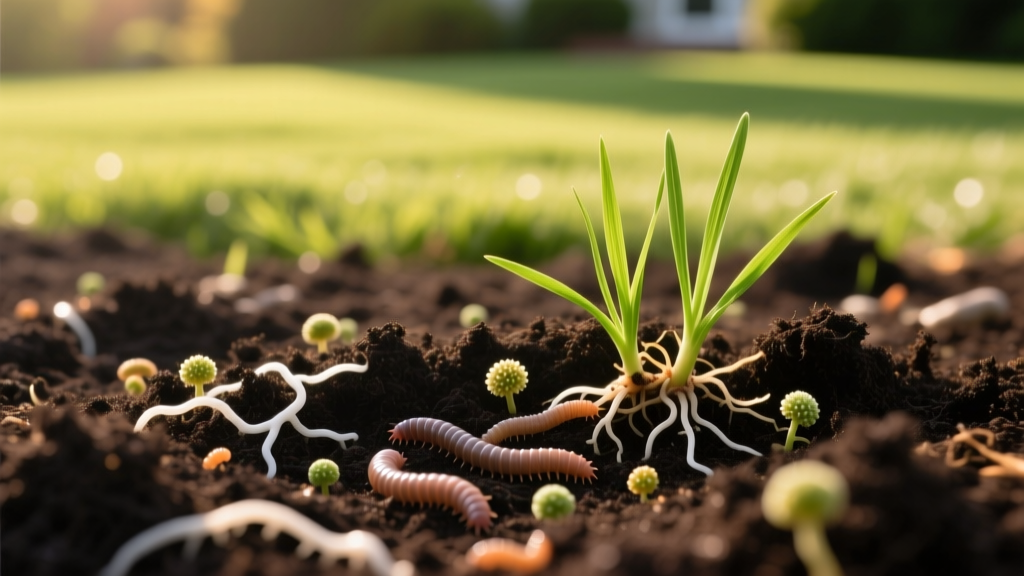
Suppress Soil Pests Using Compost And Microbes
David ParkPublished
The Paradigm Shift: From Eradication to Ecological Balance
For decades, the standard approach to managing soil-borne lawn pests—such as white grubs, root-knot nematodes, and turf-damaging fungi—has relied heavily on synthetic chemical nematicides and insecticides. While products containing imidacloprid or carbaryl offer quick knockdowns, they often devastate the soil's natural biology, leading to a cycle of dependency and secondary pest outbreaks. Modern Integrated Pest Management (IPM) recognizes that the most sustainable defense against soil pests lies beneath the surface. By prioritizing soil health and utilizing high-quality compost, homeowners can cultivate a thriving soil food web that naturally suppresses pest populations.
The Environmental Protection Agency (EPA) notes that composting not only reduces waste but also enriches soils, suppresses plant diseases and pests, and reduces the need for chemical fertilizers. When you feed the soil ecosystem, you recruit a microscopic army that works around the clock to protect your turfgrass roots.
The Soil Food Web: Nature’s Underground Army
According to the USDA Natural Resources Conservation Service (NRCS), soil health is defined as the continued capacity of soil to function as a living ecosystem. A healthy lawn soil is teeming with billions of bacteria, fungi, protozoa, and beneficial nematodes. These organisms form a complex food web that regulates nutrient cycling and keeps potential pests in check.
When soil is degraded by compaction, overuse of synthetic salts, or lack of organic matter, the fungal and bacterial networks collapse. This biological vacuum is quickly filled by opportunistic, fast-reproducing pests like plant-parasitic nematodes and fungus gnats. Reintroducing organic matter through compost restores the habitat required for predatory organisms to thrive, effectively outcompeting and consuming turf pests before they can cause visible damage.
Mechisms of Pest Suppression in Compost
Properly cured, thermophilic compost suppresses soil-borne pests through three primary biological mechanisms:
- Competitive Exclusion: Beneficial microbes rapidly colonize the rhizosphere (the soil zone surrounding grass roots). By consuming root exudates and occupying physical space, they starve out pathogenic fungi and deter pest insects from laying eggs near the root zone.
- Antibiosis: Certain compost-dwelling bacteria and fungi, such as Trichoderma and Bacillus subtilis, produce natural antibiotics and chitin-degrading enzymes. These compounds actively break down the exoskeletons of soft-bodied soil pests and the cell walls of harmful fungal spores.
- Predation and Parasitism: A compost-rich environment supports omnivorous and predatory nematodes, as well as soil-dwelling arthropods (like predatory mites and ground beetles), which actively hunt and consume turf-destroying grubs and parasitic nematodes.
Target Pests Managed by Soil Microbes
White Grubs (Japanese Beetles, June Bugs, Chafers)
White grubs feed on turfgrass roots, causing the lawn to peel back like a carpet. A soil ecosystem rich in organic matter supports natural grub predators, such as ground beetles, rove beetles, and entomopathogenic (insect-killing) nematodes. Furthermore, a thick, microbially active thatch layer deters adult beetles from laying eggs, as they prefer the bare, compacted soil of degraded lawns.
Plant-Parasitic Nematodes
Root-knot and sting nematodes pierce grass roots, causing stunted growth and yellowing. High-quality compost increases the population of nematode-trapping fungi. These specialized fungi form adhesive nets or constricting rings that capture and consume parasitic nematodes, protecting the turf root system without the need for toxic soil fumigants.
Fungus Gnats (The Uncured Compost Warning)
While compost is a powerful tool, it must be fully cured. The University of California Integrated Pest Management (UC IPM) program warns that poorly composted organic matter, raw manure, or waterlogged soils create the perfect breeding ground for fungus gnats. These pests feed on decaying matter and fungi, and their larvae can damage tender grass roots. Always ensure your compost has reached thermophilic temperatures (131°F to 160°F) during processing to kill gnat eggs and is fully stabilized before application.
Actionable Composting Strategies for Pest Control
1. Strategic Top-Dressing
Top-dressing involves spreading a thin layer of compost over the lawn to inoculate the soil with beneficial microbes.
- Timing: Early fall or late spring when soil temperatures are between 60°F and 70°F.
- Preparation: Core aerate the lawn first to create channels for the compost and microbes to reach the root zone.
- Application Rate: Apply 1/4 to 1/2 inch of finely screened, fully cured compost. (Bulk compost typically costs $30–$50 per cubic yard; one cubic yard covers roughly 1,000 square feet at a 1/4-inch depth).
- Method: Use a landscape rake or a push broom to work the compost down into the turf canopy and aeration holes. Water deeply immediately after to activate the microbes.
2. Aerated Compost Tea (ACT) Drench
Compost tea extracts water-soluble nutrients and multiplies beneficial aerobic microbes, allowing them to penetrate deep into the soil profile.
- Recipe: In a 5-gallon bucket, combine 4 gallons of dechlorinated water, 2 cups of high-quality vermicompost or thermophilic compost, and 1 tablespoon of unsulfured blackstrap molasses (as a microbial food source).
- Brewing: Use an aquarium air pump to vigorously aerate the mixture for 24 to 36 hours. The tea should smell earthy and sweet; if it smells sour or rotten, discard it.
- Application: Dilute 1:1 with water and apply via a watering can or pump sprayer at a rate of 1 gallon per 100 square feet. Apply in the early morning or late evening to protect microbes from UV degradation.
3. Inoculating with Beneficial Nematodes
For severe grub infestations, you can use your compost tea as a carrier for beneficial nematodes, specifically Heterorhabditis bacteriophora (Hb). Purchase live Hb nematodes from a reputable biological supplier, mix them into your freshly brewed (and cooled below 80°F) compost tea, and apply immediately. The compost tea provides a protective, moist environment that helps the nematodes survive the journey into the soil.
Comparison Chart: Chemical vs. Biological Soil Pest Control
| Feature | Synthetic Chemical Pesticides | Compost & Biological IPM |
|---|---|---|
| Initial Cost | Low to Moderate ($15 - $30 per application) | Moderate ($30 - $50 per cubic yard of compost) |
| Long-Term Cost | High (Requires repeated applications) | Low (Builds self-regulating soil ecosystem) |
| Impact on Soil Health | Negative (Kills beneficial microbes, degrades structure) | Highly Positive (Improves drainage, aeration, and fertility) |
| Target Specificity | Broad-spectrum (Kills pests and beneficial insects) | Highly Specific (Predators target only pests) |
| Pest Resistance | Pests often develop chemical resistance over time | Pests cannot develop resistance to biological predation |
Common Mistakes That Invite Soil Pests
Even well-intentioned homeowners can accidentally invite pests by mismanaging soil health. Avoid these common pitfalls:
- Using Raw Manure or Uncured Woodchips: Applying uncomposted organic matter ties up soil nitrogen and creates a breeding ground for fungus gnats, root maggots, and pathogenic fungi.
- Over-Applying Synthetic Nitrogen: High levels of soluble nitrogen salts cause explosive, weak top-growth that attracts sap-sucking insects and aphids, while simultaneously burning the delicate fungal hyphae in the soil that protect against nematodes.
- Frequent, Shallow Watering: This keeps the soil surface constantly wet, encouraging fungal diseases and gnat larvae, while discouraging deep root growth and the aerobic bacteria required for pest suppression.
Conclusion: Building Long-Term Resilience
Transitioning to a soil-health-focused pest management strategy requires patience. Unlike chemical treatments that offer overnight results, building a robust soil food web through composting and biological inoculation is a cumulative process. However, the rewards extend far beyond mere pest control. By feeding your soil with high-quality compost, you create a resilient, drought-tolerant, and naturally pest-suppressive lawn that requires fewer inputs, less water, and fewer interventions year after year. Embrace the biology beneath your feet, and let nature's microscopic army do the heavy lifting for your lawn care.