Pest Control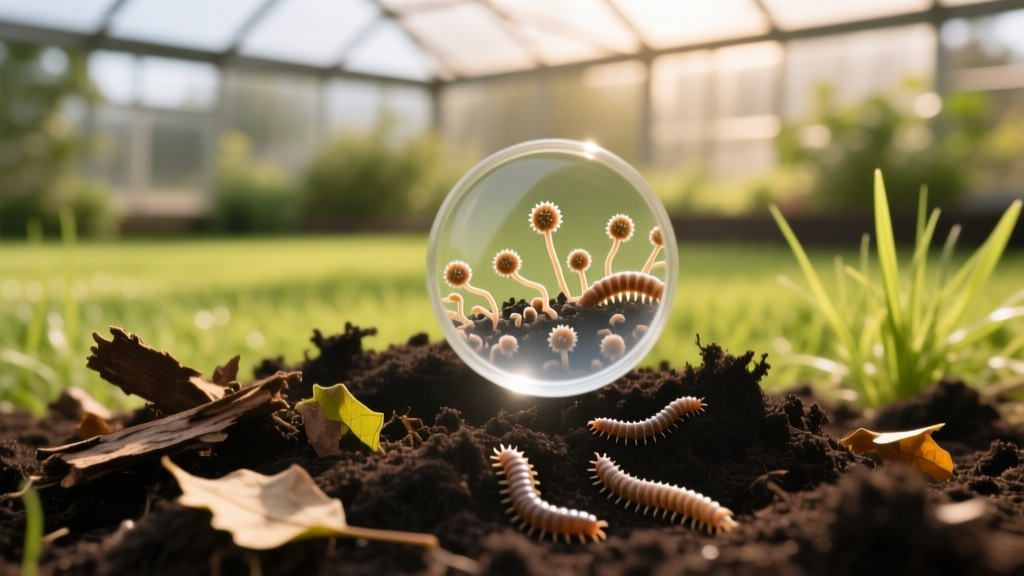
Suppress Soil Pests Using Compost And Beneficial Microbes
Anna KowalskiPublished
The Hidden Battlefield Beneath Your Lawn
When most homeowners spot a brown patch of turf or notice Japanese beetles swarming their garden, their first instinct is to reach for a chemical pesticide. While synthetic treatments can offer a quick knockdown effect, they often fail to address the root cause of the infestation: a compromised soil ecosystem. True, long-term pest control begins in the dirt. By focusing on soil health and composting, you can cultivate a natural, living defense system that actively suppresses soil-borne pests, pathogenic fungi, and root-destroying insects.
According to the Environmental Protection Agency (EPA), composting not only reduces waste but fundamentally improves soil structure, water retention, and biological diversity. In the realm of Integrated Pest Management (IPM), compost is far more than a simple fertilizer; it is a biological inoculant that introduces billions of beneficial microbes capable of outcompeting, parasitizing, and consuming the pests that threaten your lawn and garden.
The Soil Food Web: Nature's Pest Control Mechanism
To understand how compost controls pests, you must first understand the "Soil Food Web." This complex underground network consists of bacteria, fungi, protozoa, and nematodes. When you apply high-quality, mature compost to your lawn, you are reintroducing these vital organisms into an environment that has often been sterilized by synthetic salts and chemical herbicides.
Competition for Resources
Soil-borne pathogens and pest larvae require specific environmental conditions and food sources to thrive. A compost-rich soil is teeming with beneficial aerobic bacteria and mycorrhizal fungi that rapidly consume available organic matter and root exudates. By monopolizing the food supply and physically occupying space on the root systems, beneficial microbes effectively starve out pathogenic fungi and deter root-feeding insects.
Predation and Parasitism
Compost introduces predatory microorganisms that view lawn pests as a food source. Beneficial nematodes, predatory mites, and certain fungi (such as Beauveria bassiana and Metarhizium) naturally occur in healthy compost. These organisms actively hunt down the larval stages of destructive insects, infecting and eliminating them before they can mature and damage your turf.
Target Pests Managed by Compost and Soil Biology
White Grubs (Japanese Beetles, June Bugs, European Chafers)
White grubs are the larval stage of various scarab beetles, and they feast on grassroots, causing turf to roll back like loose carpet. Research from the University of California Integrated Pest Management (UC IPM) program notes that maintaining healthy, vigorously growing turf through proper soil amendments makes lawns far more tolerant of grub feeding. Furthermore, compost topdressing creates an ideal habitat for ground beetles and entomopathogenic nematodes, which are natural predators of grub larvae.
Plant-Parasitic Nematodes
Microscopic root-knot and lesion nematodes pierce plant roots, causing stunted growth, yellowing, and increased susceptibility to secondary diseases. Compost application has been scientifically proven to suppress these harmful nematodes. The decomposition of organic matter in compost releases natural nematicidal compounds, while the introduction of compost-dwelling predatory nematodes and fungi traps and consumes the plant-parasitic varieties.
Fungus Gnats and Root Aphids
Common in both garden beds and container plants, fungus gnats and root aphids thrive in stagnant, poorly drained, and biologically dead soils. Compost improves soil aggregation and drainage, eliminating the damp, anaerobic conditions that fungus gnats require for reproduction. Additionally, the predatory mites (Hypoaspis miles) introduced via compost actively hunt gnat larvae in the top layer of the soil.
Step-by-Step Guide: Building Pest-Resistant Soil
Transforming your soil into a pest-suppressive environment requires strategic application and patience. Follow this actionable guide to integrate compost and biological controls into your lawn care routine.
1. Topdressing with Mature Compost
Topdressing is the process of spreading a thin layer of compost over your existing turf. This improves soil structure and inoculates the thatch layer with decomposing microbes.
- Timing: Early fall or early spring when grass is actively growing and soil temperatures are between 55°F and 75°F.
- Measurement: Apply a 1/4-inch to 1/2-inch layer of screened, fully cured compost. (Approximately 1 cubic yard per 1,000 square feet for a 1/3-inch layer).
- Method: Mow the lawn short, aerate if the soil is compacted, and spread the compost evenly using a shovel and a stiff-bristled push broom to work it down to the soil surface.
- Cost: Bulk landscape compost typically costs $30 to $50 per cubic yard, making this highly cost-effective compared to repeated chemical treatments.
2. Brewing Actively Aerated Compost Tea (AACT)
AACT extracts and multiplies the beneficial microbes from compost, allowing you to spray them directly onto turf and into the soil profile. This is highly effective for suppressing foliar diseases and inoculating the root zone.
Basic AACT Recipe (5 Gallons):
1. Fill a 5-gallon bucket with dechlorinated water (let tap water sit for 24 hours or use a filter).
2. Place 2 cups of high-quality vermicompost (worm castings) or mature thermal compost into a mesh brew bag.
3. Add 1 tablespoon of unsulfured blackstrap molasses (food source for bacteria).
4. Suspend the bag in the water and attach an aquarium air pump with aeration stones to oxygenate the water continuously.
5. Brew for 24 to 36 hours at room temperature (65°F - 75°F).
6. Dilute 1:3 with water and apply immediately using a pump sprayer. Do not store, as anaerobic bacteria will take over once aeration stops.
3. Integrating Beneficial Nematodes
While compost builds the habitat, you can accelerate pest control by directly applying beneficial nematodes. These microscopic worms seek out and destroy soil-dwelling pests.
- Species Selection: Use Heterorhabditis bacteriophora (Hb) for deep-dwelling pests like white grubs and flea beetles. Use Steinernema carpocapsae (Sc) for surface-dwelling pests like armyworms and cutworms.
- Application Rate: Apply 1 to 2 million nematodes per 1,000 square feet for severe grub infestations.
- Crucial Timing: Apply at dusk or on a cloudy day. UV light kills nematodes instantly. Water the lawn lightly before application to moisten the soil, and water heavily immediately after to wash the nematodes off the grass blades and into the soil.
Comparison Chart: Chemical Controls vs. Compost-Based IPM
| Feature | Synthetic Chemical Pesticides | Compost & Biological IPM |
|---|---|---|
| Primary Action | Kills on contact or via systemic toxicity | Suppresses via competition, predation, and habitat modification |
| Impact on Soil Biology | Often harms beneficial microbes and earthworms | Feeds and multiplies beneficial soil organisms |
| Pest Resistance | Pests develop genetic resistance over time | Pests cannot develop resistance to being eaten or starved |
| Long-Term Soil Health | Degrades organic matter and soil structure | Builds humus, improves drainage, and sequesters carbon |
| Cost Over 5 Years | High (recurring seasonal applications) | Low (compost can be produced on-site; biology maintains itself) |
Common Mistakes to Avoid
While compost is a powerful tool for pest management, improper use can inadvertently create pest habitats. Avoid these common pitfalls:
- Using Immature or Anaerobic Compost: Compost that smells like ammonia or rotting garbage is anaerobic. It lacks oxygen and harbors pathogenic bacteria and fungus gnat larvae. Always ensure your compost is fully cured, smells earthy, and reaches proper thermophilic temperatures during the decomposition process to kill weed seeds and pathogens.
- Over-Application: Applying more than 1/2 inch of compost at a time can smother grass crowns, leading to turf die-back and creating a damp environment that attracts surface pests.
- Ignoring Soil pH and Drainage: The Rodale Institute emphasizes that organic matter works best in balanced soil. If your soil is severely compacted or the pH is extreme, microbial life will struggle to survive even with compost additions. Always conduct a soil test and perform core aeration before heavy compost applications.
Conclusion
Shifting your perspective from "pest eradication" to "soil cultivation" is the cornerstone of advanced Integrated Pest Management. By utilizing mature compost, brewing actively aerated compost teas, and introducing beneficial nematodes, you transform your lawn's soil into a living, breathing fortress. This biological approach not only suppresses destructive grubs, nematodes, and pathogens naturally but also results in a deeper-rooted, more drought-tolerant, and vibrantly green landscape that thrives season after season.