Tree Care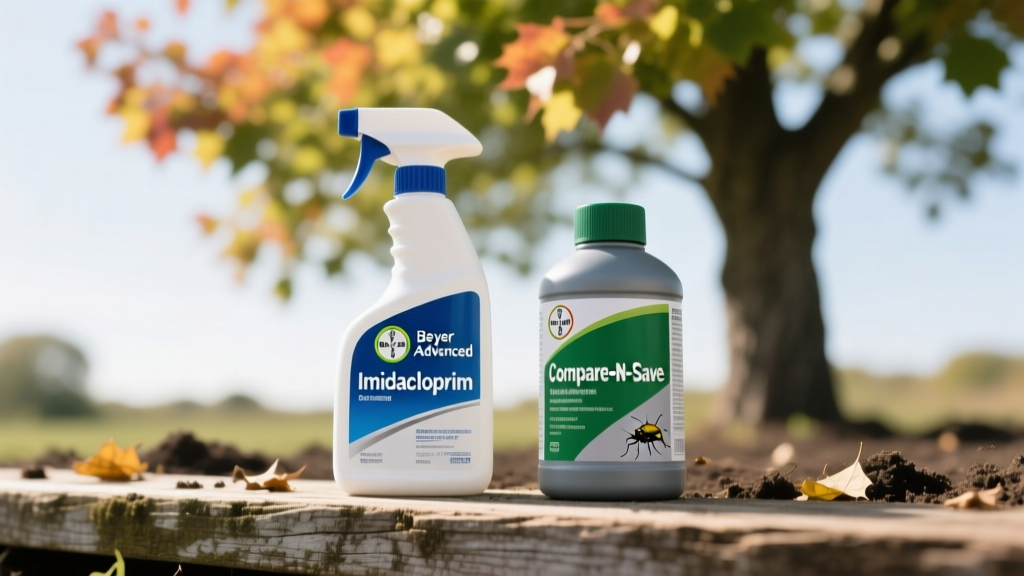
Bayer vs Compare-N-Save: Systemic Tree Insecticide Guide
James MillerPublished
The Battle of the Systemic Tree Insecticides
When devastating pests like the Emerald Ash Borer (EAB), Hemlock Woolly Adelgid, or severe scale infestations threaten your landscape, topical sprays simply are not enough. Bark-penetrating and canopy-dwelling insects require a different approach. Systemic tree insecticides have revolutionized residential and commercial tree care by utilizing the tree's own vascular system to deliver targeted pest control from the roots to the leaves. Instead of coating the bark, these products are absorbed by the roots and translocated upward through the xylem, poisoning insects as they feed on the tree's tissues.
For homeowners and property managers, two products dominate the retail space: Bayer Advanced 12 Month Tree & Shrub Protect & Feed II (now frequently branded under the BioAdvanced label) and Compare-N-Save Systemic Tree and Shrub Insect Drench. Both rely on the same primary active ingredient, but their formulations, secondary additives, and cost structures differ significantly. In this comprehensive guide, we will break down Product A versus Product B to help you decide which systemic drench is right for your landscape.
Contender A: Bayer Advanced 12 Month Protect & Feed II
Bayer Advanced (BioAdvanced) has long been the gold standard for residential tree and shrub care. The flagship 12 Month Protect & Feed II is a combination product. It contains a systemic insecticide alongside a robust blend of macronutrients and micronutrients designed to fertilize the tree while protecting it.
Pros and Cons
The primary advantage of the Bayer Advanced formula is convenience. By combining pest control with fertilization, homeowners can accomplish two major tree health tasks in a single application. The added nutrients can help trees recover from minor pest stress and promote vigorous spring growth. However, this convenience comes at a premium price point. Furthermore, the included fertilizer may not align with your soil's specific needs. If your soil already has high nitrogen levels, adding more can lead to excessive, weak canopy growth that is actually more susceptible to secondary pests and wind damage.
Contender B: Compare-N-Save Systemic Tree and Shrub Insect Drench
Compare-N-Save takes a purist approach to systemic pest control. Their Systemic Tree and Shrub Insect Drench contains a 1.47% concentration of the active ingredient without any added fertilizers, dyes, or unnecessary surfactants. It is designed to do one thing exceptionally well: eradicate and prevent insect infestations.
Pros and Cons
The standout benefit of Compare-N-Save is its cost-effectiveness. Because you are not paying for added fertilizers or heavy brand-name marketing premiums, the price per ounce of active ingredient is substantially lower. This makes it the ideal choice for large properties, orchards, or homeowners managing dozens of susceptible trees. The main drawback is that it offers no nutritional benefits. You will need to maintain a separate, dedicated fertilization schedule based on soil tests to ensure your trees remain vigorous. According to the Arbor Day Foundation, maintaining overall tree vigor through proper mulching, watering, and targeted nutrition is the first line of defense against pest outbreaks.
Head-to-Head Comparison Chart
| Feature | Bayer Advanced Protect & Feed II | Compare-N-Save Insect Drench |
|---|---|---|
| Active Ingredient | Imidacloprid (varies by specific SKU, usually ~0.5% to 1.5%) | Imidacloprid (1.47%) |
| Fertilizer Included | Yes (NPK + Micronutrients) | No |
| Cost per Ounce | High | Low |
| Best For | Small yards, convenience seekers, nutrient-deficient soils | Large properties, budget-conscious users, custom fertility plans |
| Application Method | Soil Drench | Soil Drench |
Understanding the Active Ingredient: Imidacloprid
Both products rely on Imidacloprid, a widely used neonicotinoid insecticide. Neonicotinoids are chemically similar to nicotine and work by binding to the nicotinic acetylcholine receptors in the central nervous system of insects. This binding causes paralysis and eventual death. Because mammals have different receptor structures, imidacloprid is generally considered to have low toxicity for humans and pets when used as directed, though it is highly toxic to aquatic invertebrates and certain pollinators.
Imidacloprid is highly effective against sucking insects (aphids, scale, adelgids) and wood-boring beetles. The Emerald Ash Borer Information Network, a multi-university research initiative, frequently cites imidacloprid soil drenches as a viable, cost-effective treatment option for ash trees with less than 50% canopy decline, provided the tree's vascular system is still intact enough to transport the chemical.
How to Measure and Apply a Soil Drench
The efficacy of both Bayer Advanced and Compare-N-Save relies entirely on proper application. If you apply too little, the tree won't be protected. If you apply too much, you risk environmental runoff. Both brands dose their products based on the tree's circumference or diameter at breast height (DBH).
- Step 1: Measure the Trunk. Using a flexible measuring tape, measure the circumference of the tree trunk at exactly 4.5 feet (54 inches) above the ground. This is the standard DBH measurement.
- Step 2: Calculate the Dose. Read the specific product label. Generally, Compare-N-Save requires 3 fluid ounces of concentrate per inch of trunk circumference (or roughly 1 ounce per inch of diameter). Bayer Advanced may have slightly different ratios due to its inert ingredients and fertilizer bulk.
- Step 3: Mix with Water. Mix the calculated concentrate with 1 pint to 1 quart of water per inch of trunk circumference. The water acts as a carrier to help the chemical penetrate the soil profile.
- Step 4: Apply at the Base. Pour the mixture evenly in a circle around the base of the tree. Focus on the area immediately adjacent to the trunk and extending out to the drip line (the outer edge of the canopy), where the most active feeder roots are located.
- Step 5: Water it In. If the soil is dry, lightly water the area after application to help the imidacloprid migrate down into the root zone. Avoid heavy watering that causes runoff.
Timing is Everything: When to Apply
Systemic insecticides are not instant-kill solutions. It can take anywhere from 2 to 8 weeks for the imidacloprid to fully translocate from the roots to the upper canopy of a mature tree. Therefore, timing is critical.
The optimal window for application is early spring, just as the soil thaws and the tree begins its active upward sap flow, but before the target pests emerge or lay eggs. A secondary window exists in the fall, after the leaves have dropped but before the ground freezes. Fall applications allow the roots to absorb the chemical and store it, providing immediate protection the moment spring growth resumes. Never apply soil drenches to waterlogged, frozen, or severely drought-stressed soil, as the roots will not absorb the solution.
Systemic insecticides are most effective when applied as a preventive measure before pest populations reach critical, tree-killing levels. Once the vascular system is severely damaged by borers, the tree can no longer transport the insecticide to the canopy, rendering the treatment useless.
Environmental Considerations and Pollinator Safety
As neonicotinoids, both Bayer Advanced and Compare-N-Save carry significant environmental responsibilities. Imidacloprid can be present in the nectar and pollen of treated plants, posing a risk to bees and other pollinators. The United States Environmental Protection Agency (EPA) strictly regulates the use of neonicotinoids and mandates specific label warnings to protect pollinator populations.
Crucial Safety Rules:
- Never apply systemic drenches to trees that are currently blooming or about to bloom.
- Do not use imidacloprid products on Linden (Basswood) trees, as they are highly attractive to bees and the systemic transfer to blossoms can cause mass pollinator die-offs.
- Remove any flowering weeds or clover from the ground beneath the tree's drip line before applying the drench to prevent bees from foraging on contaminated ground flora.
- Keep pets and children away from the application area until the soil surface is completely dry.
Final Verdict: Which Should You Choose?
The choice between Bayer Advanced and Compare-N-Save ultimately comes down to your landscape's specific needs and your budget. If you are treating a few ornamental shrubs and a small Japanese Maple, and you prefer the convenience of a single product that feeds and protects, Bayer Advanced Protect & Feed II is an excellent, user-friendly choice.
However, if you are managing a multi-acre property, protecting a grove of Ash trees from the Emerald Ash Borer, or operating on a strict budget, Compare-N-Save Systemic Tree and Shrub Insect Drench is the undisputed winner. Its pure 1.47% imidacloprid formulation delivers the exact same pest-killing power at a fraction of the cost, allowing you to allocate your remaining budget toward proper, customized tree fertilization and deep-root watering practices.