Pest Control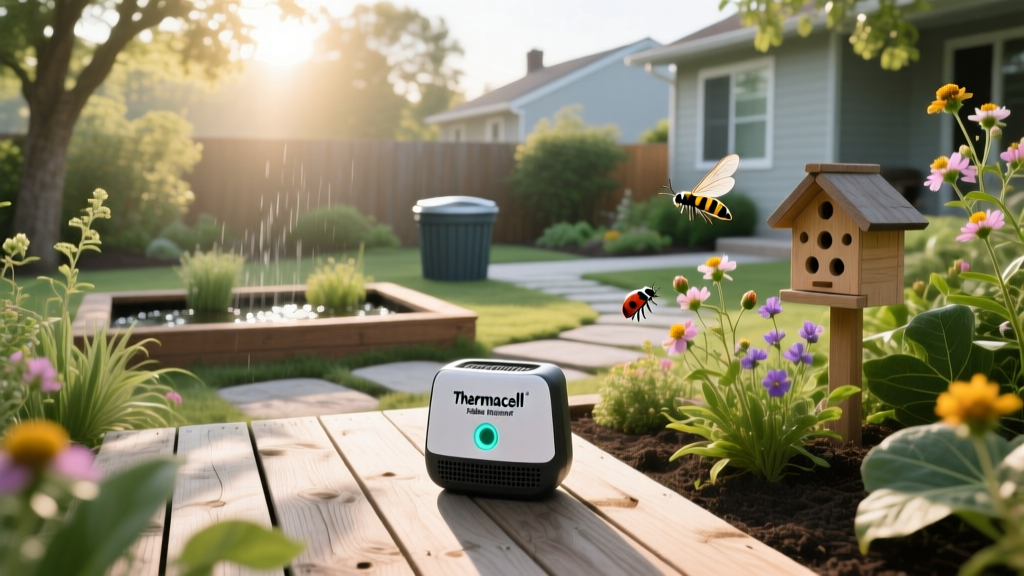
Thermacell Radius Mosquito Repeller: 2026 Bio-Control Yard Guide
Mike RodriguezPublished
The Ecological Conflict: Mosquito Control vs. Beneficial Insects
As we navigate the 2026 mosquito season, homeowners and gardeners are increasingly aware of the delicate balance required to maintain a thriving outdoor ecosystem. For decades, the standard response to a mosquito infestation was to deploy broad-spectrum chemical foggers and perimeter sprays. While these methods undeniably reduce mosquito populations, they come at a devastating ecological cost. Traditional barrier sprays utilizing synthetic pyrethroids like bifenthrin or permethrin do not discriminate between a biting nuisance and a vital pollinator. When applied to shrubs, tall grasses, and garden borders, these chemicals leave a toxic residue that decimates populations of bees, butterflies, and crucial bio-control agents like ladybugs, lacewings, and parasitic wasps.
The modern approach to pest management demands a more nuanced strategy. Integrated Pest Management (IPM) emphasizes targeted interventions that minimize harm to non-target organisms. According to the Environmental Protection Agency's IPM principles, the goal is to manage pest damage by the most economical means, and with the least possible hazard to people, property, and the environment. This is where localized spatial repellents, specifically the Thermacell Radius Zone Mosquito Repeller, become an invaluable tool in the eco-conscious gardener's arsenal.
How the Thermacell Radius Supports Bio-Control
The Thermacell Radius operates on a fundamentally different principle than traditional yard sprays. Instead of coating your garden's foliage with a persistent chemical barrier, the Radius uses a heat-activated mechanism to vaporize a precise dose of a synthetic pyrethroid into the immediate air space. This creates an invisible, odorless, 15-foot zone of protection that disrupts the mosquito's sensory receptors, effectively preventing them from entering your patio or seating area.
From a bio-control perspective, this spatial approach is revolutionary. Because the active ingredient is dispersed as a localized vapor rather than a liquid spray, it does not settle onto leaves, flowers, or soil. This means that the foraging grounds of your beneficial insects remain completely uncontaminated. A honeybee visiting a nearby coneflower, or a predatory mantis stalking aphids on your rose bushes, will not come into contact with toxic surface residues. The EPA's Pollinator Protection guidelines heavily advocate for reducing pesticide contact with blooming plants, and the Radius's vapor-only application perfectly aligns with this mandate.
Building a 2026 Bio-Control Mosquito Strategy
To truly master mosquito control without sacrificing your garden's ecological integrity, the Thermacell Radius must be used as the human shield component of a broader, multi-tiered bio-control strategy. Here is how to integrate the Radius with natural predator encouragement and biological larvicides in 2026.
1. Larval Source Management with Bti
Mosquitoes require standing water to reproduce. Instead of treating your entire yard for adult mosquitoes, target them at the larval stage using Bacillus thuringiensis israelensis (Bti). Bti is a naturally occurring soil bacterium that produces proteins toxic only to mosquito, black fly, and fungus gnat larvae. It is entirely harmless to birds, fish, pets, and beneficial insects. By placing Bti dunks or bits in rain barrels, birdbaths, and low-lying yard depressions, you halt the mosquito life cycle at the source. This biological control method ensures that the adult mosquitoes never emerge to plague your yard, reducing the overall reliance on adulticides.
2. Encouraging Natural Adult Predators
A healthy 2026 garden is a fortress of natural predators. Dragonflies and damselflies are voracious mosquito hunters, consuming hundreds of insects daily. By planting native aquatic and marginal plants around water features, you provide breeding habitats for dragonfly nymphs. Similarly, installing bat houses on the perimeter of your property can introduce a single bat colony that will consume thousands of night-flying insects, including mosquitoes, every evening. Broad-spectrum sprays kill these predators or drive them away; the Thermacell Radius, confined to your immediate seating area, allows these aerial bio-control agents to patrol the rest of your property unimpeded.
3. Strategic Placement of the Radius Repeller
The Radius is designed to protect people, not plants. Place the device on your patio table, deck railing, or near your outdoor kitchen prep area. Turn it on 15 to 30 minutes before you plan to occupy the space to allow the 15-foot protective dome to fully establish. Because it is a spatial repellent, wind is its primary adversary. The EPA's mosquito control resources note that environmental factors like wind can disperse repellents; therefore, if wind speeds exceed 10 mph, consider moving the Radius closer to your seating position or utilizing physical windbreaks like outdoor curtains or privacy hedges to maintain the integrity of the protection zone.
Comparative Analysis: Spatial Repellents vs. Chemical Barriers
Understanding the trade-offs between different mosquito control methods is essential for effective IPM. The table below compares the Thermacell Radius spatial repellent against traditional permethrin barrier sprays and biological Bti treatments across key ecological and practical metrics for the 2026 season.
| Feature | Thermacell Radius (Spatial) | Permethrin Barrier Spray | Bti Dunks (Biological) |
|---|---|---|---|
| Target Life Stage | Adult Mosquitoes | Adult Mosquitoes | Larvae |
| Impact on Pollinators | None (Vapor does not coat flora) | Severe (Toxic residue on blooms) | None (Aquatic target only) |
| Impact on Predatory Insects | None (Leaves foliage safe) | High (Kills ladybugs, mantises) | None |
| Effective Range | 15-foot localized dome | Entire treated yard perimeter | Specific water sources |
| Duration of Effect | Up to 12 hours per cartridge | 3 to 4 weeks per application | 30 days per dunk |
| Approximate 2026 Cost | $60 (Device) + $25 (Refills) | $150 - $300 per professional treatment | $15 for a multi-pack |
Maximizing Your IPM Investment
To get the most out of the Thermacell Radius while maintaining a robust bio-control ecosystem, timing and maintenance are key. Always store your Radius cartridges in a cool, dry place to preserve the efficacy of the active ingredient. In 2026, Thermacell's smart-indicator technology on the Radius model ensures you are never caught off guard by an empty cartridge, allowing for seamless transitions during long summer evenings.
Furthermore, combine the use of the Radius with personal bio-friendly practices. Avoid wearing dark clothing or heavily floral-scented perfumes, which naturally attract mosquitoes. Incorporate mosquito-repelling companion plants like lavender, marigolds, and crushed garlic around your patio perimeter. While these plants alone will not stop a severe infestation, they act as a mild deterrent that complements the Radius's vapor dome, creating a layered defense system that requires zero chemical fallout.
Conclusion
The narrative that you must choose between a mosquito-free yard and a thriving, pollinator-friendly garden is officially outdated. By adopting an Integrated Pest Management approach in 2026, you can leverage biological controls like Bti and natural predators to manage the broader ecosystem, while utilizing the Thermacell Radius Zone Mosquito Repeller to secure your immediate living spaces. This targeted, spatial strategy ensures that your family remains comfortable and bite-free, while the bees, butterflies, and beneficial predators that keep your garden healthy continue to flourish undisturbed.