Home & Garden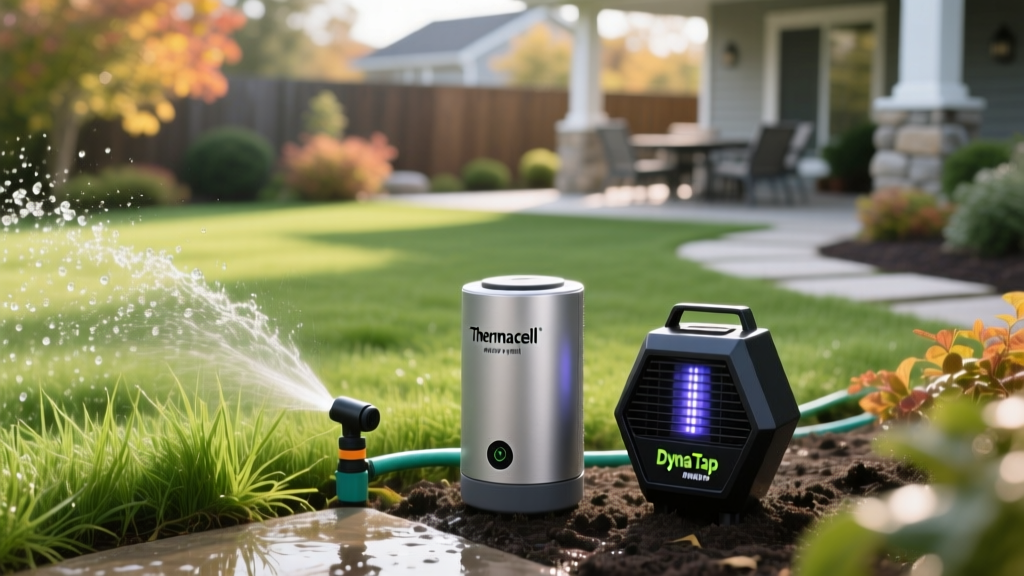
Thermacell vs DynaTrap: Mosquito Control for Irrigated Yards 2026
Mike RodriguezPublished
The Hidden Link Between Sprinkler Systems and Mosquito Breeding
As homeowners in 2026 increasingly treat their outdoor spaces as extensions of their indoor living areas, the demand for pristine, hydrated lawns has never been higher. However, there is a hidden cost to lush landscaping: mosquito proliferation. Mosquitoes require less than half an inch of standing water to complete their breeding cycle, and poorly optimized irrigation systems are often the primary culprit in residential yards. When sprinkler heads are misaligned, or when smart controllers fail to account for local soil saturation levels, water pools in low-lying areas, along fence lines, and near patio foundations.
According to the EPA's mosquito control guidelines, eliminating standing water is the single most effective method of reducing local mosquito populations. Yet, even with perfect drainage, adult mosquitoes will migrate from neighboring properties into your hydrated, humid oasis. This is where active mosquito control systems—specifically spatial repellents like Thermacell and UV/CO2 suction traps like DynaTrap—become essential. But how do these devices perform in a yard that is actively managed by a complex sprinkler and drip irrigation network? The interaction between your irrigation schedule and your mosquito control strategy is critical for maintaining a bite-free outdoor living space in 2026.
Core Technologies: Thermacell vs. DynaTrap in 2026
Before integrating these devices into your irrigated landscape, it is vital to understand the distinct mechanisms behind the two leading mosquito control brands on the market today.
Thermacell: The Spatial Repellent Dome
Thermacell devices, including the smart-home-integrated LIV system and the portable Radius 2.0, rely on heat-activated spatial repellents. By heating a mat or cartridge containing metofluthrin or allethrin, the device creates an invisible, odorless 'dome' of protection, typically spanning a 15 to 20-foot radius. This technology is highly effective for localized areas like patios, pergolas, and outdoor dining sets, essentially masking human scent and irritating the mosquito's nervous system, forcing them to flee the zone.
DynaTrap: The UV and CO2 Suction Trap
DynaTrap units, such as the popular DT1260 and the heavy-duty DT1700, take a completely different approach. Rather than repelling mosquitoes, they attract and eliminate them. These devices use a combination of UV light and a titanium dioxide-coated surface that produces a plume of carbon dioxide (CO2)—mimicking human breath. Once the mosquito approaches, a whisper-quiet vacuum fan sucks the insect into a retention cage where it dehydrates and dies. DynaTraps are designed for continuous, 24/7 operation to break the breeding cycle over a larger area, often covering up to half an acre.
The Sprinkler Interference Factor: Wind, Water, and Vapor Domes
When viewing mosquito control through the lens of an irrigation specialist, the physical environment created by your sprinkler system dramatically impacts the efficacy of these devices. Water and humidity are the defining variables.
How Irrigation Disrupts Spatial Repellents
Thermacell's protective dome is essentially a delicate cloud of airborne active ingredients. If your irrigation system utilizes rotary nozzles or oscillating sprinklers that cast water over or near the patio where the Thermacell is deployed, the physical water droplets will act as a 'knockdown' agent. The water binds to the airborne metofluthrin particles, pulling them out of the air and onto the ground, instantly collapsing your protective dome. Furthermore, the micro-wind currents generated by high-pressure spray heads can scatter the vapor. For Thermacell to work in an irrigated yard, the device must be placed strictly outside the spray radius of your sprinkler zones, and the irrigation schedule must be paused during outdoor evening entertaining.
Why DynaTrap Thrives in Humid Zones
DynaTrap units, being electrical suction devices, do not rely on an airborne chemical dome. In fact, mosquitoes are highly attracted to the humidity created by drip irrigation lines and freshly watered garden beds. While you must protect the electrical components of a DynaTrap from direct, high-pressure sprinkler impact to prevent short circuits, the ambient humidity generated by your irrigation system actually enhances the trap's effectiveness. The CO2 plume disperses beautifully in the dense, humid air of a freshly watered lawn, drawing mosquitoes out of the damp shrubbery and into the vacuum fan.
2026 Product Comparison Matrix for Irrigated Yards
To help you choose the right system based on your specific sprinkler layout and outdoor living design, review the comparison chart below.
| Feature | Thermacell LIV / Radius 2.0 | DynaTrap DT1260 / DT1700 |
|---|---|---|
| Primary Mechanism | Heat-activated spatial repellent | UV light, CO2 generation, vacuum fan |
| Effective Coverage | 15 to 20 ft. radius (Patio/Deck) | Up to 1/2 acre (Yard-wide) |
| Sprinkler Tolerance | Very Low (Water destroys vapor dome) | Moderate (Must avoid direct spray, loves ambient humidity) |
| Power Source | Lithium-ion battery (Radius) / Wired (LIV) | Continuous 110V AC outlet required |
| Irrigation Scheduling | Must water before/after human occupancy | Runs 24/7; watering schedules do not interfere |
| 2026 Average Cost | $60 (Radius) / $300+ (LIV 4-zone kit) | $140 - $220 depending on model |
Designing a Mosquito-Resistant Irrigation Schedule
The most effective way to support your mosquito traps is to optimize your irrigation controller. The EPA WaterSense smart irrigation controllers program has heavily promoted the use of weather-based and soil-moisture-based controllers to prevent the exact type of overwatering that breeds mosquitoes. In 2026, integrating a smart controller like the Rachio 4 or Hunter Hydrawise with wireless soil moisture sensors is the gold standard for lawn health and pest control.
- Shift to Dawn Watering: Mosquitoes are most active at dawn and dusk. If your sprinklers run at 6:00 PM, you are creating a humid, puddled environment right as you step outside to grill, and right as mosquitoes begin their evening feeding. Program your smart controller to water between 4:00 AM and 6:00 AM. This allows the sun to evaporate surface puddles before evening, while the soil retains deep moisture.
- Audit Your Drip Lines: Drip irrigation is excellent for conserving water, but a single leaking emitter in a shaded flower bed can create a permanent, damp breeding ground. Conduct a monthly audit of your drip zones to ensure emitters are delivering water directly to the root zone without pooling on the surface.
- Utilize Cycle and Soak: For yards with heavy clay soil, water tends to run off and pool in low spots rather than absorbing. Use the 'cycle and soak' feature on your smart controller to apply water in short, 5-minute bursts separated by 30-minute soak intervals. This eliminates the surface standing water that mosquitoes require.
Strategic Placement Guide for Irrigated Zones
Where you place your traps in relation to your sprinkler heads and drip zones will dictate your success. According to entomology experts at the University of Minnesota Extension, mosquitoes rest in cool, shaded, and humid areas during the heat of the day—exactly where your drip irrigation keeps the soil moist and the foliage dense.
Placing the DynaTrap
Position your DynaTrap 20 to 40 feet away from your primary patio seating area. You want to draw mosquitoes away from your living space and toward the trap. Place the trap near the edge of your irrigated garden beds or near shaded shrubbery where drip lines keep the soil cool and damp. Ensure the trap is elevated about 3 to 5 feet off the ground, safely out of the splash zone of any low-lying pop-up spray heads, but close enough to the humid foliage to intercept mosquitoes as they emerge from their daytime resting spots.
Placing the Thermacell
Thermacell is strictly for human-occupied zones. Place the Radius or LIV emitters directly on your outdoor dining table, conversation pit, or outdoor kitchen island. Ensure that no rotary sprinkler heads or misting lines are aimed toward this area. If you have a pergola with an integrated misting system for summer cooling, be aware that turning on the mist will instantly neutralize the Thermacell's spatial repellent dome. Use the Thermacell only when the irrigation and misting systems are completely dormant.
Conclusion: A Unified Approach to Yard Care
Achieving a lush, green lawn in 2026 without inviting an army of mosquitoes requires a holistic approach that bridges irrigation science and pest control. By leveraging smart sprinkler controllers to eliminate standing water, shifting your watering schedules to the early morning, and strategically deploying either a Thermacell for targeted patio protection or a DynaTrap for broad-spectrum yard reduction, you can reclaim your outdoor living space. Understanding how water droplets and ambient humidity interact with spatial repellents and CO2 traps allows you to design a landscape that is both beautifully hydrated and entirely bite-free.
