Home & Garden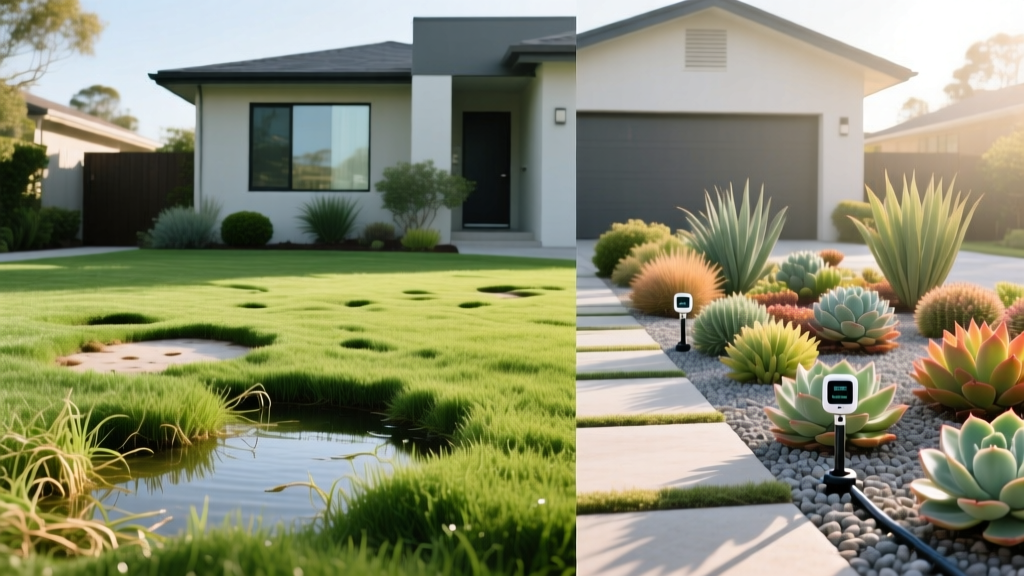
From Thirsty Turf to Smart Xeriscape: A Yard Transformation
Robert HayesPublished
Introduction: Rethinking the American Lawn
For decades, the quintessential American dream has included a sprawling, emerald-green front lawn. However, as climate patterns shift and water restrictions become more frequent, homeowners and landscaping professionals are reevaluating the true cost of traditional turfgrass. According to the Environmental Protection Agency (EPA), outdoor water use accounts for nearly 30 percent of total household water consumption, with landscape irrigation being the primary culprit. In drought-prone regions, this number can skyrocket to 60 percent or more during the peak summer months.
This article documents a complete front yard transformation—taking a failing, water-wasting 500-square-foot Kentucky Bluegrass lawn and converting it into a thriving, energy-efficient smart xeriscape. By bridging the gap between sustainable outdoor living and smart home technology, this before-and-after case study provides a practical, actionable blueprint for your own landscape renovation.
The 'Before' State: A Failing Turfgrass Lawn
The subject property featured a 500-square-foot front yard dominated by patchy Kentucky Bluegrass. The soil was heavily compacted clay, leading to severe water runoff and poor root development. Despite running traditional pop-up spray sprinklers for 45 minutes three times a week, the grass remained stressed, yellowing at the edges, and prone to fungal diseases.
Pain Points Identified:
- High Water Bills: The homeowner reported a 40 percent spike in water usage during July and August.
- Maintenance Burden: Weekly mowing, edging, and seasonal aeration consumed roughly three hours per week.
- Aesthetic Decline: The lawn suffered from dog urine spots and heavy foot traffic wear near the mailbox.
- Inefficient Irrigation: Spray heads were watering the sidewalk and driveway, wasting precious resources.
The goal was clear: eliminate the thirsty turf, reduce maintenance to near zero, and create a visually striking, drought-tolerant landscape that integrates seamlessly with modern smart home systems.
The Master Plan: Designing the 'After' State
To achieve a successful transformation, we leaned on principles of xeriscaping and hydrozoning. Hydrozoning involves grouping plants with similar water needs together, ensuring that no plant is over-watered simply to keep a neighboring plant alive. We consulted the University of California's WUCOLS database, the gold standard for evaluating landscape plant water requirements, to select species rated as 'Low' or 'Very Low' water use.
Design Elements Selected:
- Hardscaping: A meandering pathway of decomposed granite (DG) bordered by steel edging to improve permeability and reduce runoff.
- Plant Palette: Agastache 'Blue Fortune', Salvia 'Mystic Spires', and Pink Muhly Grass (Muhlenbergia capillaris) for year-round color and pollinator support.
- Smart Irrigation: A weather-based smart controller paired with a subsurface drip irrigation system.
- Mulch: A 3-inch layer of shredded arborist wood chips to retain soil moisture and suppress weeds.
Step-by-Step Transformation Execution
Phase 1: Turf Removal and Soil Preparation
Instead of using chemical herbicides or renting a gas-powered sod cutter, we opted for sheet mulching. This eco-friendly method builds soil health while killing the existing grass.
- Mowing: We scalped the existing grass as low as the mower would allow.
- Cardboard Layer: We laid down overlapping sheets of plain, uncoated corrugated cardboard, wetting each layer thoroughly to initiate the decomposition process.
- Compost and Mulch: Over the cardboard, we applied a 1-inch layer of organic compost followed by a 3-inch layer of arborist wood chips.
Cost & Timing: The cardboard was sourced for free from local appliance stores. Compost and mulch cost approximately $120 for delivery. This phase took one full weekend.
Phase 2: Hardscaping and Permeable Pathways
To break up the visual monotony of the garden beds and provide a functional walkway to the front door, we installed a decomposed granite (DG) path.
We excavated a 3-inch deep, 3-foot wide winding path. After laying down a heavy-duty landscape fabric to prevent weed growth, we added a 2-inch base of crushed gravel, compacted it with a hand tamper, and topped it with 1.5 inches of DG stabilized with a natural binder. Steel landscape edging was secured with spikes to keep the DG contained.
Cost & Timing: Materials (DG, gravel, edging, fabric) totaled $280. Installation took two days of heavy labor.
Phase 3: Smart Irrigation Installation
Traditional spray heads are incredibly inefficient for mixed garden beds. We capped the existing spray zones and converted the system to a drip irrigation network using 1/2-inch mainline tubing and 1/4-inch micro-drip emitters.
The heart of the new system is a Rachio 3 Smart Sprinkler Controller. According to the EPA's WaterSense program, weather-based smart controllers can save the average home nearly 7,600 gallons of water annually. The Rachio connects to the home's Wi-Fi and uses local weather data, including hyper-local rain forecasts and soil moisture evaporation rates, to automatically adjust watering schedules.
'Upgrading to a smart controller was the single most impactful decision in this transformation. The system automatically skipped watering after a surprise afternoon thunderstorm, something my old mechanical timer would never have done.' — Homeowner
Cost & Timing: The smart controller ($229), drip tubing, and fittings ($150) were installed in one afternoon.
Phase 4: Planting the Native Palette
With the soil prepped and irrigation laid out, it was time to plant. We arranged the plants in odd-numbered clusters to mimic natural growth patterns. The taller Pink Muhly Grass was placed as a focal point near the porch, while the Salvia and Agastache were mass-planted along the borders to create a vibrant, pollinator-friendly edge.
Each plant was placed in a hole twice as wide as its nursery pot but no deeper, ensuring the root crown remained slightly above grade to prevent rot. The drip emitters were positioned exactly 6 inches from the base of each new plant to deliver water directly to the root zone.
Cost & Timing: 25 plants at an average of $18 each in 1-gallon pots ($450). Planting took one day.
The 'After' State: Results and ROI
Six months post-transformation, the yard is virtually unrecognizable. The once-patchy, high-maintenance turf has been replaced by a dynamic, textured landscape that changes with the seasons. The Pink Muhly Grass produces a stunning, hazy pink bloom in the fall, while the Salvia provides continuous blue spikes from late spring through early frost, drawing hummingbirds and native bees.
Before & After Comparison Data
| Metric | Before (Kentucky Bluegrass) | After (Smart Xeriscape) | Improvement / Savings |
|---|---|---|---|
| Summer Water Usage (Monthly) | ~4,500 Gallons | ~800 Gallons | 82% Reduction |
| Weekly Maintenance Time | 3 Hours (Mowing, edging) | 20 Minutes (Weeding, pruning) | 88% Time Saved |
| Chemical Fertilizer Use | 3 Applications / Year | 0 Applications / Year | 100% Elimination |
| Irrigation Efficiency | 60% (Spray drift & evaporation) | 95% (Subsurface drip) | Highly Optimized |
| Total Project Cost (DIY) | N/A (Existing) | $1,229 | ROI via water savings in ~3 years |
Conclusion: Embracing the Future of Landscaping
This before-and-after transformation proves that abandoning traditional turf does not mean sacrificing curb appeal. In fact, the new xeriscape offers a far more sophisticated, layered aesthetic that stands out in the neighborhood. By integrating permeable hardscaping, drought-tolerant native plants, and smart home irrigation technology, homeowners can create outdoor spaces that are not only beautiful but also environmentally responsible and highly efficient.
If you are tired of the endless cycle of mowing, watering, and fertilizing, consider sheet mulching your tired lawn and embracing the smart xeriscape revolution. Your wallet, your schedule, and your local watershed will thank you.
