Pest Control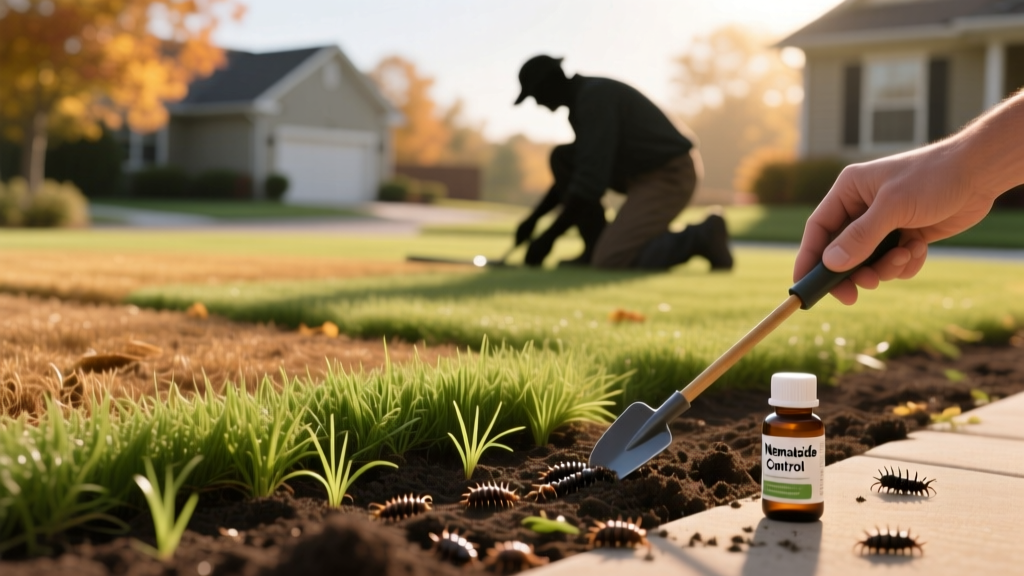
Fall Grub Control: Timing Treatments Around Overseeding
Lisa ThompsonPublished
The Dilemma: Fall Overseeding vs. Grub Control
For homeowners managing cool-season turfgrasses like Kentucky Bluegrass, Tall Fescue, and Perennial Ryegrass, late summer and early fall represent the most critical window for lawn renovation. This is the optimal time for overseeding, as warm soil temperatures promote rapid seed germination while cooler autumn air reduces heat stress on young seedlings. However, this exact same seasonal window coincides with the peak feeding activity of white grubs—the destructive larvae of Japanese beetles, June bugs, and European chafers. Balancing your planting schedule with an effective pest control strategy requires precise seasonal timing.
Many turf managers and homeowners face a common dilemma: Do I apply grub control before overseeding, or will the pesticides harm my new grass seed? Furthermore, if you opt for organic biological controls like beneficial nematodes, how do you time their application alongside the heavy watering schedules required for seed germination? According to turfgrass specialists at University of Minnesota Extension, late August through mid-September is the prime overseeding window, meaning your pest management interventions must be carefully choreographed around these planting dates.
Understanding the White Grub Life Cycle
To effectively time your treatments, you must understand the seasonal life cycle of the white grub. Adult beetles lay their eggs in the turf canopy in mid-to-late summer. By late August and early September, these eggs hatch into small, first- and second-instar grubs. These young grubs are actively feeding just below the soil surface, consuming the root systems of your turfgrass. This aggressive feeding is what causes the brown, dead patches commonly seen in early autumn, and it also attracts secondary pests like skunks, raccoons, and crows that tear up the lawn to forage for the grubs.
Because the grubs are young and their exoskeletons are thin, late summer and early fall represent the most effective time to apply curative treatments. By late October, as soil temperatures drop below 50°F, the grubs migrate deeper into the soil profile to overwinter, rendering surface-applied treatments largely ineffective until they resurface in the spring.
Choosing Your Control Method: Chemical vs. Biological
When integrating pest management with your fall planting schedule, you generally have two routes: synthetic chemical curatives or biological controls. Each has distinct implications for your overseeding timeline.
Synthetic Chemical Curatives
If you are dealing with an active grub infestation in late summer, preventatives like Imidacloprid (applied in early summer) are no longer effective. You must switch to a fast-acting curative insecticide. The industry standard for fall curative treatment is Trichlorfon (commonly sold under the brand name Dylox). Trichlorfon works rapidly, often killing grubs within 24 to 48 hours of ingestion and contact.
Fortunately, Trichlorfon does not possess pre-emergent herbicidal properties, meaning it will not harm or inhibit the germination of your fall grass seed. You can safely apply Trichlorfon immediately before, during, or shortly after your overseeding process. The primary constraint is water: Trichlorfon requires immediate and deep watering (at least 0.5 inches) to move the active ingredient past the thatch layer and into the root zone where the grubs are feeding. This aligns perfectly with the frequent, light watering schedules required for new grass seed, though you must ensure the initial application is watered in heavily enough to reach the soil.
Biological Controls: Beneficial Nematodes
For gardeners committed to organic integrated pest management (IPM), beneficial nematodes are a highly effective alternative. Specifically, the species Heterorhabditis bacteriophora (Hb nematodes) is a proven parasite of white grubs. According to research from the Cornell University NYS IPM Program, these microscopic roundworms actively seek out grub larvae, enter their bodies, and release symbiotic bacteria that kill the host within 48 hours.
Timing nematodes around overseeding requires careful attention to soil temperature and UV exposure. Nematodes are living organisms that will die if exposed to direct sunlight or if applied to soils below 60°F. Because fall overseeding requires keeping the top inch of soil consistently moist, the environment is generally favorable for nematode survival. However, you should apply nematodes after core aeration (which helps them penetrate the soil) and ideally in the early evening or on a cloudy day. Unlike chemicals, nematodes pose zero risk to your grass seed, earthworms, or beneficial pollinators.
Treatment and Planting Schedule Matrix
Coordinating lawn aeration, overseeding, and pest control requires a strict chronological approach. Use the following matrix to plan your late-summer lawn care regimen.
| Timeframe | Lawn Care Activity | Pest Control Action | Watering Requirements |
|---|---|---|---|
| Mid-August | Core Aeration & Soil Prep | Apply Hb Nematodes (Evening) | Water in nematodes (0.25 inches) |
| Late August | Overseeding & Starter Fertilizer | Apply Trichlorfon (if not using nematodes) | Heavy initial water, then keep seed moist |
| Early September | Monitor Seed Germination | Inspect for grub damage / secondary foraging | Light, frequent watering (2-3x daily) |
| Mid-September | First Mow of New Seed | Curative spot-treatment if necessary | Transition to deep, infrequent watering |
Step-by-Step Fall Action Plan
To ensure your new grass thrives while simultaneously eradicating root-eating pests, follow this step-by-step seasonal schedule:
- Test and Prepare (Early August): Conduct a soil test and amend as necessary. If the lawn has heavy thatch (over 0.5 inches) or compacted soil, schedule core aeration. Grubs thrive in stressed, shallow-rooted turf, so alleviating compaction is your first line of defense.
- Biological Application (Mid-August): If using Heterorhabditis bacteriophora, order them from a reputable supplier and keep them refrigerated (38°F–42°F) until the moment of application. Apply using a hose-end sprayer designed for nematodes, removing any filters that might trap the organisms. Apply in the late evening and water immediately.
- Chemical Application Alternative (Late August): If opting for Trichlorfon (Dylox), apply at a rate of 3 to 5 lbs per 1,000 square feet (check specific product label). Water in immediately with 0.5 inches of water. As noted by Michigan State University Extension, Trichlorfon degrades rapidly in soil with high pH or standing water, so precise timing and immediate watering are crucial for efficacy.
- Overseeding (Late August to Early September): Spread your cool-season grass seed at the recommended rate (e.g., 3-5 lbs per 1,000 sq ft for Tall Fescue overseeding). Apply a starter fertilizer high in phosphorus to encourage root development.
- The Watering Balancing Act (September): Grass seed requires the top inch of soil to remain constantly moist, requiring 10-15 minutes of watering 2 to 3 times a day. If you applied Trichlorfon prior to seeding, the heavy initial watering will have already moved the chemical into the grub zone. The subsequent light waterings for the seed will not negatively impact the treatment.
Cost Breakdown and Product Measurements
Budgeting for integrated pest management and fall renovation helps prevent mid-project surprises. Below is an estimated cost breakdown for a standard 5,000 square foot lawn.
- Trichlorfon (Dylox 6.2G): A 30 lb bag covers approximately 10,000 sq ft and costs around $60-$75. For a 5,000 sq ft lawn, your cost is $30 to $37.50.
- Beneficial Nematodes (Hb): A package containing 25 million nematodes (sufficient for 5,000 sq ft) typically costs between $35 and $50, plus expedited shipping to ensure they arrive alive.
- Grass Seed (Tall Fescue Blend): High-quality, weed-free seed costs about $8-$12 per lb. At 4 lbs per 1,000 sq ft, you need 20 lbs, totaling $160 to $240.
- Starter Fertilizer: A standard 18-24-12 starter fertilizer costs roughly $40 for a bag covering 5,000 sq ft.
By understanding the seasonal timing of both your turfgrass and its pests, you can successfully establish a thick, resilient lawn that naturally resists future infestations, reducing the need for chemical interventions in subsequent years.