Pest Control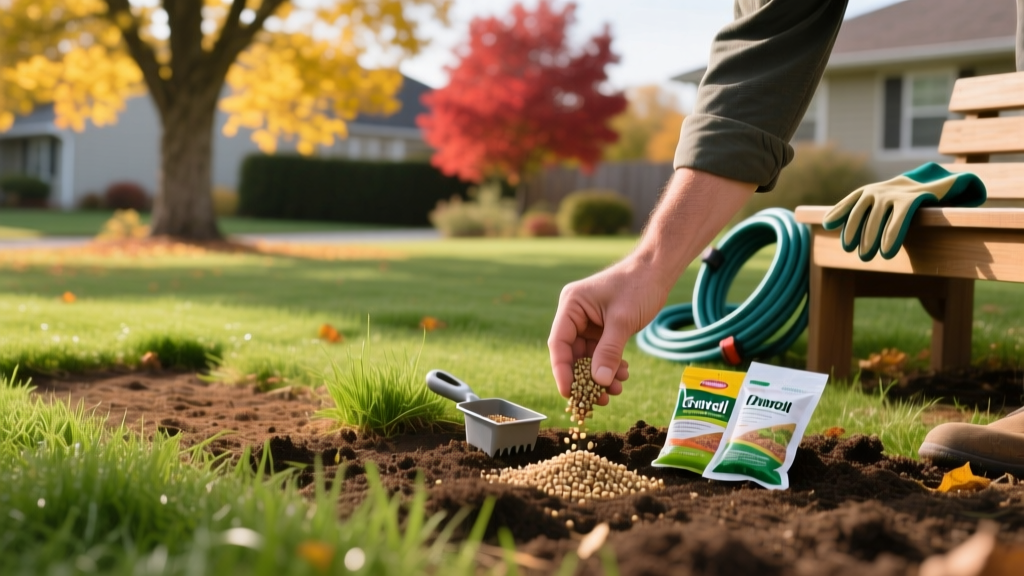
Timing Grub Control Applications With Fall Overseeding
Mike RodriguezPublished
The Fall Dilemma: Grubs vs. Grass Seed
For homeowners dedicated to maintaining a pristine lawn, autumn presents a unique scheduling conflict. Fall is the undisputed best season for planting cool-season grasses like Tall Fescue and Kentucky Bluegrass. Soil temperatures are cooling, weed competition is waning, and autumn rains provide natural irrigation. However, fall is also a critical window for managing one of the most destructive lawn pests: the white grub. Synchronizing your grub control applications with your overseeding schedule requires a deep understanding of seasonal timing, pest life cycles, and product chemistry. If you apply the wrong preventative treatment too late, it will fail to stop the grubs. If you apply certain harsh curative chemicals right as your grass seed germinates, you risk stunting root development or disrupting the delicate soil microbiome.
Understanding the Seasonal Life Cycle of White Grubs
White grubs are the larval stage of various scarab beetles, including Japanese beetles, June bugs, and European chafers. To effectively time your pest control treatments alongside your planting schedule, you must understand their seasonal movements. According to the University of Minnesota Extension, white grubs follow a predictable annual cycle that dictates when they are most vulnerable to treatment and when they cause the most damage to turfgrass roots.
- Spring (April - May): Overwintered grubs migrate upward to feed briefly on grass roots before pupating into adult beetles.
- Early Summer (June - July): Adult beetles emerge, mate, and lay eggs in the top inch of soil. These eggs hatch into tiny, first-instar grubs by late July.
- Late Summer to Early Fall (August - September): Grubs are actively feeding near the surface, causing visible brown patches. This is the peak damage window and the ideal time for curative treatments or biological controls.
- Late Fall to Winter (November - March): As soil temperatures drop below 50°F, grubs burrow deep below the frost line to overwinter, rendering them immune to surface-applied treatments.
Because fall overseeding typically occurs between late August and mid-September—exactly when grubs are feeding aggressively near the surface—homeowners must choose a pest control strategy that eliminates the grubs without harming the newly planted grass seed.
Selecting the Right Grub Control for Your Planting Schedule
Not all grub control products are created equal, and their seasonal timing varies drastically. Some chemicals require months to build up in the soil profile, while others act as immediate knockdown agents. Below is a comparison chart of the most common active ingredients used in grub control, analyzed through the lens of fall overseeding compatibility.
| Active Ingredient | Product Type | Best Application Window | Overseeding Compatibility |
|---|---|---|---|
| Chlorantraniliprole | Preventative | April - June (Spring) | Excellent (Safe for fall seed) |
| Imidacloprid | Preventative | June - July (Early Summer) | Excellent (Safe for fall seed) |
| Trichlorfon | Curative | August - September (Fall) | Good (Safe, but short residual) |
| Heterorhabditis bacteriophora | Biological (Nematodes) | August - September (Fall) | Excellent (Improves soil health) |
If you missed the spring and early summer preventative windows, you cannot rely on products containing Imidacloprid or Chlorantraniliprole in the fall. As noted by University of Kentucky Entomology, preventative insecticides must be ingested by the tiny early-instar grubs and require time to translocate through the soil. Applying them in September will yield poor results. Instead, you must pivot to curative chemical options or biological controls that align with your fall planting schedule.
The Ultimate Fall Planting and Pest Control Calendar
To successfully establish new grass while eradicating a fall grub infestation, follow this sequential timeline. This schedule assumes you are dealing with an active grub problem in late summer and need to overseed your lawn simultaneously.
Step 1: Late August (Assessment and Curative Treatment)
Before dropping any seed, assess your lawn for grub damage. Look for irregular brown patches that peel back like loose carpet. If you find more than 5 to 7 grubs per square foot, treat the lawn with a fast-acting curative product containing Trichlorfon (e.g., Bayer Advanced 24 Hour Grub Killer). Apply at a rate of 1.5 to 3 lbs per 1,000 square feet. Trichlorfon degrades rapidly in the soil (usually within 7 to 10 days), meaning it will not leave harmful residues that could affect your grass seed planted a week later.
Step 2: Early September (Soil Preparation and Seeding)
Once the curative treatment has been watered in and the 7-day degradation window has passed, prepare your soil. Core aerate the lawn to relieve compaction and create ideal seed-to-soil contact. Spread a high-quality Tall Fescue or Kentucky Bluegrass blend at the recommended rate (typically 5 to 8 lbs per 1,000 square feet for overseeding). Apply a starter fertilizer high in phosphorus to encourage rapid root development.
Step 3: Mid-September (Biological Reinforcement)
For long-term, organic pest management that perfectly complements a planting schedule, apply beneficial nematodes (Heterorhabditis bacteriophora) about two weeks after your grass seed has germinated. Nematodes are microscopic worms that seek out and destroy grubs. They are entirely safe for new grass, pets, and humans. In fact, they contribute to a healthy soil food web, which benefits your newly planted turf.
Application Rates, Costs, and Best Practices
Budgeting and precise measurements are critical for integrated pest management (IPM). Here is a breakdown of costs and application specifics for the fall curative and biological methods:
- Trichlorfon (Chemical Curative): Expect to pay between $25 and $35 for a bag covering 3,000 square feet. It is highly soluble and must be watered in immediately with at least 0.25 to 0.5 inches of irrigation to push the active ingredient into the root zone where the grubs are feeding.
- Beneficial Nematodes (Biological): A package containing 10 million nematodes (sufficient for roughly 3,000 square feet) typically costs between $30 and $45. Nematodes must be applied in the late afternoon or early evening to avoid UV degradation. They require consistently moist soil to survive and hunt, which aligns perfectly with the frequent, light watering schedule required for germinating grass seed.
Watering Strategies for Seed and Pest Control
One of the greatest synergies between fall overseeding and grub control is the watering requirement. Newly planted grass seed requires the top inch of soil to remain consistently moist, necessitating light watering two to three times a day. Curative grub treatments like Trichlorfon and biological nematodes both require ample soil moisture to activate and move through the soil profile. By maintaining a rigorous watering schedule for your new seed, you are simultaneously ensuring maximum efficacy for your pest control treatment. However, be careful not to overwater to the point of runoff, which can wash away both your expensive grass seed and your pest control products into storm drains.
Summary
Mastering the seasonal timing of lawn care means recognizing when pest control and planting schedules naturally align, and when they conflict. By utilizing fast-degrading curative chemicals in late August, planting your seed in early September, and finishing with biological nematode applications, you can achieve a thick, healthy lawn free from root-destroying grubs. Always consult local resources, such as the Cornell University Integrated Pest Management guidelines, to adjust these timelines based on your specific regional climate and local soil temperatures.