Lawn Care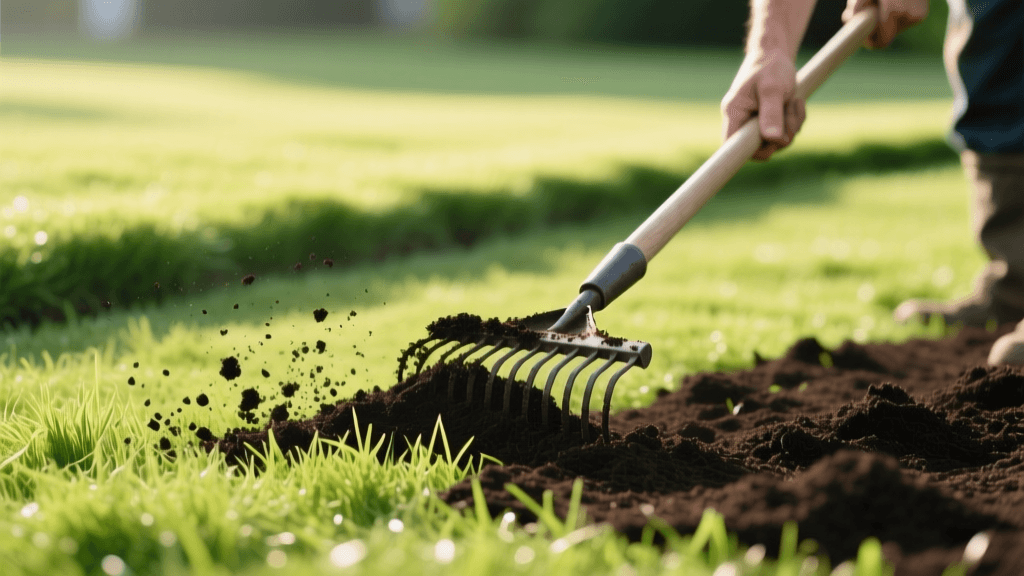
How to Topdress Your Lawn with Compost for Better Soil Health
The Foundation of a Thriving Lawn: Soil Health and Compost
When most homeowners think about lawn care, they immediately picture synthetic fertilizers, herbicides, and frequent mowing. However, the true secret to a dense, vibrant, and drought-resistant lawn lies hidden beneath the surface. Soil health is the foundation of turfgrass vitality, and one of the most effective, natural ways to restore and maintain that health is through compost topdressing. Topdressing involves applying a thin layer of organic matter—specifically compost—over the surface of your existing lawn. This practice bridges the gap between simple lawn maintenance and advanced soil science, transforming compacted, lifeless dirt into a thriving ecosystem.
According to the USDA Natural Resources Conservation Service, healthy soil is a living ecosystem that sustains plants, animals, and humans. By introducing mature compost to your lawn, you are inoculating your soil with billions of beneficial microbes, improving soil structure, and creating a sustainable environment where turfgrass can naturally resist pests, diseases, and environmental stress.
The Science of Soil Health: Why Your Lawn Needs Compost
To understand why compost is so transformative, you must understand the Soil Food Web. In undisturbed natural ecosystems, plants exude sugars through their roots to feed soil bacteria and fungi. In return, these microbes mine the soil for essential minerals and deliver them back to the plant roots. Modern lawn care practices—such as heavy synthetic fertilizer use, broad-spectrum fungicides, and soil compaction from foot traffic—disrupt this delicate biological network.
Compost acts as a biological reset button. It provides a slow-release, complex carbon source that feeds the soil microbiome. Furthermore, compost dramatically improves the soil's Cation Exchange Capacity (CEC). CEC is the soil's ability to hold onto essential positively charged nutrients like calcium, magnesium, and potassium, preventing them from leaching away during heavy rains. Sandy soils, which naturally have very low CEC, benefit immensely from the organic matter in compost, which acts like a sponge to retain both water and nutrients.
Top Benefits of Compost Topdressing
- Thatch Degradation: Thatch is a layer of dead organic matter that can choke your lawn. The fungi and bacteria introduced via compost actively break down thatch, turning it into usable humus.
- Enhanced Water Retention: Organic matter can hold up to 90% of its weight in water. Topdressing reduces your irrigation needs and helps your lawn survive summer droughts.
- pH Buffering: Compost naturally buffers soil pH, bringing highly acidic or alkaline soils closer to the neutral 6.5 to 7.0 range preferred by most turfgrasses.
- Disease Suppression: Beneficial microbes in high-quality compost outcompete pathogenic fungi, naturally reducing the incidence of common lawn diseases like brown patch and dollar spot.
- Slow-Release Nutrition: Unlike synthetic fertilizers that cause rapid, weak growth spikes, compost releases nitrogen, phosphorus, and potassium slowly as microbes break it down, promoting deep root growth.
When to Topdress: Timing by Grass Type
Timing your compost application to coincide with your grass's peak growing season is critical. Applying compost when the grass is actively growing ensures that the turf can quickly push through the topdressing layer and take advantage of the newly available nutrients. As noted by the University of Minnesota Extension, aligning organic amendments with the natural growth cycles of your specific turfgrass maximizes uptake and minimizes weed competition.
| Grass Category | Common Varieties | Primary Topdressing Window | Secondary Window |
|---|---|---|---|
| Cool-Season | Kentucky Bluegrass, Tall Fescue, Perennial Ryegrass | Late Summer to Early Fall (Late Aug - Oct) | Early Spring (April - May) |
| Warm-Season | Bermuda, Zoysia, St. Augustine, Centipede | Late Spring to Early Summer (May - June) | Mid-Summer (July) |
How to Calculate and Source the Right Compost
Not all compost is created equal. For lawn topdressing, you need a finely screened, fully mature compost. Immature compost can rob your soil of nitrogen as it continues to decompose, and it may contain phytotoxic acids that burn grass blades.
What to Look For:
- Screen Size: Request compost screened to 1/4 inch or 3/8 inch. This ensures it will easily fall down to the soil surface and not smother the grass blades.
- OMRI Listed: If possible, look for OMRI (Organic Materials Review Institute) listed compost to ensure it is free from synthetic chemical residues and heavy metals.
- Avoid High-Salt Manures: Composts heavily based on feedlot manure can contain high salt levels, which can desiccate turfgrass roots. Plant-based composts or leaf mold are excellent, safe alternatives.
The Math: Calculating Cubic Yards
Compost is typically sold by the cubic yard. To determine how much you need, use the following formula to achieve a standard 1/4-inch topdressing layer:
Formula: (Square Footage of Lawn × Desired Depth in Inches) ÷ 324 = Cubic Yards Needed
Example: For a 5,000 square foot lawn at a 1/4-inch depth (0.25 inches):
(5,000 × 0.25) ÷ 324 = 3.85 cubic yards.
Cost Estimate: Bulk compost typically costs between $30 and $60 per cubic yard, depending on your region and the quality of the blend. Delivery fees usually range from $50 to $100.
Step-by-Step Compost Topdressing Guide
Follow this actionable routine to ensure your compost application is successful and integrates seamlessly into your lawn care schedule.
Step 1: Mow Low and Rake
Mow your lawn slightly lower than your standard maintenance height. For cool-season grasses, drop the deck to about 2 inches; for warm-season grasses, 1 to 1.5 inches. Rake the lawn vigorously to remove dead grass, debris, and loose thatch. This opens up the soil surface to receive the compost.
Step 2: Core Aeration (Highly Recommended)
While you can topdress without aerating, pairing the two practices yields exponential benefits. Core aeration pulls small plugs of soil from the ground, relieving compaction. When you apply compost immediately after aerating, the organic matter falls directly into the aeration holes, amending the soil profile deep at the root zone where it is needed most.
Step 3: Spread the Compost
Using a flat-headed shovel, toss small piles of compost evenly across your lawn. Then, use a push broom, a leveling rake, or a specialized topdressing drag mat to spread the compost into a uniform layer. Your goal is a 1/4-inch to 1/2-inch layer. Ensure that the tips of the grass blades are still poking through the compost; you want to amend the soil, not bury the living plant.
Step 4: Water Deeply
Immediately after spreading, water the lawn deeply. This serves two purposes: it washes the compost off the grass blades and down to the soil surface (preventing fungal issues on the leaves), and it activates the microbial life within the compost, kickstarting the integration process.
Step 5: Overseed (Optional but Beneficial)
If you are topdressing in the fall for cool-season grasses, this is the perfect time to overseed. The compost provides an ideal, moisture-retentive seedbed for new grass seed, drastically improving germination rates and seedling survival.
Frequently Asked Questions
Will compost smother my existing grass?
No, as long as you adhere to the 1/4-inch to 1/2-inch depth rule and ensure the grass blades remain exposed to sunlight. Smothering only occurs if you apply layers that are too thick (over 1 inch) or use heavily compacted, clay-rich topsoil instead of fluffy, organic compost.
Can I use compost from my backyard bin?
You can, but with caution. Backyard compost bins often do not reach the high temperatures (130°F - 160°F) required to kill weed seeds and pathogenic fungi. Furthermore, backyard compost is rarely screened finely enough for easy lawn application. If you use it, ensure it is fully decomposed, dark, crumbly, and smells like rich forest earth.
Does compost replace the need for fertilizer?
Compost provides a broad spectrum of micronutrients and slow-release macronutrients, but it is generally lower in immediate nitrogen compared to synthetic fertilizers. Many organic lawn care professionals use compost to build the soil biology, and then supplement with organic nitrogen sources like feather meal or alfalfa meal to meet the high nitrogen demands of turfgrass.
By shifting your focus from merely feeding the grass to feeding the soil ecosystem, you create a resilient, self-sustaining lawn. The Environmental Protection Agency (EPA) highlights that diverting organic waste to create compost not only benefits your local landscape but also reduces methane emissions from landfills, making compost topdressing a win for your lawn and the global environment.