Lawn Care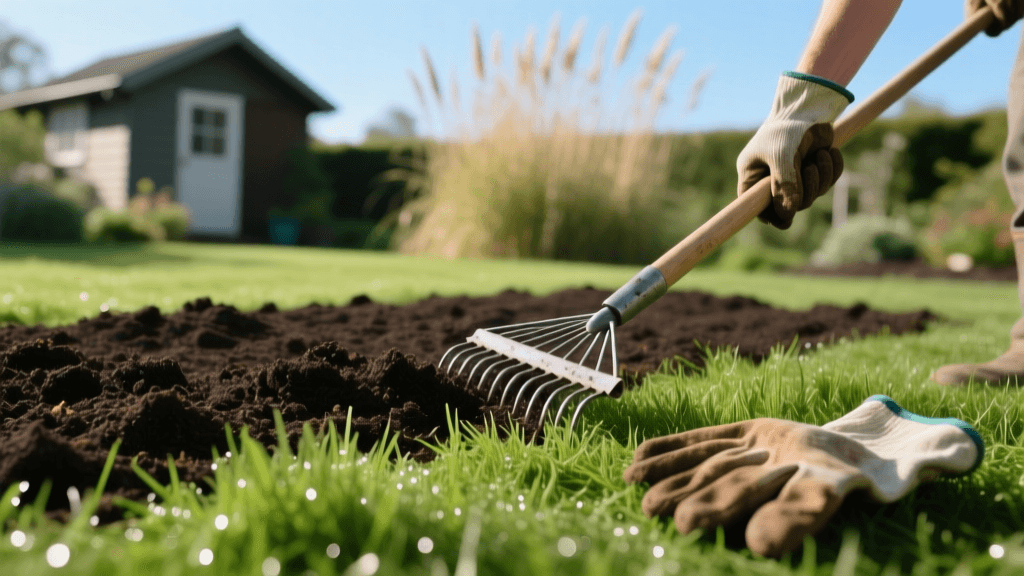
Topdressing Your Lawn With Compost: A Soil Health Guide
The Foundation of Turf: Why Soil Health Matters
When homeowners think of lawn care, they often focus on the visible elements: mowing patterns, weed control, and the deep green color of the grass blades. However, the true secret to a resilient, drought-tolerant, and lush lawn lies beneath the surface. Soil health is the foundation of sustainable turf management, and compost topdressing is one of the most effective, natural methods to restore and maintain that foundation. Unlike synthetic fertilizers that force-feed the grass, compost feeds the soil ecosystem, promoting long-term vitality and structural integrity.
According to the USDA Natural Resources Conservation Service, increasing soil organic matter is the single most impactful step you can take to improve soil health. Organic matter acts like a sponge, increasing the soil's water-holding capacity, improving drainage in heavy clay soils, and providing a slow-release buffet of nutrients for the complex soil food web. By topdressing your lawn with high-quality compost, you are inoculating your turf with billions of beneficial microbes, fungi, and bacteria that naturally suppress disease and break down thatch.
Compost vs. Synthetic Fertilizers: A Soil Health Comparison
Understanding the difference between feeding the plant and feeding the soil is crucial for modern lawn care. While synthetic fertilizers provide an immediate flush of nitrogen, they do nothing to improve the physical structure of the soil. Over time, reliance on synthetics can lead to soil compaction, salt buildup, and a decline in microbial life. Below is a comparison of how compost topdressing stacks up against traditional synthetic lawn fertilizers.
| Feature | Compost Topdressing | Synthetic Fertilizer |
|---|---|---|
| Nutrient Release | Slow, steady release over months/years | Rapid, immediate flush (high leaching risk) |
| Soil Microbiology | Inoculates soil with beneficial microbes | Can harm microbial life due to salt index |
| Water Retention | Increases moisture retention by up to 30% | No impact on soil water-holding capacity |
| Soil Structure | Binds soil particles, reducing compaction | No structural benefit |
| Risk of Turf Burn | Virtually zero (if mature and screened) | High if over-applied or applied in heat |
How to Choose the Right Compost for Your Lawn
Not all compost is created equal. Applying the wrong type of organic matter can introduce weed seeds, tie up nitrogen, or burn your turf. When sourcing compost for lawn topdressing, look for products that are certified by the US Composting Council's Seal of Testing Assurance (STA) program. The Cornell Waste Management Institute emphasizes that mature, properly thermophilic compost is essential to ensure that pathogens and weed seeds are destroyed during the decomposition process.
For lawn applications, ensure the compost is finely screened to a maximum particle size of 1/4 inch or 3/8 inch. This allows the material to easily settle down to the soil surface and into aeration holes without smothering the grass blades. Avoid composts that are heavily wood-chip or bark-based, as these have a high carbon-to-nitrogen (C:N) ratio and will rob your lawn of nitrogen as they continue to break down. Opt for leaf mold, aged manure blends, or municipal food-and-yard-waste composts that have a dark, crumbly texture and an earthy, forest-floor aroma.
Step-by-Step Guide to Topdressing Your Lawn
Topdressing is a straightforward process, but preparation is key to ensuring the compost integrates with the native soil rather than sitting on top as a separate layer.
Step 1: Mow Low and Core Aerate
Begin by mowing your lawn slightly lower than your usual maintenance height, aiming for about 1.5 to 2 inches. This prevents the grass from being completely buried under the compost. Next, perform core aeration. Pulling 2-to-3-inch plugs from the soil is the most critical pre-step. The aeration holes will act as vertical mulching channels, allowing the compost, water, and oxygen to penetrate deep into the root zone where they are needed most.
Step 2: Calculate Your Compost Needs
Applying too much compost will smother your turf, while applying too little won't yield significant soil health benefits. The ideal application rate is a 1/4-inch to 1/2-inch layer. To calculate the cubic yards of compost you need, use this formula:
(Square Footage × Desired Depth in Inches) ÷ 324 = Cubic Yards
For example, if you have a 5,000 square foot lawn and want to apply a 1/4-inch (0.25) layer of compost: (5,000 × 0.25) ÷ 324 = 3.85 cubic yards. Always order slightly more than your calculation to account for settling and uneven terrain.
Step 3: Spread and Level the Compost
Dump the compost in small, manageable piles across your lawn. Using a standard landscaping rake, spread the material evenly. Once broadly distributed, switch to a specialized lawn leveling rake (often featuring a flat metal or aluminum grid) or a stiff push broom. Work the compost into the grass canopy and directly into the core aeration holes. The goal is to leave the tips of the grass blades exposed to sunlight while the soil surface is completely covered.
Step 4: Water Deeply and Overseed
Immediately after spreading, water the lawn thoroughly with about 1/2 inch of water. This washes the compost off the grass blades (preventing fungal issues) and settles it firmly into the soil and aeration holes. If you are also overseeding your lawn, the compost provides the perfect, moisture-retentive seedbed for new grass seed to germinate and establish.
Seasonal Timing: When to Apply Compost
Timing your compost application to coincide with your grass type's peak growing season ensures the turf can quickly grow through the topdressing layer and take advantage of the newly available nutrients.
- Cool-Season Grasses (Kentucky Bluegrass, Fescue, Ryegrass): The absolute best time to topdress is in early fall (late August to late September). The soil is still warm, promoting microbial activity, and the cool air temperatures stimulate aggressive root and shoot growth. Spring application is a secondary option, but be cautious of encouraging weed seed germination.
- Warm-Season Grasses (Bermuda, Zoysia, Centipede, St. Augustine): Apply compost in late spring to early summer (May or June), just as the grass is breaking dormancy and entering its most aggressive growth phase. Avoid applying in late fall, as the grass will soon go dormant and the compost may harbor moisture that leads to winter fungal diseases.
Budgeting: DIY vs. Professional Topdressing Costs
Investing in soil health yields long-term dividends by reducing your water bill, minimizing the need for synthetic chemicals, and preventing costly lawn renovations. However, the upfront costs can vary based on your approach.
- DIY Bulk Compost: Purchasing compost in bulk from a local landscape supply yard is the most cost-effective method. Expect to pay between $30 and $60 per cubic yard, plus a delivery fee of $50 to $100. For a 5,000 sq ft lawn requiring 4 cubic yards, your material cost will be roughly $150 to $350.
- DIY Bagged Compost: Bagged compost is convenient but expensive for large areas. At $5 to $8 per 1-cubic-foot bag, covering 5,000 sq ft at a 1/4-inch depth would require over 100 bags, costing upwards of $500 to $800. This is only recommended for small patch repairs.
- Professional Services: Hiring a professional lawn care company to core aerate and topdress typically costs between $0.15 and $0.35 per square foot. For a 5,000 sq ft lawn, expect a quote between $750 and $1,750. This includes heavy equipment, labor, and premium screened compost.
Common Compost Topdressing Mistakes to Avoid
While compost is incredibly forgiving, a few common mistakes can hinder your results. First, never use raw, unfinished compost. As outlined in the EPA's guide to composting basics, properly finished compost should be dark, crumbly, and lack any recognizable original materials. Unfinished compost will continue to decompose, generating heat that can scorch grass roots and tying up vital nitrogen in the soil.
Second, avoid topdressing over a thick layer of thatch. If your lawn has more than a half-inch of thatch (the spongy layer of dead and living organic matter between the soil and the grass blades), you must dethatch before applying compost. Otherwise, the compost will sit on top of the thatch barrier, creating a hydrophobic layer that prevents water and air from reaching the soil. Finally, do not apply compost to a waterlogged or deeply frozen lawn; wait for optimal soil moisture conditions to ensure the material integrates seamlessly with the native earth.
Conclusion
Transitioning from a chemical-dependent lawn care regimen to a soil-health-focused approach is a transformative step for your landscape. Compost topdressing is not a quick-fix band-aid; it is a long-term investment in the biological and structural integrity of your soil. By feeding the soil food web, improving moisture retention, and naturally alleviating compaction, you cultivate a turf that is not only beautiful but deeply resilient against drought, disease, and environmental stress. Start with a single application this season, and watch as your lawn's vitality transforms from the ground up.