Lawn Care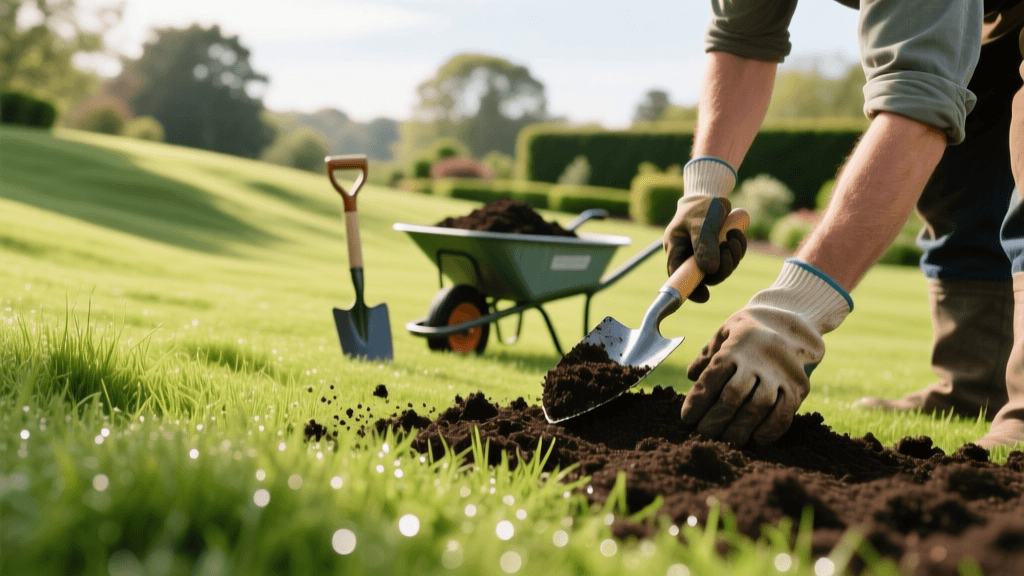
Topdressing Your Lawn With Compost: Soil Health Guide
The Foundation of a Lush Lawn: Understanding Soil Health
When homeowners think about lawn care, they often focus on what is visible above ground: the vibrant green color of the grass, the absence of weeds, and the uniformity of the cut. However, the true secret to a resilient, drought-tolerant, and lush lawn lies entirely out of sight. Soil health is the cornerstone of sustainable turfgrass management. Without a thriving subterranean ecosystem, even the most expensive grass seed and rigorous watering schedules will yield disappointing results.
According to the USDA Natural Resources Conservation Service, soil health is defined as the continued capacity of soil to function as a vital living ecosystem that sustains plants, animals, and humans. In the context of lawn care, healthy soil is teeming with beneficial microbes, fungi, earthworms, and nematodes. These organisms break down organic matter, cycle nutrients, and create microscopic channels that allow air and water to penetrate deep into the root zone. When soil becomes compacted or depleted of organic matter, this ecosystem collapses, leading to thatch buildup, shallow root systems, and an increased reliance on chemical interventions.
The Science of Soil: Cation Exchange Capacity and Organic Matter
To understand why compost is so revolutionary for lawns, you must understand a soil science concept known as Cation Exchange Capacity (CEC). CEC is a measure of the soil's ability to hold onto positively charged ions (cations), which include essential plant nutrients like calcium, magnesium, and potassium. Sandy soils have a naturally low CEC, meaning water and nutrients wash right through them. Clay soils have a high CEC but suffer from severe compaction and poor drainage.
Adding organic matter via compost topdressing fundamentally alters the soil structure. It binds sandy particles together to hold moisture, while simultaneously pushing clay particles apart to improve drainage. Furthermore, humus—the stable end-product of compost decomposition—has a massive CEC, acting like a slow-release nutrient reservoir that feeds your turfgrass exactly when it needs it.
Why Compost Topdressing Beats Synthetic Fertilizers
Synthetic fertilizers provide a quick, highly soluble burst of nitrogen that forces rapid top growth. While this makes the lawn look green for a few weeks, it does nothing to improve the underlying soil structure. In fact, over-reliance on synthetic salts can harm soil microbes and increase soil acidity over time. Compost topdressing, on the other hand, feeds the soil food web, which in turn feeds the grass.
| Feature | Compost Topdressing | Synthetic Fertilizer |
|---|---|---|
| Nutrient Release | Slow, steady, and microbially driven | Rapid, water-soluble burst |
| Soil Structure | Improves aeration, drainage, and CEC | No structural benefit; can degrade soil |
| Microbial Life | Inoculates soil with beneficial bacteria/fungi | Can harm microbial populations via salt burn |
| Drought Tolerance | Increases water retention significantly | Promotes shallow roots, reducing tolerance |
| Long-Term Cost | Reduces need for water and future amendments | Requires continuous, recurring purchases |
When to Topdress Your Lawn
Timing your compost application to coincide with your turfgrass's peak growing season is critical. The goal is to apply the compost just as the grass is actively growing, allowing the turf to push up through the organic layer and integrate it into the thatch and soil profile.
- Cool-Season Grasses (Kentucky Bluegrass, Tall Fescue, Perennial Ryegrass): The absolute best time to topdress is in the early fall, roughly 4 to 6 weeks before your first expected hard frost. Early spring is a secondary window, but fall is preferred because it coincides with peak root development and avoids the stress of summer heat.
- Warm-Season Grasses (Bermuda, Zoysia, St. Augustine, Centipede): Topdress in late spring to early summer, just after the lawn has completely greened up and is entering its most vigorous growth phase. Never topdress warm-season grasses in the fall, as the compost can trap moisture and promote fungal diseases during winter dormancy.
How to Choose the Right Compost for Turfgrass
Not all compost is created equal, and applying the wrong type can introduce weed seeds, pathogens, or herbicide residues to your lawn. The Environmental Protection Agency (EPA) notes that proper, high-heat composting destroys pathogens and weed seeds, but amateur or poorly managed municipal piles may not reach the necessary temperatures.
When sourcing compost, look for products that carry the US Composting Council's Seal of Testing Assurance (STA). This certification guarantees the compost has been lab-tested for nutrient content, pH, soluble salts, and the absence of harmful heavy metals. For lawns, you want a finely screened compost (1/4 inch or 3/8 inch screen) with a dark, crumbly texture and an earthy smell. Avoid composts that smell like ammonia or sulfur, as this indicates anaerobic decomposition. Additionally, be highly cautious of composts containing biosolids or municipal yard waste if you live in an area where persistent herbicides (like aminopyralid or clopyralid) are used, as these chemicals can survive the composting process and devastate broadleaf plants in your landscape.
Step-by-Step Guide to Compost Topdressing
Step 1: Core Aeration
Topdressing is most effective when paired with core aeration. Rent a walk-behind core aerator and make two passes over your lawn in perpendicular directions. This removes thousands of small soil plugs, creating deep channels for the compost to fall into, directly reaching the root zone and alleviating compaction.
Step 2: Mowing and Debris Removal
Mow your lawn slightly shorter than your usual maintenance height. This prevents the grass blades from matting down under the weight of the compost. Rake the lawn thoroughly or use a leaf blower to remove all debris, dead grass, and the soil cores left behind by the aerator (or break the cores up with a drag mat).
Step 3: Calculating Your Compost Volume
A standard topdressing application for an existing lawn is a thin layer, roughly 1/4 to 1/2 inch thick. Applying more than this can smother the turf and block sunlight. As a general rule, one cubic yard of compost will cover approximately 1,000 square feet of lawn at a depth of 1/3 inch. Measure your lawn's square footage carefully before ordering bulk compost to avoid over-application.
Step 4: Application and Spreading
Dump the compost in small, manageable piles across the lawn. Using a flat-headed shovel or a specialized compost spreader, distribute the material evenly. Once spread, use a leveling rake or a stiff push broom to work the compost down into the turf canopy and the aeration holes. The goal is to leave the tips of the grass blades exposed to sunlight while the soil surface and thatch layer are covered.
Step 5: Watering and Integration
Immediately after spreading, water the lawn deeply. This washes the compost off the grass blades, preventing fungal issues, and settles the organic matter firmly into the soil and aeration cores. Keep the soil consistently moist for the next two weeks to encourage microbial activity and root growth into the new organic layer.
The Economics of Compost Topdressing
While the upfront cost of compost topdressing is higher than buying a bag of synthetic fertilizer, the long-term return on investment is substantial. Bulk compost typically costs between $30 and $50 per cubic yard, plus a delivery fee of $50 to $100 depending on your proximity to the supplier. Aeration machine rentals average $80 to $100 per day. For a 5,000-square-foot lawn, you will need about 5 cubic yards of compost, bringing the total material and equipment cost to roughly $350 to $450.
However, this single application can reduce your summer irrigation needs by up to 30% due to increased water retention, and it eliminates the need for multiple synthetic fertilizer applications throughout the year. Over a three-to-five-year period, the reduction in water bills, chemical purchases, and reseeding costs makes compost topdressing a financially sound landscape investment.
Common Mistakes to Avoid
- Smothering the Grass: Never apply more than 1/2 inch of compost at one time. If your soil is severely degraded, it is better to apply 1/4 inch twice a year (spring and fall) than to dump an inch of material all at once and kill the turf.
- Topdressing During Drought: Compost needs moisture to activate and integrate. Avoid topdressing during the peak heat of summer or during drought restrictions when you cannot water the lawn adequately.
- Using Unfinished Compost: Compost that is still hot and actively decomposing will rob the soil of nitrogen (a process called nitrogen immobilization) and can physically burn grass roots. Ensure your compost is fully cured, dark, and cool to the touch.
Long-Term Soil Health Maintenance
Topdressing with compost is a powerful intervention, but maintaining soil health requires ongoing cultural practices. Transition to mulching your grass clippings rather than bagging them; clippings return valuable nitrogen and organic matter back to the soil surface. Minimize foot traffic on wet soils to prevent compaction, and consider installing stepping stones in high-traffic areas where the soil is repeatedly crushed.
Healthy soil is not a destination; it is an ongoing relationship with your landscape. By feeding the soil biology with compost, you create a self-sustaining ecosystem that naturally resists pests, diseases, and environmental stress.
By shifting your lawn care paradigm from simply feeding the plant to nurturing the soil, you will cultivate a turf that is not only visually stunning but ecologically resilient for decades to come.