Lawn Care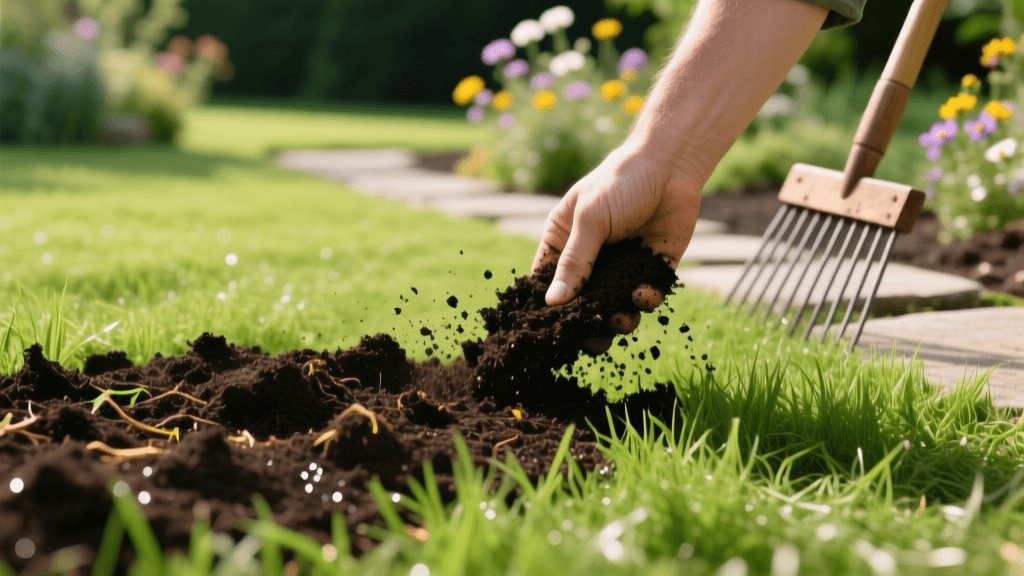
Topdressing Lawns With Compost: The Ultimate Soil Guide
Transforming Your Turf: The Power of Compost Topdressing
A vibrant, resilient lawn starts from the ground up. While many homeowners focus heavily on synthetic fertilizers and frequent watering, the true secret to a lush, drought-tolerant, and disease-resistant lawn lies beneath the surface. Soil health is the foundation of turfgrass vitality, and one of the most effective, time-tested methods to improve your soil profile is topdressing your lawn with compost. Topdressing involves applying a thin layer of organic material over your existing turf to amend the soil, level uneven terrain, and introduce beneficial microorganisms. When executed correctly, this practice can drastically reduce your reliance on chemical inputs, minimize thatch buildup, and transform patchy, struggling grass into a dense, carpet-like lawn.
The Science of Soil Health and Organic Matter
To understand why compost topdressing is so effective, we must look at the biological and chemical properties of soil. Healthy soil is not just dirt; it is a living ecosystem teeming with bacteria, fungi, nematodes, and earthworms. Over time, construction practices, heavy foot traffic, and the continuous use of synthetic salts can compact the soil and deplete its organic matter. According to the Soil Science Society of America, increasing soil organic matter is the single most effective way to improve soil structure, enhance water infiltration, and boost the Cation Exchange Capacity (CEC), which is the soil's ability to hold and release essential nutrients to plant roots.
Compost acts as a slow-release, organic fertilizer and a powerful soil conditioner. It introduces humus, which binds soil particles together into stable aggregates. This aggregation creates pore spaces in heavy clay soils, improving drainage and oxygen flow to the roots. Conversely, in sandy soils, compost acts like a sponge, dramatically increasing water retention. In fact, high-quality compost can hold up to twenty times its weight in water, making your lawn significantly more resilient during summer droughts. Furthermore, the United States Environmental Protection Agency highlights that composting and applying organic matter to landscapes suppresses plant diseases, reduces the need for chemical fertilizers, and promotes robust root systems.
When to Topdress: Timing for Cool and Warm-Season Grasses
Timing is critical when applying compost. You want to topdress when your turfgrass is actively growing and can quickly recover from the stress of the application and any accompanying aeration. Applying compost to dormant grass can smother the crown and invite fungal pathogens.
Cool-Season Grasses
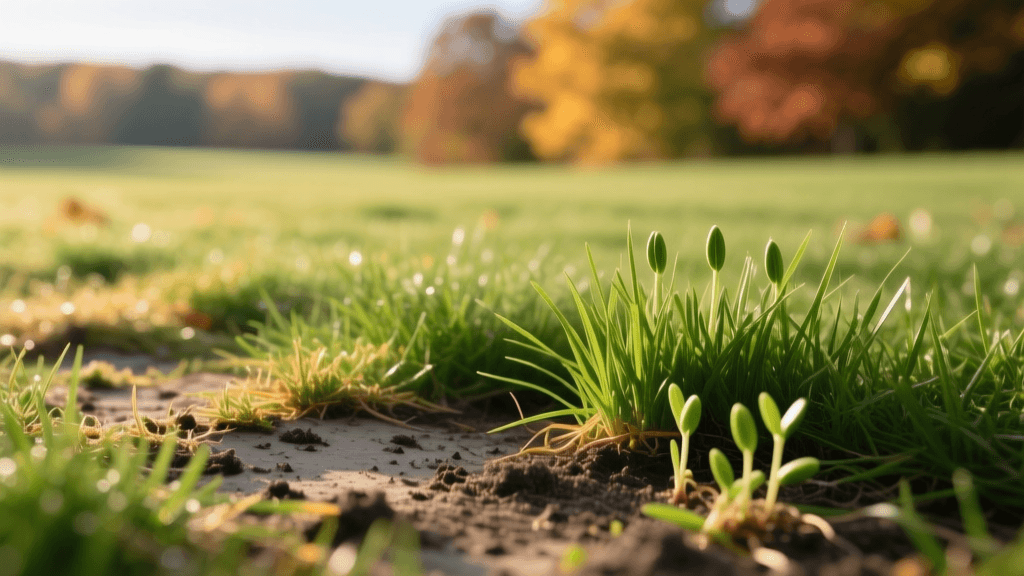
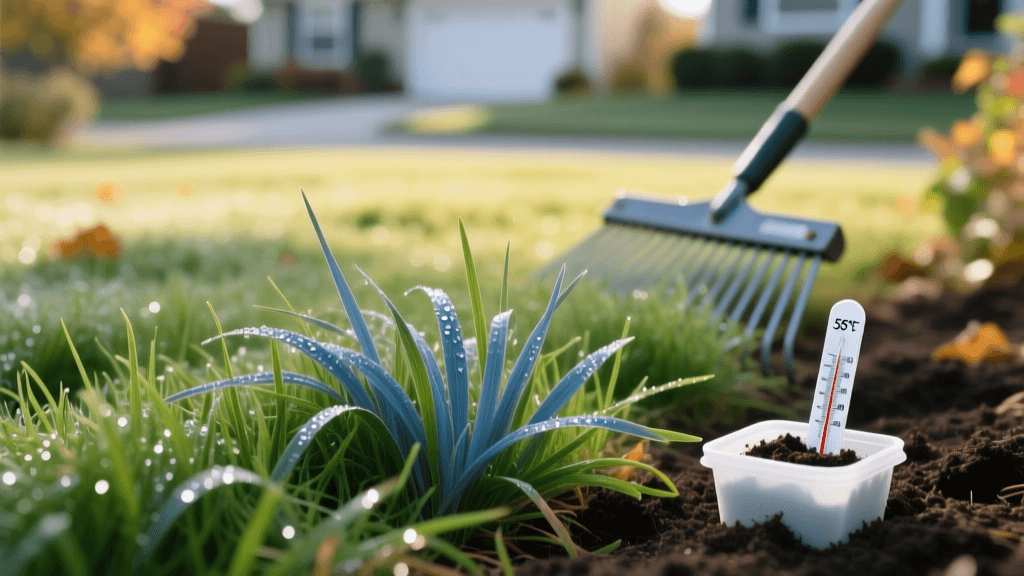
For cool-season grasses such as Kentucky Bluegrass, Tall Fescue, Perennial Ryegrass, and Fine Fescue, the optimal time to topdress is in the early fall (late August to late September). During this window, soil temperatures are still warm enough to stimulate microbial activity, while cooler air temperatures promote aggressive root growth and turf recovery. A secondary, lighter application can be done in early spring just as the grass breaks dormancy and begins its active growth phase.
Warm-Season Grasses
Warm-season grasses, including Bermudagrass, Zoysia, St. Augustine, and Centipedegrass, thrive in the heat. The best time to topdress these lawns is in late spring to early summer (May through June), just after the grass has fully greened up and is entering its peak growing season. Avoid topdressing warm-season lawns in the fall, as the approaching dormancy will prevent the grass from growing through the compost layer, leaving it vulnerable to winter weed invasion and rot.
Selecting the Right Compost for Lawns
Not all compost is created equal. Using the wrong material can introduce weed seeds, harmful pathogens, or excessive salts that will burn your turf. When purchasing compost for topdressing, adhere to the following criteria:
- Fine Screened Texture: The compost must be finely screened (ideally 1/4 inch or 3/8 inch mesh). Large chunks of wood or uncomposted debris will smother the grass blades and make it impossible to achieve a smooth, level application.
- OMRI Listed: Look for products certified by the Organic Materials Review Institute (OMRI). This ensures the compost is free from synthetic contaminants and heavy metals.
- Fully Cured: The compost should smell rich and earthy, like a forest floor. If it smells sour, acidic, or like ammonia, it has not finished decomposing and will rob your soil of nitrogen as it continues to break down.
- Low Salt Content: Avoid composts heavily derived from animal manure unless they have been thoroughly tested and aged. Manure-based composts can carry high salt levels, which are toxic to turfgrass roots. Plant-based composts, such as those made from composted leaves, yard waste, and forestry byproducts, are generally safer for lawns.
Step-by-Step Guide to Topdressing Your Lawn
Follow this detailed protocol to ensure your compost integrates seamlessly into the soil profile without damaging your existing turf.
Step 1: Mow and Prepare the Turf
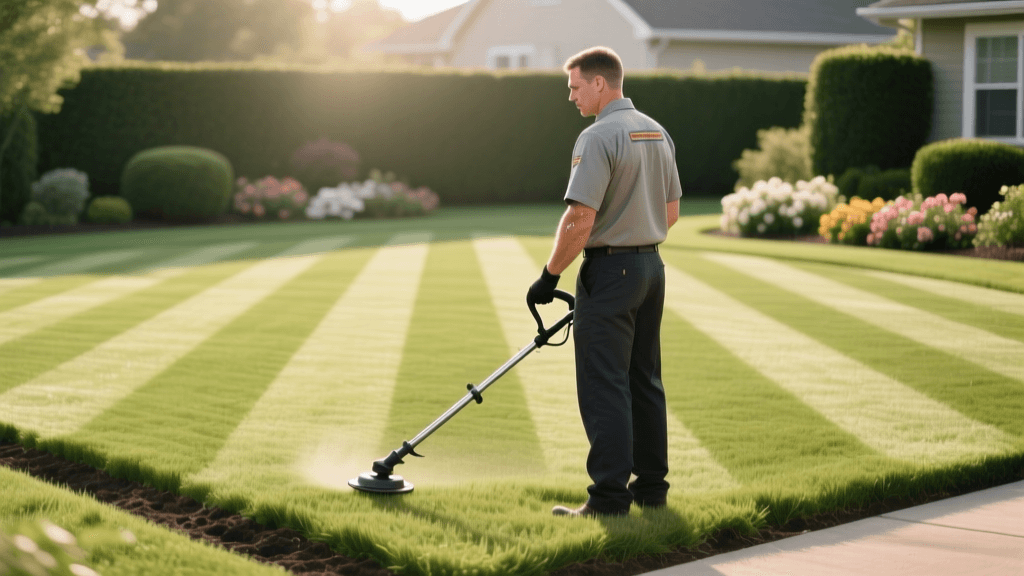
Mow your lawn slightly shorter than your usual maintenance height. For most lawns, cutting the grass down to 1.5 or 2 inches is ideal. This prevents the grass blades from being completely buried under the compost and allows the organic matter to make direct contact with the soil surface and thatch layer.
Step 2: Core Aeration (Highly Recommended)
While you can topdress without aerating, combining the two practices yields exponentially better results. Rent a core aerator and make two passes over your lawn in perpendicular directions. Core aeration removes small plugs of soil (ideally 2 to 3 inches deep), relieving compaction and creating open channels. When you apply compost immediately after aerating, the organic matter falls directly into these holes, amending the subsoil where roots actively forage for nutrients.
Step 3: Calculate and Apply the Compost
Your goal is to apply a thin, even layer of compost ranging from 1/4 inch to a maximum of 1/2 inch deep. Applying more than 1/2 inch at one time risks smothering the grass crowns. Dump the compost in small piles across the lawn to minimize heavy wheelbarrow traffic, which can compact the soil you just aerated.
Step 4: Spread and Level
Use a push broom, a specialized lawn leveling rake (often called a lawn leveling tool or lute), or the back of a landscape rake to spread the compost. Work the material back and forth, ensuring it drops down to the soil level and fills the aeration holes. The tips of the grass blades should still be visible above the compost layer when you are finished.
Step 5: Water Deeply
Immediately after spreading, water the lawn deeply. This serves two purposes: it washes any compost dust off the grass blades (preventing potential fungal issues and allowing sunlight to reach the leaf tissue), and it helps settle the compost into the aeration holes and thatch layer, initiating the microbial breakdown process.
Compost Volume Calculator and Cost Breakdown
Calculating the correct amount of compost prevents overspending and ensures you achieve the proper depth. The table below outlines the volume required for a standard 1/4 inch application, which is the safest and most effective depth for established lawns.
| Lawn Area (Sq Ft) | Application Depth | Compost Needed (Cubic Yards) | Estimated Bulk Cost |
|---|---|---|---|
| 1,000 | 1/4 inch | 0.75 cu yd | $25 - $40 |
| 2,500 | 1/4 inch | 1.9 cu yd | $60 - $95 |
| 5,000 | 1/4 inch | 3.8 cu yd | $120 - $190 |
| 10,000 | 1/4 inch | 7.7 cu yd | $240 - $385 |
| 5,000 | 1/2 inch | 7.7 cu yd | $240 - $385 |
Cost Analysis: Purchasing compost in bulk from a local landscape supply yard is vastly more economical than buying bagged compost from a big-box store. Bulk compost typically costs between $30 and $50 per cubic yard. In contrast, bagged compost costs roughly $4 to $6 per cubic foot. Since there are 27 cubic feet in a cubic yard, bagged compost equates to $108 to $162 per cubic yard. For any lawn larger than 1,000 square feet, bulk delivery or a pickup truck load is the only financially sensible option.
Common Mistakes to Avoid
Even with the best intentions, homeowners can make errors during the topdressing process that hinder lawn health. Avoid these common pitfalls:
- Smothering the Grass: Applying a layer thicker than 1/2 inch will block sunlight and oxygen from reaching the grass crowns, leading to turf death. If your lawn is severely uneven and requires more than 1/2 inch of fill in certain spots, apply the compost in multiple stages, allowing the grass to grow through the first layer before applying the next.
- Using Unfinished Compost or Topsoil: Topsoil is heavy, lacks microbial life, and can introduce clay that worsens compaction. Unfinished compost will tie up soil nitrogen as it decomposes, causing your lawn to turn yellow. Always use fully cured, screened compost.
- Skipping the Aeration Step: While topdressing alone provides surface benefits, failing to aerate first means the compost sits on top of the thatch layer and takes much longer to integrate into the root zone. Aeration is the bridge that connects the compost to the subsoil.
- Applying Before Heavy Rain: If a torrential downpour is forecasted immediately after your application, the compost may wash away into storm drains or pool in low-lying areas before it has a chance to settle into the turf canopy.
Conclusion: A Long-Term Investment in Your Lawn
Topdressing with compost is not a quick-fix bandage; it is a foundational soil management strategy. By committing to an annual or bi-annual topdressing routine, you are actively rebuilding the soil food web, enhancing drought tolerance, and naturally suppressing turf diseases. Over the course of three to five years, the cumulative effect of adding organic matter will result in a lawn that requires less water, fewer synthetic fertilizers, and significantly less maintenance, proving that the best lawn care secrets are always rooted in soil health.