Lawn Care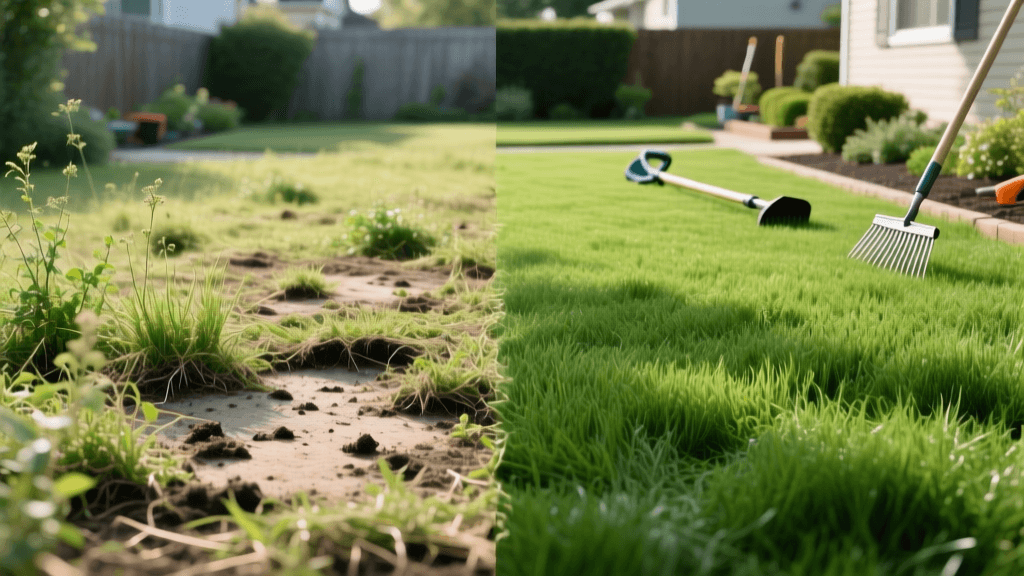
From Weeds to Wow: Transforming a Neglected Fescue Lawn
The 'Before' State: Assessing a Neglected Cool-Season Lawn
Every stunning lawn transformation begins with an honest assessment of the 'before' state. If you are staring out at a yard dominated by patchy brown dirt, aggressive crabgrass, and hard, compacted soil, you are not alone. Many homeowners inherit or slowly develop cool-season lawns that have lost their vigor due to years of improper mowing, lack of aeration, and inconsistent fertilization. For cool-season grasses like Tall Fescue and Kentucky Bluegrass, the end of summer often reveals the true extent of the damage left behind by heat stress and drought.
Before you can achieve that lush, emerald-green 'after' picture, you must understand why the lawn failed. Compacted soil prevents oxygen and water from reaching the root zone, leading to shallow roots that burn out in July. Meanwhile, bare patches act as an open invitation for opportunistic weeds like dandelions, plantain, and spurge. Transforming this neglected space requires more than just throwing down a few handfuls of seed; it demands a strategic, multi-step renovation process that resets the soil ecology and establishes a deep-rooted, resilient turf.
The Transformation Blueprint: Timeline and Budget
Timing is the most critical factor in cool-season lawn renovation. According to Penn State Extension, the absolute best window for planting or renovating Tall Fescue and Kentucky Bluegrass is between late August and early September. This timing allows the grass to establish deep roots during the cool autumn months before facing the stress of the following summer.
Below is a structured budget and timeline for a complete 5,000 square foot lawn transformation.
| Renovation Phase | Timing (Cool-Season) | Key Products & Tools | Est. Cost (per 5,000 sq ft) |
|---|---|---|---|
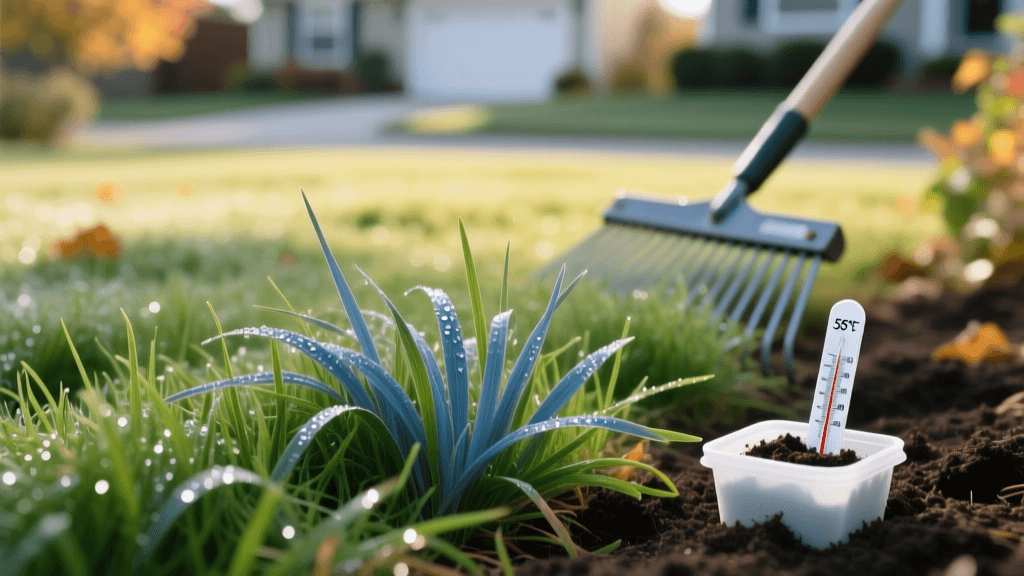
| Soil Testing | Late Spring / Early Summer | Mail-in Soil Test Kit (e.g., UMass) | $20 - $30 |
| Weed Eradication | Early to Mid-August | Glyphosate or Selective Herbicide | $30 - $50 |
| Aeration & Prep | Late August | Core Aerator Rental, Compost | $150 - $200 |
| Seeding & Feeding | Early September | TTTF Seed Mix, Starter Fertilizer | $120 - $160 |
| Establishment Care | September - October | Irrigation, Mowing, Tenacity | $50 - $80 |
Step 1: Eradication and Soil Preparation
To get a true 'before and after' transformation, you must first clear the canvas. If your lawn is more than 50% weeds, a complete renovation using a non-selective herbicide like glyphosate is often the most efficient route. Apply the herbicide in early August when weeds are actively growing. Wait 10 to 14 days for the existing vegetation to completely die off. If you prefer to keep whatever healthy grass remains and only target weeds, you can use a selective herbicide or a product containing mesotrione (Tenacity), which will bleach the weeds white without killing your existing desirable fescue.
Once the vegetation is cleared, mow the dead material as low as your mower will allow (scalping it down to about 1 inch). Rake the area vigorously with a heavy metal thatch rake to remove the dead organic layer. This ensures that your new seed will make direct contact with the soil, which is non-negotiable for successful germination.
Step 2: Core Aeration and Soil Amendment
Compacted soil is the silent killer of cool-season lawns. To transition from a hard, hydrophobic 'before' surface to a soft, sponge-like 'after' soil profile, you must aerate. Rent a walk-behind core aerator (such as a Billy Goat or Ryan model) from your local hardware store. Run the aerator over the lawn in two perpendicular directions, pulling thousands of 3-inch soil cores to the surface. Leave these cores on the lawn; they will break down over the next few weeks and help decompose thatch.
Immediately after aeration, apply a soil amendment based on your earlier soil test results. Most urban soils are heavily compacted clay lacking in organic matter. Top-dress the lawn with a 1/4-inch layer of high-quality, screened compost. The compost will fall into the aeration holes, creating vertical columns of rich organic matter that act as highways for water, oxygen, and new grassroots. As noted by NC State Extension, maintaining proper soil pH (between 6.0 and 7.0) and organic matter is vital for Tall Fescue to thrive and resist summer diseases like Brown Patch.
Step 3: Selecting and Sowing the Right Seed
The secret to a dramatic visual transformation lies in the genetics of the seed you choose. Do not buy cheap, generic seed from a big-box store; these often contain annual ryegrass or weed seeds. Instead, invest in a premium Turf-Type Tall Fescue (TTTF) mix, ideally blended with 10% Kentucky Bluegrass (KBG). The TTTF provides deep, drought-tolerant roots and a bunching growth habit, while the KBG spreads via rhizomes to fill in any future bare spots and repair damage naturally. Brands like Jonathan Green Black Beauty Ultra or Scotts Turf Builder Sun & Shade are excellent choices.
For a complete renovation, apply seed at a rate of 6 to 8 pounds per 1,000 square feet. Use a broadcast spreader, applying half the seed walking north-to-south, and the other half walking east-to-west to ensure even coverage. After seeding, apply a high-phosphorus starter fertilizer, such as Scotts Turf Builder Starter Food for New Grass (24-25-4) or a similar Lesco 18-24-12 formula. Phosphorus is critical for rapid root development during the first 30 days of growth.
Step 4: The Germination Watering Schedule
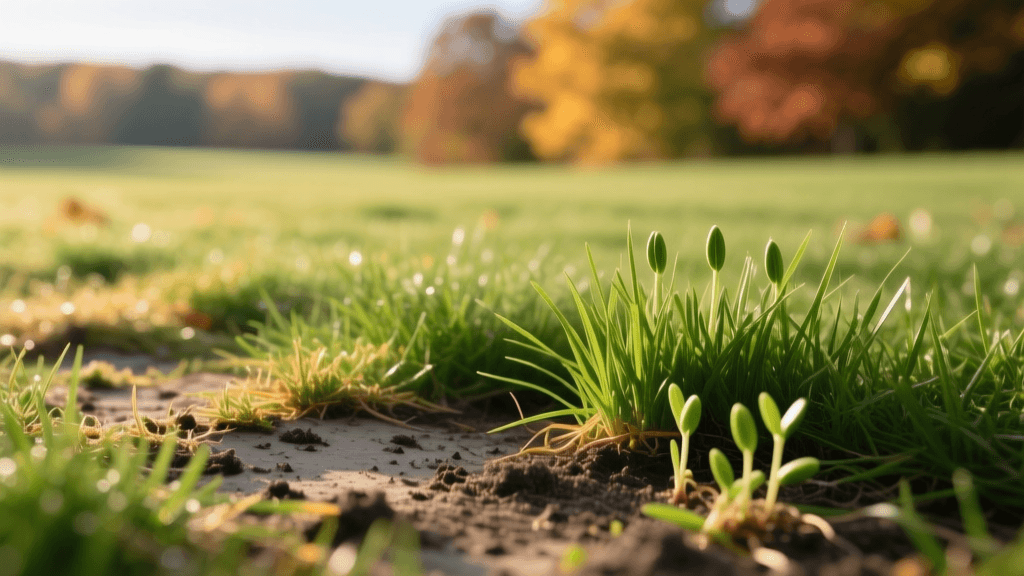
You can do everything perfectly, but if you fail at watering, your transformation will stall. Fescue seed must remain consistently moist to germinate. The 'before' habit of watering deeply once a week will rot or wash away new seed. You must adopt a frequent, light watering schedule for the first 21 days.
- Days 1-14 (Germination): Water 2 to 3 times per day for 10-15 minutes per zone. The goal is to keep the top 1 inch of soil damp, not soggy. Set your sprinkler timers for 8:00 AM, 12:00 PM, and 4:00 PM.
- Days 15-21 (Seedling Stage): As seeds sprout and establish tiny roots, reduce frequency to once a day for 20-30 minutes to encourage roots to chase the water deeper into the soil.
-
Pro Tip: If you cannot water multiple times a day due to work schedules, consider applying a seed germination accelerant or a moisture-retaining seed coating, and lay down a thin layer of peat moss or straw mulch over the seed to lock in moisture.
- Days 22-60 (Establishment): Transition to the 'after' maintenance routine: deep, infrequent watering. Aim for 1 to 1.5 inches of water per week, applied in one or two heavy sessions to build drought tolerance.
The 'Before vs. After' Comparison
When you commit to this rigorous renovation process, the visual and functional changes are staggering. Below is a comparison of what you can expect when comparing the neglected starting point to the fully established lawn 12 months later.
| Lawn Feature | The 'Before' Neglected Lawn | The 'After' Transformed Lawn |
|---|---|---|
| Grass Density | Patchy, thin, visible soil and weeds | Thick, lush, carpet-like 100% coverage |
| Weed Presence | Over 50% Crabgrass, Dandelions, Spurge | Less than 5% easily managed broadleaf weeds |
| Soil Profile | Compacted, hydrophobic, hard clay | Aerated, compost-amended, biologically active |
| Root Depth | Shallow (1-2 inches), prone to drought | Deep (4-6 inches), highly drought-tolerant |
| Visual Color | Yellowish-green, brown patches, uneven | Deep, uniform emerald green year-round |
The 'After' Reveal: Maintaining Your New Lawn
Once your new fescue lawn reaches about 3.5 inches in height, it is time for the first mow. Never remove more than the top 1/3 of the grass blade. Set your mower deck to 3.5 or 4 inches. Taller grass shades the soil, preventing weed seeds from germinating and retaining soil moisture. Leaving the clippings on the lawn will also return valuable nitrogen back to the soil profile.
To protect your investment and ensure your 'after' lawn doesn't slowly revert to a 'before' state, implement a seasonal maintenance schedule. Apply a pre-emergent crabgrass preventer in early spring (once the new grass has been mowed at least three times), and schedule annual core aeration and overseeding every fall to keep the turf thick and competitive against weeds. By following this comprehensive transformation guide, you will not only boost your home's curb appeal but also create a resilient, eco-friendly outdoor space that thrives for years to come.