Tree Care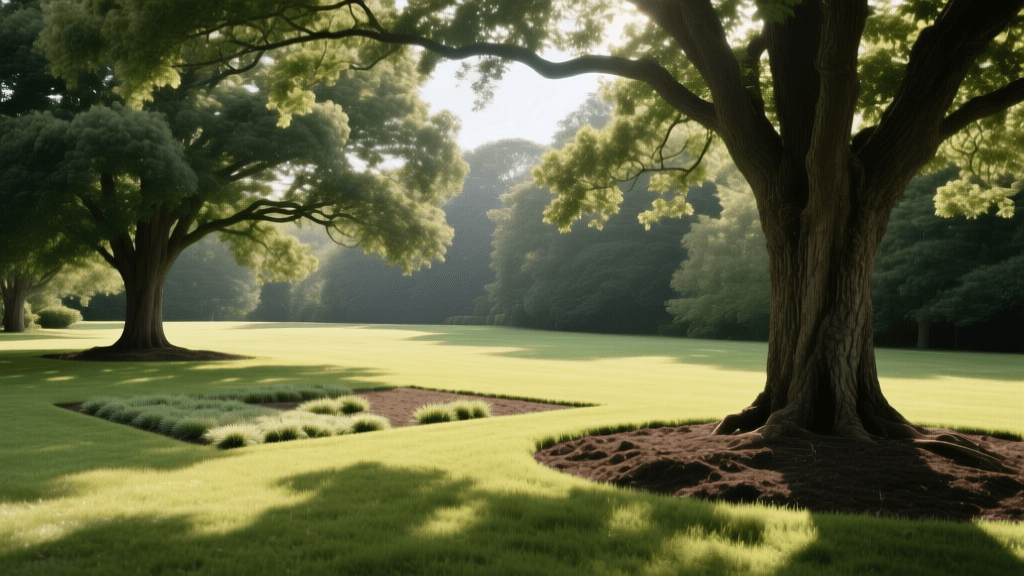
Tree Canopy Management for Shaded Lawn Renovation Projects
The Challenge of Lawn Renovation Under Trees
Lawn renovation is a cornerstone of landscape recovery, but when your yard is dominated by mature trees, standard turf recovery protocols often fail. Grass and trees are natural competitors. While a lush, dark green lawn thrives in full sun, the reality of a shaded yard is a constant battle for light, water, and soil nutrients. If you are attempting a lawn renovation or recovery project in a heavily wooded or shaded landscape, simply throwing down shade-tolerant seed and fertilizer will result in disappointment. To achieve a true lawn recovery, you must integrate strategic tree care—specifically canopy management and root zone preservation—into your turfgrass renovation plan.
Trees like Norway Maples, Beeches, and Spruces cast dense shade and possess aggressive, shallow root systems that intercept rainfall and deplete soil nitrogen before grass roots can access them. Furthermore, the constant drop of leaves and needles can alter soil pH and smother emerging grass seedlings. Successful lawn renovation in these environments requires a holistic approach that balances the health of your mature trees with the biological needs of shade-tolerant turfgrasses.
Strategic Canopy Pruning to Increase Sunlight
The most critical step in renovating a shaded lawn is increasing the amount of photosynthetically active radiation (PAR) that reaches the soil surface. Even the most advanced shade-tolerant grasses, such as Fine Fescues, require a minimum of three to four hours of direct or heavily filtered sunlight daily to maintain root density and recover from environmental stress.
Crown Raising and Crown Thinning
To allow more light to penetrate the canopy, arborists utilize two primary techniques: crown raising and crown thinning. Crown raising involves the selective removal of the lower branches of a tree to allow low-angle morning and evening sunlight to reach the lawn. Crown thinning is the selective removal of smaller, inner branches throughout the canopy to create 'dappled' light, which is ideal for turfgrass photosynthesis.
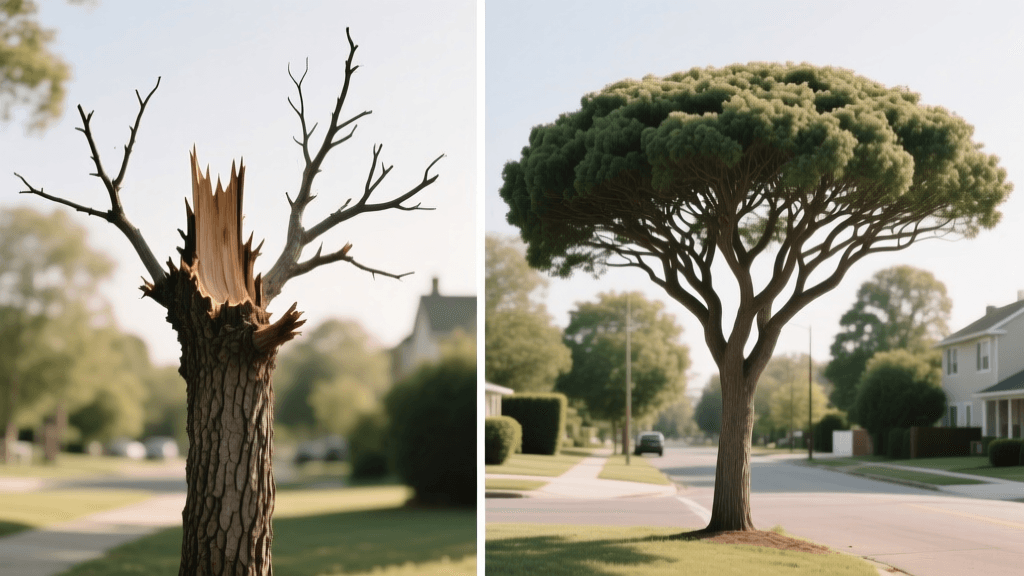
However, pruning must be done with extreme caution. According to the Arbor Day Foundation, you should never remove more than 25% of a tree's live canopy in a single year. Over-pruning stresses the tree, triggers a flush of weak 'water sprouts,' and severely compromises the tree's ability to produce energy, ultimately leading to decline. Avoid harmful practices like 'lion's tailing' (stripping inner branches and leaving only foliage at the tips), which makes limbs highly susceptible to breaking during storms.
Hiring a Professional
For large mature trees, lawn renovation projects should include the budget for an ISA Certified Arborist. The International Society of Arboriculture (ISA) strongly recommends using credentialed professionals who understand the biology of the branch collar and can make proper pruning cuts that seal quickly, preventing the introduction of decay fungi that could eventually kill the tree and ruin your landscape investment.
The Danger of Surface Roots and Soil Grading
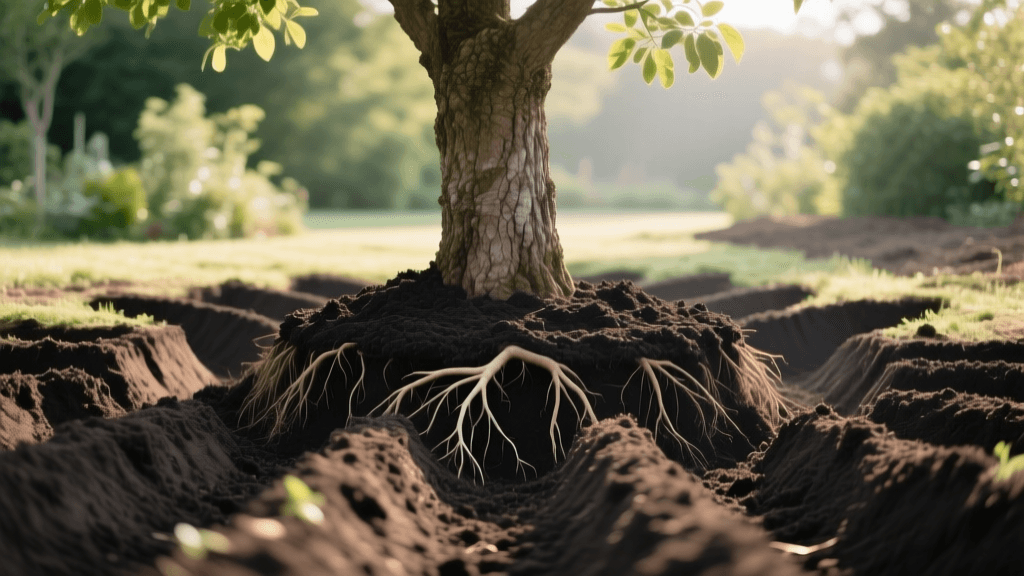
During lawn renovation, homeowners frequently make a fatal mistake: adding topsoil to level the yard and cover unsurface tree roots. The vast majority of a tree's fine, water-absorbing feeder roots reside in the top 6 to 12 inches of soil. These roots require constant oxygen exchange with the atmosphere.
Dumping even two to three inches of heavy topsoil or compost over the critical root zone will suffocate these feeder roots, leading to a slow, irreversible decline of the tree over the next three to five years. As the tree dies back, it will drop large, hazardous limbs onto your newly renovated lawn. If surface roots are preventing mowing or grass establishment, do not bury them. Instead, embrace the roots by establishing a mulch ring or planting shade-tolerant groundcovers like Pachysandra or Vinca minor in the most heavily rooted areas.
Lawn Renovation Action Plan for Shaded Yards
Below is a structured timeline and action plan for integrating tree care with lawn recovery in a shaded landscape.
| Phase | Action Step | Timing | Estimated Cost | Expected Outcome |
|---|---|---|---|---|
| 1. Canopy Prep | Professional crown thinning and raising (max 25% removal) | Late Winter / Early Spring | $400 - $1,200 per tree | 3-4 hours of filtered sunlight reaching the soil. |
| 2. Soil Testing | Test pH and nutrients; apply lime if pH is below 6.0 due to oak/pine litter. | Early Spring | $30 - $50 per test | Optimized soil chemistry for grass seed germination. |
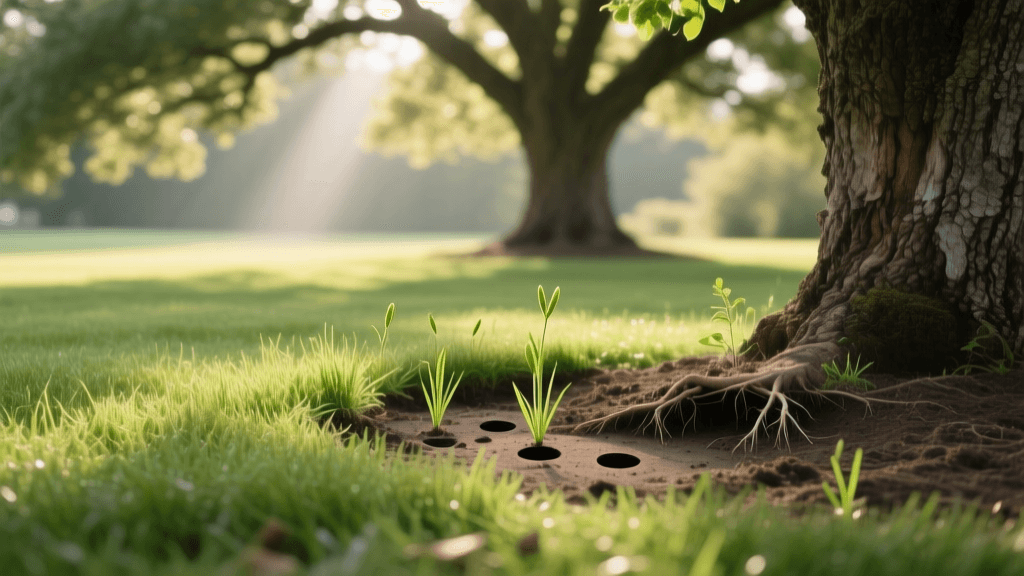
| 3. Aeration | Core aeration using specialized equipment to avoid severing major tree roots. | Late Summer | $150 - $250 per yard | Reduced compaction, better water infiltration. |
| 4. Seeding | Overseed with Fine Fescue blend at 5-8 lbs per 1,000 sq ft. | Early Fall (Late Aug - Sept) | $60 - $90 per 50lb bag | Dense, shade-adapted turfgrass establishment. |
| 5. Mulching | Establish 3-4 inch mulch rings inside the tree drip line; keep 3 inches from trunk. | Mid Fall | $40 - $60 per cubic yard | Eliminates impossible-to-grow zones, protects tree bark. |
Selecting the Right Shade-Tolerant Grass Seed
Standard Kentucky Bluegrass mixes will fail in shaded environments, leading to thin, disease-prone turf that requires constant reseeding. For lawn recovery under trees, you must select cool-season grasses specifically bred for low-light environments. Fine Fescues—including Creeping Red Fescue, Chewings Fescue, and Hard Fescue—are the undisputed champions of shade tolerance. They feature narrow blades, require less nitrogen, and possess deep root systems that can better compete with tree roots.
When purchasing seed, look for high-quality blends like Jonathan Green Black Beauty Ultra or Pennington Smart Seed Dense Shade. Ensure the seed tag guarantees a weed seed percentage of less than 0.1%. During overseeding, apply the seed at a rate of 5 to 8 pounds per 1,000 square feet. Use a starter fertilizer high in phosphorus (e.g., 10-18-10) to encourage rapid root development before the tree roots can monopolize the soil nutrients.
Managing Water and Nutrient Competition
Trees act as giant umbrellas, intercepting rainfall and preventing it from reaching the grass below. Conversely, shaded lawns retain moisture longer, creating a breeding ground for fungal diseases like powdery mildew, brown patch, and dollar spot. To manage this, water your shaded lawn deeply but infrequently—aiming for 1 inch of water per week, applied in the early morning so the grass blades dry quickly in the afternoon breeze.
Fertilization requires a delicate balance. Trees will rapidly absorb fast-release, water-soluble nitrogen before it reaches the grass roots. To ensure your recovering lawn gets the nutrients it needs, use a slow-release, organic nitrogen source like Milorganite or a sulfur-coated urea product. Apply fertilizer primarily in the early fall when cool-season grasses are actively growing and storing energy, but tree root uptake is beginning to slow down for winter dormancy.
The Drip Line Rule: When to Abandon Grass
Part of successful lawn renovation is knowing when to stop fighting nature. The 'drip line' of a tree is the imaginary ring on the ground directly below the outermost circumference of the tree's branches. Inside this zone, the concentration of tree roots is incredibly dense, and the canopy interception of rain and sunlight is at its maximum. Grass will almost never thrive inside the drip line of a mature tree.
Instead of wasting time, seed, and fertilizer in this zone, establish a high-quality mulch ring. Apply 2 to 4 inches of premium shredded hardwood or pine bark mulch. Crucially, keep the mulch at least 3 to 6 inches away from the trunk flare of the tree. Piling mulch against the trunk (a practice known as 'volcano mulching') traps moisture against the bark, inviting rot, fungal cankers, and root-girdling issues that will eventually kill the tree. By replacing the inner turf zone with mulch, you eliminate the need to use string trimmers near the trunk, preventing mechanical damage to the bark, while simultaneously preserving soil moisture for the tree and allowing your renovated grass to thrive in the outer, brighter zones of the yard.
Conclusion
Lawn renovation in a shaded landscape is not just about turfgrass; it is an exercise in ecosystem management. By strategically pruning the canopy to maximize filtered light, protecting the critical root zone from soil compaction and suffocation, and utilizing specialized shade-tolerant seed blends, you can achieve a stunning, resilient lawn. Remember that the health of your grass is inextricably linked to the health of your trees. Prioritize professional arboriculture practices alongside your turf management routines, and your shaded yard will recover into a lush, vibrant, and sustainable landscape.