Tree Care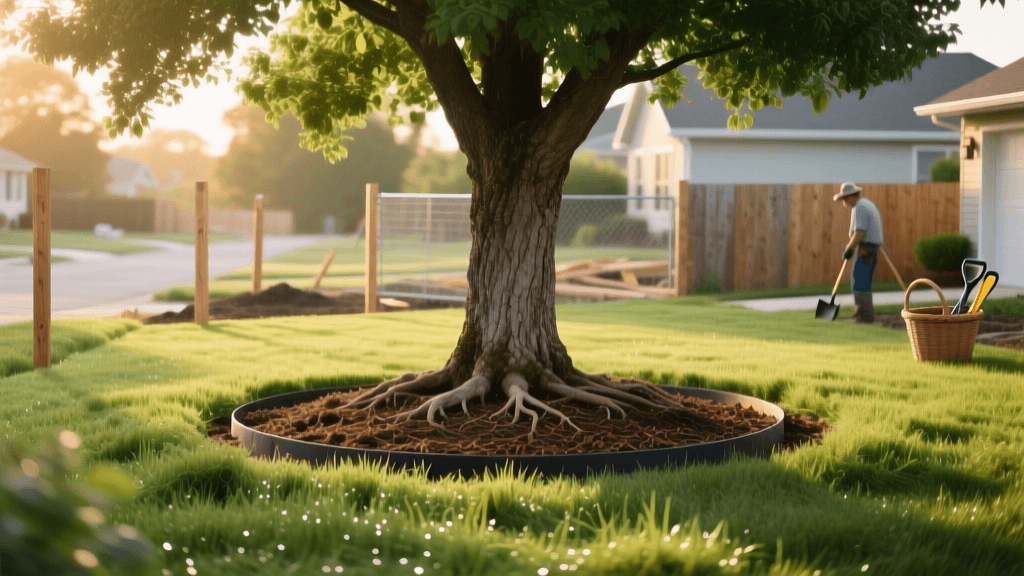
Tree Care and Lawn Recovery: Managing Root Zones and Shade
The Intersection of Lawn Renovation and Tree Health
When homeowners embark on a major lawn renovation, the focus is almost entirely on the turf: grading the soil, laying fresh sod, tilling in compost, and planting shade-tolerant grass seed. However, this intensive process often ignores the silent giants in the landscape. Mature trees and their complex root systems are highly vulnerable to the heavy equipment, soil amendments, and grading techniques used during lawn recovery. In fact, the intersection of lawn renovation and tree care is one of the most critical, yet frequently misunderstood, aspects of landscape management.
According to the University of Minnesota Extension, soil compaction and grade changes are among the leading causes of urban tree decline. When you bring rototillers, skid steers, and heavy foot traffic into your yard to fix a failing lawn, you are simultaneously threatening the structural integrity and biological health of your trees. To achieve a truly successful landscape recovery, you must balance the needs of your new turf with the preservation of your tree's critical root zone.
The Hidden Casualty of Lawn Renovation: Soil Compaction
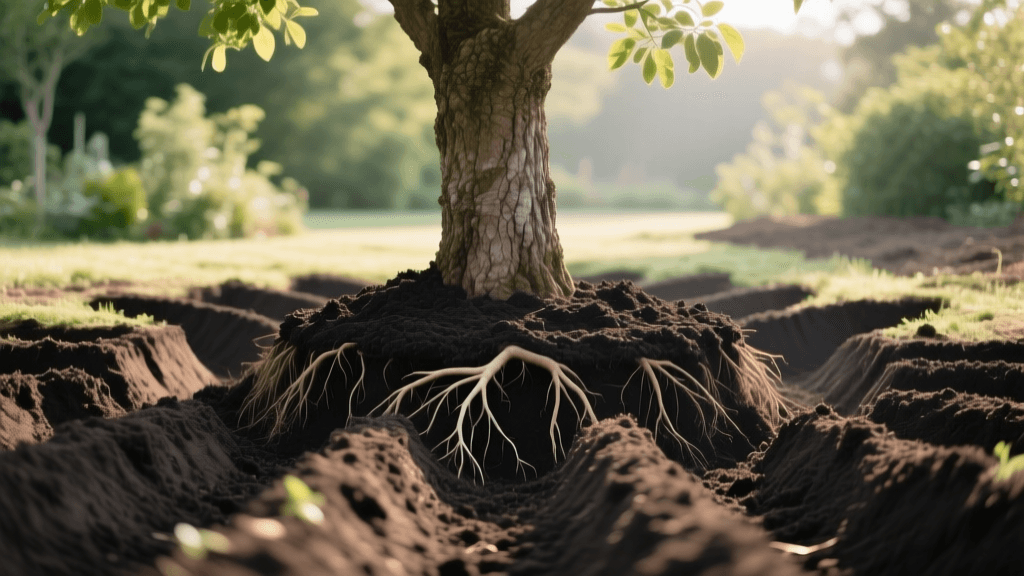
Trees require a delicate balance of oxygen, water, and nutrients in the soil. The top 12 to 18 inches of soil contain the vast majority of a tree's fine, water-absorbing roots. During lawn renovation, activities like core aeration, deep tilling, and the repeated rolling of heavy sod pallets compress the soil particles together. This compaction destroys the macropores in the soil, effectively suffocating the tree's root system.
Furthermore, adding thick layers of topsoil to level out a bumpy lawn before seeding can bury the tree's root flare and smother shallow roots. The International Society of Arboriculture (ISA) warns that even a few inches of added soil over the root zone can drastically reduce the amount of oxygen reaching the roots, leading to a slow, multi-year decline that homeowners often fail to connect back to their lawn renovation project.
Mapping and Protecting the Critical Root Zone (CRZ)
To protect your trees during lawn recovery, you must first identify the Critical Root Zone (CRZ). The CRZ is the minimum area of soil and roots required to keep the tree healthy and structurally stable. A standard arboricultural rule of thumb is to allow one foot of radial distance from the trunk for every one inch of trunk diameter (measured at 4.5 feet above the ground).
Calculating Your Tree's Safe Zone
- Measure the Trunk: Use a tape measure to find the diameter of the trunk at breast height (DBH). If the circumference is 62 inches, the diameter is roughly 20 inches.
- Calculate the Radius: A 20-inch diameter tree requires a minimum CRZ radius of 20 feet from the trunk.
- Establish a Perimeter: Use physical barriers like orange fencing to keep heavy lawn renovation equipment, soil stockpiles, and chemical fertilizer mixtures out of this zone.
The Turf vs. Mulch Debate in the Understory
One of the most common frustrations in lawn renovation is trying to grow grass directly under the canopy of mature trees. Homeowners often spend hundreds of dollars on premium shade-tolerant seed, extra irrigation, and specialized fertilizers, only to watch the grass thin out and die by mid-summer. This is because turf grass and trees are natural competitors. In a forest ecosystem, trees drop leaves to create a protective, moisture-retaining duff layer; they do not compete with dense, water-hogging turf grasses.
For a sustainable lawn recovery, the best arboricultural practice is to abandon the idea of growing turf inside the CRZ and instead transition this area to a proper mulch bed. This not only saves you time and money on lawn care but also dramatically improves the health of the tree.
Comparison: Turf Grass vs. Wood Mulch in the CRZ
| Landscape Factor | Turf Grass in CRZ | Arborist Wood Mulch in CRZ |
|---|---|---|
| Water Competition | High; grass intercepts rainfall and irrigation before it reaches deep tree roots. | Low; mulch acts as a sponge, retaining soil moisture and reducing evaporation. |
| Soil Temperature | Fluctuates wildly with sun and shade exposure. | Insulates roots, keeping soil cooler in summer and warmer in winter. |
| Maintenance Damage | High risk of mower blight and string-trimmer damage to the trunk flare. | Zero mechanical damage; eliminates the need to mow near the trunk. |
| Soil Biology | Requires synthetic fertilizers that can disrupt mycorrhizal fungi networks. | Breaks down slowly, feeding beneficial soil fungi and earthworms naturally. |
Safe Soil Decompaction Techniques for Tree Zones
If your lawn renovation has already caused soil compaction near your trees, you must remediate the soil without severing the structural roots. Standard lawn core aerators are designed to punch through turf thatch and soil, but using them near a tree's trunk will slice through vital fine roots and invite pathogenic fungi.
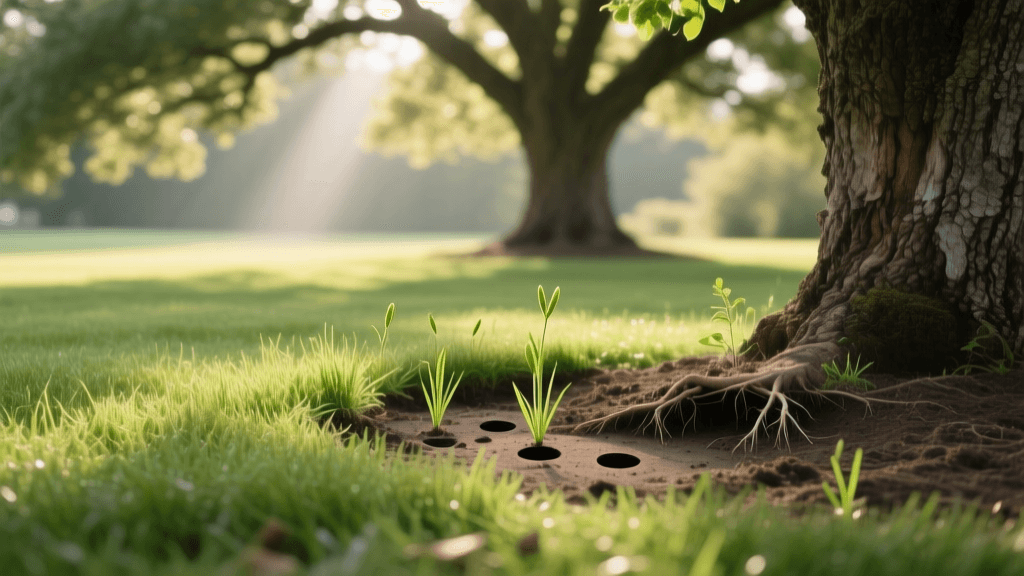
Instead, utilize vertical mulching or air spading. Vertical mulching involves using a narrow auger to drill holes 12 to 18 inches deep in a grid pattern around the tree's drip line, which are then filled with a porous mix of compost and pea gravel. This restores oxygen to the soil profile without causing massive root trauma. For severe compaction caused by heavy grading equipment, hire a certified arborist to perform air spading, which uses highly compressed air to safely fracture compacted soil away from delicate root hairs.
Canopy Management for Lawn Recovery
If you are determined to grow shade-tolerant grasses, such as Fine Fescues or rough bluegrass, in the transition zones just outside the CRZ, you must manage the tree canopy to allow for dappled sunlight. Turf grass generally requires at least four hours of direct or filtered sunlight to survive and recover from renovation stress.
The Arbor Day Foundation emphasizes that proper pruning is essential for both tree health and understory light management. Selectively thinning the inner canopy (crown thinning) allows light to penetrate to the ground while maintaining the tree's structural integrity. Avoid "lion's tail" pruning or raising the canopy too high, as this removes too much photosynthetic material and makes the tree top-heavy and vulnerable to storm damage. Always prune just outside the branch collar to promote rapid compartmentalization of the wound.
Post-Renovation Tree Hydration and Nutrition
Lawn renovation often alters the drainage patterns of your yard. Areas that once held water may now be graded to shed it, leaving established trees suddenly drought-stressed. Furthermore, the high-nitrogen fertilizers used to kickstart new grass seed can force a tree into producing late-season, tender growth that is highly susceptible to frost damage and pest infestations.
Actionable Hydration and Feeding Schedule
- Deep Watering: Provide 10 gallons of water per inch of trunk diameter every 7 to 10 days during the first growing season after lawn renovation. Use a slow-drip soaker hose placed at the edge of the drip line, not at the base of the trunk.
- Mycorrhizal Inoculants: Apply a mycorrhizal fungi drench to the soil. These beneficial fungi form a symbiotic relationship with tree roots, effectively extending their reach for water and phosphorus, which is especially vital if root mass was lost during grading.
- Avoid Weed-and-Feed: Keep broadleaf herbicides and high-nitrogen lawn fertilizers out of the CRZ. Tree roots will absorb these chemicals, which can cause severe leaf scorch and long-term vascular damage.
Conclusion: A Harmonious Landscape Recovery
True lawn renovation is not just about replacing dead grass; it is about restoring the ecological balance of your entire yard. By mapping and protecting the Critical Root Zone, transitioning high-stress understory areas to wood mulch, and utilizing safe soil decompaction methods, you ensure that your trees remain healthy anchors in your landscape. A thriving tree provides the perfect dappled shade necessary for cool-season grasses to thrive in the transition zones, resulting in a lush, resilient, and beautifully integrated outdoor space that will endure for decades to come.