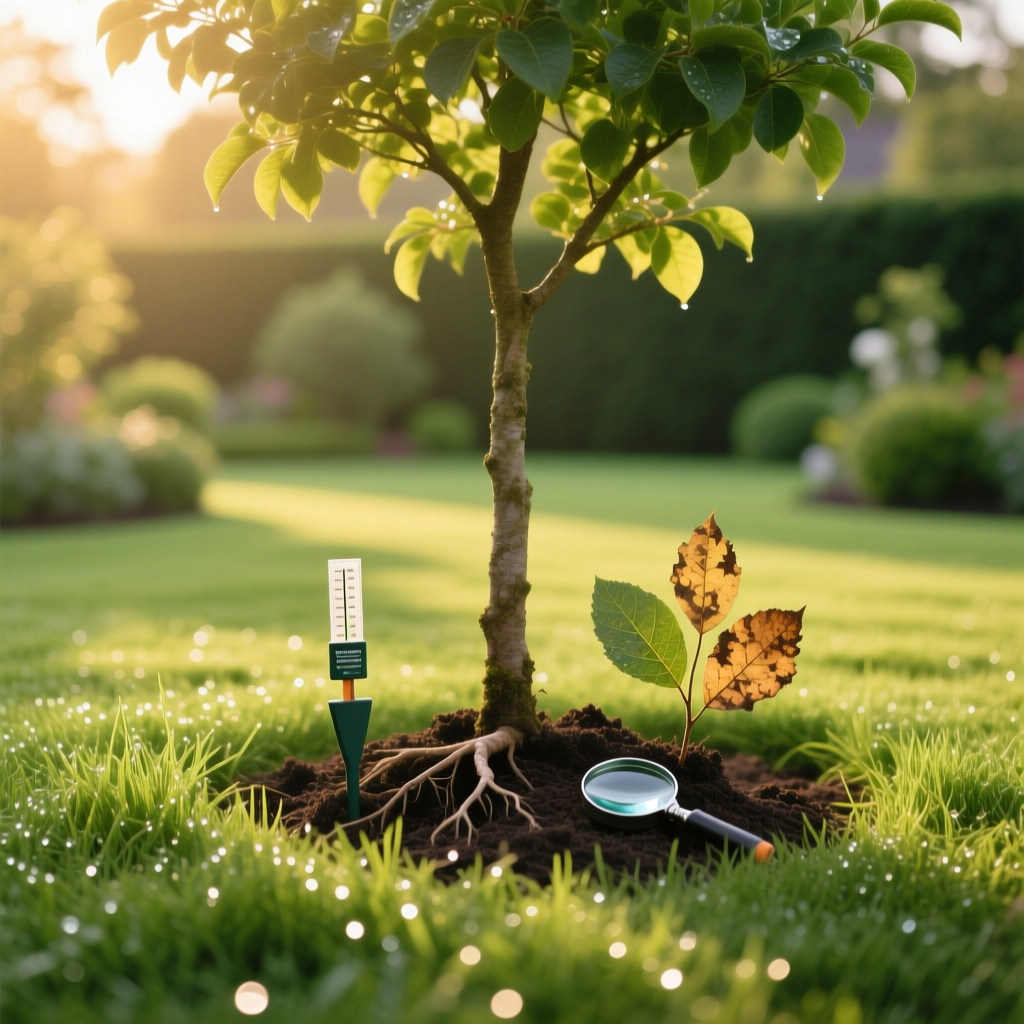
Trees are the majestic anchors of our landscapes, providing shade, beauty, and immense ecological value. However, unlike the turfgrass in your yard, which benefits from frequent, shallow feedings, trees possess deep, complex root systems that require a highly specialized approach to nutrition. Understanding tree fertilization methods, conducting proper soil testing, and identifying nutrient deficiencies are critical skills for any homeowner or landscape professional aiming to maintain vigorous, long-lived trees.
While many gardeners are familiar with lawn fertilizer types and their application schedules, treating a mature oak or maple with the same mindset can lead to disastrous results. Trees and turfgrass compete for resources, and their nutritional demands fluctuate based on soil chemistry, seasonal changes, and environmental stressors. This comprehensive guide will walk you through the science of tree nutrition, how to interpret soil tests, recognize the visual symptoms of nutrient starvation, and apply the most effective fertilization methods to ensure your canopy thrives for generations.
The Foundation of Tree Health: Soil Testing Explained
Before a single drop of liquid fertilizer or granular nutrient is applied to the root zone, a comprehensive soil test is absolutely mandatory. Guessing what your tree needs based on generic regional advice often leads to over-fertilization, which can burn delicate feeder roots, pollute local waterways, and trigger severe pest infestations. If you are already familiar with lawn soil testing basics, you have a head start, but tree soil sampling requires a slightly different methodology.
How to Collect a Tree Soil Sample
Trees absorb the majority of their water and nutrients from the top 12 to 18 inches of soil, primarily within the drip line (the area directly beneath the outermost circumference of the tree canopy). To get an accurate reading:
- Use the Right Tools: Use a soil probe or a clean spade to extract cores of soil from at least 6 to 12 inches deep.
- Sample Multiple Zones: Take 5 to 10 random samples from different areas under the drip line, avoiding the immediate trunk base where soil chemistry is skewed by bark and trunk runoff.
- Mix & Submit: Combine the cores in a clean plastic bucket, remove any rocks or large organic debris, and send a representative sub-sample to a certified arboricultural or university extension laboratory.
Understanding Soil pH & Cation Exchange Capacity (CEC)
The two most vital metrics on your soil test report are pH and CEC. Soil pH dictates nutrient availability. Most landscape trees prefer a slightly acidic to neutral pH (between 6.0 and 7.0). When soil becomes too alkaline (high pH), essential micronutrients like iron and manganese become chemically locked up, rendering them inaccessible to the tree's roots regardless of how much fertilizer you apply. Conversely, highly acidic soils can cause toxic accumulations of aluminum and manganese.
Cation Exchange Capacity (CEC) measures the soil's ability to hold onto positively charged nutrients (cations) like calcium, magnesium, and potassium. Clay soils typically have a high CEC, acting like a sponge for nutrients, while sandy soils have a low CEC, meaning fertilizers must be applied in smaller, more frequent doses to prevent leaching.
Diagnosing Tree Nutrient Deficiencies
Trees communicate their nutritional distress through their foliage. By understanding the difference between mobile and immobile nutrients, you can accurately diagnose what your tree is starving for based on where the symptoms appear.
Mobile Nutrient Deficiencies
Mobile nutrients can be translocated from older tissues to newer growth when supplies are low. Therefore, deficiency symptoms appear on older, lower leaves first.
- Nitrogen (N): The most common deficiency. Symptoms include uniform yellowing (chlorosis) of older leaves, stunted shoot growth, and premature leaf drop. The tree will appear sparse and lack vigor.
- Phosphorus (P): Rarely deficient in established landscapes unless the soil is highly compacted or alkaline. Symptoms include a dull, dark green or purplish tint to older leaves, poor root development, and delayed maturity.
- Potassium (K): Vital for drought tolerance and disease resistance. Deficiencies manifest as scorching or browning along the margins and tips of older leaves, often curling inward. Branches may become weak and prone to winter dieback.
- Magnesium (Mg): Presents as interveinal chlorosis (yellowing between the veins while the veins remain green) on older leaves, often with a distinct reddish or purple marginal band.
Immobile Nutrient Deficiencies
Immobile nutrients cannot be moved within the plant once incorporated into the tissue. Deficiency symptoms appear on newer, terminal growth first.
- Iron (Fe): Extremely common in alkaline soils or compacted urban sites. New leaves emerge pale yellow or almost white, while the fine veins remain distinctly green. Severe cases lead to necrotic spotting and twig dieback.
- Manganese (Mn): Similar to iron chlorosis but often accompanied by a checkered or mottled yellow-green pattern on new leaves.
- Calcium (Ca): Essential for cell wall structure. Deficiencies cause distorted, hooked, or stunted new growth, and in severe cases, the death of the terminal bud.
Proven Tree Fertilization Methods
Once a deficiency is confirmed via soil or foliar tissue testing, selecting the correct application method is paramount. The goal is to deliver nutrients directly to the absorptive feeder roots while minimizing runoff and turfgrass competition.
Deep Root Injection (Liquid Soil Drench)
Widely considered the gold standard for professional arborists, deep root injection involves using a specialized soil probe to inject liquid fertilizer under high pressure directly into the root zone (typically 8 to 12 inches deep).
- Benefits: Bypasses turfgrass competition, alleviates minor soil compaction through the pressure of the liquid, and places nutrients exactly where the feeder roots reside.
- Application Pattern: Injections are made in a grid pattern, spaced 2 to 3 feet apart, starting a few feet from the trunk and extending slightly past the drip line.
Broadcast Surface Application
Granular fertilizers can be spread evenly over the soil surface beneath the canopy. This method relies on rainfall or irrigation to dissolve the granules and carry the nutrients down into the root zone.
- Benefits: Cost-effective and easy for homeowners to perform.
- Drawbacks: Highly inefficient in landscapes where trees are surrounded by turfgrass, as the grass roots will intercept the majority of the nitrogen before it reaches the deeper tree roots. It also poses a higher risk of surface runoff.
Trunk Injection & Implants
For severe, acute deficiencies (like iron chlorosis in high-value oaks or maples) or when soil conditions completely lock up nutrients, trunk injection delivers liquid formulations directly into the tree's xylem (vascular system).
- Benefits: 100% nutrient uptake efficiency; zero environmental runoff; immediate results within weeks.
- Drawbacks: Requires drilling holes into the trunk, which creates physical wounds that the tree must compartmentalize. It should only be performed by trained professionals and reserved for specific, severe cases rather than routine maintenance.
Foliar Sprays
Spraying liquid micronutrients directly onto the leaves allows for rapid absorption through the stomata.
- Benefits: Provides a very fast visual correction for minor micronutrient deficiencies.
- Drawbacks: Only a temporary band-aid solution. It does not address the underlying soil chemistry issues and must be repeated frequently. It is also difficult to achieve adequate coverage on massive, mature shade trees.
Seasonal Care: Timing Fertilization & Pruning Synergies
The timing of your fertilization program is just as important as the method. Trees have distinct physiological cycles, and aligning your nutrient applications with these cycles maximizes uptake and minimizes stress.
Spring vs. Fall Fertilization
Spring: As soil temperatures rise and buds break, trees enter a period of rapid vegetative growth. A slow-release, balanced fertilizer applied in early spring supports canopy expansion and root development. However, avoid high-nitrogen, fast-release fertilizers late in the spring, as this can force soft, succulent growth that is highly vulnerable to summer drought and pests.
Fall: Autumn is arguably the best time for deep root fertilization. After the leaves drop, the canopy goes dormant, but the root system remains active as long as the soil temperature is above 40°F (4°C). Nutrients applied in the fall are absorbed and stored in the roots over the winter, providing a massive reserve of energy for the explosive growth required the following spring.
The Intersection of Pruning & Nutrition
Fertilization does not exist in a vacuum; it must be coordinated with your structural maintenance. Utilizing proper tree pruning techniques alters the tree's 'source and sink' dynamics. When you remove a significant portion of the canopy (the sinks), the root system (the source) temporarily has excess energy. Applying heavy nitrogen immediately after a severe pruning can result in an uncontrollable flush of weak, watersprout growth as the tree desperately tries to replace lost photosynthetic tissue. Conversely, if a tree is heavily pruned to remove deadwood or disease, a mild, potassium-rich fall fertilizer will help the tree compartmentalize the pruning wounds and build winter hardiness without forcing unwanted top growth.
Moisture & Mulching
Nutrients can only be absorbed by roots if they are dissolved in water. Fertilizing a drought-stressed tree is not only ineffective but can actually draw moisture out of the roots via osmosis, causing fertilizer burn. Always ensure the soil is adequately moist before and after application. Furthermore, reviewing tree mulching basics is essential; a proper 2-to-3-inch layer of organic mulch over the root zone (kept away from the trunk) regulates soil temperature, retains moisture, and slowly breaks down to provide a natural, steady stream of micronutrients and organic matter.
Boosting Disease Resistance Through Proper Nutrition
A well-nourished tree is a resilient tree. Nutrition plays a foundational role in a tree's immune system and its ability to fend off environmental stressors, boring insects, and fungal pathogens. Familiarizing yourself with common tree diseases will help you spot the secondary effects of poor nutrition.
The Danger of Excess Nitrogen
One of the most common mistakes in urban forestry is over-applying nitrogen. While it produces a rapid, lush, dark green canopy, this growth is structurally weak. The cell walls are thin, and the tissues are high in soluble amino acids, making the tree an irresistible target for sap-sucking insects like aphids and scale, as well as wood-boring beetles. Furthermore, excess nitrogen exacerbates fungal diseases like Anthracnose and Powdery Mildew, which thrive on soft, succulent new growth.
Building Cellular Armor
To build a tree's natural defenses, focus on Potassium (K) and Calcium (Ca). Potassium regulates the opening and closing of stomata, improving the tree's drought tolerance and its ability to synthesize defensive chemical compounds. Calcium is the literal glue that holds plant cell walls together. Adequate calcium levels result in thick, robust bark and leaf cuticles that physically block fungal spores and bacterial pathogens from entering the tree's vascular system. By maintaining a balanced soil profile based on regular testing, you empower the tree to utilize its natural compartmentalization processes (CODIT) to wall off decay and disease.
Frequently Asked Questions
How often should I fertilize my mature shade trees?
Mature, established shade trees in a natural, undisturbed woodland setting rarely need supplemental fertilization, as the natural leaf litter recycling process provides adequate nutrients. However, in urban and suburban landscapes where leaves are raked away, soil is compacted, and turfgrass competes for resources, fertilization is necessary. Generally, a deep root fertilization every 1 to 3 years is sufficient, provided it is guided by regular soil testing. Over-fertilizing mature trees can lead to structural weaknesses and increased susceptibility to pests.
Can I use my leftover lawn fertilizer on my trees?
While you physically can, it is not recommended. Lawn fertilizers are typically high in fast-release nitrogen and often contain broadleaf herbicides (weed-and-feed products) that are highly toxic to trees and shrubs. Even without herbicides, the nutrient ratios in turf fertilizers are designed for the shallow, dense root mats of grass, not the deep, expansive root systems of trees. Using lawn fertilizer on trees encourages shallow root growth and increases the risk of nutrient runoff. Always use fertilizers specifically formulated for woody ornamentals.
What is the best way to fix an iron deficiency in oak trees?
Iron chlorosis in oaks is usually not caused by a lack of iron in the soil, but by a high soil pH that locks the iron up. The long-term solution is to lower the soil pH using elemental sulfur or acidifying fertilizers, combined with the application of chelated iron (like Fe-EDDHA), which remains available to the roots even in alkaline conditions. For immediate, short-term relief on a highly valued tree, a certified arborist can perform a trunk injection of iron, which will green up the canopy within weeks, though this must be paired with soil amendments for a permanent fix.
Does mulching replace the need for tree fertilization?
Mulching is an incredible cultural practice that mimics the forest floor, improving soil structure, retaining moisture, and fostering beneficial mycorrhizal fungi. As organic mulch (like wood chips or shredded bark) decomposes, it does release trace amounts of nutrients. However, this breakdown process is very slow and rarely provides the concentrated macronutrients (Nitrogen, Phosphorus, Potassium) required to correct a diagnosed deficiency or support a tree under severe environmental stress. Think of mulch as a soil conditioner and moisture retainer, and fertilizer as a targeted dietary supplement; both are necessary for optimal tree health.
How do I know if my tree is over-fertilized?
Signs of over-fertilization include a sudden, unnatural flush of excessively dense, weak new growth, often accompanied by smaller than normal leaves. The tips and margins of the leaves may turn brown and crispy (fertilizer burn) due to salt accumulation in the soil drawing moisture out of the roots. You may also notice an increase in pest activity, particularly aphids, and a sudden dieback of smaller twigs. If you suspect over-fertilization, cease all applications immediately, flush the soil with deep, prolonged watering to leach out excess salts, and consult a certified arborist to assess the root damage.


