
Landscaping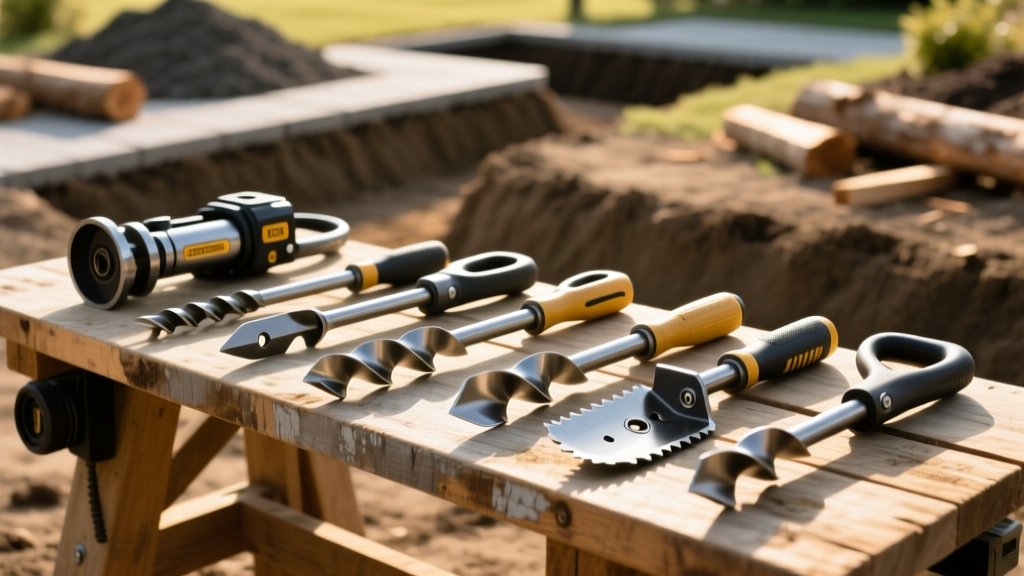
Best Trenchers and Earth Augers for Hardscaping Projects
Lisa ThompsonPublished
Transforming Your Landscape with Heavy-Duty Digging Tools
Hardscaping projects—whether you are installing a French drain, building a retaining wall, setting fence posts, or laying irrigation lines—require moving massive amounts of earth. While a shovel and a pickaxe might suffice for a single mailbox post, large-scale landscaping demands mechanical power. Choosing the right earth auger or trencher can reduce a multi-day manual excavation job into a few hours of efficient machine work. This guide breaks down the essential trenching and augering equipment available to homeowners and landscape contractors, helping you match the right tool to your specific soil conditions and project dimensions.
Earth Augers: Digging Post Holes and Planting Trees
Earth augers are specialized drilling tools designed to bore deep, cylindrical holes into the ground. They are indispensable for setting pergola posts, installing signposts, and planting large balled-and-burlapped trees. According to the University of Minnesota Extension, using an auger to prep soil for tree planting can significantly reduce manual labor, though care must be taken to avoid glazing the sides of the hole in heavy clay soils, which can impede root growth and water drainage.
Types of Earth Augers
- Manual Post Hole Diggers: Best for 1 to 3 holes in loose, loamy soil. They rely entirely on human torque and gravity, making them unsuitable for rocky or heavy clay soils.
- One-Man Gas-Powered Augers: Typically equipped with a 2-cycle or 4-cycle engine producing between 2 to 4 horsepower. These are ideal for holes up to 8 inches in diameter. They feature a centrifugal clutch and a handlebar that requires the operator to brace against the rotational torque.
- Two-Man Gas-Powered Augers: Designed with dual handlebars and higher torque outputs (often 5 to 7 HP). The second operator provides stability and helps lift the heavy bit out of deep holes, especially when drilling 10-inch to 12-inch diameters.
- Hydraulic Skid-Steer Attachments: For professional landscapers, hydraulic auger drives mounted on mini skid steers or compact track loaders provide immense down-pressure and rotational torque. Planetary gearboxes multiply the hydraulic flow (GPM) into high-torque output, allowing these machines to chew through shale and compacted gravel with specialized rock bits.
Selecting the Right Auger Bit
Auger bits are categorized by diameter, pitch, and cutting tooth design. Standard dirt bits feature flat or slightly angled tungsten carbide teeth and a standard helix pitch for moving loose soil upward. For hardpan, shale, or frost layers, you must upgrade to a rock bit. Rock bits feature a heavier steel shaft, a reinforced pilot point (fishtail), and bullet-style teeth that fracture rock rather than scraping it. Always ensure your powerhead's output shaft matches the bit's hex or round pin connection, and always use a high-quality shear pin. The shear pin is designed to snap if the bit strikes an immovable boulder or tree root, saving the machine's transmission from catastrophic failure.
Trenchers: Laying Pipe, Cable, and Edging
While augers create vertical holes, trenchers are engineered to carve continuous horizontal channels. Trenchers are critical for installing drainage pipes, electrical conduits, water lines, and landscape edging.
Chain Trenchers vs. Vibratory Plows
The two most common types of walk-behind trenching equipment are chain trenchers and vibratory cable plows. Understanding the difference is vital for protecting your existing turf and utility lines.
- Walk-Behind Chain Trenchers: These operate similarly to a chainsaw turned vertically. A continuous steel chain fitted with digging teeth rotates around a boom, excavating soil and depositing it via an auger flight to the side of the trench. They are ideal for digging precise, flat-bottomed trenches (typically 4 to 8 inches wide and 12 to 36 inches deep) required for PVC drainage pipes and French drains.
- Vibratory Plows (Cable Plows):strong> Instead of removing soil, a vibratory plow uses a rapidly oscillating steel blade to slice through the earth, creating a narrow fissure. A feeder tube behind the blade drops irrigation wire, fiber optics, or poly tubing directly into the ground. Because the soil is merely displaced and falls back into the slit, surface turf damage is minimal, making vibratory plows the preferred choice for installing invisible dog fences and sprinkler wiring across established lawns.
Equipment Comparison and Rental Guide
For most DIY landscapers, renting equipment from a local yard or home improvement center is far more economical than purchasing. Below is a comparison of common hardscaping excavation tools, their ideal use cases, and estimated daily rental costs.
| Tool Type | Best Application | Typical Daily Rental Cost | Pros | Cons |
|---|---|---|---|---|
| One-Man Gas Auger | Fence posts, small shrubs | $50 - $75 | Lightweight, fits in a car trunk | High kickback risk, struggles in clay |
| Two-Man Gas Auger | Large posts, deep footings | $80 - $110 | High torque, handles tough soils | Heavy, requires two operators |
| Walk-Behind Chain Trencher | French drains, water lines | $120 - $180 | Creates clean, flat-bottom trenches | Damages turf, leaves large soil piles |
| Vibratory Cable Plow | Irrigation wire, dog fences | $100 - $150 | Minimal turf disruption, fast | Cannot install rigid PVC pipe |
| Mini Skid Steer w/ Auger | Massive planting, boulders | $250 - $350 | Extreme torque, zero operator fatigue | Requires trailer for transport |
Soil Conditions and Blade Maintenance
The success of your hardscaping excavation depends heavily on your local soil profile. If you are working in heavy, expansive clay, moisture content is your biggest enemy. Digging clay when it is wet will cause it to stick to auger flights and trencher chains in massive, heavy clumps, eventually stalling the engine and bending teeth. Conversely, bone-dry clay can be as hard as concrete. The optimal time to trench or auger in clay-heavy landscapes is when the soil is slightly moist but crumbly.
Maintenance during the job is equally critical. When using a chain trencher, periodically stop to clear the trenching chain of wrapped roots and packed mud. For hydraulic augers, ensure the planetary drive is greased at the Zerk fittings before every use to prevent premature bearing failure.
Critical Safety Protocols: Utility Lines and Trench Collapse
Excavation is one of the most hazardous landscaping activities. Before a single tooth touches the dirt, you must contact your local utility marking service. In the United States, dialing 811 or visiting Call 811 will dispatch professionals to mark underground gas, water, electric, and communication lines for free. Hitting an unmarked utility line can result in fatal electrocution, massive gas explosions, and crippling financial liability.
Furthermore, trench collapse is a severe risk. The Occupational Safety and Health Administration (OSHA) warns that trenching and excavation work presents serious hazards, primarily due to the immense weight of soil. One cubic yard of dry soil can weigh up to 3,000 pounds—equivalent to a compact car. OSHA regulations mandate that any trench deeper than 5 feet must have a protective system, such as sloping, shoring, or shielding. For residential hardscaping, keep your walk-behind trencher depths to a maximum of 36 inches, and never step into an unshored trench to clear debris or lay pipe. Always use a shovel to clear the bottom of a trench from the surface level.
Conclusion
Upgrading from manual shovels to mechanical earth augers and trenchers is a game-changer for landscape design and hardscaping execution. By carefully selecting the right machine based on your soil type, project depth, and material being installed, you can ensure structural integrity for your retaining walls, proper drainage for your French drains, and healthy root establishment for your trees. Always prioritize safety, respect underground utilities, and maintain your equipment to guarantee a successful, efficient landscaping transformation.

