Tree Care
How to Use Compost for Tree Soil Health and Root Growth
Trees are the backbone of any thriving landscape, providing shade, improving air quality, and increasing property value. However, the secret to a majestic, long-lived tree lies hidden beneath the surface. Soil health is the single most critical factor in tree vitality, yet it is often the most neglected. For home gardeners and landscaping enthusiasts, understanding how to leverage compost to rejuvenate tree soil is a game-changer. This comprehensive guide will walk you through the science of soil health, the best compost types for various tree species, and actionable, step-by-step methods to incorporate organic matter into your tree care routine.
Why Urban and Suburban Trees Struggle
In natural forest ecosystems, trees thrive in a self-sustaining cycle of organic matter. Leaves fall, branches decay, and a rich, spongy layer of humus forms on the forest floor. This layer feeds a complex web of soil microbes, fungi, and insects that break down nutrients and make them bioavailable to the tree's root system.
In urban and suburban environments, this cycle is violently disrupted. We rake away leaves, mow over grass, and compact the soil with heavy construction equipment and foot traffic. The result is often a sterile, compacted, and nutrient-poor environment. Tree roots struggle to penetrate hardpan soil, water runs off instead of infiltrating, and the vital mycorrhizal fungi networks that act as an extension of the root system are decimated. Rebuilding this soil ecosystem is paramount, and compost is the most effective tool at your disposal.
The Science of Compost and Tree Soil Health
Compost is not merely a fertilizer; it is a soil conditioner and a biological inoculant. According to the USDA Natural Resources Conservation Service, healthy soil is a living ecosystem that sustains plants, animals, and humans. When you apply compost to the root zone of a tree, you are introducing billions of beneficial microorganisms.
These microbes perform several critical functions:
- Nutrient Cycling: Bacteria and fungi break down organic matter, releasing essential macro and micronutrients in a slow-release form that prevents fertilizer burn.
- Soil Structure Improvement: Fungal hyphae and microbial byproducts bind soil particles together into aggregates. This improves porosity, allowing oxygen to reach the roots and excess water to drain away, preventing root rot.
- Disease Suppression: A diverse microbiome outcompetes pathogenic soil-borne diseases like Phytophthora and Armillaria, acting as a natural biological shield for your trees.
- Moisture Retention: Organic matter acts like a sponge. Adding just 5% compost to soil by volume can increase its water-holding capacity by up to 20%, which is crucial for helping trees survive summer droughts.
Choosing the Right Compost for Your Trees
Not all compost is created equal. The source material dictates the nutrient profile, pH, and physical structure of the final product. Selecting the right type of compost depends on your specific tree species and soil conditions. Below is a comparison chart to help you choose the best amendment for your landscape.
| Compost Type | Best Use Case | N-P-K Ratio | Estimated Cost |
|---|---|---|---|
| Leaf Mold | Moisture retention, acid-loving trees | 1-0-1 | $4-$6 / cu ft |
| Municipal Yard Waste | General top-dressing, bulk applications | 2-1-1 | $30-$45 / cu yd |
| Composted Pine Bark | Improving drainage, lowering pH | 1-0-0 | $5-$8 / cu ft |
| Vermicompost | High-value transplants, quick nutrient boost | 2-1-1 | $10-$15 / cu ft |
- Leaf Mold: Created entirely from decomposed deciduous leaves. It is low in nutrients but exceptional for moisture retention and fostering fungal dominance, which most shade trees prefer.
- Municipal Yard Waste: A balanced, cost-effective option for large-scale top-dressing. Ensure it has been properly hot-composted to eliminate weed seeds and pathogens.
- Composted Pine Bark: Excellent for acid-loving trees like oaks, maples, and pines. It improves drainage in heavy clay soils and slowly lowers soil pH.
- Vermicompost: Worm castings are a premium, nutrient-dense amendment. Due to the high cost, it is best reserved for high-value transplants or treating specific, localized root zone issues.
Step-by-Step Guide: Top-Dressing Established Trees
Top-dressing is the process of applying compost to the surface of the soil around an established tree. Because you cannot dig up the soil without severing vital feeder roots, top-dressing relies on earthworms and natural weathering to incorporate the organic matter over time.
Timing: The best times to top-dress are early spring (just before bud break) or late fall (after leaf drop).
Measurements and Application:
- Clear the Area: Remove any turfgrass, weeds, or old, matted mulch from the tree's drip line (the area extending from the trunk to the outer edge of the canopy).
- Expose the Root Flare: Locate the root flare—the point where the trunk widens and transitions into the roots. This area must remain exposed to the air to prevent trunk rot.
- Apply the Compost: Spread a 2-inch to 4-inch layer of your chosen compost over the soil surface. Keep the compost at least 3 to 6 inches away from the trunk itself.
- Water Thoroughly: Water the composted area deeply to activate the microbes and begin the leaching process of nutrients into the root zone.
- Cap with Mulch (Optional): You can add a 2-inch layer of coarse wood chip mulch over the compost to retain moisture and regulate soil temperature. As The Morton Arboretum advises, always avoid 'volcano mulching,' which traps moisture against the bark and invites pests and disease.
Amending Soil for Newly Planted Trees
When planting a new tree, the temptation is often to fill the planting hole entirely with rich compost. This is a critical mistake. Creating a 'bathtub' effect with highly amended soil can lead to a perched water table, where water pools in the loose compost and drowns the roots, or the roots refuse to expand into the denser native soil.
The University of Massachusetts Amherst Extension recommends a conservative approach to backfilling.
- The 80/20 Rule: Mix no more than 10% to 20% compost with 80% to 90% native soil for your backfill. This provides a gentle nutrient boost while encouraging the roots to adapt to and expand into the surrounding native earth.
- Wide, Shallow Holes: Dig a hole that is two to three times as wide as the root ball, but no deeper than the root ball's height.
- Surface Amendment: After backfilling and watering, apply a 2-inch layer of compost on the surface, followed by mulch, extending out to the drip line.
Advanced Techniques: Vertical Mulching
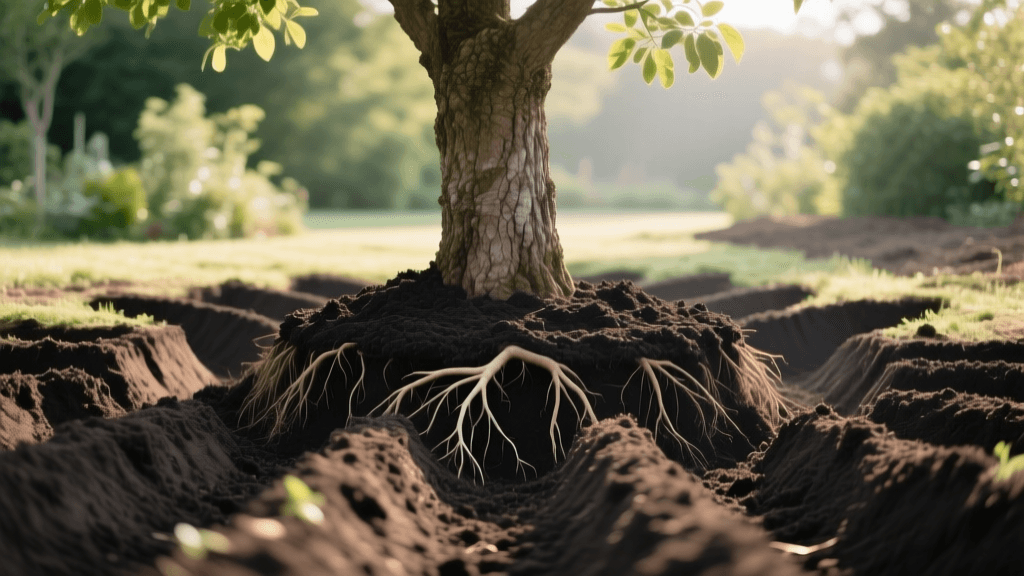
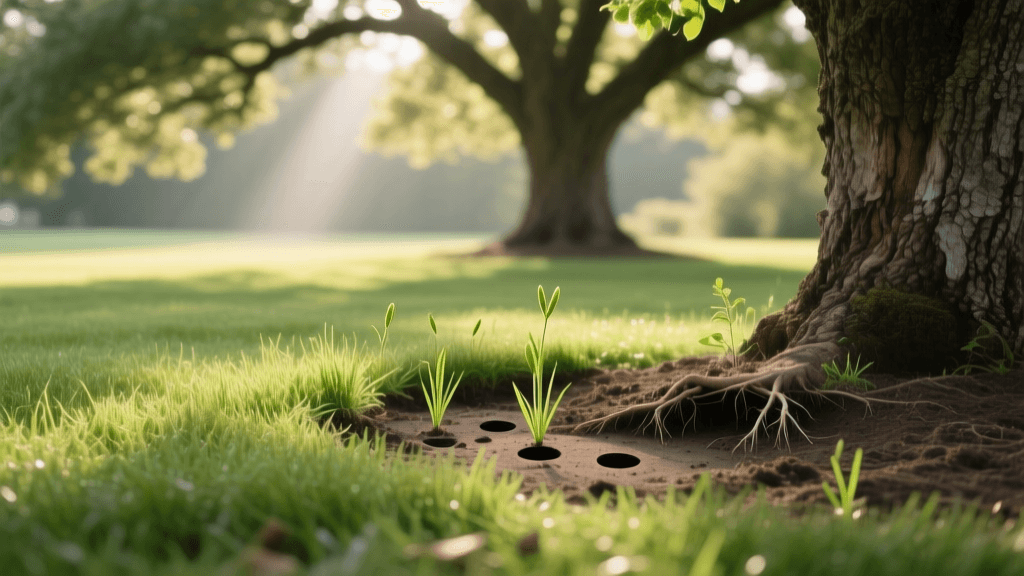
For trees suffering from severe soil compaction, surface top-dressing may not be enough to reach deep feeder roots. Vertical mulching is a specialized technique used by arborists to alleviate compaction and deliver compost directly to the root zone.
Using a 2-inch auger, drill holes 12 to 18 inches deep in a grid pattern across the tree's drip line, spacing the holes about 18 inches apart. Fill these holes with a mixture of coarse compost, sand, and slow-release organic fertilizer. This creates permanent channels for air, water, and biological activity to penetrate deep into the soil profile, revitalizing struggling trees without the need for heavy, root-tearing trenching.
Common Composting Mistakes to Avoid
Even with the best intentions, improper compost application can harm your trees. Avoid these common pitfalls:
- Using Unfinished Compost: Compost that is still hot, smells like ammonia, or contains recognizable food scraps will rob the soil of nitrogen as it finishes decomposing and can chemically burn delicate feeder roots. Always use dark, crumbly, earthy-smelling, fully cured compost.
- Burying the Root Flare: Piling compost or mulch against the trunk creates a dark, moist environment that encourages adventitious root growth (girdling roots) and invites fungal pathogens and borers.
- Over-Application: More is not always better. Applying compost thicker than 4 inches can suffocate the soil by blocking oxygen exchange. Stick to the recommended 2-4 inch depth.
- Ignoring Soil pH: While compost generally buffers pH, heavily manure-based composts can sometimes be too alkaline for acid-loving trees like Pin Oaks or Blue Spruces. Always test your soil pH every 2-3 years to ensure your amendments are moving the needle in the right direction.
Conclusion
Investing in soil health through strategic composting is the most impactful, long-term investment you can make in your landscape. By mimicking the natural forest floor, you transform sterile suburban dirt into a thriving, living ecosystem. Your trees will reward your efforts with vigorous growth, vibrant foliage, and the resilience to withstand pests, diseases, and environmental stress for generations to come.