
Landscaping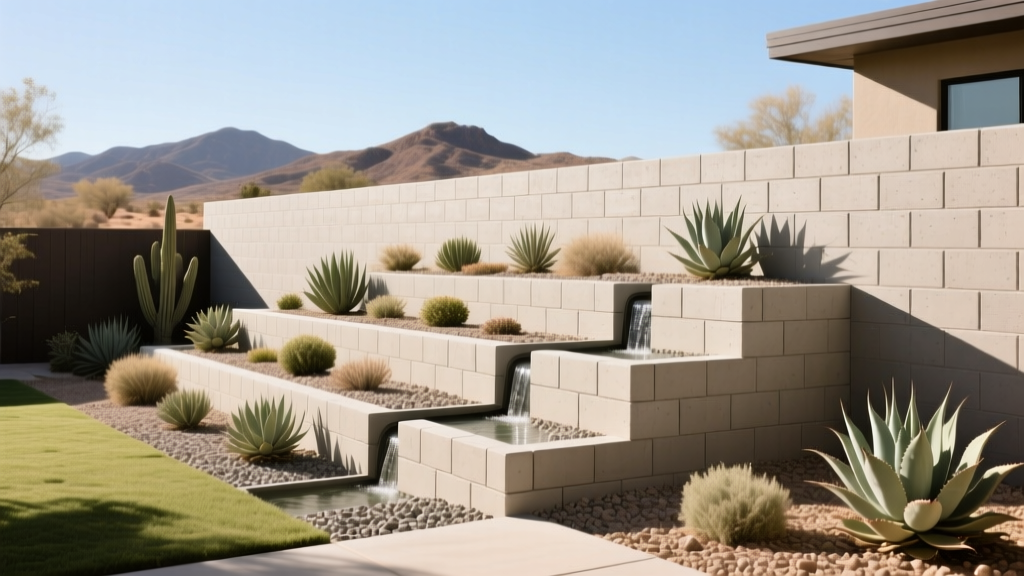
2026 Guide: Versa-Lok Retaining Walls for Xeriscapes
Anna KowalskiPublished
The Intersection of Hardscaping and Xeriscaping in 2026
As climate-adaptive gardening becomes the standard in 2026, xeriscaping has evolved far beyond simply replacing grass with gravel. Modern low-water landscaping focuses on creating resilient, dynamic ecosystems that capture every drop of rain, manage microclimates, and support drought-tolerant flora. One of the most effective ways to achieve this is through strategic terracing using retaining walls. By slowing down water runoff, terraced walls allow precious rainfall to percolate deeply into the soil profile rather than washing away into storm drains.
When it comes to building these water-management structures, Versa-Lok modular retaining wall blocks have emerged as a premier choice for xeriscape designers and DIY homeowners alike. Unlike traditional mortared stone or poured concrete, Versa-Lok's mortarless, pin-connected system offers unique advantages that perfectly align with the core principles of low-water landscaping. According to the EPA's WaterSense program, water-efficient landscaping relies heavily on proper grading and soil permeability to maximize natural irrigation. Versa-Lok walls facilitate exactly this type of environmental harmony.
Why Versa-Lok Modular Blocks Excel in Low-Water Landscapes
The primary enemy of drought-tolerant plants—such as succulents, agaves, and Mediterranean herbs—is not a lack of water, but rather poor drainage and prolonged root moisture. Traditional mortared retaining walls trap hydrostatic pressure and moisture behind them, often leading to saturated soil pockets that cause fatal root rot in xeriscape plantings.
Versa-Lok blocks solve this problem through their ingenious design. The system utilizes high-density polyethylene pins to lock the solid concrete blocks together, eliminating the need for mortar. This mortarless construction creates a permeable structure that naturally relieves hydrostatic pressure. Water can easily weep through the joints and the open-graded backfill, ensuring the terraced soil remains well-drained. Furthermore, the Versa-Lok retaining wall systems are engineered to flex slightly with freeze-thaw cycles and soil settlement, preventing the catastrophic cracking that plagues rigid concrete walls in arid, expansive clay soils.
Essential Materials and 2026 Pricing Estimates
Before breaking ground, you must gather the correct materials. Building a wall that supports a xeriscape requires specific drainage aggregates that double as a dry-climate aesthetic. Below is a breakdown of materials and estimated 2026 costs for a standard 20-foot long, 3-foot high retaining wall:
- Versa-Lok Standard Blocks: Approximately 2.5 blocks per square foot of wall face. (Est. $6.50 - $8.00 per block in 2026).
- Versa-Lok Pins: Required for every block-to-block connection to ensure structural integrity without mortar.
- Class II Road Base: Used for the compacted foundation trench. Crucial for preventing wall settling in dry, shifting soils.
- 3/4-Inch Angular Drain Rock: Used for the backfill zone immediately behind the wall. Angular rock locks together and prevents soil migration while maximizing drainage.
- Biaxial Geogrid: Necessary for walls exceeding 3 feet in height or those supporting heavy terraced loads.
- Non-Woven Filter Fabric: Placed between the native soil and the drain rock to prevent fine silt from clogging the drainage zone.
Step-by-Step Versa-Lok Retaining Wall Construction
Step 1: Excavation and Base Preparation
Proper base preparation is non-negotiable. Excavate a trench that is at least 6 inches deep and 24 inches wide, ensuring you dig below the frost line if applicable to your specific arid or semi-arid region. Fill the trench with 4 to 6 inches of Class II road base and compact it using a mechanical plate compactor. The base must be leveled to 98% Standard Proctor density. A perfectly level base course dictates the success of the entire wall; any errors here will compound as you stack higher.
Step 2: Laying the Foundation Course
Place the first course of Versa-Lok blocks directly onto the compacted base. Use a 4-foot level and a rubber mallet to tap each block into perfect alignment. Because Versa-Lok blocks feature a manufactured split face, you can easily use a hydraulic block splitter or a diamond-blade masonry saw to cut blocks for corners or curves. Ensure the front face of the blocks is aligned with a string line to maintain a smooth, continuous curve or straight edge across your xeriscape terrace.
Step 3: Stacking, Pinning, and Geogrid Integration
Begin stacking the second course. Versa-Lok blocks feature pre-drilled core holes. Align the holes of the upper block with those of the lower block and drive the fiberglass or polyethylene pins into place using a hammer. This pinning mechanism provides immense shear strength. As you build, step the backfill zone with 3/4-inch drain rock. If your wall exceeds 3 feet, unroll the geogrid over the completed course, extending it back into the excavated soil bank according to the engineer's specifications (typically 60% of the wall's height). The geogrid ties the wall to the earth, creating a single, monolithic reinforced soil mass.
Step 4: Backfilling for Maximum Drainage
In a xeriscape environment, drainage is paramount. Maintain a 12-inch column of 3/4-inch angular drain rock directly behind the Versa-Lok blocks for the entire height of the wall. Wrap the native soil side of this rock column with non-woven filter fabric to keep the terrace soil from washing into the rock voids. This setup guarantees that when rare but intense desert monsoons occur, the water will rapidly drain through the terrace, relieving pressure on the wall and preventing the drowning of your drought-adapted plants.
Designing the Xeriscape Terraces
Once the Versa-Lok wall is capped and backfilled, the terraced planting zones are ready for xeriscaping. According to the Colorado State University Extension, successful xeriscaping relies on hydro-zoning—grouping plants with similar water needs together. The top of a retaining wall is naturally a high-drainage, high-heat zone due to the thermal mass of the concrete blocks.
Cap the wall with Versa-Lok's specialized capstones, securing them with a flexible, weather-resistant landscape adhesive. For the upper terrace, plant heat-loving, deep-rooted succulents like Agave parryi or Yucca rostrata. The lower terraces, which may receive slightly more ambient moisture runoff from the upper levels, are ideal for creeping groundcovers like Sedum rupestre or drought-tolerant ornamental grasses such as Muhlenbergia rigens (Deer Grass). Install a sub-surface drip irrigation system directly into the root zones before applying a 2-inch layer of decorative river rock or decomposed granite mulch. This mulch suppresses weeds, reflects heat, and further reduces soil evaporation.
Versa-Lok Block Styles for Xeriscape Designs
| Block Style | Aesthetic Profile | Best Xeriscape Application | 2026 Availability |
|---|---|---|---|
| Versa-Lok Standard | Classic split-face, rugged texture | Large structural terraces, desert canyon themes | High |
| Versa-Lok Cobble | Rounded, weathered stone appearance | Mediterranean gardens, soft-curve dry creek beds | Medium |
| Versa-Lok Mosaic | Varied sizes, natural ashlar pattern | High-end courtyard walls, modern xeriscape accents | High |
Conclusion
Building a retaining wall with Versa-Lok modular blocks is a transformative project for any low-water landscape. By leveraging the system's mortarless drainage capabilities and structural pinning, you create a durable, permeable hardscape that protects your soil and elevates your xeriscape design. As water conservation continues to dictate landscaping trends in 2026 and beyond, mastering the art of the terraced, dry-climate retaining wall is an invaluable skill for the modern eco-conscious homeowner.

