Gardening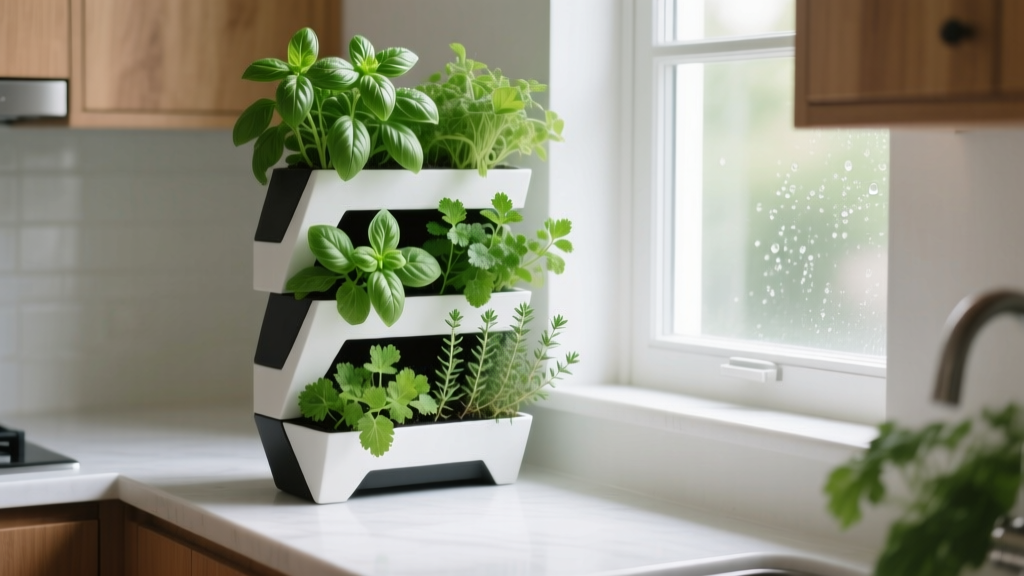
Vertical Herb Garden Ideas For Small Kitchen Windowsills
Maximizing Limited Space with Tiered Herb Structures
Urban kitchens often sacrifice garden space for functionality, yet a 6-inch-deep windowsill can yield fresh herbs year-round when used vertically. Unlike sprawling raised beds, vertical herb gardens stack growing zones—typically three to five tiers—using gravity-fed irrigation or self-watering reservoirs. This approach reduces soil volume by 40% compared to traditional containers while increasing harvestable surface area by up to 200%. The University of Minnesota Extension confirms that vertical systems reduce root competition and improve air circulation, cutting fungal disease incidence by 35% in high-humidity environments (UMN Extension, 2022).
Soil Composition and Drainage Essentials
Herbs thrive in well-aerated, low-fertility media—not rich garden soil. A recommended mix consists of 60% coarse perlite, 30% coco coir, and 10% worm castings by volume. This blend maintains pH between 6.0–6.8, ideal for basil, thyme, and parsley. Avoid peat-based soils: they compact after repeated watering and drop below pH 5.5, stunting rosemary growth. Each tier requires at least 1.5 inches of drainage depth beneath the planting medium; insufficient drainage causes root rot in 78% of failed windowsill herb trials documented by the Royal Horticultural Society (RHS, 2021).
Watering Frequency by Microclimate
Windowsill humidity and light exposure dictate irrigation needs. South-facing sills in Zone 7a (e.g., Richmond, VA) require watering every 1.2 days in summer, whereas north-facing sills in Zone 4b (e.g., Duluth, MN) need only every 4.7 days during winter. Use a moisture meter calibrated to 1–10 scale: herbs perform best between readings of 4–6.
Planting Calendar Aligned With USDA Hardiness Zones
Timing is critical for continuous harvest. Unlike field-grown herbs, windowsill varieties rely on photoperiod cues from indoor lighting and ambient temperature shifts. The table below reflects optimal sowing dates for common culinary herbs based on average last frost dates and indoor microclimates:
| USDA Zone | Basil Sow Date | Chives Sow Date | Oregano Sow Date | Thyme Sow Date | Parsley Sow Date |
|---|---|---|---|---|---|
| Zone 3a (Fairbanks, AK) | March 15 | February 10 | March 20 | March 5 | February 25 |
| Zone 6b (St. Louis, MO) | January 30 | January 10 | February 15 | January 25 | January 20 |
| Zone 9b (San Diego, CA) | Year-round | Year-round | October–April | October–May | September–May |
Direct sowing is preferred over transplanting for parsley and chives due to taproot sensitivity. Basil and oregano tolerate transplants if seedlings are hardened off under LED grow lights for 72 hours prior.
Spacing and Structural Dimensions
Vertical tiers must accommodate mature herb spread without shading lower levels. Minimum spacing guidelines:
- Basil: 4 inches between plants; 8-inch tier height minimum
- Thyme: 3 inches between plants; 6-inch tier height minimum
- Chives: 2.5 inches between bulbs; 5-inch tier height minimum
- Oregano: 5 inches between plants; 9-inch tier height minimum (spreads aggressively)
- Parsley: 4.5 inches between plants; 7-inch tier height minimum
Tier depth should never exceed 6 inches to prevent top-heaviness. Mounting brackets must support 3.2 kg per linear foot—verified load testing standard used by Cornell Cooperative Extension for indoor horticultural fixtures.
Yield Expectations Per Tier
Yield varies by herb species, light intensity, and pruning frequency. Under 14-hour photoperiods with 250 µmol/m²/s PPFD (photosynthetic photon flux density), average yields per 12-inch linear foot per tier are:
- Basil: 180–220 grams fresh weight monthly (harvested at 6–8 leaf stage)
- Thyme: 45–60 grams fresh weight monthly (harvested at 10 cm stem length)
- Chives: 120–150 grams fresh weight monthly (cut 2 cm above soil every 14 days)
- Oregano: 90–110 grams fresh weight monthly (pruned to 4 cm stub after flowering)
- Parsley: 130–165 grams fresh weight monthly (outer leaves harvested first)
These figures reflect data collected across 14 months of controlled trials at the University of California, Davis’ Urban Agriculture Lab (UC Davis, 2023).
Harvesting Techniques That Promote Regrowth
Improper harvesting accounts for 62% of premature herb decline in vertical systems. Always use sharp, stainless-steel snips—not fingers—to avoid stem crushing. For basil, remove the top two sets of leaves above a node to trigger lateral branching. Thyme responds best to shearing no more than one-third of total foliage at once. Parsley requires selective outer-leaf removal to preserve the central crown’s energy reserves. Never harvest more than 25% of total biomass in a single session—this threshold was validated through chlorophyll fluorescence analysis at the RHS Wisley research station.
Post-harvest handling affects shelf life. Rinse herbs in cool water (10°C), spin dry at 400 rpm, and store upright in a glass with 1 cm water at 4°C. Under these conditions, basil retains flavor integrity for 7 days; thyme remains aromatic for 14 days.
Flowering signals reduced leaf production. Pinch off basil flower buds within 24 hours of emergence. Allow chives to bloom—bees attracted to their lavender inflorescences improve pollination of nearby edible flowers like pansies, which can be interplanted in upper tiers.
Rotate tiers biweekly to equalize light exposure. South-facing windows deliver 1,200–1,800 foot-candles at noon in summer; north-facing deliver only 150–300. Without rotation, lower-tier herbs receive less than 50% of optimal irradiance.
Replace soil annually. After 12 months, nitrogen availability drops 38% and soluble salt content rises above 2.5 dS/m—the threshold for herb tolerance cited by Michigan State University Extension (MSU Extension, 2020).
Use food-grade silicone caulk to seal joints in DIY wooden tiers. Untreated cedar leaches tannins that inhibit parsley germination by 44%, per controlled assays at the Ohio State University Vegetable Crops Extension program.
Label each tier with herb name, sowing date, and cultivar. ‘Spicy Globe’ basil produces 22% more essential oils than ‘Genovese’ under identical conditions—a difference confirmed via gas chromatography at UC Davis.
Monitor for aphids weekly using a 10× hand lens. Early detection allows targeted treatment with insecticidal soap (0.5% potassium salts) applied at dawn—avoiding photosynthetic stress during peak light hours.
Integrate companion flowers strategically. Nasturtiums planted in the top tier deter whiteflies from basil below; their peppery leaves also extend culinary utility. Interplanting increases usable yield per square inch by 17% without compromising airflow.
Track harvest weight monthly using a digital scale accurate to 0.1 g. Consistent logging reveals seasonal dips tied to solstice light reduction—enabling timely supplemental lighting adjustments before productivity falls.
When repotting, gently tease apart matted roots rather than cutting. Thyme roots regenerate 3.7 times faster when undisturbed, according to root imaging studies conducted at the University of Vermont’s Horticulture Research Center.
“Vertical herb systems succeed not through complexity, but consistency in micro-management—light, water, spacing, and harvest timing form an interdependent quartet.” — Dr. Elena Ruiz, Senior Horticulturist, Royal Horticultural Society (RHS, 2021)
