Tree Care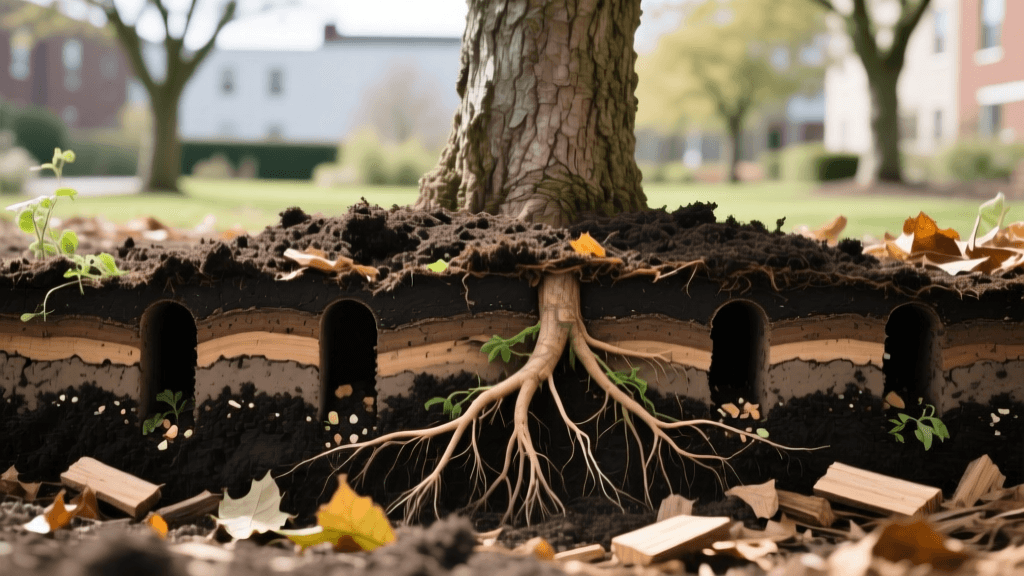
Revitalize Compacted Tree Soil Using Vertical Mulching
The Silent Killer of Urban Trees: Soil Compaction
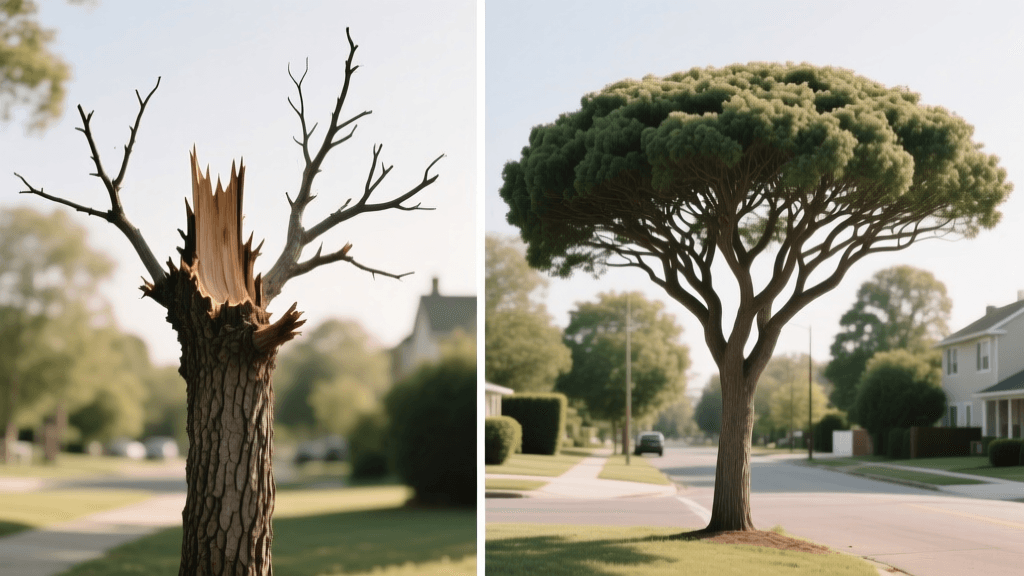
In suburban and urban landscapes, mature trees often exhibit a slow, mysterious decline. Leaves become smaller, canopy dieback occurs at the tips, and the tree becomes increasingly susceptible to secondary pests and diseases. While homeowners often blame drought or nutrient deficiency, the true culprit is usually lurking just beneath the surface: soil compaction. Over years of foot traffic, construction, lawn mowing, and heavy rainfall, the natural structure of the soil is crushed, eliminating the vital pore spaces that tree roots need to survive.
Healthy soil is composed of roughly 50% solid material (minerals and organic matter) and 50% pore space. This pore space is divided equally between water and oxygen. When soil becomes compacted, the macropores are destroyed, leading to a condition where water pools on the surface or runs off, while oxygen is entirely excluded from the root zone. Tree roots require a minimum of 15% to 20% oxygen in the soil atmosphere to perform cellular respiration and absorb nutrients. Without it, the fine feeder roots suffocate and die, cutting off the tree's ability to hydrate and feed itself.
Reversing this damage requires more than just surface watering or throwing synthetic fertilizer on the lawn. It requires a fundamental restructuring of the soil profile and a reintroduction of vital soil biology. According to the Environmental Protection Agency (EPA), adding high-quality compost to degraded soils significantly improves soil structure, increases water retention, and reintroduces beneficial microorganisms that help bind soil particles into healthy, porous aggregates.
What is Vertical Mulching?
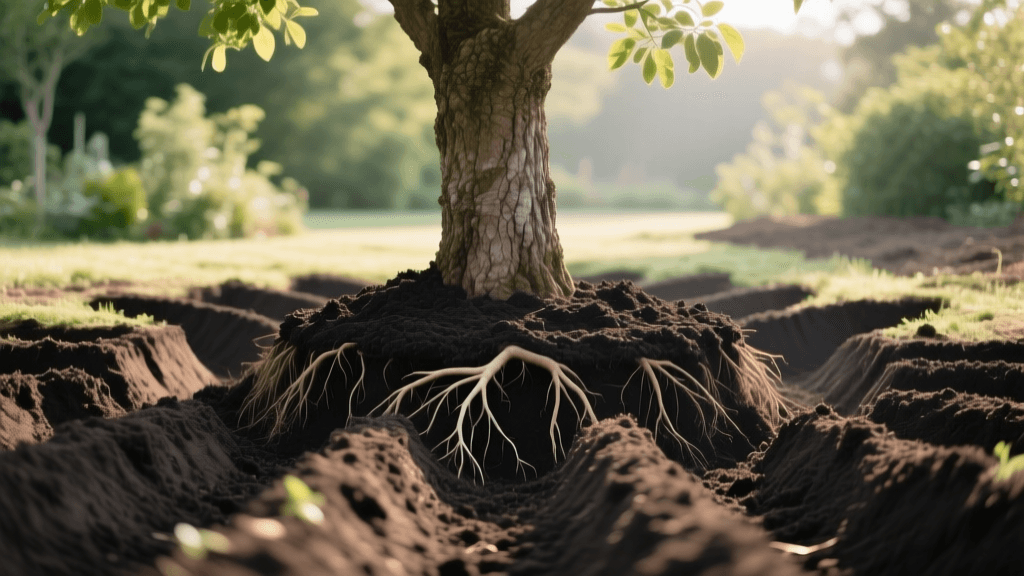
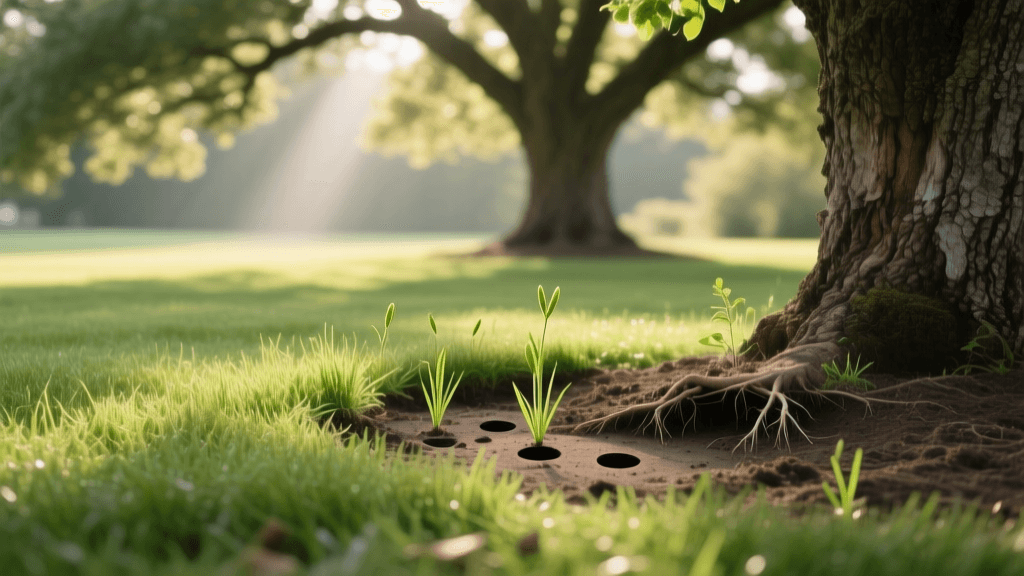
Vertical mulching is a specialized arboricultural technique designed to alleviate deep soil compaction without severing the tree's critical structural roots. The process involves drilling a grid of holes throughout the tree's Critical Root Zone (CRZ) and filling them with a highly porous, nutrient-rich mixture of compost and organic amendments. These vertical columns act as biological chimneys, allowing oxygen and water to penetrate deep into the subsoil while providing a hospitable environment for new feeder roots to proliferate.
When combined with a generous layer of organic surface mulch, vertical mulching mimics the natural forest floor, creating a sustainable ecosystem that supports long-term tree health. The Arbor Day Foundation emphasizes that proper mulching and soil aeration are among the most effective ways to reduce tree stress, moderate soil temperature, and prevent the mechanical damage that leads to root rot.
Step-by-Step Guide to Vertical Mulching with Compost
Executing a vertical mulching project requires careful planning and the right tools. Here is a comprehensive guide to revitalizing your tree's root zone.
Step 1: Map the Critical Root Zone (CRZ)
The CRZ is generally defined as the area under the tree's canopy and extending slightly beyond the drip line. For every inch of trunk diameter (measured at 4.5 feet above the ground), you should plan to treat one foot of radial distance. Avoid drilling within 3 to 5 feet of the trunk base to protect the tree's major structural roots and root flare.
Step 2: Drill the Aeration Holes
Using a power auger with a 2-inch to 3-inch wide bit, drill holes in a staggered grid pattern across the CRZ. Space the holes approximately 2 to 3 feet apart. The holes should be drilled to a depth of 8 to 12 inches, which is the primary zone where fine feeder roots operate. If you encounter a large structural root (greater than 1.5 inches in diameter), stop drilling and move the hole a few inches away to avoid severing it.
Step 3: Mix the Amendment Blend
Do not simply fill the holes with native soil or pure topsoil, as this will quickly re-compact. Instead, create a highly porous, biologically active blend. A standard professional mix includes:
- 60% high-quality, screened organic compost
- 20% biochar (to provide permanent microscopic housing for soil fungi and bacteria)
- 10% expanded shale or perlite (for permanent physical aeration)
- 10% slow-release organic fertilizer (such as kelp meal or bone meal)
Step 4: Fill and Top-Dress
Fill each drilled hole with your amendment blend, tamping it down very lightly so it does not settle below the soil grade. Once all holes are filled, apply a 2-inch to 3-inch layer of coarse wood chip mulch over the entire treated area. Keep the mulch at least 4 inches away from the actual trunk of the tree to prevent bark decay and rodent damage.
Choosing the Right Organic Amendments
The success of your vertical mulching effort depends heavily on the materials you use. Different amendments serve different purposes in the soil food web. Below is a comparison chart of common soil amendments used in tree care.
| Amendment | Primary Function | Water Retention | Aeration Value | Estimated Cost (per cu ft) |
|---|---|---|---|---|
| Organic Compost | Biological inoculant, macro/micro nutrients | High | Moderate (decomposes) | $3.00 - $6.00 |
| Horticultural Biochar | Microbial habitat, carbon sequestration | Very High | High (permanent) | $10.00 - $15.00 |
| Expanded Shale | Physical soil fracturing, drainage | Low | Very High (permanent) | $5.00 - $8.00 |
| Peat Moss | Acidity adjustment, moisture retention | Very High | Low (compacts when wet) | $4.00 - $7.00 |
As noted by researchers at the University of Minnesota Extension, incorporating finished compost into heavy clay soils is essential for breaking up dense soil particles and preventing the anaerobic conditions that breed root-killing pathogens like Phytophthora.
Enhancing Soil Biology with Aerated Compost Tea
While vertical mulching addresses the physical structure of the soil, you must also address the biological deficit. Compacted soils are largely anaerobic, meaning the beneficial aerobic bacteria and mycorrhizal fungi have died off. To rapidly repopulate the soil food web, professional arborists use Aerated Compost Tea (ACT).
Brewing the Tea
ACT is not a simple steeping process; it requires active oxygenation to cultivate aerobic microbes. To brew a 5-gallon batch of ACT:
- Fill a 5-gallon bucket with non-chlorinated water (if using tap water, let it sit uncovered for 24 hours to allow chlorine to off-gas).
- Place 2 cups of high-quality, thermophilic compost into a mesh brew bag and suspend it in the water.
- Add 1 tablespoon of unsulfured blackstrap molasses. This serves as a carbohydrate food source to rapidly multiply the bacterial populations.
- Attach an aquarium air pump with a bubbling stone to the bottom of the bucket. The water should roil and bubble vigorously.
- Brew for 24 to 36 hours at room temperature (65°F to 75°F). The tea should smell sweet and earthy; if it smells like sulfur or rotten eggs, it has gone anaerobic and should be discarded.
Application Rates and Timing
Apply the compost tea as a soil drench immediately after brewing, as the microbes will begin to die once the aeration stops. The general application rate is 1 gallon of undiluted compost tea per inch of trunk diameter. Pour the tea directly over the vertical mulch holes and the surrounding wood chip mulch. The water will carry the microbes deep into the soil profile, where they will colonize the organic matter and begin the process of nutrient cycling.
Timing, Costs, and Maintenance Considerations
The optimal time to perform vertical mulching and compost tea applications is during the tree's dormant season or periods of active root growth. Early fall (after leaf drop) and early spring (before bud break) are ideal. During these windows, the tree is directing energy toward root expansion rather than canopy growth, allowing it to quickly exploit the newly aerated soil columns.
Cost Breakdown for a Medium-Sized Tree
For a tree with a 15-inch trunk diameter, the Critical Root Zone will cover a substantial area. Here is an estimated cost breakdown for a DIY approach:
- Power Auger Rental (1 day): $60 - $90
- Organic Compost (1 cubic yard): $40 - $60
- Biochar and Expanded Shale (5 bags): $75 - $100
- Air Pump and Brewing Supplies: $35 - $50
- Arborist Wood Chips: Often free from local tree care companies or municipal drop sites.
Total DIY investment generally ranges from $210 to $300 per tree. Hiring a certified arborist to perform the same service with specialized pneumatic air-spade equipment can cost between $800 and $1,500, but is highly recommended for extremely valuable heritage trees or properties with complex underground utility networks.
Conclusion
Soil compaction is a pervasive issue that slowly starves urban and suburban trees of the oxygen, water, and biological support they need to thrive. By implementing a vertical mulching strategy and utilizing high-quality compost and biochar, homeowners can physically restructure the soil profile and biologically inoculate the root zone. Combined with regular applications of aerated compost tea and proper surface mulching, this proactive approach to soil health will extend the lifespan of your trees, improve their resistance to environmental stressors, and restore the natural vigor of your landscape.