Tree Care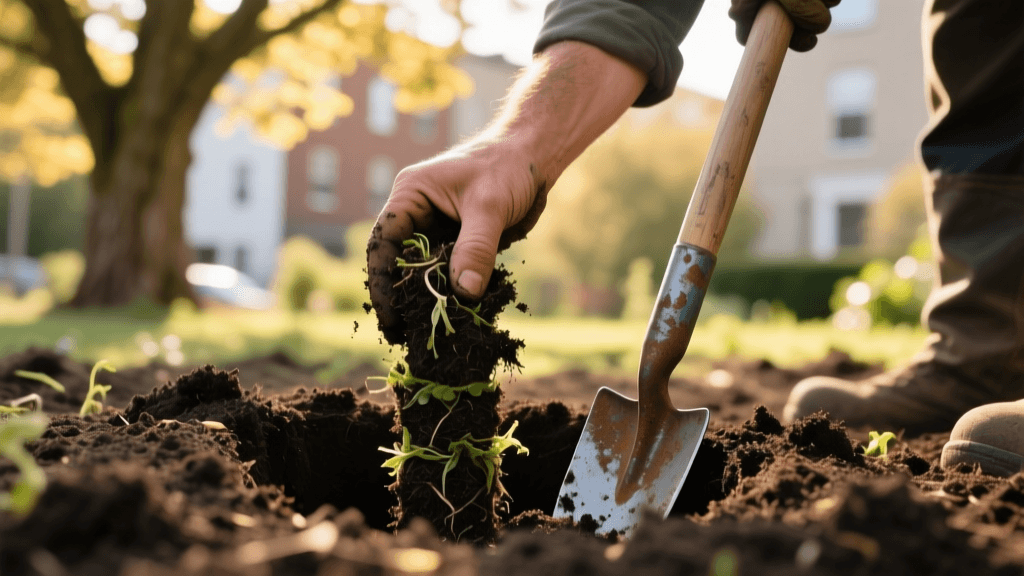
Revitalize Compacted Tree Soil With Vertical Mulching and Compost
The Hidden Threat of Soil Compaction in Urban Trees
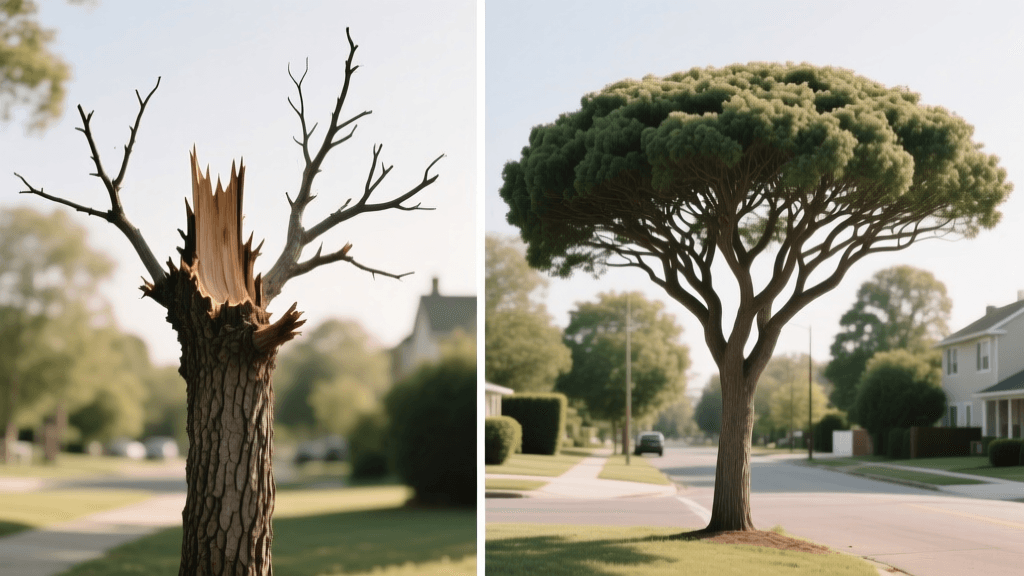
Trees in urban and suburban environments face an invisible enemy beneath the surface: soil compaction. When foot traffic, construction equipment, and heavy mowers repeatedly press down on the earth, the vital pore spaces between soil particles are crushed. These pore spaces are essential because they hold the oxygen and water that tree roots need to survive. Without them, roots suffocate, beneficial soil microbes die off, and the tree enters a slow, agonizing state of decline. According to tree health experts at The Morton Arboretum, soil compaction is one of the leading causes of premature tree death in landscaped environments. The canopy may thin, leaves may scorch early in the summer, and dieback may appear at the branch tips—all classic symptoms of a root system starving for oxygen and nutrients in compacted earth.
Traditional surface applications of fertilizer or thin layers of topsoil do little to solve this deep-rooted problem. Water simply runs off the hardened surface, and nutrients fail to penetrate the root zone. To truly rescue a declining tree and restore the soil food web, arborists turn to a highly effective, scientifically backed technique known as vertical mulching, combined with targeted compost and biological amendments.
Assessing Soil Health Before Amending
Before you begin drilling or amending, it is crucial to understand the current state of your soil. Compacted soils often suffer from poor drainage, which can lead to anaerobic conditions and root rot if organic matter is added incorrectly. Perform a simple percolation test to gauge how water moves through the soil profile. Dig a test hole about 12 inches deep and 6 inches wide in the tree's drip line. Fill it with water and let it drain completely to pre-moisten the surrounding soil. Then, fill it a second time and measure how long it takes for the water level to drop one inch. If it takes longer than an hour, your soil is severely compacted and poorly drained.
Additionally, consider sending a soil sample to your local university extension office to test the pH and baseline nutrient levels. Most shade trees prefer a slightly acidic to neutral pH (between 6.0 and 7.0). If the soil is highly alkaline, which is common in urban areas due to concrete runoff, you will need to incorporate elemental sulfur or acidic organic matter like peat moss and pine bark fines into your compost blend to bring the pH back into an optimal range for nutrient uptake.
What is Vertical Mulching?
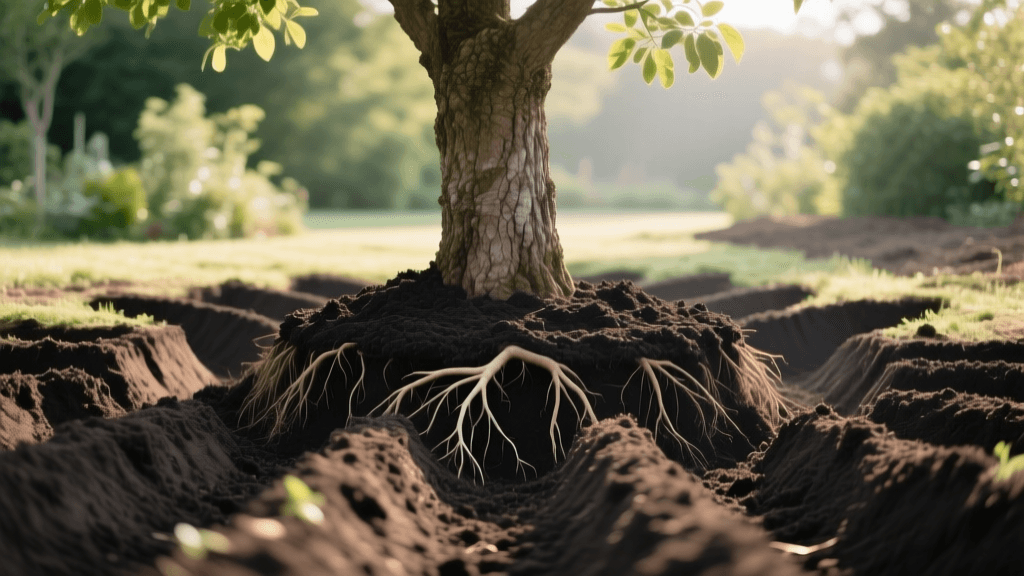
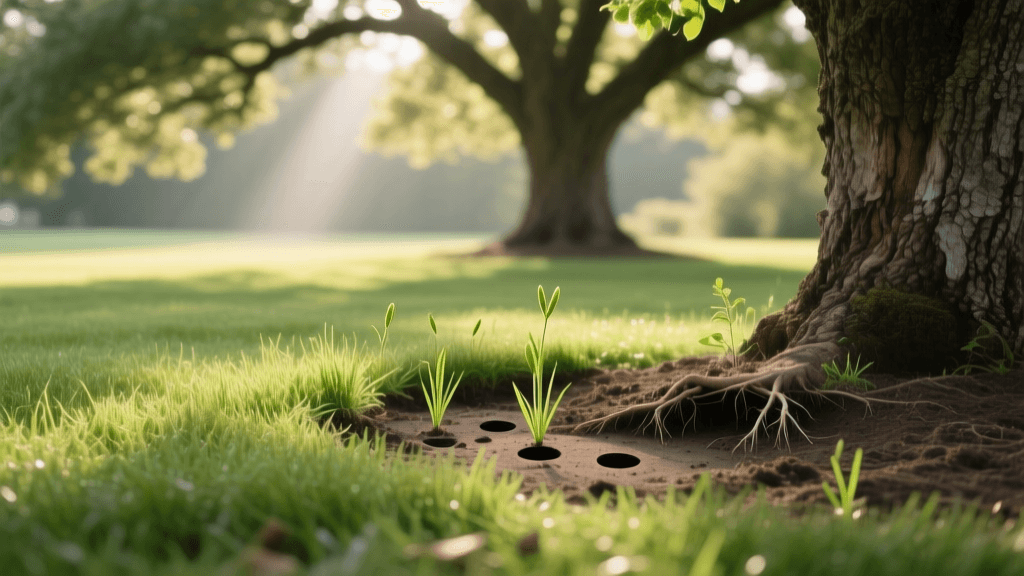
Vertical mulching is the process of drilling a grid of deep, narrow holes throughout a tree's critical root zone and filling them with a porous, nutrient-rich compost blend. This technique physically bypasses the compacted surface layer, creating direct channels for air, water, and biological amendments to reach the deeper, fine absorbing roots. It acts as a relief valve for suffocating soils. Furthermore, the organic matter placed inside these columns slowly breaks down, encouraging fine feeder roots to grow into the loose, aerated channels. Over time, as the compost decomposes and roots expand, the surrounding compacted soil is naturally fractured and improved from the inside out.
Step-by-Step Guide to Vertical Mulching
Executing a vertical mulching project requires careful planning to avoid damaging the tree's primary structural roots. Follow these actionable steps to ensure success:
Step 1: Map the Critical Root Zone (CRZ)
The CRZ is generally defined as the area beneath the tree's canopy and extending slightly beyond the drip line. Focus your efforts in this zone, as it contains the highest concentration of fine, water-absorbing roots. Avoid working within three feet of the tree's trunk to protect the root flare and major structural anchor roots.
Step 2: Drill the Aeration Holes
Using a power auger with a 2-inch to 3-inch diameter bit, drill holes to a depth of 12 to 18 inches. Space the holes in a staggered grid pattern, approximately 2 to 3 feet apart. If you hit a root larger than one inch in diameter, stop drilling, backfill the hole with native soil, and move a few inches to the side. You want to target the spaces between structural roots, not sever them.
Step 3: Prepare the Amendment Blend
The material you use to fill the holes is just as important as the holes themselves. You need a mixture that provides long-term aeration, moisture retention, and biological inoculation. Avoid using heavy topsoil or pure peat moss, which can become hydrophobic or compact over time. Instead, rely on a specialized blend of high-quality compost, biochar, and coarse sand.
The Ultimate Compost and Biochar Blend for Tree Roots
To maximize the benefits of vertical mulching, the fill material must be highly porous and biologically active. Biochar is a crucial ingredient here; it is a highly porous form of charcoal that acts like a microscopic sponge, retaining water and nutrients while providing a permanent habitat for beneficial soil bacteria and mycorrhizal fungi. It also significantly boosts the soil's Cation Exchange Capacity (CEC), allowing the tree to access nutrients more efficiently.
Below is a recommended amendment ratio table based on the general needs of different tree categories:
| Tree Type | Screened Compost | Biochar | Coarse Sand | Mycorrhizal Inoculant |
|---|---|---|---|---|
| Deciduous Shade Trees | 50% | 10% | 35% | 5% |
| Evergreens and Conifers | 40% | 15% | 40% | 5% |
| Fruit and Flowering Trees | 60% | 10% | 25% | 5% |
When mixing, ensure the compost is fully mature and screened to remove large wood chunks that could impede root growth. The mycorrhizal inoculant should be an endo/ecto blend specifically formulated for trees, as these symbiotic fungi will attach to the new roots growing into the vertical columns, effectively expanding the tree's root system by hundreds of times and dramatically increasing its drought tolerance.
Enhancing Soil Biology with Aerated Compost Tea
Once the vertical mulch columns are filled, you can supercharge the biological activity of the soil by drenching the area with Aerated Compost Tea (ACT). The Environmental Protection Agency (EPA) highlights that compost introduces vital microbiology to degraded environments, but brewing it into a liquid extract allows those microbes to flow deeply into the soil profile and the freshly drilled aeration holes.
To brew a basic 5-gallon batch of ACT for tree application, combine 2 cups of high-quality, worm-casting-based compost, 1 tablespoon of unsulfured blackstrap molasses (to feed the bacteria), and 1 tablespoon of liquid kelp (to feed the fungi) in a 5-gallon bucket of dechlorinated water. Use an aquarium air pump to vigorously aerate the mixture for 24 to 36 hours. This continuous oxygen supply forces the beneficial aerobic microbes to multiply exponentially. Once brewed, apply the tea immediately by pouring it directly over the vertical mulch holes and across the surrounding root zone. The liquid will carry the microbes deep into the soil, where they will begin breaking down locked-up nutrients and protecting the tree's roots from soil-borne pathogens.
Long-Term Soil Health Maintenance
Vertical mulching is a powerful intervention, but long-term soil health requires ongoing surface management. After drilling and amending, top-dress the entire Critical Root Zone with a 2-to-4-inch layer of coarse arborist wood chips. As noted by researchers at Penn State Extension, maintaining a consistent layer of organic mulch mimics the natural forest floor, buffering soil temperatures, retaining moisture, and slowly feeding the soil food web as the wood decomposes. Keep the mulch pulled back at least 3 inches from the tree trunk to prevent bark decay and rodent damage.
Furthermore, eliminate all foot and vehicle traffic over the root zone. Install physical barriers or decorative fencing around the drip line if necessary to prevent future compaction. Water the tree deeply and infrequently during dry spells to encourage roots to grow downward into the newly amended vertical channels rather than lingering near the surface.
A tree is only as healthy as the soil it grows in. By rebuilding the soil structure from the bottom up through vertical mulching and biological composting, we give declining urban trees a second chance at vitality and resilience.
By combining the physical relief of vertical mulching with the biological power of compost, biochar, and mycorrhizal fungi, you can transform a suffocating, compacted landscape into a thriving, living soil ecosystem that will support your trees for decades to come.