Tree Care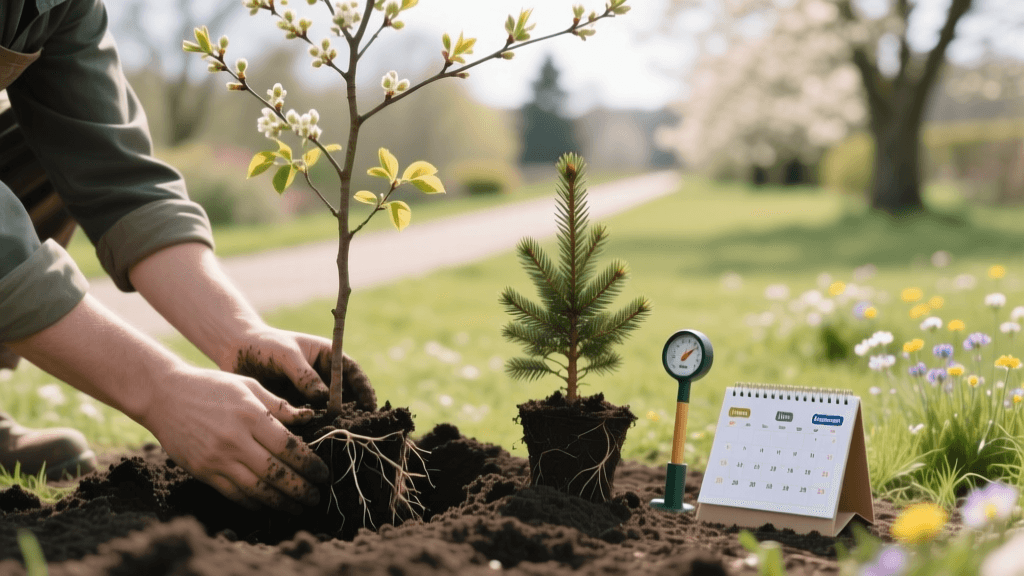
When to Plant Trees: Seasonal Timing & Hardiness Guide
Introduction to Seasonal Tree Planting
Planting a tree is one of the most impactful long-term investments you can make in your landscape. However, the success of that investment relies heavily on seasonal timing. Dropping a tree into the ground during the wrong season or at the wrong soil temperature can lead to transplant shock, stunted root growth, or outright mortality. Understanding the biological rhythms of trees—specifically the balance between top growth and root establishment—is the key to a thriving landscape. This comprehensive guide breaks down the optimal seasonal planting schedules, soil temperature thresholds, and actionable steps for both deciduous and evergreen trees across various USDA Hardiness Zones.
The Golden Rule: Dormancy and Soil Temperature
The overarching rule of tree planting is to transplant during dormancy or periods of minimal top growth. When a tree is not expending energy on producing leaves or flowers, it can dedicate its resources to establishing a robust root system. According to the University of Minnesota Extension, planting during dormancy reduces transplant shock and allows the root system to anchor before the stress of summer heat or winter freezes sets in.
Soil temperature is just as critical as air temperature. Roots require a minimum soil temperature to begin growing and absorbing water. For most deciduous species, the soil must be consistently at least 50°F (10°C). Evergreens, which retain their needles and lose moisture year-round, require slightly warmer soil temperatures—around 55°F (12°C)—to establish roots fast enough to replace transpired moisture. Investing in a simple $15 soil thermometer can save you from planting too early in the spring or too late in the fall.
Deciduous vs. Evergreen: Seasonal Planting Schedules
Not all trees respond to seasonal shifts in the same way. Deciduous trees drop their leaves and enter a hard dormancy, making them highly forgiving during fall and early spring planting. Evergreens, however, require more strategic timing to prevent winter desiccation (drying out).
| Tree Type | Optimal Planting Season | Minimum Soil Temp | Establishment Timeline |
|---|---|---|---|
| Deciduous (Container) | Early Fall / Early Spring | 50°F (10°C) | 1 year per inch of trunk caliper |
| Deciduous (Bare-Root) | Early Spring (Pre-Budbreak) | 45°F (7°C) | 1 to 1.5 years per inch of caliper |
| Evergreen (Container/B&B) | Early Spring / Late Summer | 55°F (12°C) | 1.5 to 2 years per inch of caliper |
| Broadleaf Evergreen | Early Spring | 55°F (12°C) | 1.5 to 2 years per inch of caliper |
Pro Tip: Avoid planting evergreens in late fall. If an evergreen does not have enough time to establish roots before the ground freezes, it will be unable to draw water to replace what is lost through its needles during harsh winter winds, leading to fatal browning.
Planting Schedules by USDA Hardiness Zone
Your geographic location dictates your seasonal planting window. The goal is always to give the tree 6 to 8 weeks of moderate weather to establish roots before extreme heat or extreme cold arrives.
Zones 3 through 5 (Northern Climates)
Best Time: Early Spring (April to May)
In northern regions with harsh, freezing winters, fall planting is highly risky. The ground freezes deeply, and young roots are easily heaved out of the soil by frost cycles. Wait until the ground thaws and soil temperatures reach 50°F in the spring. Bare-root trees are exceptionally popular here and must be planted before bud break.
Zones 6 through 8 (Middle Climates)
Best Time: Early Fall (September to November)
This is the sweet spot for fall planting. The air is cooling down, reducing moisture loss from the canopy, but the soil is still warm from the summer, promoting rapid root growth. Trees planted in early fall in Zone 7, for example, will establish a massive root network over the winter and spring, making them highly drought-resistant by their first summer.
Zones 9 through 11 (Southern & Tropical Climates)
Best Time: Late Fall to Winter (November to February)
In the deep south, summer heat is the primary enemy of new transplants. Planting in late fall or winter allows the tree to establish during the mild, rainy season. In Zone 10 and 11, where true dormancy does not exist, plant at the very beginning of the rainy season to minimize manual watering requirements.
Step-by-Step Action Plan: Measurements, Products, and Costs
Proper planting technique is just as important as seasonal timing. The Clemson University Cooperative Extension emphasizes that planting depth is the number one cause of tree failure in residential landscapes. Follow these actionable steps for a successful installation.
1. Locating the Root Flare and Digging
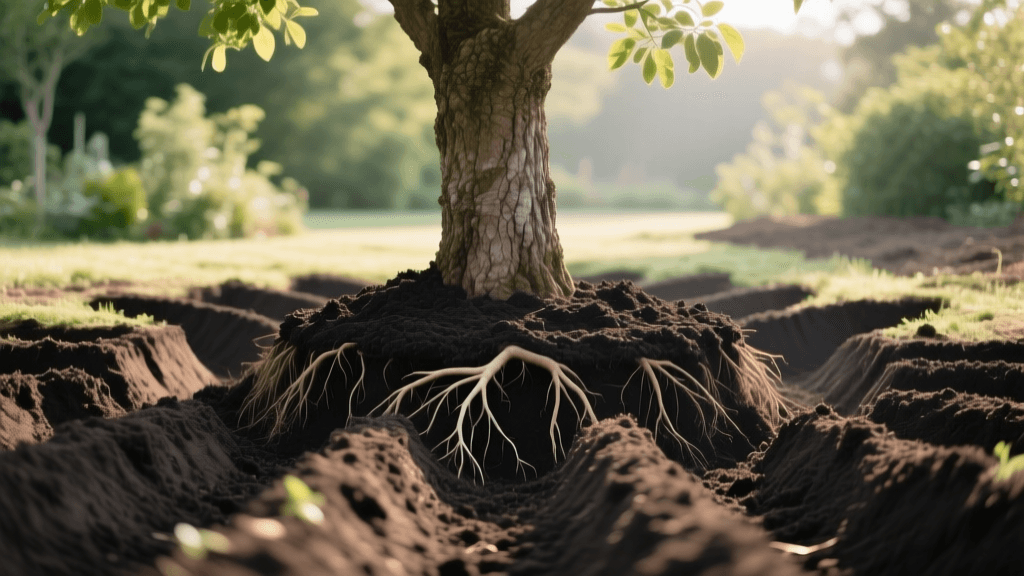
The root flare (where the trunk widens at the base and transitions into roots) must be visible above the soil line. If your tree is in a container, gently brush away the top inch or two of soil to find it. Dig a hole that is 2 to 3 times wider than the root ball, but no deeper than the root ball itself. The tree should sit on undisturbed, solid soil at the bottom of the hole to prevent sinking.
2. Soil Amendments and Backfilling
Do not amend the backfill soil with heavy compost or peat moss. Amending the hole creates a "bathtub effect" where water pools in the loose soil and rots the roots. Use the native soil you just dug out to backfill. However, you can apply a mycorrhizal inoculant like MycoGrow Soluble (approx. $25) directly to the root ball to encourage symbiotic fungal growth, which vastly improves water uptake.
3. Mulching: The Donut Method
Apply 2 to 3 inches of high-quality hardwood mulch, such as Scotts Nature Scapes (approx. $15 per 3-cubic-foot bag), in a wide ring around the tree. Keep the mulch at least 3 inches away from the trunk itself. Never "volcano mulch," as piling mulch against the bark invites rot, disease, and girdling roots.
4. Cost Breakdown for a Standard 15-Gallon Tree
- 15-Gallon Container Tree (e.g., Red Maple): $80 - $150
- Mycorrhizal Root Inoculant: $25
- Hardwood Mulch (3 bags): $45
- Slow-Release Watering Bag: $30
- Total Estimated DIY Cost: $180 - $250
Post-Planting Seasonal Watering and Care
Once the tree is in the ground, your seasonal care schedule shifts entirely to moisture management. The North Carolina State Extension notes that inconsistent watering is the leading cause of transplant shock in the first 90 days.
The Watering Formula: Provide 10 gallons of water per inch of trunk caliper (measured at knee height) per week during the growing season. A 2-inch caliper tree needs 20 gallons a week.
To achieve this without standing in your yard with a hose, invest in a slow-release watering bag like the Treegater Original ($30). You fill it with a hose in about 5 minutes, and it slowly drips water directly into the root zone over 5 to 9 hours, preventing runoff and ensuring deep soil penetration. During the fall and winter, reduce watering significantly, but do not let the root ball completely dry out if there is no snow cover or rainfall. By aligning your planting schedule with nature's seasonal rhythms and following precise installation metrics, your new tree will be anchored, hydrated, and ready to thrive for decades to come.