Pest Control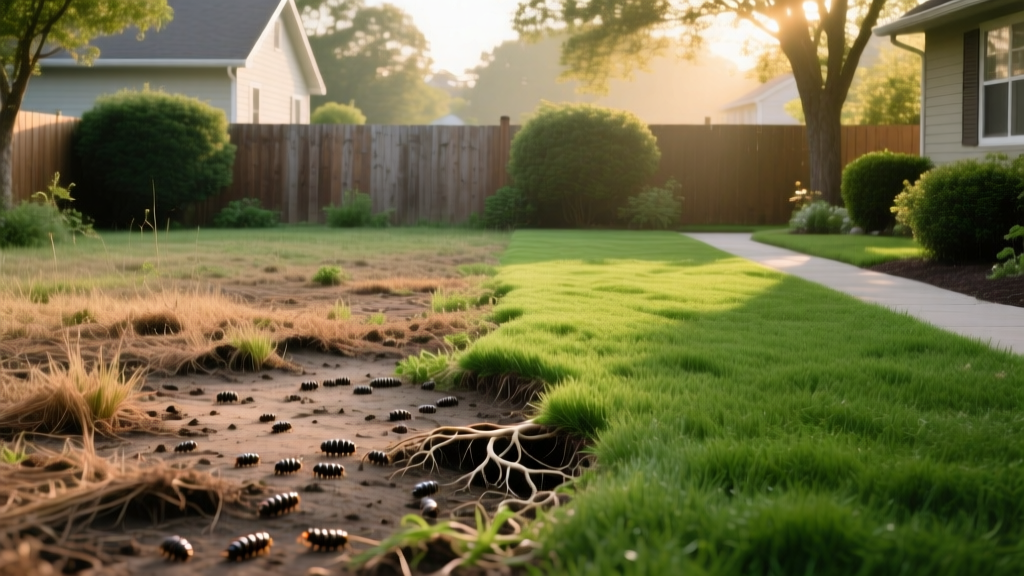
Lawn Grub Recovery: Before and After Transformation Guide
Mike RodriguezPublished
The Nightmare of a Grub-Infested Lawn
Waking up to a lawn that looks like it has been tilled by wild animals is a homeowner's worst nightmare. White grubs—the larval stage of Japanese beetles, June bugs, and European chafers—are among the most destructive turfgrass pests in North America. They feed aggressively on grassroots just below the soil surface, severing the plant from its water and nutrient supply. For many, the first sign of an infestation isn't the grubs themselves, but the devastating aftermath. This guide explores the dramatic before and after transformation of a severely grub-damaged lawn, detailing the Integrated Pest Management (IPM) strategies, curative treatments, and cultural practices required to bring a dead yard back to life.
The 'Before' State: Recognizing Severe Grub Damage
Before a transformation can begin, you must accurately diagnose the problem. A lawn suffering from a severe white grub infestation exhibits several distinct, highly visible symptoms that differentiate it from drought stress or fungal diseases.
Visual and Tactile Symptoms
- Spongy Turf: When you walk on the affected area, the ground feels unusually soft, spongy, or loose underfoot.
- Brown, Irregular Patches: Grass turns brown and wilts despite adequate rainfall or irrigation, usually starting in late summer or early fall.
- The 'Carpet' Effect: Because the roots have been completely severed, the dead turf can be rolled back like a freshly laid carpet or a loose rug.
- Predator Damage: Secondary damage is often the most shocking 'before' visual. Raccoons, skunks, crows, and armadillos will tear up the lawn, flipping over chunks of sod to feast on the protein-rich grubs beneath.
Confirming the Infestation
To confirm grubs are the culprit, perform the 'tug test.' Grab a handful of brown grass and pull. If it lifts away effortlessly with no root resistance, grubs are likely present. Next, use a flat shovel to cut a 1-foot by 1-foot square of sod about 3 inches deep and peel it back. Count the grubs. According to Penn State Extension, finding more than 8 to 10 grubs per square foot indicates a damaging population that requires immediate intervention.
The Transformation Plan: Step-by-Step Recovery
Reclaiming your lawn requires a multi-phased approach. You cannot simply throw grass seed on dead, grub-eaten soil and expect a miracle. The transformation from a destroyed yard to a lush oasis follows a strict timeline.
Step 1: Curative Treatment (Late Summer to Early Fall)
If you discover an active infestation between mid-August and October, the grubs are young, actively feeding, and near the surface. This is the window for curative chemical control. The most effective active ingredient for rapid knockdown is Trichlorfon (commonly sold under the brand name Dylox).
- Application Rate: Apply 2 to 3 pounds of active ingredient per 1,000 square feet.
- Watering: Trichlorfon degrades rapidly in sunlight and high pH soils. It must be watered in immediately with at least 0.5 inches of irrigation to move the chemical into the root zone where the grubs are feeding.
- Cost: A 10-pound bag of Dylox 6.2 Granules costs approximately $30 to $40 and covers up to 5,000 square feet.
Step 2: Cleanup and Soil Preparation (Late Fall)
Once the curative treatment has eliminated the grub population (usually within 7 to 14 days), you must address the physical damage. Rake away the dead, rolled-back sod and debris. If the soil is heavily compacted from predator traffic or foot traffic, perform core aeration. Aeration pulls 3-inch soil plugs from the ground, relieving compaction and creating ideal micro-environments for new grass seed to establish.
Step 3: Overseeding and Soil Amendment
The 'after' transformation relies heavily on introducing resilient turfgrass. Choose a seed blend appropriate for your region, ideally one containing endophyte-enhanced perennial ryegrass or tall fescue, which are naturally more resistant to insect feeding.
- Seeding Rate: Apply 3 to 5 pounds of seed per 1,000 square feet for overseeding.
- Topdressing: Apply a thin layer (1/4 inch) of compost to retain moisture and provide organic nutrients.
- Starter Fertilizer: Use a fertilizer high in phosphorus (e.g., 10-18-10) to stimulate rapid root development in the new seedlings.
Grub Control Product Comparison
Selecting the right product depends entirely on the time of year and your IPM goals. Below is a comparison of the most reliable grub control products on the market.
| Active Ingredient | Brand Example | Type | Best Application Timing | Est. Cost (per 5k sq ft) |
|---|---|---|---|---|
| Trichlorfon | Bayer Advanced 24-Hour Grub Killer (Dylox) | Curative (Fast-Acting) | Mid-August to Late September | $30 - $40 |
| Chlorantraniliprole | Scotts GrubEx1 | Preventative (Long-Lasting) | April to Early June | $20 - $25 |
| Imidacloprid | BioAdvanced Season-Long Grub Control | Preventative | May to Mid-July | $25 - $35 |
| Milky Spore (Bacillus popilliae) | Milky Spore Powder | Biological / Organic | Spring or Fall (Takes 1-3 years) | $40 - $60 |
Long-Term Prevention: Securing the 'After' State
A beautiful lawn is only a temporary victory if you do not implement preventative measures for the following spring. The Japanese beetle life cycle dictates that adults will emerge in early summer, mate, and lay eggs in your lush, irrigated turf. Those eggs will hatch into the next generation of grubs by late summer.
To protect your newly transformed lawn, apply a preventative treatment containing Chlorantraniliprole (such as Scotts GrubEx1) between April and early June. As noted by Michigan State University Extension, Chlorantraniliprole is highly effective, safe for pollinators, and breaks down slowly in the soil, providing season-long protection without the environmental risks associated with older neonicotinoid chemicals. This preventative step is the cornerstone of a sustainable IPM strategy, ensuring your lawn remains intact year after year.
Organic and Cultural IPM Strategies
For homeowners looking to minimize synthetic chemical use, cultural practices play a massive role in grub deterrence:
- Deep, Infrequent Watering: Grub eggs require consistent topsoil moisture to survive. Watering your lawn deeply but infrequently (1 inch per week) allows the top layer of soil to dry out between waterings, naturally reducing egg survival rates.
- Beneficial Nematodes: Applying Heterorhabditis bacteriophora (Hb) nematodes in late summer is a highly effective biological control. These microscopic worms seek out and parasitize white grubs. According to the University of California IPM, nematodes must be applied in the evening and watered in immediately to protect them from UV light and desiccation.
- Mowing High: Keep your mower blade set to 3 or 3.5 inches. Taller grass develops deeper, more robust root systems that can tolerate minor grub feeding without showing visible drought stress.
The 'After' State: A 12-Month Transformation
What does a successful transformation look like? At the 30-day mark post-curative treatment and overseeding, the bare patches will be filled with vibrant, bright green grass seedlings. The sponginess of the soil will be gone, replaced by firm earth as new roots anchor into the topsoil. Predator damage will cease entirely once the food source is eliminated and the turf is secured.
By the 12-month mark, following a spring preventative application and a full season of proper mowing and watering, the lawn will be unrecognizable from its 'before' state. The turf will be dense, dark green, and deeply rooted. When you walk across the yard, it will feel firm and resilient. More importantly, the underlying soil food web will be restored, and the turf will possess the vigor to naturally outcompete weeds and withstand environmental stressors.
Total Cost Breakdown for a 5,000 Sq. Ft. Lawn
Transforming a heavily damaged lawn requires an investment, but it is significantly cheaper than hiring a landscaping crew to install new sod. Here is a realistic cost breakdown for a DIY 5,000 square foot lawn transformation:
- Curative Treatment (Dylox): $35.00
- Core Aeration (Rental for half-day): $75.00
- Premium Grass Seed (15 lbs): $60.00
- Starter Fertilizer & Compost Topdressing: $45.00
- Preventative Treatment (Next Spring): $22.00
- Total Estimated DIY Cost: $237.00
Compare this to the $2,500 to $4,000 it would cost to hire professionals to strip the dead sod, grade the soil, and lay fresh sod, and the DIY IPM transformation becomes an incredibly cost-effective and rewarding endeavor. By understanding the life cycle of the white grub and adhering to a strict timeline of curative and preventative treatments, you can successfully guide your lawn from a state of total destruction to a neighborhood showpiece.