Home & Garden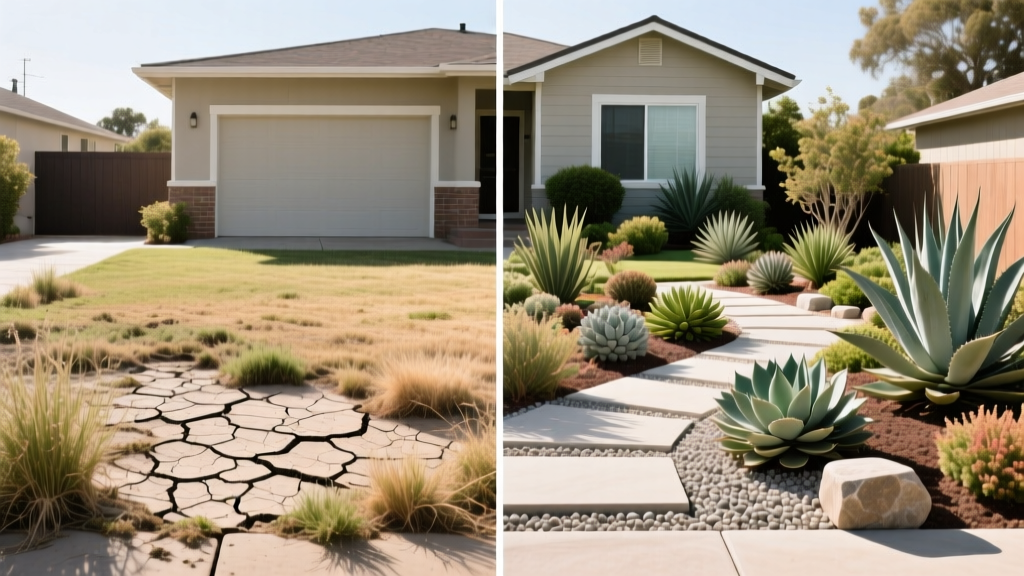
Xeriscape Front Yard Transformation: Before and After Guide
David ParkPublished
The Power of a Landscape Transformation
There is a growing movement among homeowners to rethink the traditional American lawn. As water restrictions tighten and energy costs rise, the sprawling, emerald-green turf of the past is being replaced by dynamic, drought-tolerant, and ecologically beneficial landscapes. Bridging the gap between indoor comfort and outdoor sustainability, a well-executed landscape makeover not only boosts curb appeal but also integrates smart home technology to conserve resources.
In this before-and-after case study, we follow the transformation of a 1,500-square-foot suburban front yard. We will break down the transition from a thirsty, high-maintenance Kentucky Bluegrass lawn to a stunning, energy-efficient smart xeriscape garden, complete with native plantings, permeable hardscaping, and automated drip irrigation.
The "Before": A Thirsty, High-Maintenance Turf Lawn
The "before" state of this property was a classic example of outdated landscaping. The front yard consisted entirely of Kentucky Bluegrass, a cool-season turf that demands significant resources to maintain its appearance in a transitional climate zone. The homeowner faced several persistent issues:
- Excessive Water Usage: The outdated rotor sprinkler system ran three times a week for 45 minutes per zone, leading to massive runoff on the adjacent driveway.
- High Utility Bills: During peak summer months, the outdoor water usage accounted for nearly 60% of the total municipal water bill, costing upwards of $145 per month.
- Chemical Reliance: The turf required synthetic fertilizers four times a year and annual broadleaf herbicide applications to combat dandelions and clover.
- Labor Intensive: Mowing, edging, and aerating consumed an average of three hours every weekend from April through October.
According to the EPA WaterSense program, the average American family uses 320 gallons of water per day, and nearly 30% of that is dedicated to outdoor use, much of which is lost to evaporation and runoff from inefficient sprinkler systems. It was time for a change.
The Vision: Planning the Drought-Tolerant After
The goal was to design a landscape that required 80% less water, eliminated the need for mowing, and integrated seamlessly with the home's smart ecosystem. The design philosophy centered on "hydrozoning"—grouping plants with similar water and sunlight needs together—and utilizing permeable hardscaping to manage stormwater runoff on-site.
Step-by-Step Transformation Process
Phase 1: Turf Removal and Soil Remediation
Rather than using harsh chemical herbicides or expensive sod-cutting machinery, the homeowner opted for sheet mulching (also known as lasagna composting). This method suppresses the existing grass while simultaneously building soil health.
- Mow Low: The existing turf was mowed down to the lowest possible setting (about 1 inch).
- Cardboard Layer: Overlapping sheets of plain, uncoated corrugated cardboard were laid directly over the grass, ensuring a 6-inch overlap at all seams to prevent weeds from pushing through.
- Compost and Mulch: A 3-inch layer of organic compost was spread over the cardboard, followed by a 2-inch layer of arborist wood chips.
Cost Breakdown: Cardboard was sourced for free from local appliance stores. Bulk organic compost and wood chips cost approximately $0.35 per square foot, totaling around $525 for the 1,500-square-foot area.
Phase 2: Installing Smart Drip Irrigation
Sprinklers are notoriously inefficient for garden beds, losing up to 30% of water to wind and evaporation. The new design utilized a subsurface drip irrigation system, which delivers water directly to the root zone.
- Mainline and Valves: The existing 3/4-inch PVC mainline was capped, and a new manifold was installed with a 100-mesh filter and a 30 PSI pressure regulator to protect the drip lines.
- Drip Tubing: Netafim Techline CV (Check Valve) drip tubing with 12-inch emitter spacing and a flow rate of 0.9 gallons per hour (GPH) was snaked through the planting zones.
- Smart Controller: The old mechanical timer was replaced with a Rachio 3 Smart Sprinkler Controller, allowing for precise, weather-based watering schedules.
Phase 3: Hardscaping and Plant Selection
To reduce the planted area and provide structural interest, a winding pathway of decomposed granite (DG) was installed. The DG was mixed with a natural stabilizer to prevent erosion and create a firm, permeable surface that allows rainwater to percolate into the soil.
The plant palette was carefully selected for drought tolerance, pollinator support, and multi-season visual interest:
- Agastache 'Blue Fortune' (Anise Hyssop): Planted in the sunniest, highest-drainage zones. Provides vibrant blue spikes from mid-summer to fall and attracts hummingbirds.
- Muhlenbergia capillaris (Pink Muhly Grass): Used as a structural anchor near the porch. Requires minimal water once established and produces a stunning pink fog of seed heads in autumn.
- Salvia nemorosa 'May Night': Mass-planted along the DG pathway borders for a low-growing, deep purple contrast.
- Achillea millefolium (Yarrow): Utilized in the "parkway" strip between the sidewalk and street due to its extreme heat and foot-traffic tolerance.
Smart Home Integration: Automating the Landscape
Bridging outdoor living with indoor smart home ecosystems was a priority. The Rachio 3 controller was integrated into the home's Wi-Fi network and linked to a local weather station API. This ensures the system automatically skips watering if rain is in the forecast or if soil moisture levels are sufficient.
Furthermore, the homeowner utilized IFTTT (If This Then That) applets to connect the irrigation system to their smart home hub. For example, if the smart weather station detects a freeze warning, the system automatically triggers a "winterize" protocol, shutting off all valves to prevent pipe bursts. Additionally, low-voltage LED uplighting was installed to highlight the Muhly Grass at night, connected to a smart transformer that adjusts lighting schedules based on local sunset times.
The "After": Results, Costs, and Water Savings
Six months after the transformation, the landscape had fully established. The difference in resource consumption and visual appeal was staggering. Strategic landscaping not only saves water but can also impact home energy efficiency. The U.S. Department of Energy notes that carefully positioned trees and shrubs can reduce home cooling and heating costs significantly by providing shade and acting as windbreaks. While this front yard focused on turf replacement, the addition of a shade-providing Desert Willow (Chilopsis linearis) near the front windows helped reduce solar heat gain inside the home.
Before and After Comparison Data
| Metric | Before (Kentucky Bluegrass) | After (Smart Xeriscape) |
|---|---|---|
| Summer Water Usage (Monthly) | 12,500 Gallons | 2,100 Gallons |
| Peak Summer Water Cost | $145.00 | $28.00 |
| Weekly Maintenance Time | 3 Hours (Mowing/Edging) | 45 Minutes (Weeding/Pruning) |
| Annual Fertilizer Applications | 4 (Synthetic) | 1 (Organic Compost Top-Dress) |
| Total Project Cost | N/A (Existing) | $3,850 (DIY Labor, Pro Materials) |
"The return on investment isn't just financial; it's about reclaiming my weekends. Instead of pushing a mower in 90-degree heat, I now sit on my porch and watch the pollinators visit the Agastache. The smart controller handles the rest."
Expert Tips for Your Own Xeriscape Makeover
If you are inspired to tackle a similar before-and-after transformation, keep these actionable tips in mind:
- Check for Local Rebates: Many municipal water districts offer "Cash for Grass" rebates. Before you remove a single blade of grass, check your local water provider's website. Rebates can range from $1.00 to $3.00 per square foot of removed turf, potentially covering your entire material cost.
- Don't Skimp on Soil Prep: Drought-tolerant plants still need deep, infrequent watering to establish their root systems during the first year. Compacted soil will cause water to pool and rot the roots. Always amend native clay or heavy soils with organic compost.
- Use Hydrozoning Strictly: Never plant a high-water succulent next to a low-water native shrub. Grouping plants by their exact water needs allows you to put them on separate irrigation valves, maximizing efficiency.
- Mulch is Mandatory: A 2-to-3-inch layer of organic mulch or inorganic gravel (for succulents) is non-negotiable. It suppresses weeds, regulates soil temperature, and drastically reduces surface evaporation.
Conclusion
Transforming a traditional lawn into a smart, water-wise xeriscape is one of the most impactful home and garden projects you can undertake. By replacing resource-heavy turf with native flora, permeable hardscapes, and intelligent irrigation technology, you create an outdoor living space that is as beautiful as it is sustainable. The before-and-after results speak for themselves: lower utility bills, drastically reduced weekend chores, and a vibrant, living ecosystem right outside your front door.
