
Gardening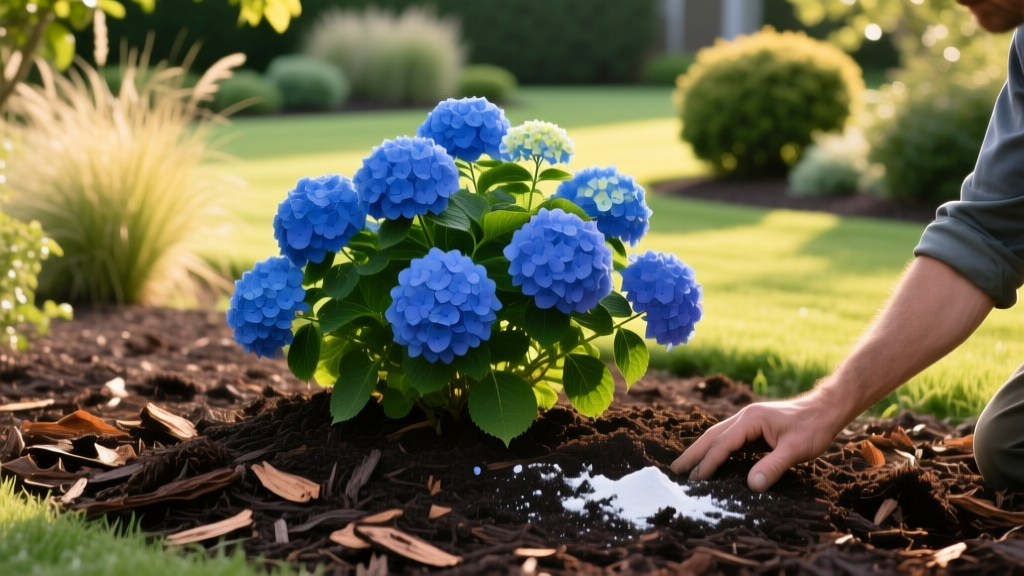
Creating Acidic Soil for Hydrangeas: Mulch and Amendment Guide
The Chemistry of Hydrangea Color and Soil pH
The color of Hydrangea macrophylla (bigleaf) and Hydrangea serrata blooms is not strictly dictated by genetics, but by the availability of aluminum ions in the soil. To achieve deep blue or vibrant purple blooms, you must cultivate acidic soil for hydrangeas, specifically targeting a pH between 5.0 and 5.5. In alkaline soils (pH above 6.0), aluminum binds with hydroxide ions to form insoluble compounds, rendering it unavailable to the plant's roots and resulting in pink or red flowers.
Key Science Insight: It is not the acidity itself that turns hydrangeas blue, but the aluminum. However, aluminum is only soluble and absorbable by hydrangea roots in acidic environments. If your soil lacks native aluminum, lowering the pH alone will not turn the flowers blue; you must introduce an aluminum source alongside your acidifying amendments.
Testing Your Baseline Soil pH
Before applying any amendments, you must establish an accurate baseline. Guessing your soil pH leads to over-application, which can cause severe root burn or lock out essential nutrients like phosphorus and calcium.
Recommended Testing Methods
- Professional Lab Testing ($15 - $30): The most accurate method. Send a soil sample to your local university extension office. Lab tests provide your exact buffer pH, which dictates how much amendment is actually required to shift your soil chemistry.
- Luster Leaf Rapitest 1601 ($14.99): A reliable at-home chemical dye kit. It uses color-coded capsules to measure pH, N, P, and K. Accuracy is generally within 0.5 pH units.
- Sonkir MS02 Digital Meter ($25.00): Useful for tracking trends over time, but digital probes are notoriously inaccurate in highly organic or dry soils. Always calibrate with a buffer solution before use.
Amendment Comparison Matrix: Lowering Soil pH
Not all soil acidifiers are created equal. The choice between elemental sulfur, aluminum sulfate, and iron sulfate depends on your timeline, soil type, and budget. According to UMass Extension, understanding the reaction speed and toxicity risks of each compound is critical for plant health.
| Amendment | Active Compound | Reaction Speed | Application Rate (Per 100 sq ft to drop 1 pH) | Avg. Cost | Toxicity Risk |
|---|---|---|---|---|---|
| Elemental Sulfur | Sulfur (S) | Slow (3-6 months) | 1.0 lb (Loam) | $12 (4 lbs) | Low |
| Aluminum Sulfate | Al2(SO4)3 | Fast (2-4 weeks) | 6.0 lbs | $16 (4 lbs) | High (Root burn) |
| Iron Sulfate | FeSO4 | Moderate (1-2 months) | 4.5 lbs | $20 (5 lbs) | Moderate |
Expert Recommendation: Use Espoma Organic Soil Acidifier (elemental sulfur) for long-term, safe pH reduction. Reserve Bonide Aluminum Sulfate only for immediate color correction on established plants, applying it in a diluted liquid drench (1/4 cup per gallon of water) rather than broadcasting dry granules to avoid localized salt buildup.
The Role of Mulch in Maintaining Acidic Soil
Amendments lower the pH, but the right mulch buffers and maintains it. Mulch regulates soil temperature, retains moisture, and slowly leaches organic acids into the soil profile as it decomposes. However, not all organic mulches are created equal when managing acidic soil for hydrangeas.
Mulch Material Breakdown
- Pine Bark Mulch (Shredded): The gold standard. Decomposes slowly, maintains a localized pH of 4.5 to 5.5, and prevents soil compaction. Apply a 2-to-3-inch layer, keeping it 3 inches away from the main hydrangea stems to prevent crown rot.
- Pine Needles (Straw): Excellent for aeration and slow acidification. While fresh pine needles are acidic, they lose much of their acidity as they brown. They are best used as a top-dressing over pine bark to maintain surface acidity.
- Oak Leaf Mold: Highly acidic and rich in micronutrients. Requires composting before application to prevent matting and water runoff.
- The Coffee Grounds Myth: Do not rely on spent coffee grounds to lower soil pH. Once brewed, coffee grounds have a near-neutral pH of 6.5 to 6.8. Furthermore, applying thick layers of wet coffee grounds creates an impermeable crust that blocks water and oxygen from reaching hydrangea roots.
Step-by-Step Amendment Application Protocol
Follow this precise sequence to safely transition your soil chemistry without shocking the plant's root system.
- Calculate the Deficit: If your lab test shows a pH of 6.5 and you want 5.5, you need a 1.0 unit drop. For a 10-square-foot hydrangea bed, apply 0.1 lbs (roughly 3 tablespoons) of elemental sulfur.
- Timing the Application: Elemental sulfur relies on Thiobacillus soil bacteria to oxidize into sulfuric acid. These bacteria are dormant in soil temperatures below 55°F. Apply sulfur in early spring or early fall when soil biology is active.
- Incorporation: Gently scratch the granular sulfur into the top 1 inch of soil. Hydrangea roots are shallow; deep tilling will sever the feeder roots responsible for water uptake.
- Hydration: Water the area deeply immediately after application to activate the bacterial breakdown process and wash any residual sulfur dust off the foliage to prevent leaf burn.
- Apply Mulch: Cap the amended soil with 2.5 inches of shredded pine bark mulch to lock in moisture and stabilize the soil temperature for optimal bacterial activity.
Irrigation Edge Cases: The Hard Water Problem
A frequently overlooked failure mode in hydrangea cultivation is municipal water chemistry. If you live in an area with hard tap water, your irrigation is likely loaded with dissolved calcium carbonate (limestone), which has a pH of 8.0 or higher. Continually watering your carefully amended acidic soil with alkaline tap water will neutralize your sulfur applications within weeks.
Pro-Tip for Municipal Water Users: If you cannot collect rainwater, lower the pH of your tap water by adding 1 tablespoon of standard white vinegar (5% acidity) per gallon of water. This will safely neutralize the dissolved carbonates and prevent your irrigation from buffering the soil back to alkaline levels.
Troubleshooting and Toxicity Warnings
Warning: Aluminum Toxicity
While hydrangeas tolerate aluminum better than most plants, excessive application of aluminum sulfate can lead to toxicity. Symptoms include severe leaf margin necrosis (browning edges), stunted new growth, and dark, brittle roots. If you observe these signs, cease aluminum applications immediately, flush the soil with heavy irrigation, and apply a phosphorus-rich fertilizer to help bind the excess aluminum in the soil.
While hydrangeas tolerate aluminum better than most plants, excessive application of aluminum sulfate can lead to toxicity. Symptoms include severe leaf margin necrosis (browning edges), stunted new growth, and dark, brittle roots. If you observe these signs, cease aluminum applications immediately, flush the soil with heavy irrigation, and apply a phosphorus-rich fertilizer to help bind the excess aluminum in the soil.
Furthermore, avoid dropping the soil pH below 4.5. Highly acidic soil locks out vital macronutrients, particularly phosphorus and magnesium, leading to interveinal chlorosis (yellowing leaves with green veins). Re-test your soil every 6 months using a reliable lab service, as recommended by Clemson University Extension, to ensure your acidic soil for hydrangeas remains in the optimal 5.0 to 5.5 sweet spot.

