
Gardening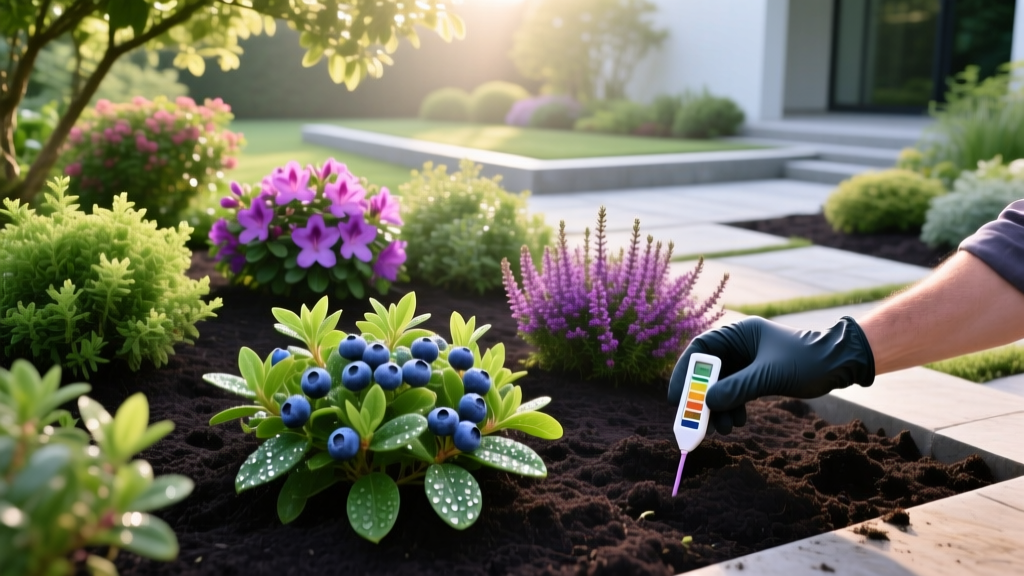
Top Acidic Soil Plants and How to Amend Your Garden for Low pH
Understanding the Acidic Soil Ecosystem
Soil pH dictates nutrient availability, microbial activity, and overall plant health. While most standard garden vegetables and turfgrasses thrive in a neutral pH range of 6.0 to 7.0, a specific subset of botanical species has evolved to require highly acidic conditions. Acidic soil is generally defined as having a pH below 6.0, with strongly acidic soils dropping below 5.0. For gardeners looking to cultivate acidic soil plants, attempting to force these species into alkaline or neutral earth will result in severe nutrient lockout, stunted growth, and eventual death.
The primary reason these plants demand low pH is iron and manganese availability. In soils with a pH above 6.5, iron becomes chemically bound and insoluble, rendering it inaccessible to plant roots. Acid-loving plants (calcifuges) lack the specialized root exudates that alkaline-tolerant plants use to chelate iron in high-pH environments. Therefore, successfully growing these species requires a dual approach: selecting the right cultivars and actively managing your soil chemistry through targeted amendments and mulching.
Expert Insight: Never attempt to lower the pH of highly alkaline soils (pH 7.5+) just to grow acid-loving plants in the ground. The buffering capacity of calcareous soils will constantly push the pH back up. Instead, grow acidic soil plants in raised beds or containers filled with a custom peat-and-pine-bark mix.
Top Acidic Soil Plants by Category
Selecting the right plant for your specific pH level is crucial. Below is a curated matrix of the most reliable acid-loving plants, categorized by their ideal pH ranges and landscape function.
| Plant Category | Specific Cultivars / Species | Ideal pH Range | Key Soil Requirement |
|---|---|---|---|
| Edible Shrubs | Highbush Blueberry (Vaccinium corymbosum) | 4.5 - 5.5 | High organic matter (20%+), excellent drainage |
| Ornamental Shrubs | Azaleas & Rhododendrons (Rhododendron spp.) | 4.5 - 6.0 | Shallow root zone, consistent moisture, acidic mulch |
| Flowering Shrubs | Bigleaf Hydrangea (Hydrangea macrophylla) | 5.0 - 5.5 (for blue) | Aluminum availability (only soluble in acidic soil) |
| Evergreens | American Holly (Ilex opaca), Mountain Laurel | 5.0 - 6.5 | Well-drained loam, intolerant of heavy clay |
| Perennials & Ferns | Japanese Painted Fern, Astilbe, Bleeding Heart | 5.5 - 6.5 | Dappled shade, rich humus content |
Accurate Soil Testing: Skip the Guesswork
Before purchasing elemental sulfur or applying amendments, you must establish a precise baseline. Cheap, dye-based liquid test kits (often priced around $10-$15) are notoriously inaccurate for pH readings below 6.0, frequently skewing results by 0.5 to 1.0 full pH units. For acidic soil plants, a 0.5 margin of error is the difference between thriving blueberries and iron chlorosis.
Recommended Testing Methods
- University Mail-In Labs (Best Accuracy): Send a 2-cup soil sample to a lab like A&L Great Lakes Laboratories or the UMass Soil and Plant Tissue Testing Laboratory. Costs range from $25 to $35 and provide exact pH, buffer pH (crucial for determining how much sulfur is needed), and Cation Exchange Capacity (CEC).
- Digital Probes (Best for Routine Monitoring): Invest in a high-quality digital meter like the Bluelab pH Pen (approx. $95). Calibrate it monthly using pH 4.01 and 7.01 buffer solutions. Avoid cheap analog dials with uncalibrated metal prongs.
Amendment Protocols: Lowering Soil pH Safely
According to North Carolina State Extension, lowering soil pH is a chemical process that requires careful calculation based on your soil's texture and current buffer index. The two primary amendments are elemental sulfur and aluminum sulfate.
Elemental Sulfur (The Long-Term Solution)
Elemental sulfur relies on soil bacteria (Thiobacillus) to oxidize the sulfur into sulfuric acid. This process takes 6 to 12 months and is highly dependent on soil temperature and moisture. It is the safest and most cost-effective method for long-term pH management.
| Current Soil pH | Target pH | Sandy Loam (lbs/100 sq ft) | Silt Loam (lbs/100 sq ft) | Heavy Clay (lbs/100 sq ft) |
|---|---|---|---|---|
| 7.0 | 5.5 | 1.0 - 1.5 | 2.0 - 2.5 | 3.0 - 4.0 |
| 6.5 | 5.0 | 1.5 - 2.0 | 3.0 - 3.5 | 4.0 - 5.0 |
Note: Never apply more than 2 lbs of elemental sulfur per 100 square feet in a single application. Over-application can cause toxic salt buildup and root burn. Split higher doses into spring and fall applications.
Aluminum Sulfate (The Fast-Acting Rescue)
Aluminum sulfate hydrolyzes instantly in water, dropping pH within days. However, it requires roughly 6 times the volume of elemental sulfur to achieve the same pH drop, making it expensive for large areas. More importantly, excessive use leads to aluminum toxicity, which stunts root growth. Use aluminum sulfate only as a targeted, small-scale rescue treatment for container plants or single struggling shrubs, applying no more than 1 lb per 10 square feet.
Mulching Strategies to Maintain Acidity
Amending the soil is only half the battle; maintaining the low pH requires the right mulch. As organic matter decomposes, it releases organic acids that buffer the soil against alkalinity creep.
- Pine Bark Mulch: The gold standard for acidic soil plants. A 3-inch layer of aged pine bark (pH 4.0 - 5.0) suppresses weeds, retains moisture, and slowly acidifies the topsoil as it breaks down. Expect to pay $5 to $7 per 2-cubic-foot bag.
- Pine Needles (Pine Straw): Excellent for slope stabilization and blueberry beds. While fresh pine needles are acidic, they neutralize slightly as they decompose. Their primary benefit is physical: they form a breathable mat that prevents soil compaction and allows water infiltration without raising pH.
- Oak Leaves: Shredded oak leaves make a superb, free acidic mulch. Run them through a mulching mower before applying to prevent them from matting and blocking water.
Myth Buster: Coffee Grounds
Do not rely on spent coffee grounds to lower soil pH. While unbrewed coffee grounds are acidic, the brewing process washes away the acidic compounds. Spent coffee grounds have a near-neutral pH of 6.5 to 6.8. They are an excellent source of slow-release nitrogen, but they will not acidify your soil for hydrangeas or azaleas.
Do not rely on spent coffee grounds to lower soil pH. While unbrewed coffee grounds are acidic, the brewing process washes away the acidic compounds. Spent coffee grounds have a near-neutral pH of 6.5 to 6.8. They are an excellent source of slow-release nitrogen, but they will not acidify your soil for hydrangeas or azaleas.
Troubleshooting Chlorosis and Alkalinity Creep
Even with careful planning, irrigation water (which is often alkaline) and surrounding concrete foundations can slowly raise soil pH over time. The first visual indicator is interveinal chlorosis: new leaves emerge yellow while the veins remain distinctly green. This is a classic sign of iron deficiency induced by high pH.
The Chelated Iron Fix
If your soil tests above 6.5 and your acidic soil plants show chlorosis, applying standard iron sulfate will not work; it will instantly lock up in the alkaline soil. You must use chelated iron. Look for products containing Fe-EDDHA (such as Sequestrene 138). Fe-EDDHA remains stable and available to plant roots in soils with a pH up to 9.0. Apply as a soil drench at a rate of 1 to 2 ounces per 10 gallons of water, directly to the root zone in early spring. Avoid Fe-EDTA or Fe-DTPA, as these chelates break down and become ineffective in soils with a pH above 7.0.
Frequently Asked Questions
Can I use vinegar to lower soil pH?
While household white vinegar (5% acetic acid) will temporarily lower soil pH, the effect lasts only a few days before soil microbes break down the acetate. It is not a viable long-term amendment for acidic soil plants and can harm beneficial soil mycorrhizae if applied in high concentrations.
Do hydrangeas need acidic soil to survive?
No, Hydrangea macrophylla will survive and grow vigorously in neutral or slightly alkaline soil (pH 6.5 - 7.5). However, without acidic soil (pH 5.0 - 5.5), the plant cannot absorb aluminum, meaning the flowers will be pink or purple instead of the highly sought-after deep blue. As noted by University of Minnesota Extension, soil pH acts as the gatekeeper for specific mineral uptake.
How often should I re-test my soil pH?
For dedicated acid beds (like blueberry patches or rhododendron borders), test the soil every two years in the early spring. If you are actively trying to lower the pH with elemental sulfur, test annually in the fall to track the bacterial oxidation progress and adjust your application rates for the following year.

