
Gardening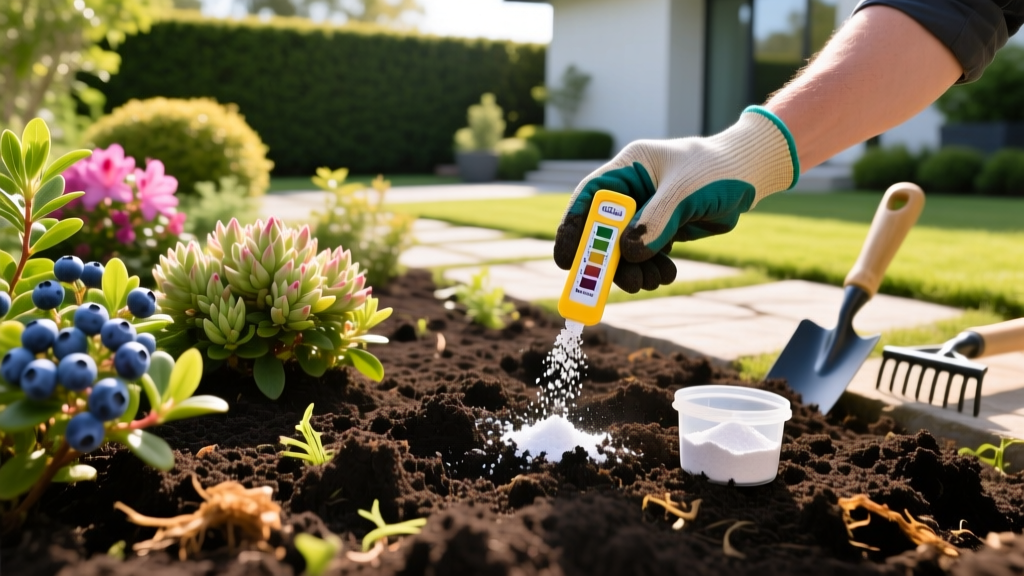
How to Make Soil More Acidic: Fast and Slow Amendment Guides
Lowering soil pH requires matching the amendment's chemical mechanism to your soil's cation exchange capacity (CEC) and buffer pH. Ericaceous plants like blueberries, azaleas, rhododendrons, and hydrangeas demand a highly acidic environment, typically between pH 4.5 and 5.5, to access vital micronutrients like iron and manganese. Applying the wrong amendment or miscalculating the dosage based on soil texture can lead to toxic metal accumulation or rapid pH rebound.
The Soil Testing Baseline: Active pH vs. Buffer pH
Before purchasing amendments, you must distinguish between active pH and buffer pH. A standard $15 analog tester or digital probe (like the Luster Leaf Rapitest 1601) only measures active pH—the current hydrogen ion concentration in the soil water. However, it ignores the soil's buffering capacity, which is its resistance to pH change driven by clay content and organic matter.
For accurate amendment calculations, invest $35 in a mail-in laboratory test from an accredited facility like A&L Great Lakes Laboratories or your local university extension. The lab will provide a buffer pH index. According to Penn State Extension, a soil with an active pH of 7.0 but a high buffer pH will require two to three times more elemental sulfur to lower than a sandy soil with the same active pH but a low buffer index.
⚠️ The Vinegar Myth: Do not use household white vinegar (acetic acid) to acidify garden beds. While it causes a temporary 24-hour pH drop, it rapidly washes out with irrigation, destroys beneficial soil biology, and fails to alter the soil's underlying chemical buffer. It is strictly a short-term hydroponic or container flush tool, not a soil amendment.
Slow-Release Acidifiers: The Long-Term Strategy
For permanent landscape beds and perennial shrubs, slow-release amendments are the gold standard. They alter the soil chemistry gradually, preventing root shock and nutrient lockout.
Elemental Sulfur (The Biological Approach)
Elemental sulfur (S) is the most cost-effective and widely recommended long-term acidifier. It does not react chemically on its own; instead, it relies on naturally occurring Thiobacillus bacteria in the soil to oxidize the sulfur into sulfuric acid. Because this is a biological process, it is highly dependent on soil moisture, aeration, and temperature. Bacterial activity halts when soil temperatures drop below 55°F, making early fall or early spring the optimal application windows.
- Sandy Soil: Apply 1 lb of 90% elemental sulfur per 100 square feet to lower pH by 1.0 point.
- Loam Soil: Apply 1.5 to 2 lbs per 100 square feet to lower pH by 1.0 point.
- Heavy Clay: Apply 2 to 3 lbs per 100 square feet to lower pH by 1.0 point.
As of 2026, products like Espoma Soil Acidifier (which contains 90% elemental sulfur) retail for approximately $16 for a 4 lb bag, treating up to 400 square feet of sandy soil. Always broadcast sulfur evenly and incorporate it into the top 6 inches of soil; surface-applied sulfur oxidizes at a fraction of the speed.
Sphagnum Peat Moss (The Structural Approach)
Canadian Sphagnum peat moss naturally sits at a pH of 3.0 to 4.5. Incorporating it into the soil physically lowers the pH while simultaneously increasing moisture retention and CEC. For a new blueberry or azalea bed, mix 2 cubic feet of peat moss per 25 square feet of planting area, tilling it to a depth of 8 inches. Note that coconut coir, while an excellent sustainable alternative for moisture retention, has a near-neutral pH (5.5-6.5) and will not actively acidify your soil.
Amendment Comparison Matrix
| Amendment | Speed of Action | Cost per 100 sq ft | Longevity | Best Use Case |
|---|---|---|---|---|
| Elemental Sulfur | 6–12 Months | $2.00 – $4.00 | 2–4 Years | New landscape beds, pre-planting prep |
| Iron Sulfate | 3–4 Weeks | $8.00 – $12.00 | 3–6 Months | Emergency pH drops, treating chlorosis |
| Sphagnum Peat Moss | Immediate (physical) | $10.00 – $15.00 | 1–2 Years (decomposes) | Soil structure improvement, new beds |
| Ammonium Sulfate (21-0-0) | 1–2 Months | $1.50 – $3.00 | Seasonal (fertilizer) | Maintaining pH in established beds |
Fast-Acting Acidifiers: Emergency Drops and Container Fixes
When established plants exhibit severe iron chlorosis (yellowing leaves with green veins) due to a sudden pH spike, you cannot wait six months for elemental sulfur to oxidize. You need immediate chemical intervention.
Iron Sulfate vs. Aluminum Sulfate
Iron sulfate reacts chemically with soil moisture to release hydrogen ions, dropping the pH within three to four weeks. To lower soil pH by 1.0 point, apply approximately 8 lbs of iron sulfate per 100 square feet. It also provides a massive dose of bioavailable iron, instantly correcting chlorosis.
Crucial Warning: Avoid aluminum sulfate. While it acts just as quickly as iron sulfate, the resulting chemical reaction releases free aluminum ions into the soil solution. According to UMass Amherst Extension, blueberries and many ericaceous plants are highly susceptible to aluminum toxicity, which stunts root growth and can kill the plant even as the pH reaches the target range. Reserve aluminum sulfate strictly for hydrangeas if you are specifically attempting to turn their blooms blue, as they tolerate and sequester aluminum safely.
Acidifying Fertilizers for Maintenance
Once your target pH is reached, switch your nitrogen source to ammonium sulfate (21-0-0). As soil bacteria convert ammonium into nitrate (a process called nitrification), they release hydrogen ions as a byproduct, providing a gentle, continuous acidifying effect. Apply at a rate of 1 lb per 100 square feet in early spring. Avoid calcium nitrate or sodium nitrate fertilizers, which will rapidly drive your pH back up.
The Mulch Factor: Pine Needles and Organic Matter
Surface mulches contribute to long-term, localized acidification at the root zone as they decompose. Long-leaf pine needles (often sold as pine straw) have a fresh pH of 3.2 to 3.8. While their acidifying power diminishes slightly as they age and compost, a 3-inch layer of pine straw replenished annually creates a highly acidic micro-environment in the top 2 inches of soil where ericaceous feeder roots concentrate.
Conversely, the internet myth regarding coffee grounds requires clarification. Brewed coffee grounds are nearly neutral (pH 6.5) because the acid is water-soluble and ends up in your cup. Only fresh, unbrewed grounds are highly acidic, but applying them directly to soil ties up nitrogen during decomposition and can create a hydrophobic crust. Stick to pine straw, shredded oak leaves, and well-composted pine bark for reliable mulching.
Step-by-Step Acidification Protocol
- Test in Late Summer: Pull soil cores from the top 6 inches of the root zone and send them to a lab for active and buffer pH analysis.
- Calculate and Apply Sulfur in Fall: Use the lab's buffer index to calculate elemental sulfur rates. Broadcast and till into the top 6 inches before winter dormancy. The freeze-thaw cycle and early spring microbial activity will begin the oxidation process.
- Incorporate Peat in Spring: Two weeks before planting, till 2 inches of sphagnum peat moss into the bed to lower pH physically and improve drainage.
- Plant and Mulch: Install your acid-loving plants and immediately apply a 3-inch layer of pine straw or pine bark mulch.
- Fertilize with Ammonium Sulfate: Apply a maintenance dose of 21-0-0 fertilizer post-bloom to sustain the acidic environment.
- Retest Annually: Soil naturally buffers back toward neutral over time. Test every 12 months to apply micro-doses of sulfur as needed.
Troubleshooting: Irrigation Water and pH Rebound
If you have applied the correct rates of elemental sulfur but your soil pH rebounds to alkaline levels within a single season, your irrigation water is likely the culprit. Municipal water and deep well water in arid or limestone-rich regions often contain high levels of dissolved bicarbonates (hard water). These bicarbonates act as a liquid lime, constantly neutralizing your soil amendments.
If your irrigation water has a pH above 7.5 and high alkalinity, you must either switch to rainwater harvesting for your ericaceous beds or inject a mild acid into your irrigation system. For container-grown blueberries and azaleas, flushing the pots with a solution of 1 tablespoon of white vinegar per gallon of water once a month can neutralize the bicarbonates in the tap water, preventing the potting mix from locking up and reverting to an alkaline state.

