
Gardening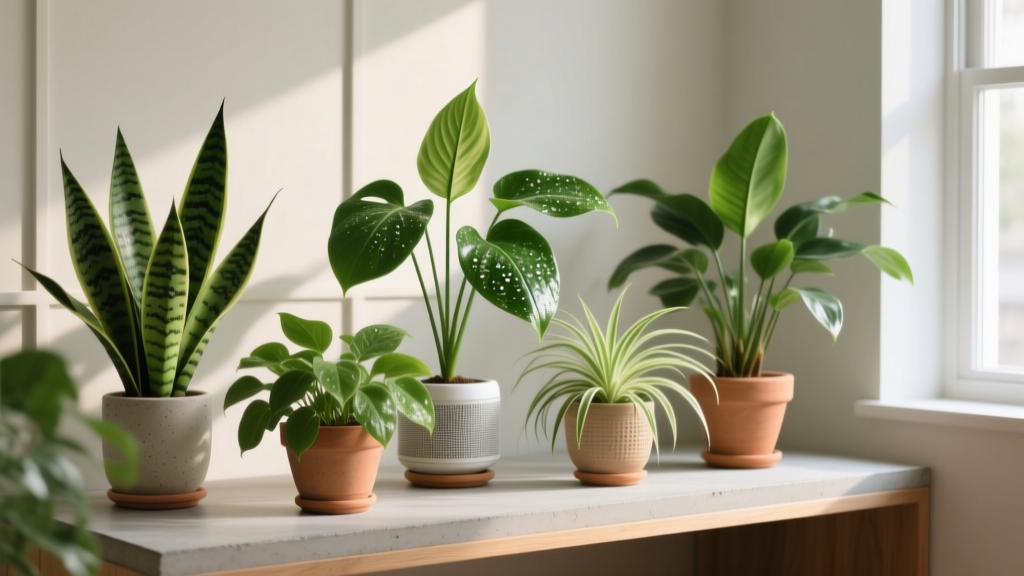
Top House Plants That Clean the Air: Beginner Guide
The Reality of Air-Purifying Houseplants
Many beginners purchase a single pothos or peace lily expecting it to function like a mechanical HEPA filter. While it is true that certain house plants that clean the air exist, the modern scientific consensus requires a reality check. According to the EPA's guide on Volatile Organic Compounds, indoor air can be two to five times more polluted than outdoor air due to off-gassing from furniture, paint, and cleaning supplies. Plants can help mitigate these volatile organic compounds (VOCs), but only if deployed with strategic density and proper care.
This guide strips away the marketing fluff and provides a beginner-friendly, data-driven approach to selecting, placing, and maintaining air-purifying plants in 2026. We will cover exact light metrics, watering schedules, and the mathematical density required to actually impact your indoor air quality.
The Science: How Phytoremediation Actually Works
Plants do not just 'breathe in' toxins through their leaves. The true heavy lifting occurs in the rhizosphere (the root zone). Soil microbes break down VOCs like formaldehyde and benzene, using them as a carbon source. The plant's role is to transport these compounds down to the roots via its vascular system. Therefore, a healthy, active root zone and well-aerated soil are far more critical for air purification than the physical size of the plant's leaves.
Comparison Matrix: Top 5 Beginner-Friendly Air Purifiers
Before buying, match the plant to your specific indoor environment. The table below breaks down the exact requirements and target VOCs for the most reliable species.
| Plant Species | Target VOCs | Light Needs (Foot-Candles) | Watering Schedule | Pet Safe? |
|---|---|---|---|---|
| Snake Plant (Sansevieria trifasciata) |
Formaldehyde, Xylene, Toluene | Low to Bright (50 - 1,000+ fc) | Every 3-4 weeks (dry out completely) | No (Toxic) |
| Spider Plant (Chlorophytum comosum) |
Formaldehyde, Xylene | Moderate Indirect (200 - 500 fc) | Weekly (top 2 inches dry) | Yes |
| Golden Pothos (Epipremnum aureum) |
Formaldehyde, Benzene | Low to Moderate (75 - 300 fc) | Every 1-2 weeks (top 50% dry) | No (Toxic) |
| Peace Lily (Spathiphyllum wallisii) |
Benzene, Trichloroethylene, Ammonia | Low to Moderate (50 - 250 fc) | Weekly (keep slightly moist) | No (Toxic) |
| Boston Fern (Nephrolepis exaltata) |
Formaldehyde, Xylene | Moderate Indirect (150 - 400 fc) | Twice weekly (keep soil damp) | Yes |
Note: Always verify toxicity if you have cats or dogs. For a comprehensive list, consult the ASPCA's Toxic and Non-Toxic Plant Directory.
Deep Dive: Care Protocols for Maximum Efficacy
A stressed plant closes its stomata (the pores on its leaves) to conserve water, effectively shutting down its ability to filter airborne toxins. To keep your botanical air purifiers operational, follow these specific care protocols.
1. Snake Plant (Sansevieria): The Nighttime Oxygen Generator
Unlike most plants, the Snake Plant utilizes Crassulacean Acid Metabolism (CAM), meaning it absorbs CO2 and releases oxygen at night. This makes it the premier choice for bedrooms.
- Potting: Use a 6-to-8-inch unglazed terracotta pot. Terracotta wicks away excess moisture, preventing the root rot that rapidly kills Sansevieria.
- Soil Mix: 50% standard potting soil, 25% perlite, 25% orchid bark for extreme drainage.
- Failure Mode: Overwatering. If the leaves become mushy at the base and turn yellow, you have induced crown rot. Cut back watering immediately and check the roots.
2. Spider Plant: The Rapid Multiplier
Spider plants are exceptionally efficient at pulling formaldehyde from the air, a common off-gas from pressed-wood furniture and synthetic carpets.
- Fertilization: Apply a balanced 10-10-10 liquid fertilizer diluted to half-strength once a month during the spring and summer. Over-fertilizing causes brown leaf tips due to salt buildup.
- Propagation: Snip the 'spiderettes' (babies) and root them in water for 14 days before potting in soil. This allows you to rapidly increase your plant density without buying new specimens.
3. Golden Pothos: The Low-Light Survivor
If your space lacks south or east-facing windows, Pothos is your best option. It continues to metabolize benzene even in low-light environments (under 100 foot-candles).
- Pruning: Cut vines back by 30% every spring. This forces the plant to produce new lateral growth, which has a higher density of active stomata than aging, leggy vines.
- Dusting: Wipe leaves with a damp microfiber cloth monthly. A layer of dust can block up to 40% of light absorption and physically clog the stomata.
Warning: The Dust & Pest Trap
Stagnant indoor air allows dust to settle on broad leaves (like the Peace Lily). This not only halts phytoremediation but attracts spider mites. Inspect the undersides of leaves monthly. If you see fine webbing, isolate the plant and treat with a ready-to-use insecticidal soap spray, applying at dusk to avoid leaf burn from direct sunlight.
Realistic Placement Strategy: The Density Rule
The most common beginner mistake is placing one plant in a 300-square-foot living room and expecting cleaner air. Recent environmental engineering studies have clarified the math behind phytoremediation. To achieve a measurable reduction in indoor VOCs that rivals standard mechanical ventilation, you must follow the Density Rule.
Calculating Your Plant Quota
Research indicates that you need approximately 10 to 15 medium-sized plants (in 6 to 8-inch pots) per 100 square feet of floor space to meaningfully impact VOC levels. While this may sound like a jungle, you can achieve this through vertical layering:
- Canopy Layer: Hanging planters (Spider plants, trailing Pothos) suspended near the ceiling where warm, VOC-heavy air rises.
- Mid-Level Layer: Bookshelves and plant stands (Peace Lilies, smaller Ferns) at breathing height (3 to 5 feet off the ground).
- Ground Layer: Large floor pots (Snake Plants, large Ferns) placed in corners where air circulation is typically poorest.
Airflow is Mandatory
Plants cannot filter air that does not reach them. Place your air-purifying plants within 3 to 5 feet of your HVAC return vents or near ceiling fans. This creates a continuous loop, forcing VOC-laden air through the plant's leaf canopy and down into the microbe-rich soil zone.
Common Beginner Mistakes to Avoid
- Using Leaf Shine Products: Commercial aerosol leaf shines contain petroleum distillates and waxes. These coat the leaf, completely suffocating the stomata and halting all air-purifying capabilities. Always use plain water for cleaning.
- Ignoring the Root Zone: If your soil becomes hydrophobic (repels water) or compacted, the rhizosphere microbes die off. Repot your plants every 18 to 24 months with fresh, well-aerated potting mix to maintain the microbial colonies responsible for breaking down toxins.
- Relying Solely on Plants for Mold: While plants can absorb some airborne spores, they cannot fix a structural moisture issue. If you have black mold, plants will not save you; you must address the humidity source and use mechanical HEPA filtration.
Frequently Asked Questions
Do house plants that clean the air really work better than HEPA filters?
No. Mechanical HEPA filters combined with activated carbon are vastly superior for immediate particulate and VOC removal. Plants should be viewed as a passive, supplementary biological filtration system that improves mental well-being and provides minor, continuous VOC reduction over time.
How often should I repot my air-purifying plants?
Every 18 to 24 months. The soil microbiome degrades over time, and compacted soil restricts the oxygen flow that root-zone microbes need to break down airborne toxins. When repotting, increase the pot size by only 1 to 2 inches in diameter to prevent excess soil from holding stagnant water.
Can I use grow lights to boost air purification?
Yes. If your room lacks natural light, using a full-spectrum LED grow light (outputting 2,000 to 5,000 lux at the canopy level) for 10 to 12 hours a day will keep the plant's metabolism active. A dormant plant in a dark corner is not filtering the air.

