
Gardening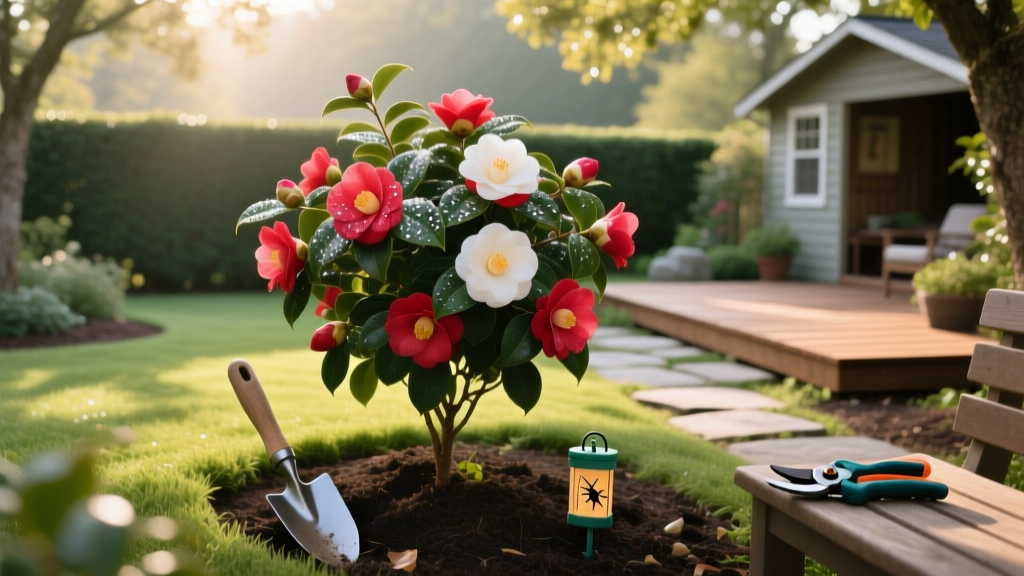
What Is Alabama's State Flower? Growing Camellia Japonica Guide
Identifying Alabama's Official State Flower
If you are researching Southern horticulture or studying regional emblems, you have likely asked: what is Alabama's state flower? The official state flower of Alabama is the Camellia, specifically the species Camellia japonica. Known for its large, rose-like blooms and glossy evergreen foliage, the camellia is a cornerstone of Southern landscaping. While it thrives across USDA Hardiness Zones 7 through 9, it holds a special cultural and historical significance in Alabama, where it replaced the native goldenrod as the state floral emblem in 1959.
This guide moves beyond basic trivia to provide a comprehensive, expert-level framework for cultivating Camellia japonica in your own garden, covering precise soil chemistry, planting depth mechanics, and seasonal maintenance matrices.
The Botanical and Historical Profile
Before planting, it is crucial to understand the botanical lineage and the historical context of this plant. The Camellia japonica is not native to the American South; it originates from the forests of Japan and China. It was introduced to the U.S. in the late 18th century and quickly became a staple in antebellum gardens.
Historical Context: In 1927, the Alabama legislature designated the goldenrod as the state flower. However, by the 1950s, the Women's Club of Greenville, led by Mrs. Bertie F. Golding, successfully lobbied to replace it. They argued that the goldenrod was a common weed that grew wild in ditches, whereas the camellia represented refinement, cultivation, and the elegance of Southern gardens. Act No. 189 officially adopted the camellia in 1959, and in 1999, the legislature amended the code to specify Camellia japonica as the exact species.
| Botanical Attribute | Specific Data Point |
|---|---|
| Family | Theaceae (Tea family) |
| Mature Dimensions | 6 to 12 feet tall, 4 to 8 feet wide |
| Foliage Type | Broadleaf evergreen, serrated margins |
| Bloom Window | Late fall through early spring (varies by cultivar) |
| Optimal Soil pH | 5.0 to 6.5 (Highly acidic) |
Site Selection: The Alkalinity Decision Framework
The most common reason Camellia japonica fails in residential landscapes is improper site selection regarding soil pH. Camellias are ericaceous (acid-loving) plants. If your soil pH exceeds 7.0, the plant cannot absorb iron and manganese, leading to severe interveinal chlorosis (yellowing leaves with green veins) and eventual death.
Regional Soil Considerations in Alabama
Alabama's geology is highly diverse, which dictates your planting strategy:
- The Tennessee Valley (Northern AL): Soils here often sit atop limestone bedrock, resulting in naturally alkaline pH levels (7.0 - 8.0). Decision: Do not plant camellias directly in the ground here without massive, ongoing sulfur amendments. Instead, grow them in large raised beds or containers using a 100% pine bark mix.
- The Coastal Plain (Southern AL): Soils are naturally sandy and acidic (pH 4.5 - 5.5). Decision: Ideal for direct-ground planting, though you may need to add dolomitic lime to raise the pH slightly to the 5.5 sweet spot and prevent magnesium deficiency.
- The Piedmont (Central AL): Heavy red clay soils that are slightly acidic but poorly drained. Decision: Plant on a berm or mound to ensure rapid water runoff and prevent root asphyxiation.
Precision Planting Protocol
According to research published by the University of Florida IFAS Extension, camellias are highly susceptible to Phytophthora root rot if buried too deeply. Follow this exact installation sequence to ensure survival:
- Excavate the Hole: Dig a hole that is exactly twice the width of the nursery container, but no deeper than the root ball itself.
- Amend the Backfill: Do not use pure native clay. Mix 50% native soil with 50% finely milled pine bark to increase aeration and lower pH.
- Set the Grade (Critical): Place the root ball in the hole so that the top of the root mass sits 1 to 2 inches above the surrounding soil grade. The root flare must never be buried.
- Backfill and Slope: Fill the void with your amended mix, then slope the soil gently down from the root flare to the surrounding grade to shed water away from the stem.
- Mulch Application: Apply a 3-inch layer of pine straw or pine bark nuggets. Keep the mulch at least 4 inches away from the main trunk to prevent stem canker.
Seasonal Maintenance and Pruning Matrix
Camellias require minimal intervention if sited correctly, but timing is everything. The most disastrous mistake homeowners make is pruning in late summer or winter. Camellia japonica sets its flower buds for the following year in July and August. Pruning after June will systematically remove next year's blooms.
| Season | Action Required | Specific Product / Metric |
|---|---|---|
| Early Spring (Post-Bloom) | Pruning & Shaping | Bypass pruners; cut 1/4 inch above a leaf node |
| Late Spring | Fertilization | Acidic fertilizer (e.g., 12-4-8 or 10-10-10 with sulfur) |
| Summer | Hydration & Bud Set | 1 inch of water weekly; do not prune |
| Winter | Cold Protection | Frost cloth for buds if temps drop below 15°F |
Troubleshooting Common Afflictions
Even expertly planted camellias face environmental pressures. Here is how to identify and treat the two most prevalent issues in Southern gardens, as outlined by the American Camellia Society.
1. Tea Scale (Fiorinia theae)
Symptoms: Yellow mottling or halos on the top surface of the leaves. If you flip the leaf over, you will see a crusty white and brown coating along the midrib.
The Fix: Tea scale is an armored insect that sucks sap from the leaf underside. Contact insecticides fail because of the hard shell. Apply a 2% horticultural oil spray (neem or mineral oil) in early spring when crawlers are active, ensuring you thoroughly coat the undersides of the foliage. For severe infestations, a soil drench containing dinotefuran provides systemic control.
2. Camellia Petal Blight (Ciborinia camelliae)
Symptoms: Brown, water-soaked spots appear on the flower petals, rapidly spreading until the entire bloom turns brown and drops prematurely. This is often confused with frost damage.
The Fix: This is a fungal disease that overwinters in the soil. Prevention is mandatory. Remove all fallen blooms from the garden bed immediately. Replace the top layer of mulch annually in late winter. If the disease is chronic, apply a preventative fungicide containing mancozeb or thiophanate-methyl just as the flower buds begin to show color.
Frequently Asked Questions
Can I grow Alabama's state flower indoors?
While Camellia japonica can be grown in containers, it struggles as a traditional indoor houseplant. It requires high humidity, intense bright light, and a winter chilling period (temperatures between 35°F and 45°F for several weeks) to trigger bud break. A heated, dry living room will cause all flower buds to abort and drop.
How fast does Camellia japonica grow?
It is a slow-growing shrub, typically adding only 4 to 8 inches of vertical growth per year. Because of this slow growth rate, purchasing a mature 5-gallon or 7-gallon specimen (which typically costs between $60 and $120 at local nurseries) is highly recommended over starting from a 1-gallon pot if you want immediate landscape impact.
Are camellia roots invasive?
No. Camellias have shallow, fibrous, non-aggressive root systems. They are perfectly safe to plant near foundations, sidewalks, and underground utilities, provided you maintain the required 4-to-6-foot clearance for the mature canopy spread.

